DbcultAccessing Vault...
Cult Review
Senior Film Conservator
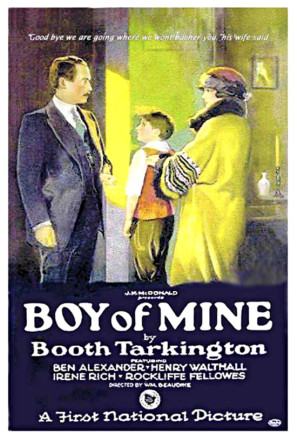
There are certain cinematic narratives that, despite their age, resonate with an almost unsettling prescience, their themes echoing through generations with undiminished power. Such is the case with 'Boy of Mine', a silent film from an era often dismissed by modern audiences as quaint or simplistic. Yet, within its frames lies a profoundly complex exploration of familial dynamics, the suffocating grip of control, and the arduous journey towards understanding what truly constitutes a family. This isn't just a period piece; it's a timeless inquiry into the nature of love, discipline, and the often-destructive pursuit of an idealized, rigid order.
At its core, 'Boy of Mine' presents a domestic drama steeped in the psychological tensions of an early 20th-century household. We are introduced to a wealthy banker, a man whose professional success is mirrored by an almost pathological need for control within his own home. He is not merely a father; he is a disciplinarian, an architect of an emotional prison for his nine-year-old son, Bill. The film, through its masterful use of silent storytelling, paints a vivid portrait of a household where joy is a rare commodity, replaced instead by an atmosphere of constant scrutiny and unyielding expectation. This isn't just about a stern father; it's about a man so consumed by his own vision of order that he inadvertently starves his family of affection and genuine connection.
Henry B. Walthall, a veteran of the silent screen, embodies the banker with a chilling effectiveness. His performance is a study in restrained menace, conveying a father whose love, if it exists, is buried beneath layers of pride, convention, and a misguided belief in the efficacy of absolute authority. We see him not as a cartoon villain, but as a product of his time, perhaps even a victim of his own perceived responsibilities. He believes he is shaping his son into a man of substance, a successor to his own considerable achievements, but his methods are corrosive. Each stern glance, each curt command, each denial of childish spontaneity chips away at Bill’s spirit. Walthall’s subtle expressions, the tightening of his jaw, the unblinking intensity of his gaze, communicate volumes without a single spoken word, creating a character who is both formidable and, ultimately, profoundly pathetic in his isolation.
The film cleverly uses the opulent setting of the banker's home to underscore the emotional poverty within. The grand rooms, the expensive furnishings, the trappings of wealth—all serve as a gilded cage for Bill and his mother. This juxtaposition is not unlike the thematic undercurrents found in films such as The Grandee's Ring, where social standing often dictates personal suffering, or even Brewster's Millions, which, while comedic, still touches upon the peculiar burdens and distorted values that immense wealth can impose. Here, the wealth is a barrier, not a comfort, insulating the father from the very human connection he unwittingly destroys.
At the heart of this emotional maelstrom is Bill, portrayed with heartbreaking vulnerability by Eugene Jackson. Jackson’s performance is nothing short of remarkable, capturing the quiet despair and burgeoning rebellion of a child under constant siege. We witness Bill’s attempts to navigate his father’s rigid world, his small acts of defiance, and the crushing weight of expectation that slowly extinguishes his youthful exuberance. His eyes, often downcast or wide with a silent plea, become the primary conduit for the film’s emotional impact. Bill is not a mischievous child; he is a boy yearning for affection and understanding, trapped in a system designed to break, rather than build, his spirit.
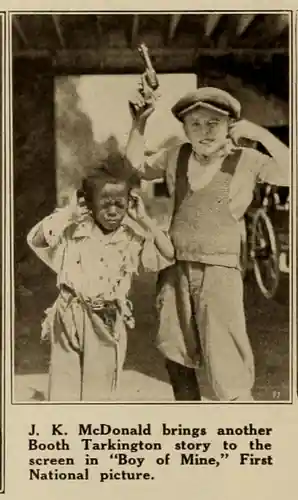
The silent film medium, paradoxically, amplifies Bill’s plight. Without dialogue, the burden of conveying internal struggle falls entirely on physical expression and facial nuance. Jackson excels here, allowing the audience to feel Bill's every suppressed sigh, every swallowed tear. His journey from a hopeful, albeit timid, child to one on the verge of emotional collapse is rendered with profound authenticity. This portrayal stands as a testament to the power of early cinema to evoke deep empathy, much like the poignant child performances seen in films such as Children of Banishment, which similarly explores the hardships faced by the young in difficult circumstances.
Irene Rich, as Bill's mother, serves as the emotional fulcrum of the narrative. Her character embodies the quiet suffering of a woman caught between her husband’s unyielding demands and her son’s desperate need for protection. She is initially a passive observer, a silent participant in the domestic tyranny, but her growing anguish is palpable. Rich’s performance conveys the internal conflict of a mother torn between loyalty and an overwhelming maternal instinct. Her eventual decision to leave, taking Bill with her, is not an act of petulance but a desperate, courageous break for freedom—a primal scream in a world that has silenced her for too long. This pivotal moment is delivered with a quiet strength that underscores the profound shift in the film's emotional landscape, giving voice to the voiceless.
Her resolve to protect her son, even at the cost of her marriage and social standing, is a powerful statement on the limits of endurance. It's a testament to the idea that love, ultimately, must supersede all other considerations. This theme of a woman making a difficult, life-altering choice for the sake of her child resonates deeply, finding echoes in the quiet heroism often depicted in melodramas of the era, though 'Boy of Mine' handles it with a starker, less sentimental realism.
The central conflict of 'Boy of Mine' is a timeless one: the struggle between rigid discipline and unconditional love. The banker's philosophy is rooted in a belief that sternness forges character, that emotional restraint builds strength. Yet, the film masterfully demonstrates how such an approach can instead breed fear, resentment, and a profound sense of alienation. It questions the very definition of strength, suggesting that true resilience comes not from an iron will, but from a nurturing environment where one feels safe to grow and express oneself.
The act of the mother and son leaving is a profound symbolic gesture. It represents not just a physical departure but an emotional liberation. The empty house, once a symbol of the banker's power, becomes a desolate monument to his folly. The film then shifts its focus to the father's internal struggle, forcing him to confront the void left by his family's absence. This moment of reckoning is crucial, highlighting the idea that sometimes, the greatest lessons are learned through loss. His journey from authoritarian patriarch to a man grappling with loneliness and regret is the film’s most nuanced arc, presenting a complex character capable of change, however belatedly.

The writers—Booth Tarkington, Lex Neal, Hope Loring, and Louis D. Lighton—craft a narrative that avoids easy answers. They refuse to demonize the father entirely, instead portraying him as a man trapped by his own convictions and the societal pressures of his class. This nuanced approach elevates the film beyond simple melodrama, making it a contemplative piece on the complexities of human nature and the profound impact of parental choices. The narrative structure, allowing for the father's eventual introspection, gives the film a redemptive quality, though the scars of his past actions remain palpable.
Beyond its compelling story, 'Boy of Mine' is a testament to the artistry of silent cinema. The direction, though uncredited in the prompt, expertly uses visual cues, intertitles, and the actors' expressive performances to convey a rich tapestry of emotions. The cinematography effectively captures the stark contrast between the banker's sterile home and the burgeoning freedom that Bill and his mother find outside its walls. The pacing allows for moments of quiet reflection, building tension gradually before the climactic separation. This careful craftsmanship ensures that the film's emotional beats land with significant impact, proving that narrative depth and character development were not exclusive to the sound era.
The film's ability to maintain engagement and convey such intricate psychological states without dialogue is a powerful reminder of the unique strengths of silent storytelling. It forces the viewer to engage more actively, interpreting nuances from gestures, gazes, and the overall mise-en-scène. This immersive quality is a hallmark of the best silent films, distinguishing them from mere precursors to sound cinema. The meticulous attention to detail in character development and emotional progression showcases the sophisticated narrative techniques that were already well-established in the early 1920s.
When considering 'Boy of Mine', one might draw parallels with other films that explore the complexities of family and societal pressures. The stern patriarchal figure, for instance, finds an echo in the rigid social structures depicted in films like The Dawn of a Tomorrow, where class and societal expectations often dictate personal freedom. The mother's brave departure for her child's well-being could be seen as a spiritual predecessor to later narratives of female agency, albeit within the confines of early 20th-century melodrama.
The film's exploration of internal conflict and the psychological toll of a repressive environment positions it alongside more introspective dramas. While not as overtly grand in scale as a historical epic like Quo Vadis?, its examination of human nature is no less profound. The themes of personal transformation and the consequences of one's actions resonate with the moral dilemmas presented in films like Der Eid des Stephan Huller - II, which delves into the psychological unraveling of its protagonist. Even the lighter fare of the era, such as Beloved Rogues, often contained undercurrents of challenging societal norms, though perhaps not with the same dramatic intensity as 'Boy of Mine'. The film stands as a significant piece within its cinematic landscape, contributing to a rich tradition of storytelling that probes the human condition.
In conclusion, 'Boy of Mine' is far more than a historical curiosity. It is a powerful, emotionally charged drama that speaks to universal truths about parenting, sacrifice, and the often-painful process of self-discovery. The film's enduring message lies in its poignant depiction of a father forced to confront the devastating consequences of prioritizing principle over genuine connection. It reminds us that while discipline has its place, it must always be tempered with empathy and love, for true familial bonds are forged not in an iron grip, but in the warmth of shared affection and mutual respect. This silent masterpiece continues to provoke thought and stir emotion, cementing its place as a significant, if often overlooked, gem of early cinema.

IMDb 6.5
1936
Community
Log in to comment.