DbcultAccessing Vault...
Cult Review
Senior Film Conservator
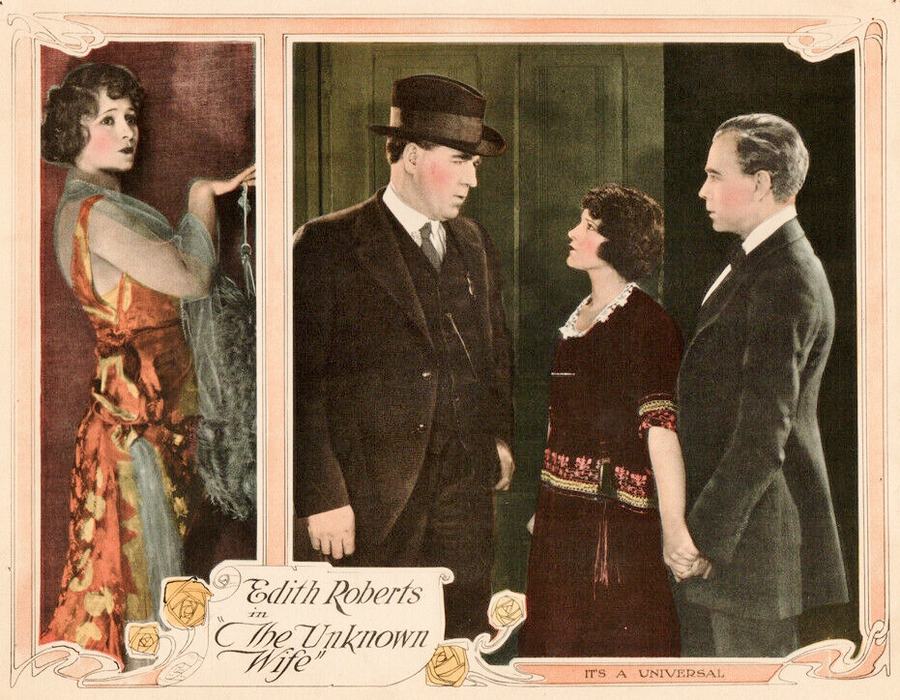
The camera, like a private eye with a busted flashbulb, squints at Donald Grant’s first post-prison dawn: a horizon the color of wet cement, a town whose name is never spoken aloud, only exhaled in factory steam. Casson Ferguson plays him with shoulders that remember handcuffs—every shrug looks like a ghost rattling chains. When he signs the night-shift ledger, the ink blots resemble tiny judicial gavels pounding guilty verdicts onto paper. The film’s opening movement is a master-class in economical despair: no title card needs to announce "EX-CON," we read it in the way his palms hover an inch above the time-stamp, afraid the metal might still burn.
Enter Helen Wilburton—Edith Roberts crafting a study in contradictory pulses: calf-skin gloves, but ink under the fingernails; a mouth that spells shorthand faster than most folks sin. Their meet-cute is a malfunctioning pay-window: the clerk shortchanges Donald a nickel, Helen slips him the coin from her own purse, their fingers brush like crossed wires sparking. In that spark the film announces its true currency: trust is both contraband and sacrament.
Director Wallace Clifton, working from Bennett Cohen’s scenario, refuses to luxuriate in pastoral courtship. Instead, courtship is compressed into a staccato montage—shared sandwich on a pier, a ferris wheel ride shot from inside the swinging car so the world tilts like a drunk conscience, a registrar office door that slams so hard the intertitle jumps. The marriage bed is never shown; we cut from their shy hotel-room embrace to the factory’s dark silhouette, an editorial shrug that says lust and larceny share alarm clocks.
Cinematographer Frank Cotner shoots the metropolis as though it owes him money: streets slick as black marble, streetlamps blooming like sulphur chrysanthemums, façades that lean inward to eavesdrop. When the burglary breaks, the camera performs a slow iris-in on a shattered safe, then a match-cut to Donald’s wedding ring—visual alliteration that weds innocence to culpability without a word of testimony. Shadows are not mere absence of light but affidavits signed by the city itself.
The tonal swing from rural whistle-stop to urban jungle is so abrupt it feels like changing reels mid-sneeze. One moment Donald is oiling looms, next he is cadging cigarettes in an alley that smells of tar and trombone spit. This whiplash is intentional: the film insists social mobility for the branded class is always downward elevator music—any ascent is merely a mechanical illusion before the free-fall.
Helen’s subplot, often dismissed as mere class-tourism, actually supplies the film’s moral gyroscope. Hired by dowager Mrs. Vale—Mathilde Brundage in pearls so fat they look like soap bubbles ready to pop—she enters a drawing room where silence is measured in ancestral portraits and the tick of ormolu clocks. The son, played by Augustus Phillips with the smirk of someone who has never had to ask the price, pursues her in sequences that prefigure Blind Man's Holiday’s predatory soirées. Yet every time he leans close, the camera frames Helen against a mirror, her reflection wearing the same hunted stare Donald wore under interrogation—marriage as shared scar tissue.
The screenplay’s smartest feint is withholding her confession of wedlock. She lets the heir circle, lets the audience squirm, until the reveal detonates in a single intertitle: "I am Mrs. Grant." The words appear over a close-up of his manicured hand recoiling from hers as though flesh turned to hot iron. In that instant the film flips the predator-prey soundtrack without a single violin cue.
Donald’s reentry into crime is shot like a sacrament gone sour. In a cellar lit by a single swinging bulb, faces emerge from inkwell darkness: Joe Neary as the gang’s mouth, Spottiswoode Aitken as its conscience-agnostic brain. The planned heist—a steamship payroll—is sketched on a shirt-cardboard, the charcoal lines trembling like an EKG. Watch Ferguson’s eyes: they do not gleam with villainy but with the arithmetic of rent and hunger. The film declines to sermonize; instead it overlays a church choir practicing next door, their muffled hymns bleeding through brick, sanctifying nothing, indicting everything.
Meanwhile Helen, clad in borrowed satin, types inventories of silver spoons she will never own. The parallel editing here is ruthless: cut on the clang of a crowbar to the ping of her typewriter bell; cut on a safecracker’s curse to the dowager’s praise for perfect penmanship. The montage screams that legality and luxury are adjacent rooms in the same mansion, separated only by which side of the door your birth key fits.
The climax—often truncated in surviving prints—deserves restoration hype equal to any lost Expressionist tower. The wounded robber, Hal Wilson, drags himself up the tenement’s skeletal fire escape, blood dripping onto laundry lines like red confetti. Donald, pursued by cops, ascends from the opposite direction. The geometry is cruciform: two men converging on a steel cross under a sodium sky. In a brawl choreographed on a three-foot grill plate, elbows become pistons, grunts replace orchestral swell. When the thief finally gasps his confession—"Grant never touched the safe"—the line is delivered in a tight close-up, frosted breath clouding the lens, as though the camera itself exhales mercy.
The subsequent denouement is almost cheeky in its speed: cops lower their batons, Helen’s employer miraciously offers Donald a foreman’s post, the couple walk into a sunrise that looks suspiciously like the one that opened the picture. But the symmetry feels earned, not cheap, because the film never promised existential revolution—only the fragile possibility that a name can be unshackled from its newspaper headline.
Casson Ferguson’s power is in restraint. Where contemporaries gesture like windmills, he lets guilt pool in the slump of a collar. Watch him listen: eyebrows knit, jaw slack, the very opposite of leading-man vanity. Edith Roberts matches him with eyes that seem to store every unkind glance ever shot her way; when she finally smiles in the closing shot, the effect is not beatific but bruised, like sun through stained glass after a riot.
Among supports, Joe Neary supplies a proto-Cagney volatility, all gum-chewing menace and Brooklyn vowels carved into the intertitles. Mathilde Brundage’s dowager is a walking objet d’art, each eye-roll a museum piece. Together they create the film’s socio-economic hinge: the rich sip tea from porcelain that prison fingers once dug from clay.
If you hunger for more silent-era redemption arcs, chase it with Marked Men’s desert morality play, or A Regular Pal where loyalty outruns the law. For urban paranoia, The Mediator offers boardroom backstabbings, while The Red Viper trades fire escapes for dockside fog. None, however, weld marital tenderness to crime-thriller mechanics as seamlessly as The Unknown Wife.
This is not a relic to be shelved beside moth-eaten comedies; it is a time-capsule bloodstream pumping the same anxieties that now throb in gig-economy warehouses: background checks that outlive sentences, love that must prove itself mortgage-worthy, the knowledge that one microscopic misstep rebrands you forever. The film’s title itself is a sly indictment—Helen is never "unknown" to Donald, only to a society that prefers its narratives pre-sorted into saints and screw-ups.
Watch it at midnight with the windows open. Hear the real city horns answer the celluloid police whistles. Notice how the fire escape, once a rusted ladder, now looks like a hashtag—proof that even a century ago, cinema knew how to brand redemption into trending iconography. Then ask yourself whose name you still need cleared, and who you have yet to forgive for the crime of needing a second chance.
IMDb 7.3
1935
Community
Log in to comment.