DbcultAccessing Vault...
Cult Review
Senior Film Conservator
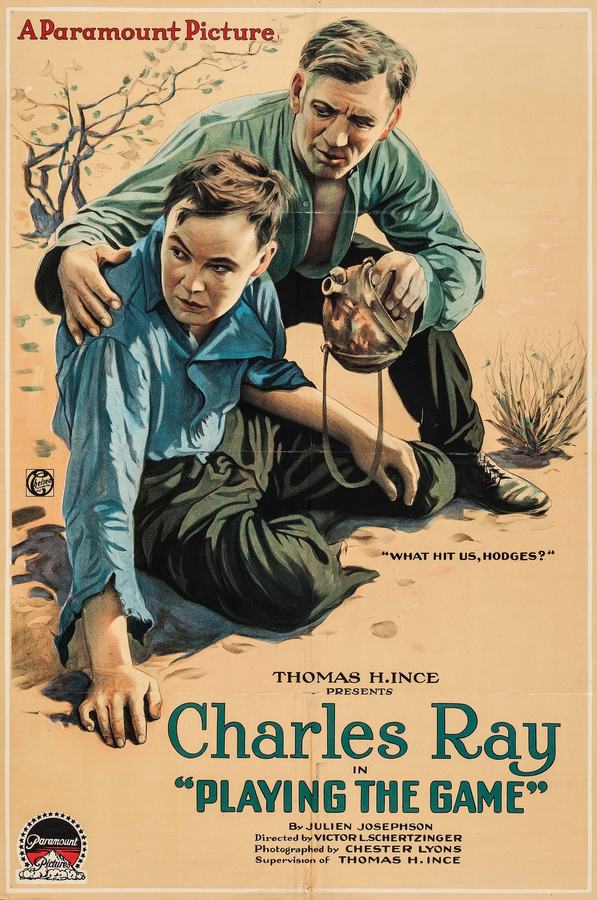
The silent era, a veritable laboratory of cinematic storytelling, frequently explored themes of identity, class, and the often-fraught path to genuine connection. Among the many gems unearthed from this prolific period, 'Playing the Game' (1917) emerges as a particularly charming and insightful entry. It’s a narrative that, while seemingly straightforward in its premise, delves into the complexities of human nature with a surprising degree of nuance, particularly for its time. At its core, we witness the saga of Larry Prentiss, a man born into the gilded cage of immense wealth, who inherits a sprawling ranch and, rather than merely overseeing it from afar, chooses a path of audacious self-exploration.
Prentiss's decision to arrive at his new property incognito, securing a position as a mere ranch-hand, is more than a whimsical caprice; it's a deliberate shedding of his privileged skin, an attempt to understand the world, and perhaps himself, without the distorting lens of his fortune. This narrative device, a staple across literature and film, from Mark Twain's 'The Prince and the Pauper' to countless romantic comedies, gains a particular poignancy in the rugged, unpretentious setting of the American West. The dusty plains and the honest toil of ranch life offer a stark contrast to the opulent drawing rooms Prentiss has undoubtedly frequented, setting the stage for a genuine, unvarnished experience.
It is within this crucible of labor and anonymity that Prentiss encounters the ranch foreman's daughter, a character brought to life with vivacious charm by Doris May. Her performance, even through the sepia-toned lens of a century past, radiates an authenticity and warmth that immediately explains Prentiss's burgeoning affection. She is unburdened by the social artifice that likely defined the women of his own class, her spirit as untamed and free as the landscape she inhabits. The courtship that ensues is, therefore, one built not on status or material advantage, but on a more fundamental attraction of personalities. This is where 'Playing the Game' truly distinguishes itself; it’s a romance that strives for a purity often absent when wealth and societal expectations dictate the terms of engagement.
The film’s exploration of class dynamics is subtle yet persistent. Prentiss, in his assumed role, experiences firsthand the challenges and camaraderie of the working class. His initial awkwardness, his learning curve with the demands of ranch life, all contribute to a nuanced portrayal of a man genuinely attempting to bridge the chasm between his inherited station and his chosen temporary reality. This immersion allows him to see the foreman’s daughter not as a charming distraction from a lower rung of society, but as a woman of substance and character, entirely apart from her social standing. This element resonates with other films of the era that grappled with similar themes, like The Countess Charming, which also explored the fluidity of social identity, albeit often with a more comedic or satirical bent towards social climbing rather than Prentiss's deliberate descent.
However, the very foundation of their burgeoning love is built upon a deception, a secret that looms large over every tender glance and shared moment. The tension derived from Prentiss’s hidden identity is the narrative engine of the film. Will his true status be revealed? How will the foreman's daughter react to the man she loves being, in fact, her employer, a millionaire who chose to masquerade among them? These questions infuse the unfolding romance with an undercurrent of dramatic suspense. The complications that ensue are not merely external obstacles but internal conflicts, challenging Prentiss’s integrity and the depth of his affection. This narrative device, while common, is handled with a delicate touch, emphasizing the emotional stakes rather than purely external plot machinations.
The supporting cast, including Robert McKim as the ranch foreman, William Elmer, and Lillian Lorraine, contribute significantly to the film's texture. McKim, in particular, delivers a performance that grounds the narrative in a sense of rugged authenticity. His portrayal of a man dedicated to his work and protective of his daughter provides a believable counterpoint to Prentiss’s more ethereal journey of self-discovery. Charles Ray and Leota Lorraine also add layers to the ranch community, creating a believable ecosystem where Prentiss’s masquerade plays out. The chemistry between Doris May and the actor portraying Prentiss (Charles Ray, though not explicitly listed as Prentiss, often played similar roles in this era) is palpable, conveying a youthful exuberance and an earnestness that makes their eventual emotional turmoil all the more impactful.
The directorial choices by R. Cecil Smith and the writing by Smith himself along with Julien Josephson are commendable for their ability to weave a compelling narrative with the visual language of silent cinema. The cinematography, though perhaps not groundbreaking by today's standards, effectively captures the expansive beauty of the Western landscape, contrasting it with the intimate moments between the characters. The use of close-ups, body language, and expressive facial acting, paramount in silent films, is skillfully employed to convey the characters' inner lives and unspoken desires. The pacing is deliberate, allowing the audience to invest in the emotional journey of Prentiss and his love interest, rather than rushing through plot points. This measured approach ensures that the eventual revelations carry significant emotional weight.
Compared to other silent films of its vintage, 'Playing the Game' stands as a testament to the enduring appeal of universal themes. While perhaps not possessing the overt dramatic flair of something like The Vixen, which often explored more melodramatic female-centric narratives, or the intense social commentary found in Grafters, which delved into the darker side of societal manipulation, 'Playing the Game' carves its own niche with its gentle yet probing examination of personal integrity and romantic love. It shares a thematic kinship with films like The Frame-Up, where mistaken identities or deliberate deceptions drive much of the plot, but here, the focus remains firmly on the emotional and moral implications of Prentiss's choices.
One of the film's strengths lies in its commitment to exploring the consequences of Prentiss's deception. It doesn't shy away from the potential pain and betrayal that such a secret can inflict, particularly on someone as seemingly guileless as the foreman's daughter. The tension builds not just from the possibility of discovery, but from the moral quandary Prentiss faces: how long can he maintain this charade without irrevocably damaging the trust he has painstakingly built? This ethical dimension elevates the film beyond a simple romantic comedy, infusing it with a more serious dramatic undertone. It forces the audience to consider the true meaning of honesty in relationships, regardless of social standing.
The resolution, without giving too much away for those who might seek out this cinematic relic, is handled with a satisfying blend of dramatic payoff and emotional catharsis. It’s a conclusion that respects the journey of its characters and the themes it has so carefully cultivated throughout its runtime. The film avoids overly simplistic answers, instead opting for a resolution that feels earned, reflecting the complexities of love and forgiveness in the face of initial deception. It’s a narrative that, despite its silent origins, speaks volumes about the human desire for authentic connection, a desire that transcends wealth, status, and even the carefully constructed facades we sometimes present to the world.
In an era where cinema was still finding its voice, 'Playing the Game' demonstrates a remarkable sophistication in its storytelling. It’s a film that utilizes its Western setting not just as a backdrop for action, but as a crucible for character development and a canvas upon which to paint a nuanced portrait of love across class lines. The performances are earnest, the direction competent, and the overall message resonates with timeless relevance. For enthusiasts of silent cinema, or anyone interested in the foundational narratives that shaped the art form, this film offers a delightful and thoughtful viewing experience. It reminds us that sometimes, to truly find ourselves, we must first lose the identity that society has imposed upon us, and embrace the unexpected paths that lead to genuine human connection.
The legacy of films like 'Playing the Game' lies not just in their historical significance, but in their capacity to still engage and provoke thought. They are echoes from a bygone era that continue to speak to contemporary audiences about enduring human truths. The simplicity of their presentation often belies the depth of their emotional and thematic content. This film, with its millionaire playing the part of a ranch hand, falling for a woman who sees him for who he appears to be, rather than who he truly is, offers a compelling exploration of authenticity. It challenges the notion that wealth dictates worth, and instead champions the virtues of honesty, hard work, and genuine affection. It’s a narrative that, even a century later, still compels us to reflect on the games we play, both with ourselves and with others, in the intricate dance of life and love.
The film’s enduring charm is a testament to the universal appeal of its central conflict. The 'incognito millionaire' trope has been revisited countless times across various media, but 'Playing the Game' presents it with a fresh, early cinematic innocence that is incredibly endearing. It captures a moment in time when societal structures were both rigid and subtly being questioned, and films could playfully explore these boundaries. The Western genre, typically associated with rugged individualism and frontier justice, here becomes a setting for a more personal, emotional struggle. It’s a quiet rebellion against the expectations of inherited status, a yearning for a life lived on one’s own terms, and a love found irrespective of social stratifications. This blend of genre and theme makes it a fascinating study for film historians and casual viewers alike.
Ultimately, 'Playing the Game' is more than just a historical curiosity; it's a vibrant piece of early American cinema that continues to resonate. Its exploration of identity, class, and the pursuit of love in the face of deception offers a compelling narrative that is both entertaining and thought-provoking. The film’s quiet power lies in its ability to tell a human story that transcends the limitations of its silent format, speaking directly to the heart of what it means to connect authentically with another person. It’s a testament to the enduring power of storytelling, proving that the most profound dramas often unfold not on grand stages, but within the intimate confines of personal relationships and the secrets we keep.
IMDb 6.6
1937
Community
Log in to comment.