DbcultAccessing Vault...
6.8/10
Senior Film Conservator

A definitive 6.8/10 rating for a film that redefined the boundaries of cult cinema. The Unwritten Code remains a cornerstone of transgressive art.
In the annals of early cinema, few narratives capture the raw, unvarnished complexities of human emotion and societal stricture quite like L.W. McChesney and Bernard J. Durning's 'The Unwritten Code.' Released in an era when film was still discovering its voice, this particular silent drama, featuring the exquisite Shirley Mason, stands as a testament to the enduring power of visual storytelling to convey profound heartbreak, cultural friction, and the insidious nature of social prejudice. It's a film that, despite its age, speaks volumes about the eternal struggle between personal desire and the crushing weight of collective expectation, a theme that remains disarmingly relevant even in our ostensibly progressive times. The screenplay, penned with a keen understanding of melodramatic tension, meticulously unravels the tragic tapestry of Kiku-San's life, a young woman whose innocence becomes a pawn in a cruel game of debt, desire, and ultimately, disillusionment.
At the heart of this poignant tale is Kiku-San, portrayed with an arresting blend of fragility and quiet strength by Shirley Mason. Her existence is initially defined by the moral decay of her father, Kimura, a man whose life is a spiral of drunkenness and gambling, a stark contrast to the delicate beauty of his daughter. Kimura's utter lack of paternal affection or responsibility casts a long shadow over Kiku-San's early life, making her vulnerable to the predations of a world far less forgiving than her gentle spirit. It is against this backdrop of familial neglect that she finds a fleeting glimmer of hope and affection in Dick Tower, an American college friend of her brother, Okuma. Their connection, born of mutual admiration, hints at a future transcending the boundaries of their respective cultures, a promise that, in the tragic tradition of silent film, is destined to be broken.
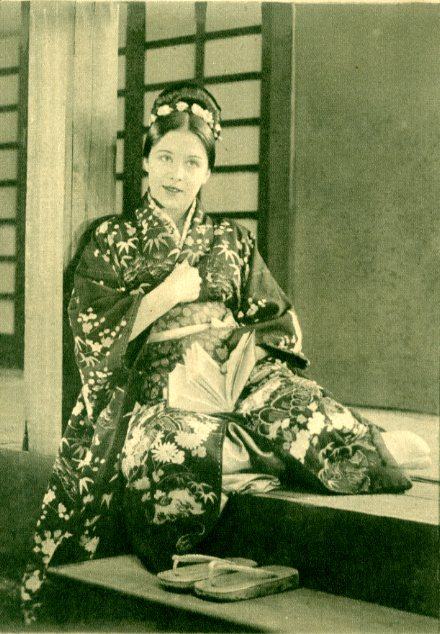
The film swiftly plunges Kiku-San into an unimaginable peril when Suzuki, a proprietor of a geisha house, cunningly exploits Kimura’s vices. He inflates Kimura’s already exorbitant debts to an astronomical sum, a calculated move designed to force the desperate father into an unthinkable transaction: offering his own daughter as payment. This moment, a horrifying testament to the commodification of women in certain societal strata, is rendered with a chilling lack of overt sensationalism, making its impact all the more profound. Kimura’s ready agreement, a shocking display of his utter depravity, underscores the depth of Kiku-San’s isolation and the terrifying precariousness of her position. It’s a narrative device that, while deeply rooted in melodramatic conventions, effectively establishes the immense stakes at play and the moral bankruptcy of certain characters. Mason’s portrayal here, though often subtle in the silent medium, conveys a palpable sense of dread and helplessness that is truly affecting.
Just as Kiku-San faces this horrifying fate, salvation arrives in the form of Dick Tower and his loyal friend Thompson. Their intervention, a dramatic confrontation with Suzuki and his henchmen, is a classic cinematic moment of heroism, brimming with the kind of physical action that would have thrilled audiences of the era. The fight sequence, though perhaps quaint by modern standards, serves its purpose in elevating Tower to the status of a white knight, a figure of masculine virtue rescuing the damsel in distress. Yet, the rescue, while preventing a worse outcome, inadvertently precipitates a new set of societal challenges. By taking Kiku-San into his home, Tower, in the eyes of their society, irrevocably compromises her. The solution, dictated by the rigid moral codes of the time, is marriage. This swift transition from peril to matrimony is presented not as a passionate declaration of love, but as a pragmatic necessity, a means to preserve Kiku-San's honor, however tarnished it might appear to others. The early days of their marriage are depicted as genuinely happy, a brief idyll where love and mutual respect seem to blossom, offering a false sense of security before the storm of societal judgment descends.
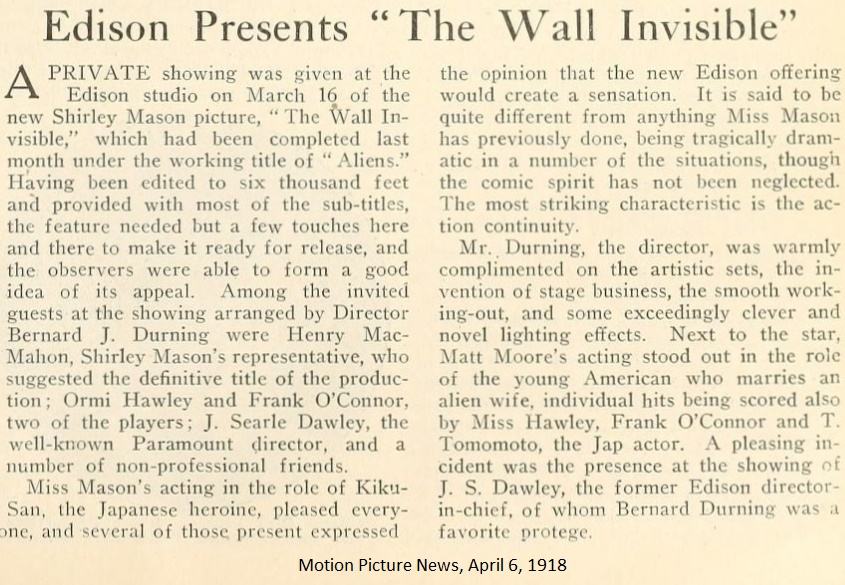
The true conflict of 'The Unwritten Code' emerges not from external threats, but from the insidious pressures of social ostracization. The happiness of Kiku-San and Tower is brutally shattered by the snobbery of Tower's friends at the American Club. This sequence is particularly insightful, illustrating how easily prejudice, even when unspoken, can corrode the foundations of a relationship. The American Club, a bastion of expatriate privilege, embodies the rigid racial and cultural hierarchies of the period. Kiku-San, despite her grace and virtue, is seen as an outsider, an 'other' who does not fit into their preconceived notions of acceptable companionship. The silent glances, the averted eyes, the subtle but undeniable slights—these are the 'unwritten codes' that inflict far deeper wounds than any physical assault. This social rejection is a powerful element, echoing the struggles seen in other films grappling with societal norms and class distinctions, such as The World Against Him, which similarly explores the crushing weight of public opinion on individual lives.
What makes this segment particularly agonizing is the gradual erosion of Tower's resolve. Initially, he seems to stand by his wife, but the relentless social pressure begins to wear him down. Even his friend Thompson, once a hero in Kiku-San's rescue, succumbs to the prevailing sentiment, urging Tower to divorce her. This betrayal by a trusted friend highlights the pervasive nature of prejudice and how easily individuals can be swayed by the desire for social acceptance. Matt Moore, as Dick Tower, subtly conveys this internal struggle, his initial warmth giving way to a growing coldness, a reflection of his capitulation to the very 'unwritten code' that denies his wife her rightful place. His character arc is a tragic study in moral weakness, a man who, despite his initial bravery, lacks the fortitude to defy the narrow-mindedness of his peers. The film here is a potent commentary on the fragility of conviction in the face of social convenience.
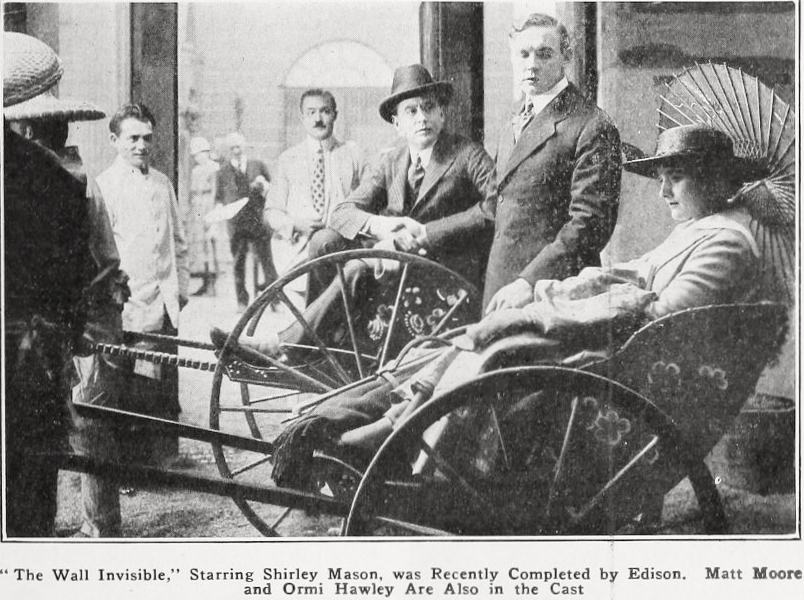
The introduction of Margaret, a wealthy American widow, marks the final nail in the coffin of Kiku-San and Tower's marriage. Margaret represents everything Tower's social circle desires: wealth, status, and, crucially, an 'acceptable' American identity. With Margaret, Tower sees a path back to the comfortable, privileged life he is being ostracized from. His increasing coldness towards Kiku-San is heartbreaking to witness, a slow-motion abandonment that speaks volumes about the priorities he ultimately chooses. Shirley Mason's portrayal of Kiku-San's growing sadness is masterfully understated, conveyed through subtle shifts in posture, the downcast gaze, the trembling lip – all hallmarks of effective silent film acting that relied heavily on mime and expressive physicality. Her silent suffering is perhaps the most eloquent aspect of the entire film, a testament to her acting prowess.
The emotional climax arrives when Kiku-San’s profound sadness is conveyed to her brother, Okuma. His protective instincts ignite, leading him to confront Tower with a desperate threat: he will kill Tower unless Kiku-San refuses to accompany him to America for Christmas. This ultimatum places an unbearable burden on Kiku-San. Faced with the choice between her own happiness and her brother's violent retribution, or more subtly, the desire to spare Tower a life of social discomfort, she makes the ultimate sacrifice. She refuses to go, feigning a desire for separation, allowing Tower to believe that their parting is her wish. This act of self-effacement, born of love and a profound understanding of the 'unwritten code' that governs their lives, is devastating. It elevates Kiku-San from a victim to a tragic heroine, a woman who chooses to bear her sorrow in silence for the sake of another's perceived happiness. The depth of this sacrifice mirrors the often-unseen struggles of women in similar historical contexts, where personal desires were frequently subjugated to familial or societal expectations, a theme echoed in films like Idle Wives, which explores the constrained lives of women.
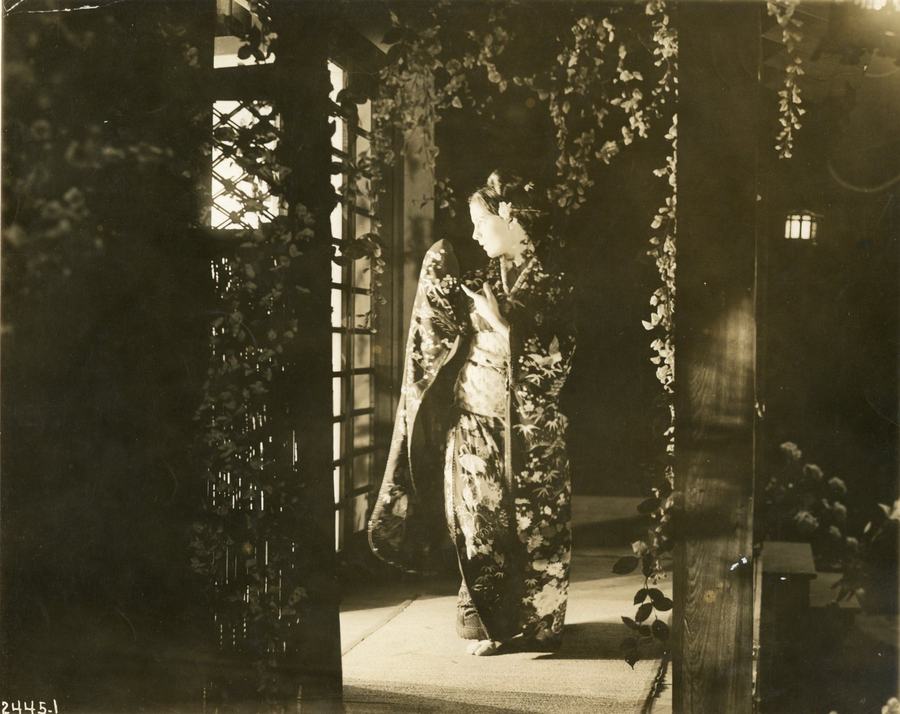
The film concludes with a stark, haunting image: Tower sails away with Margaret, blissfully ignorant of Kiku-San's true feelings, convinced that the separation was her choice. Meanwhile, Kiku-San remains, a solitary figure among the blossoming cherry trees, her face etched with a sorrow that speaks volumes without uttering a single word. This final shot is a masterclass in silent film pathos, utilizing natural beauty to underscore profound human suffering. The cherry blossoms, traditionally symbols of transient beauty and the fleeting nature of life, become a poignant metaphor for Kiku-San's lost love and happiness. It’s a beautifully composed scene that leaves an indelible mark on the viewer, emphasizing the irreversible consequences of societal pressure and personal weakness. The sheer emotional weight of this ending ensures 'The Unwritten Code' lingers long after the credits roll.
Shirley Mason's performance as Kiku-San is undoubtedly the film's anchor. Her ability to convey a vast spectrum of emotions – from innocent joy to profound despair – through subtle gestures and facial expressions is remarkable. She embodies the character with a dignity that transcends the melodramatic trappings of the plot, making Kiku-San a truly empathetic figure. Matt Moore, as Dick Tower, navigates a difficult role, portraying a character who is neither wholly villainous nor entirely heroic. His gradual moral decline is depicted with a believable, if frustrating, realism. The supporting cast, including T. Tamamoto as the despicable Kimura and Mr. Oskima as the protective Okuma, contribute effectively to the film's emotional landscape, each performance adding another layer to the intricate web of relationships. F. Wada as Suzuki similarly embodies a chilling villainy. The directional choices by Bernard J. Durning, though not overly flashy, are competent, allowing the narrative and performances to take center stage. He understands the power of close-ups to capture the nuances of silent acting and uses them effectively to highlight Kiku-San's internal turmoil.
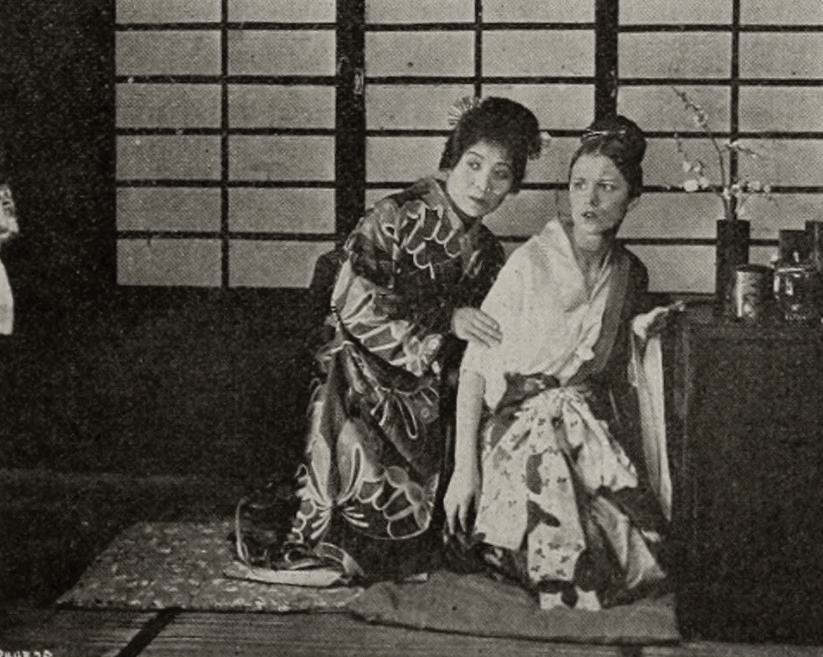
'The Unwritten Code' is more than just a tragic romance; it's a social commentary on the rigid cultural boundaries and racial prejudices that plagued society in the early 20th century. The film critiques the hypocrisy of a 'civilized' society that champions honor yet readily sacrifices individuals for the sake of social conformity. It's a powerful indictment of the 'unwritten codes' that dictate who is acceptable and who is not, and the devastating consequences for those who dare to transgress these arbitrary lines. The film's portrayal of cross-cultural relationships, though filtered through the lens of its time, still resonates with contemporary discussions about identity, acceptance, and the challenges of bridging cultural divides. Its exploration of sacrifice for love, even when that sacrifice is misunderstood or unappreciated, imbues the story with a timeless, universal appeal. The writers, L.W. McChesney and Bernard J. Durning, crafted a narrative that, while perhaps leaning into the dramatic conventions of its era, nevertheless delivered a poignant and thought-provoking examination of the human condition under duress. The narrative's strength lies in its ability to evoke deep empathy for Kiku-San, whose fate is a direct consequence of the societal forces arrayed against her.
In an era of rapid social change, films like 'The Unwritten Code' served not only as entertainment but also as a mirror reflecting the anxieties and prejudices of their time. It’s a film that, despite its lack of sound, speaks with a clear, resonant voice about the enduring pain of discrimination and the quiet dignity of those who suffer it. While we might look back on its melodramatic elements with a critical eye, its core emotional truth remains potent. For those interested in the evolution of cinematic storytelling and the enduring themes that captivate audiences across generations, 'The Unwritten Code' offers a compelling and deeply moving experience. It is a reminder that some of the most profound stories are told not with grand pronouncements, but with the subtle interplay of light, shadow, and the expressive power of the human face.
The film’s focus on the individual’s struggle against an unforgiving social environment is particularly striking. Kiku-San’s journey from a sheltered, if neglected, existence to a tragic figure of self-sacrifice highlights the severe limitations placed upon women, especially those in cross-cultural relationships, during this period. The 'unwritten code' isn't just about racial prejudice; it's also about gender roles and the expectations placed on women to maintain societal harmony, even at the cost of their own happiness. This thematic depth elevates the film beyond a simple romance, transforming it into a significant cultural artifact. It invites us to consider how far, or perhaps how little, we have truly come in dismantling these invisible barriers. The film poses a timeless question: what price are we willing to pay for acceptance, and what price do others pay for our desires? Kiku-San’s sorrowful gaze among the cherry blossoms serves as a perpetual answer, a poignant echo across the cinematic ages, reminding us of the silent battles fought and lost in the name of societal propriety and personal weakness. It’s a cinematic experience that, while steeped in the past, continues to resonate with a haunting relevance, urging us to reflect on the codes, both written and unwritten, that still shape our world.
Indeed, the enduring power of 'The Unwritten Code' lies in its ability to transcend the specific historical context of its production. While the explicit racial prejudices and rigid social hierarchies it depicts might seem a relic of a bygone era, the underlying human experiences—the yearning for acceptance, the pain of rejection, the impossible choices demanded by love and loyalty—remain universally identifiable. Shirley Mason's Kiku-San becomes an archetype of the individual crushed by forces beyond her control, a figure whose quiet strength in the face of immense suffering speaks to audiences regardless of their own background. Her character arc, defined by profound sacrifice, resonates with a deep, almost primal understanding of selflessness. The film, therefore, acts as a powerful historical document and a timeless narrative, ensuring its place as a compelling watch for anyone interested in the evolution of cinema and the enduring stories of the human heart. The emotional complexity conveyed without a single spoken word is a testament to the artistry of silent film, making 'The Unwritten Code' a compelling and deeply moving experience for the modern viewer. It is a stark reminder that some stories, particularly those of love and loss, require no dialogue to communicate their profound truths, a quality that makes it stand out even amongst other powerful dramas of its time, such as The Girl Who Didn't Think, which also explored the consequences of societal expectations on young women.
The script by L.W. McChesney and Bernard J. Durning is a masterclass in crafting a narrative that builds tension through character development and social commentary rather than overt action. While the rescue scene provides a burst of physical drama, the true conflict is psychological and sociological. They deftly illustrate how external pressures can insidiously erode internal convictions, transforming a brave rescuer into a man swayed by convenience. The pacing, typical of silent features, allows for lingering shots on faces and reactions, giving the audience ample time to absorb the emotional weight of each scene. Durning’s direction ensures that these moments are not merely static but are imbued with a dynamic emotional intensity. The use of intertitles is judicious, providing necessary exposition without overwhelming the visual storytelling. This balance is crucial for a silent film, allowing the expressive performances of the cast, particularly Mason, to carry the bulk of the narrative and emotional heavy lifting. The visual grammar of the film—the contrast between the vibrant cherry blossoms and Kiku-San's somber solitude, the opulent American Club versus her modest home—all contribute to a rich, layered viewing experience that transcends mere plot mechanics.
'The Unwritten Code' ultimately leaves us with a profound sense of melancholy, yet also an appreciation for the quiet resilience of its protagonist. It's a film that eschews a simplistic happy ending for a more complex, emotionally resonant conclusion, one that acknowledges the harsh realities of its time. It serves as an important historical artifact, shedding light on the social mores and prejudices of the early 20th century, particularly concerning cross-cultural relationships. More than that, it is a timeless drama about sacrifice, the corrosive power of social conformity, and the enduring strength of the human spirit in the face of overwhelming adversity. Shirley Mason's Kiku-San, sorrowful yet dignified amidst the cherry blossoms, remains an iconic image of tragic grace. For connoisseurs of silent cinema and those interested in the deeper currents of human experience, 'The Unwritten Code' is not merely a film to be watched, but a story to be felt, contemplated, and remembered. Its 'unwritten code' continues to whisper truths about our own societies, reminding us of the invisible barriers that still shape our lives and the quiet heroes who navigate them with unwavering, if heartbreaking, resolve.

IMDb 5.1
1931
Community
Log in to comment.