DbcultAccessing Vault...
6.8/10
Senior Film Conservator
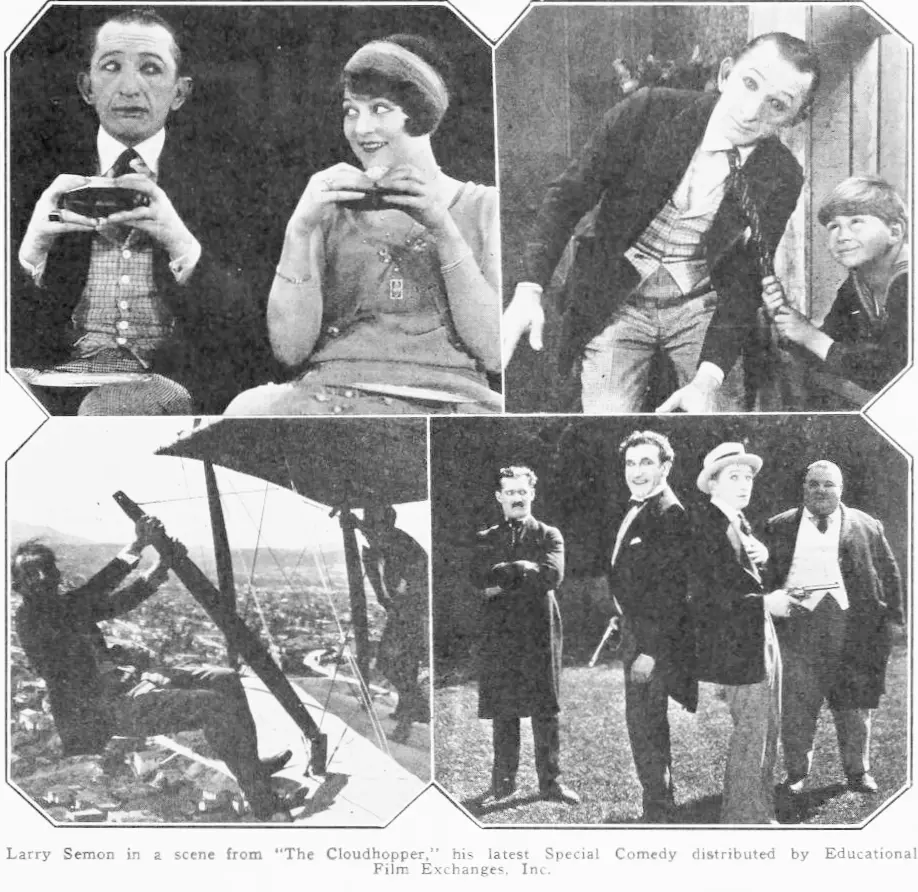
A definitive 6.8/10 rating for a film that redefined the boundaries of cult cinema. The Cloudhopper remains a cornerstone of transgressive art.
Is The Cloudhopper worth your time nearly a century after its release? Short answer: Yes, but only if you value physical choreography over narrative logic. This is a film for the silent cinema completionist and those who find the raw, unpolished danger of 1920s stuntwork more compelling than modern digital effects; it is decidedly not for viewers who require a cohesive emotional arc or a plot that makes sense for more than five minutes at a time.
This film works because it treats the laws of physics as mere suggestions, culminating in an aerial sequence that remains genuinely nerve-wracking. However, the film fails because the first half feels like a series of disconnected sketches that have little to do with the high-altitude finale. You should watch it if you are a fan of Larry Semon’s specific brand of high-octane chaos or if you want to see how silent film stars literally risked their lives for a gag.
Watching The Cloudhopper today is like looking at a blueprint for the modern action-comedy, albeit one where the safety protocols were non-existent. If you are looking for a masterpiece on the level of Buster Keaton’s The General, you will be disappointed. Semon lacked Keaton’s structural genius. But if you want to see a man dangle from a rope ladder while two biplanes dance in the clouds, it is essential viewing. It is a loud, messy, and occasionally brilliant relic of a time when 'movie magic' was just a man doing something incredibly dangerous in front of a hand-cranked camera.
Larry Semon was always a divisive figure in the silent era. Critics of the time often found his work too reliant on expensive sets and massive explosions. In The Cloudhopper, he attempts to ground his slapstick by playing two characters: the hero and a drunk. This dual role isn't just a technical flex; it’s a way for Semon to eat his cake and have it too. He gets to be the dashing leading man who saves the girl, while also indulging in the low-brow, rubber-faced comedy that made him a star.
The drunk character is particularly fascinating. In one scene at the charity bazaar, his stumbling interference creates a ripple effect of destruction that rivals the chaos seen in Our Alley. Semon’s physicality is undeniable. He moves with a frantic, almost nervous energy that differentiates him from the graceful athleticism of Douglas Fairbanks or the stoic precision of Keaton. He is a man who looks like he is constantly on the verge of a nervous breakdown, which adds a layer of genuine tension to the comedy.
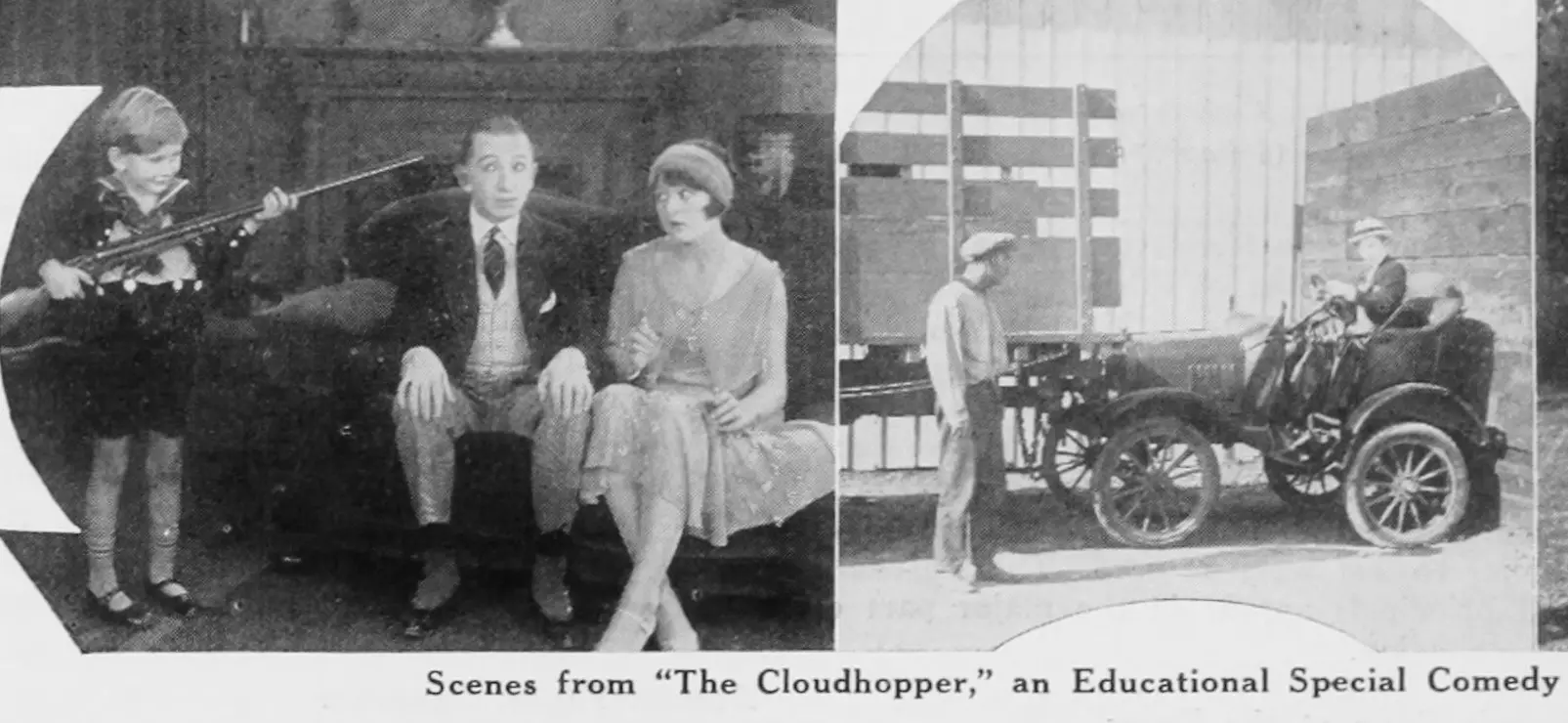
The biggest issue with The Cloudhopper is its pacing. The first twenty minutes are a domestic comedy set at a charity bazaar. We see Mickey McBan playing the 'mischievous little brother,' a trope that was already tired by 1925. The humor here is broad and repetitive. It feels like a standard short film that has been stretched to fit a feature runtime. It lacks the fairytale charm of Hansel and Gretel or the dramatic weight of The Leap of Despair.
Then, the secret formula is stolen. Suddenly, the film shifts gears into a spy thriller. This jarring transition is where many modern viewers might lose interest. However, those who stick around are rewarded with one of the most impressively filmed chases of the era. When Dorothy Dwan’s character takes to the air to pursue the crooks, the film finally finds its purpose. The cinematography becomes expansive, trading the cramped interiors of the bazaar for the wide-open, terrifyingly empty sky.
The climax of the film involves Semon climbing a rope ladder from one plane to another. There are no green screens here. There are no safety harnesses that can be digitally removed later. When you see the supports and wires give way while Semon is mid-air, you are watching a man survive a technical failure in real-time. It’s terrifying. It’s also incredibly funny, which is a difficult needle to thread.
The directing by Norman Taurog and Stephen Roberts (alongside Semon himself) utilizes the depth of field in a way that emphasizes the height. Unlike the more staged action in Brass Buttons or the episodic nature of The Adventures of Ruth, the stunts in The Cloudhopper feel integrated into the geography of the scene. You always know where the hero is in relation to the ground, which makes the stakes feel visceral.
The supporting cast, including Spencer Bell and Frank Alexander, provide the necessary friction for Semon’s antics. Bell, in particular, often had to play the 'scared' archetype that was common for African American actors of the period—a trope that has aged poorly and can be difficult to watch today. However, his timing is impeccable. The villains, played by Otto Lederer and Earl Montgomery, are appropriately menacing, though they lack the psychological depth found in films like The Woman from Nowhere.

The tone is a wild pendulum. One moment we are watching a child play a prank, and the next we are watching a man nearly plummet to his death. This lack of tonal consistency is Semon’s trademark. He wasn't interested in a 'cinematic journey.' He was interested in the next big thrill. In that sense, The Cloudhopper is more akin to a modern Michael Bay film than a Chaplin comedy. It is loud, expensive, and obsessed with its own scale.
Pros:
- Genuine, death-defying stuntwork that puts modern CGI to shame.
- Larry Semon’s dual-role allows for a wide range of comedic styles.
- Excellent use of aerial cinematography for its time.
- High energy that rarely flags once the chase begins.
Cons:
- The 'mischievous brother' subplot is grating and dated.
- The transition from the charity bazaar to the aerial chase is clumsy.
- Some supporting characters are reduced to tired racial or social stereotypes.
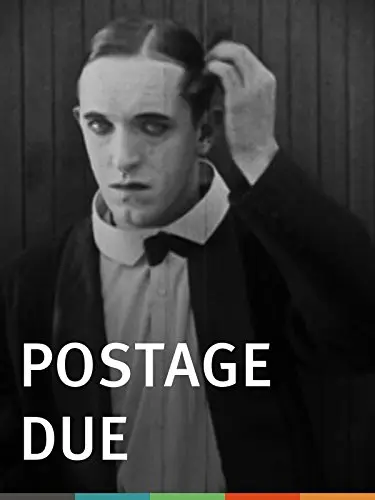
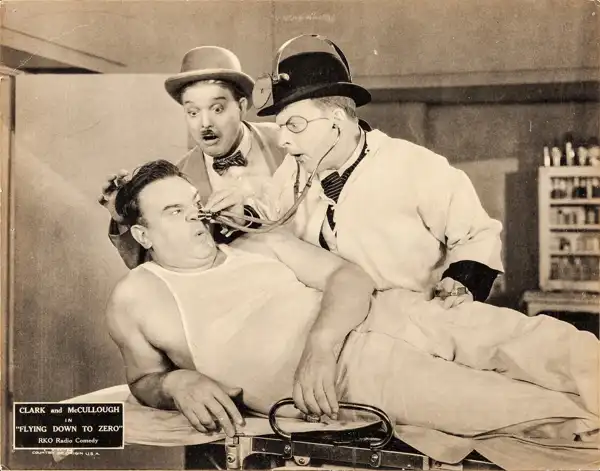
When compared to other films of the mid-20s, like the patriotic fervor of Heroes All or the gritty suspense of Terror Trail, The Cloudhopper feels remarkably light. It doesn't have the celebrity punch of A Few Moments with Eddie Cantor, nor the atmospheric mystery of A Manhattan Knight. Instead, it occupies a middle ground of 'spectacle comedy.'
While The Pursuing Vengeance or Toilers of the Sea might offer more traditional dramatic satisfaction, Semon’s film is more honest about its intentions. It wants to make you gasp and then make you laugh, in that order. It shares the frantic DNA of shorts like Hot and Cold, but with a much larger budget to burn.
The Cloudhopper is a flawed, exhilarating, and ultimately rewarding piece of silent cinema. It isn't a 'masterpiece'—the word is too heavy for a film this buoyant. It is, however, a masterclass in the 'thrill-comedy' genre that Harold Lloyd popularized and Semon weaponized. It works. But it’s flawed. The plot is a clothesline for the stunts, but when the stunts are this good, the clothesline doesn't need to be made of silk.
If you enjoyed the western-tinged comedy of Cupid the Cowpuncher or the maritime chaos of Ship Wrecked, you will find much to love here. Semon may have been forgotten by the general public in favor of the 'Big Three' (Chaplin, Keaton, Lloyd), but The Cloudhopper proves he was a titan of the sky in his own right. Don't go in expecting a deep story. Go in expecting to see a man defy death for the sake of a laugh. In the end, that’s all we can really ask of a silent clown.
IMDb —
1919
Community
Log in to comment.