DbcultAccessing Vault...
Cult Review
Senior Film Conservator
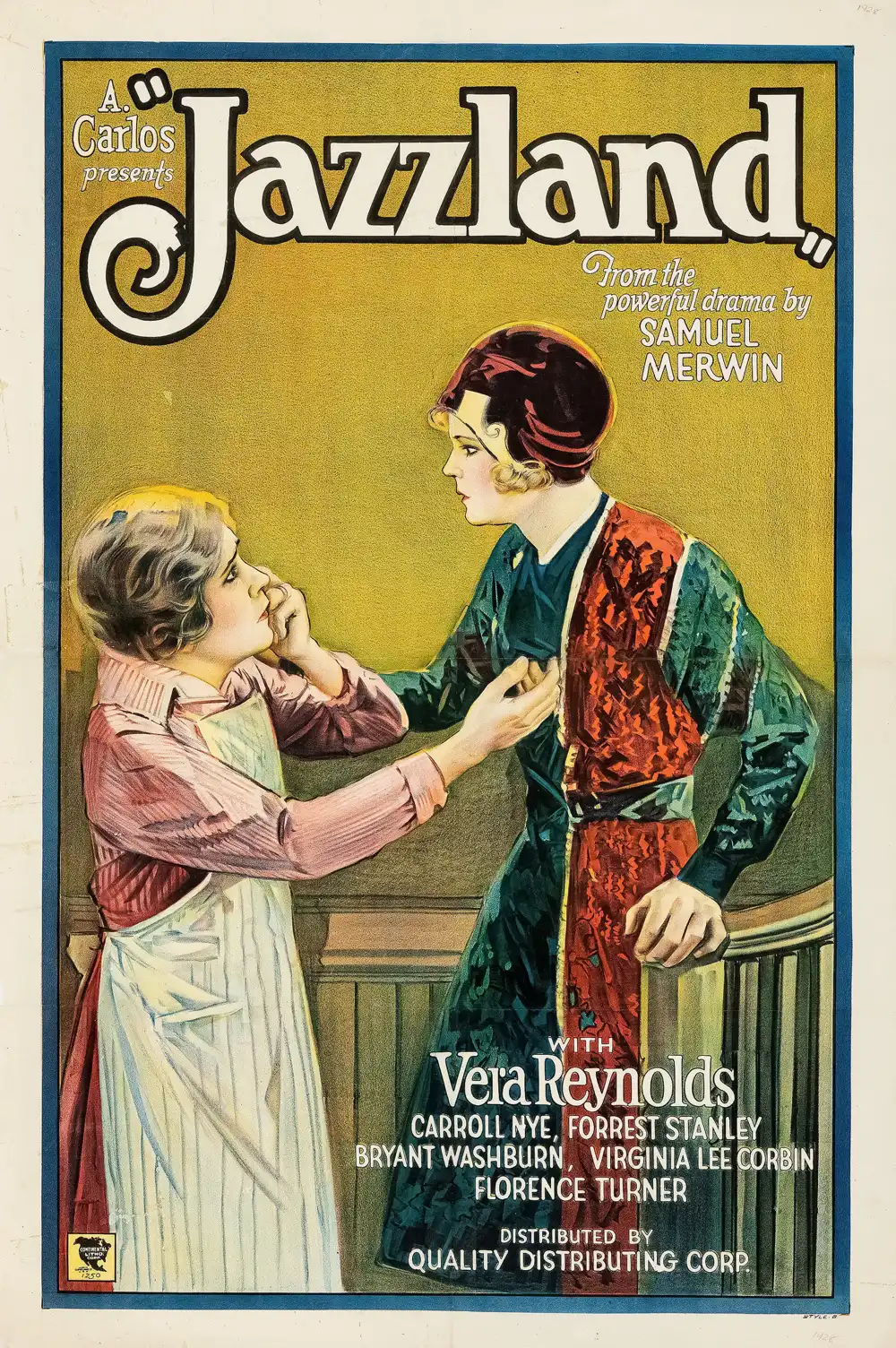
So, should you watch Jazzland today? Honestly, probably not, unless you’re a serious silent film devotee or just really, really curious about how 1928 cinema grappled with the 'Jazz Age'. For most people, it's going to feel like a slog. If you’re looking for a smooth, engaging narrative, this isn't it. But if you find charm in the rough edges, the peculiar acting choices, and the sheer historical weight of these old reels, then maybe, just maybe, you’ll find something to appreciate.
The film opens with a flurry of intertitles setting up the whole 'city life versus small town virtue' thing, which feels pretty standard for the era. Violet Bird, as the wide-eyed protagonist, tries her best. There are moments, especially in the early scenes, where her expressions are genuinely captivating, a real innocence there. You see her character, a country girl, stepping off the train into what's supposed to be the roaring heart of 'Jazzland,' and for a split second, the wonder in her eyes feels real. Then the camera lingers just a little too long, and it starts to feel like she's waiting for direction rather than reacting.
Carl Stockdale, playing the slick city fellow, is... well, he’s Carl Stockdale. His performance is a masterclass in silent film villainy, all exaggerated sneers and hand gestures that practically scream 'bad news.' It’s almost a parody, which is either brilliant or terrible depending on your mood. There’s one scene where he’s trying to charm Bird’s character, and he keeps running a hand through his hair, over and over. It’s supposed to be suave, I think, but it just looks like he’s got an itch he can’t quite scratch.
The pacing is where Jazzland really starts to buckle. There are these long stretches where not much happens, just characters looking at each other or walking across a room in what feels like real-time. Then, suddenly, a pivotal dramatic moment is rushed through in a series of quick cuts that leave you scrambling to catch up. It’s like the editor was working on two different movies at once. The big dance hall scene, which you’d expect to be the highlight, feels surprisingly inert. The extras are just sort of swaying, and the band, while miming a lot of energy, doesn't convey any actual 'jazz' spirit. It's more polite shuffling than roaring twenties.
Speaking of the sets, the 'Jazzland' club itself is a strange beast. It’s clearly a soundstage, but they’ve tried to inject some life with streamers and balloons. The problem is, the lighting is so flat that it all looks a bit sad and deflated, even when it’s supposed to be buzzing. You can almost feel the movie trying to convince you this place is exciting, but it never quite pulls it off. It’s less a hotbed of illicit fun and more like a poorly attended school dance.
Then there’s Edward Cecil. His character is supposed to be the moral compass, the good guy, but his earnestness borders on woodenness. There’s a scene where he confronts Stockdale, and the intertitles are full of righteous anger, but Cecil’s face just looks vaguely constipated. It’s a shame, because the film really needed a strong, sympathetic counterpoint to Stockdale’s hammy villainy, and Cecil just doesn't quite deliver it. You want to root for him, but it's hard to connect.
One particular shot, I remember, is a close-up of a telegram being delivered. The camera focuses on the trembling hand of the messenger for a solid five seconds before we even see the telegram itself. It’s a strange choice, trying to build suspense through a background character’s anxiety. It doesn't really work, just makes you wonder what’s up with the poor delivery guy.
And the costumes! Some of Violet Bird's dresses are stunning, genuinely beautiful examples of 1920s fashion, all beads and fringe. But then there are moments when Stockdale’s suits look oddly ill-fitting, like they were borrowed from a much larger man. It’s a small detail, but it pulls you out of the moment, makes you think about the wardrobe department rather than the drama unfolding.
The ending, without giving too much away, tries for a grand emotional climax. There's a chase, a near-tragedy, and then a resolution that feels both abrupt and entirely predictable. After all the meandering, the final beats feel rushed, as if they suddenly realized the runtime was almost up and needed to wrap things up quickly. You walk away not with a sense of catharsis, but more like, "Oh, okay, that happened."
So, Jazzland is a mixed bag. It's got flashes of genuine silent film artistry and some compelling period details, but it's often buried under a mound of uneven acting, peculiar editing, and a narrative that struggles to maintain momentum. It's a historical curio, a window into a specific moment in cinema, but not one I'd recommend for a casual Friday night viewing. Save it for a rainy afternoon when you're feeling particularly patient and academic.
IMDb —
1917
Community
Log in to comment.