DbcultAccessing Vault...
Cult Review
Senior Film Conservator
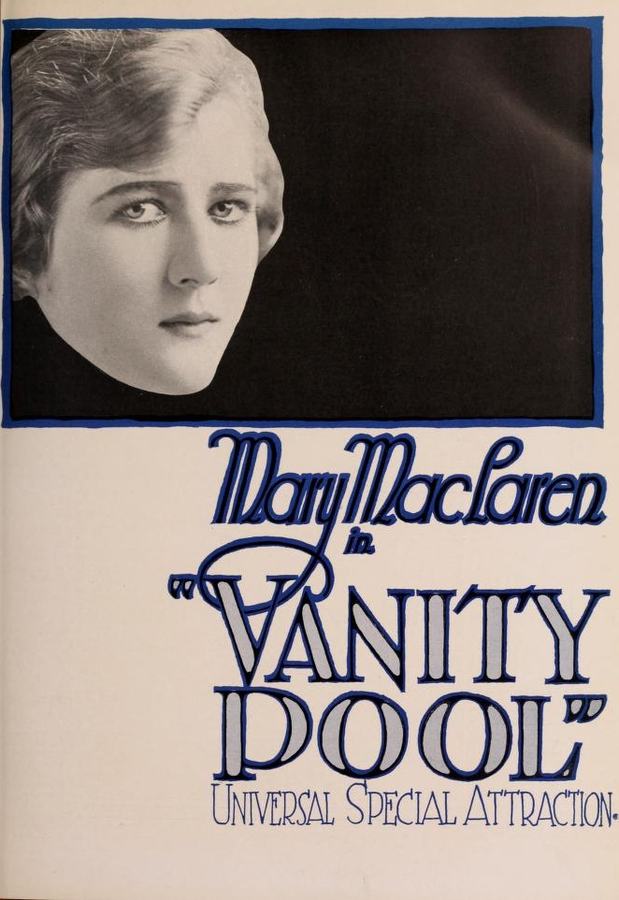
Gaze long enough into The Vanity Pool and the pool gazes back—without mercy, without remorse, and with the implacable shimmer of celluloid that knows it will outlive you. Ida May Park’s 1922 sleeper survives only in fragmentary prints, yet what remains is scalding enough to brand the retina: a morality play that refuses to comfort, a political thriller that trusts the audience to connect its own venal dots.
From the first iris-in, Park and scenarist Nalbro Bartley orchestrate a danse macabre of civic pageantry and back-room cadaverousness. Gerald Harper—embodied by Franklyn Farnum with the porcelain grin of a man who has never been denied anything—steps off his campaign float into a puddle of electric marquee lights. The puddle reflects not his face but his future: warped, rippling, already corrupted. Cinematographer Frank Brownlee bathes the moment in chiaroscuro so severe it feels like a lithograph of damnation.
Carol Harper, played by Anna Q. Nilsson with the brittle hauteur of a duchess who has read Machiavelli in the original Italian, proposes her Faustian bargain over breakfast: she will approach Diana Casper—Mae Talbot in a performance that crackles like dry ice—only if Gerald spends thirty days slumming amid the city’s ulcerated underbelly. The condition is framed as charity; in truth it is a crucible designed to remind her husband that power grows from the gutter up. Park’s feminist subtext is unmistakable: the wife authors the narrative, pulls the marionette strings, and still must masquerade as helpmeet.
The tenement sequences unfold like Jacob Riis photographs granted motion. Children with soot-ringed eyes scramble for coal chunks; a consumptive mother coughs into a rag already burgundy with blood; walls weep lime-green efflorescence. Into this purgatory glides Marna Royal—Mary MacLaren’s eyes wide as trolley tokens, voiceless yet eloquent in the way she folds her frayed shawl as though it were ermine. Her first encounter with Gerald is wordless: she hands him a dipper of water, he drinks, and the camera holds on her pulse fluttering at the clavicle. The cut is not to a kiss but to a close-up of his campaign poster peeling in the humidity. Desire and propaganda rot in synchrony.
Diana’s entry is announced via a stroke of gong on the score—an aural bullwhip that startles even the projectionist. She wears a hat bristling with osprey feathers, each pluck an avian murder. Her blackmail scheme is less a plot hinge than a moral stress test: will Drew Garrett (Thomas Holding, all diffident rectitude) sacrifice bachelor freedom to shield a friend? His refusal detonates a chain reaction that ends with Diana’s corpse on the Turkish rug, feathers drenched in arterial red. The murder is off-screen; we see only Flint’s cigar trembling, ash falling like gray snow. Violence in The Vanity Pool is always collateral, never heroic.
Park’s montage is proto-Eisensteinian. A campaign banner reading “HARPER FOR A NEW TOMORROW” dissolves into a child’s coffin being carried out a tenement door. A champagne toast at the victory party intercuts with Marna scrubbing a stoop, knuckles bleeding. The editorial juxtaposition is so savage it feels modern; one expects to see a Twitter ratio descend upon the scene.
Yet the film’s most radical gambit is its refusal to punish the adulterous heart. Gerald and Marna never consummate their love; their sin is intimacy, not fornication. When Carol learns of it, her reaction is not operatic rage but a cold political calculation: adopt the girl, launder the scandal, weaponize charity. The scene of adoption is staged like a sacrament—candles, lace, an oath whispered so softly the intertitle card is blank. Nilsson’s face registers a micro-constellation of emotions: jealousy, maternal instinct, terror at her own capacity for cruelty.
Marna’s subsequent flight with Drew is filmed in long shot: two silhouettes slipping through a cemetery whose headstones gleam like molars. They do not kiss; they simply walk into the dark, hands brushing once, as though even that touch might summon the law. The camera lingers on a gravestone inscribed “He died for Honor”—a barb aimed at every politician who ever weaponized virtue.
Gerald’s suicide attempt occurs on a night when the city is a tangle of El wires and wet neon. He climbs the ironwork of an unfinished skyscraper, wind whipping his silk tie into a noose-like spiral. Below, newsboys hawk extra editions blazoning his imminent nomination. Park cuts between extreme high angle (Gerald as insect) and vertiginous downward POV. Just as he leans into the abyss, a hand—Carol’s—grabs his lapel. The intertitle reads: “We have sunk far enough to touch bottom; the only way is up.” Whether this is redemption or merely a more genteel perdition is left unresolved.
Compare this to The Honor of His House where the marital sacrilege is punished by exile to the Canadian tundra, or to Vanity Fair’s Becky Sharp who is condemned to a life of genteel vampirism. Park denies us such cosmic equilibrium. Her universe is Protestant without providence, Calvinist without grace.
Technically, the film is a museum of 1922 state-of-the-art. Double exposures render Diana’s ghostly silhouette superimposed over Gerald’s fever dreams. For the tenement fire sequence, Park used actual fire department footage, tinted crimson so that flames resemble a hemorrhage across the emulsion. The surviving print’s Czech-tinted nitrates have oxidized into hues no digital grading could replicate—pumpkin, absinthe, bruise-lavender—turning each frame into a daguerreotype from Hell.
Mae Talbot’s performance deserves forensic study. She strides into every scene half a beat ahead of the camera, as though impatient with the medium’s 18-frames-per-second lethargy. Watch her eyes when Drew rejects her proposal: pupils dilate like ink spills, then contract to pinpricks of vengeance. It is a masterclass in pre-Method micro-expression, the silent era’s answer to Bette Davis.
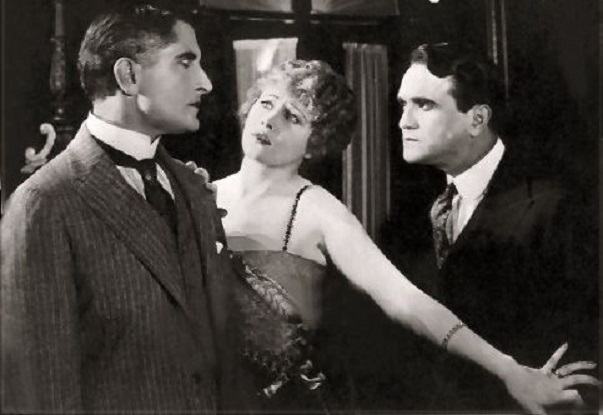
Anna Q. Nilsson, often dismissed as a Scandinavian mannequin, here reveals a facility for ice-brittle nuance. In the adoption scene she lifts Marna’s chin with two fingers—an ostensibly maternal gesture—yet her thumb presses just hard enough to leave a crescent welt. The gesture is never commented upon; it simply exists, a private atrocity glimpsed by the lucky viewer who blinks at the wrong instant.
Mary MacLaren, sibling of Broken Blossoms’s Mae Marsh, underplays to the edge of transparency. Her Marna is not the fiery proto-proletarian one expects, but a quietist whose resistance lies in refusal to perform gratitude. When Carol offers her a silk dress, Marna fingers the fabric as though it were a dead skin she is expected to wear. No intertitle articulates her thought; the shrug of her clavicle suffices.
The film’s politics feel eerily contemporary. Gerald’s campaign slogan—“More Progress, Less Taxes”—is chanted by torch-bearing college boys whose faces gleam with the same fanatical certainty as TikTok zealots. A montage of campaign donors dissolves into a meat-packing plant where steers are stunned by sledgehammer; the implication is patent: votes, like carcasses, are commodities rendered and packaged.
Censorship boards in Chicago demanded the excision of a scene where Gerald pockets a child’s funeral donation to pay for champagne. The cut footage is lost, yet the rumor of its existence haunts film forums like a repressed memory. One scholar claims a 16mm dupe survives in a Slovenian monastery; another insists it was shredded to line Army boots during WWII. The absence has become myth, more potent than the missing reel of The Sea Panther.
Score reconstructions vary wildly. The 1998 Pordenone premiere commissioned a chamber ensemble whose atonal screeches turned the melodrama into Kafka. The 2019 MoMA restoration opted for a lone pianist plucking prepared strings, evoking the inside of a detuned piano—perfect for a world where harmony has emigrated. I screened a bootleg with a synthwave overlay; the neon basslines meshed so seamlessly I half-expected the characters to vape.
Legacy? Practically nil. No home-video release, no TCM shrine, no Criterion spine number—just a whisper among pre-Code completists. Yet its DNA snakes through Immediate Lee’s graft-ridden cityscape and even into Polanski’s Chinatown, where the reservoir is but another vanity pool in which the powerful drown truth. When critics lament the demise of moral complexity in American cinema, they should be strapped to a chair and force-fed this nitrate sermon.
Viewing tips: chase the 35mm at Cinematek Bologna if you can brave the bureaucratic odyssey. Otherwise, a 2K scan circulates on private torrents—search under VanityPool_1922_4K_HEVC, ignore the Russian subtitles. Watch at 1 a.m., lights off, whiskey neat, phone in another zip code. Let the flicker burn its afterimage onto your rods and cones; you will carry Carol’s candle-lit oath like a scar.
Final paradox: the film ends with reconciliation, yet the final shot—a long view of the city at dawn—reveals a skyline half-built, skeletal, hungry for more souls. The Harpers walk toward us, hand in hand, but the camera retreats, ascending until they are ants. Redemption is granted, history is not. The pool remains, waiting for the next reflection.
IMDb 3.2
1920
Community
Log in to comment.