DbcultAccessing Vault...
Cult Review
Senior Film Conservator
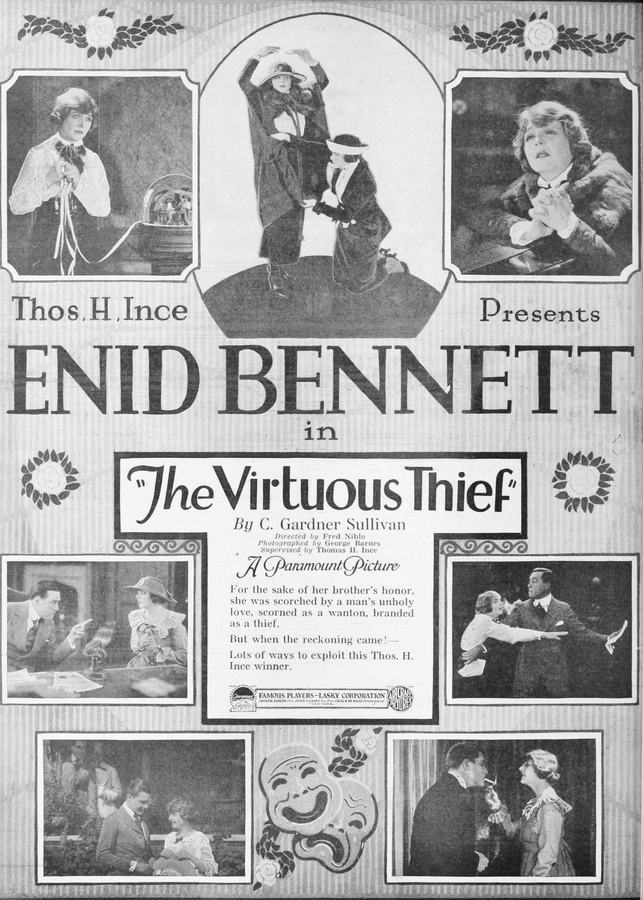
The cinematic landscape of the silent era often served as a crucible for exploring the profound moral quandaries that underpin human existence, and The Virtuous Thief stands as a particularly compelling testament to this tradition. It is a narrative steeped in the stark realities of familial obligation, class disparity, and the treacherous path a seemingly upright individual might be compelled to tread when faced with an existential threat to those they hold dear. The film wastes no time in establishing its central conflict, thrusting its protagonist, portrayed with a remarkable blend of vulnerability and nascent strength by Lucille Young, into an unenviable position. Her brother, a character brought to life by Lloyd Hughes with a nuanced portrayal of youthful indiscretion and subsequent remorse, commits an act of theft from his employer. This isn't merely a lapse in judgment; it's a seismic event that threatens to shatter the fragile foundations of their lives, promising a future marred by legal repercussions and social stigma.
The film's genius lies in its immediate elevation of stakes. Rather than allowing the narrative to dwell on the brother's initial transgression, it pivots to the sister's extraordinary response. Her decision to enter the very household from which the money was stolen, to work directly for the victimized employer, is an act of breathtaking self-abnegation. It's a calculated risk, a desperate gambit to mitigate the consequences for her brother, believing that proximity and perhaps even restitution might assuage the employer's wrath. This is where the film truly begins to unfurl its layers of psychological tension. The employer, initially a figure of authority and victimhood, quickly morphs into something far more sinister. His attempts to exploit Young's character, to leverage her vulnerable position for his own nefarious desires, injects a chilling sense of dread into the proceedings. The domestic space, traditionally a sanctuary, becomes a psychological prison, a gilded cage where the protagonist's virtue is under constant siege. The silent film medium, in its reliance on visual storytelling and the expressive power of its actors, excels at conveying this insidious threat without needing a single spoken word.
The narrative's most dramatic turn arrives with the sudden, violent demise of the employer. His murder throws the carefully constructed world of the protagonist into utter chaos. The very act of placing herself in such close proximity to the man, intended as a shield for her brother, now transforms her into the most obvious suspect. The film meticulously builds this sense of entrapment, using the visual language of silent cinema to convey the protagonist's mounting despair and the tightening noose of circumstantial evidence. The audience is invited to witness her struggle, to feel the weight of unjust accusation, and to question the true nature of justice in a world where appearances often supersede truth. This aspect of the plot resonates with the classic themes found in films like The Man Trap, where characters find themselves ensnared in situations not of their making, their reputations and freedom hanging by a thread. The Virtuous Thief, however, adds the profound layer of the protagonist's initial, noble intent, making her predicament all the more tragic.
The strength of The Virtuous Thief is undeniably bolstered by its compelling cast, whose ability to convey complex emotions and motivations through gesture, expression, and physicality is nothing short of masterful. Lucille Young, as the central figure, delivers a performance that is both delicate and fiercely resilient. Her eyes, often wide with apprehension or burning with resolve, communicate volumes, drawing the audience into her internal turmoil. She embodies the film's title, navigating a world that threatens to corrupt her, yet striving to maintain her inherent goodness despite the impossible choices she faces. Her portrayal is a masterclass in silent screen acting, demonstrating how a character's moral fortitude can be depicted without a single line of dialogue.
Lloyd Hughes, as her errant brother, offers a vital counterpoint. His initial guilt and subsequent fear are palpable, providing the catalyst for the entire dramatic arc. His performance anchors the familial bond that drives Young's character, making her monumental sacrifices understandable and deeply affecting. The dynamic between them is portrayed with an authenticity that transcends the silent medium, creating a powerful emotional core for the narrative.
The supporting ensemble further enriches the film's tapestry. Dorcas Matthews, in her role, adds another layer of intrigue, her character's motivations and loyalties often ambiguous, contributing to the pervasive atmosphere of uncertainty. William Conklin, as the ill-fated employer, masterfully crafts a character who is both outwardly respectable and inwardly depraved. His subtle shifts in demeanor, from benevolent patriarch to menacing predator, are crucial in establishing the escalating threat faced by Young's character. Niles Welch and Willis Marks, though perhaps in less expansive roles, contribute significantly to the film's texture, each adding distinct shades to the narrative's unfolding drama, whether as figures of suspicion or potential allies.
Enid Bennett and Andrew Robson round out the cast, each delivering performances that, while perhaps not central to the main thrust of the plot, provide essential context and emotional depth. Their interactions, however brief, serve to ground the narrative in a believable social milieu, highlighting the societal pressures and judgments that weigh heavily on the protagonist. The collective strength of these performances underscores the collaborative artistry inherent in silent film production, where every gesture, every facial expression, and every body movement had to convey meaning with utmost clarity and impact.
The intricate plotting and psychological depth of The Virtuous Thief owe a significant debt to the masterful pen of C. Gardner Sullivan. A prolific and influential screenwriter of the era, Sullivan was renowned for his ability to craft narratives that were both dramatically gripping and morally resonant. Here, his screenplay is a marvel of construction, meticulously laying out the dominoes of fate and circumstance that lead the protagonist down such a perilous path. The initial act of theft, the subsequent sacrifice, the predatory employer, the murder, and the ensuing accusation — each plot point is not merely an event but a carefully calibrated escalation of tension and moral dilemma. Sullivan's genius lies in his understanding of human nature, particularly the desperate lengths to which individuals will go for love and loyalty, and the corrupting influence of power and desperation.
His writing avoids simplistic heroes and villains, instead presenting characters caught in a web of choices, some noble, some regrettable, all with profound consequences. The employer, for instance, isn't just a stock antagonist; his actions are rooted in a believable, albeit despicable, sense of entitlement and opportunity. The protagonist's brother, too, is not merely a plot device but a character whose actions, however misguided, stem from understandable human frailty. This complexity in characterization, a hallmark of Sullivan's work, elevates The Virtuous Thief beyond a mere crime drama into a profound exploration of ethics and societal pressures. His ability to weave a narrative that maintains suspense while simultaneously delving into profound human questions is a testament to his enduring legacy as a screenwriter.
Beyond its thrilling plot, The Virtuous Thief offers a rich tapestry of thematic explorations that remain strikingly relevant. At its core, it is a searing examination of morality, particularly how virtue is tested and redefined under duress. The protagonist's actions, while initially driven by a morally laudable goal – saving her brother – lead her into morally compromising situations. The film asks us to ponder whether noble ends can justify questionable means, and how societal judgment often fails to account for the complex motivations behind human actions. This moral ambiguity is central to its enduring appeal.
Class disparity is another powerful undercurrent. The employer's ability to exploit Young's character stems directly from his position of power and wealth, contrasting sharply with the precarious existence of the protagonist and her brother. The theft itself is born from a perceived need, highlighting the economic pressures that can drive individuals to desperate measures. The film subtly critiques a system where justice can be swayed by influence and where the marginalized are often the first to be suspected and condemned. This exploration of class struggle and its impact on individual destinies is a recurring motif in silent cinema, finding echoes in many contemporary dramas.
The theme of sacrifice is perhaps the most poignant. The protagonist's willingness to jeopardize her own reputation and safety for her brother's sake is a powerful portrayal of unconditional love. It elevates her character beyond a mere victim of circumstance, transforming her into an active agent of her own destiny, however fraught that destiny may be. Her struggle against false accusation becomes a fight not just for her freedom, but for the vindication of her inherent goodness, a battle to prove that her actions, however unconventional, were born from a place of virtue.
Finally, the film delves into the elusive nature of justice. As the protagonist faces suspicion, the audience is compelled to question the mechanisms of legal systems and societal judgment. Is justice truly blind, or is it swayed by appearances, prejudice, and the power dynamics inherent in society? The Virtuous Thief, through its silent narrative, eloquently poses these questions, leaving a lasting impression on the viewer. The film's enduring power lies not just in its dramatic twists but in its profound engagement with these timeless human dilemmas, making it a piece of cinematic history that continues to resonate with contemporary audiences who appreciate the depth and artistry of early filmmaking. It's a reminder that even without spoken dialogue, a story can speak volumes about the human condition, challenging us to look beyond the surface and consider the complexities of morality and survival.
The cinematic tapestry of the early 20th century is rich with tales of human struggle and moral reckoning, and The Virtuous Thief undoubtedly holds its own as a significant contribution. Its ability to weave a complex narrative of crime, sacrifice, and suspicion, all while maintaining a profound emotional core, speaks volumes about the talent involved in its creation. From C. Gardner Sullivan's meticulously crafted script to the evocative performances of Lucille Young, Lloyd Hughes, Dorcas Matthews, William Conklin, Niles Welch, Willis Marks, Enid Bennett, and Andrew Robson, the film is a masterclass in silent storytelling. It invites viewers not just to observe a plot unfold but to engage deeply with the ethical dilemmas faced by its characters. The resonance of its themes – the corrupting influence of power, the complexities of justice, and the boundless nature of familial love – ensures its place as a thought-provoking piece that transcends its historical context. It is a film that challenges us to consider the true meaning of virtue when confronted with the harshest realities of life.
IMDb —
1933
Community
Log in to comment.