DbcultAccessing Vault...
3.8/10
Senior Film Conservator
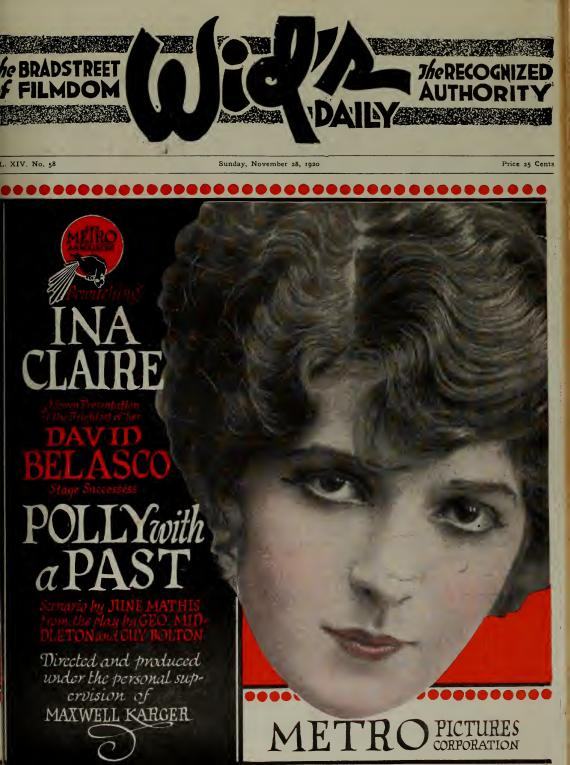
A definitive 3.8/10 rating for a film that redefined the boundaries of cult cinema. Polly with a Past remains a cornerstone of transgressive art.
The year 1920 marked a pivotal threshold in American cinema, a moment where the Victorian moralism of the previous decade began to yield to the irreverent, fast-paced sophistication of the Roaring Twenties. At the heart of this transition lies Polly with a Past, a film that deftly navigates the precarious waters of social performance and romantic stratagem. Directed with a keen eye for spatial dynamics and character-driven humor, the film serves as a luminous showcase for Ina Claire, whose transition from the Broadway stage to the silver screen brought a nuanced physicality that few of her contemporaries could emulate.
The premise of the film—a man feigning interest in a scandalous woman to capture the heart of a 'virtuous' one—is a trope as old as the theatre itself. Yet, in the hands of screenwriters June Mathis and Arthur J. Zellner, the narrative avoids the pitfalls of cliché by grounding its conflict in the absurdities of early 20th-century philanthropic obsessions. Myrtle Davis is not merely a love interest; she is a satirical personification of the 'reformer' archetype, a figure who finds more beauty in the broken than in the whole. This thematic preoccupation mirrors the moral landscape explored in The Mortal Sin, where the weight of social expectation often crushes individual agency.
Rex Van Zile’s plight is one of profound invisibility. He is too perfect, too stable, and therefore, entirely uninteresting to a woman who feeds on the drama of rehabilitation. The irony is palpable: to win the heart of the moralist, Rex must embrace the appearance of the immoral. This paradox is the engine that drives the film’s comedic momentum, reflecting a cynical view of romance that resonates even a century later.
While the film is ostensibly about Rex’s pursuit of Myrtle, it is undeniably Polly Shannon’s story. Polly represents the 'new woman' of the 1920s—industrious, ambitious, and possessing a fluid identity. Her willingness to play the role of the 'vamp' is not born of malice, but of a pragmatic desire to fund her operatic dreams. This drive for self-actualization through artistic pursuit draws a fascinating parallel to the themes found in The Prince Chap, where the domestic sphere and the artistic world frequently collide.
Claire’s performance is a masterclass in duality. As the maid, her movements are restrained, her expressions muted by the invisibility of her class. However, as the 'Polly with a Past,' she explodes into a kaleidoscope of continental affectations. The contrast is jarring and brilliant. She creates a caricature of French decadence that is just believable enough to fool the provincial American elite, yet transparent enough for the audience to delight in the ruse. This level of performative wit is something we also see in the stylistic flourishes of Remodeling Her Husband, which also interrogates the gendered power dynamics of the era.
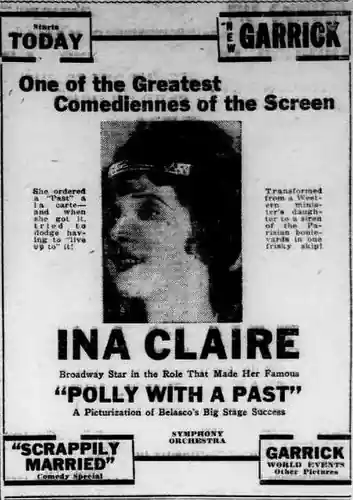
The film’s obsession with Paris as the ultimate signifier of culture and scandal is a recurring motif in silent-era comedies. For Polly, Paris is a site of liberation and professional elevation. For the wealthy characters, it is a source of anxiety and fascination. By adopting a 'past' associated with the French capital, Polly gains a social capital that her domestic status could never afford her. This subversion of class hierarchies is handled with a light touch, yet its implications are subversive. It suggests that 'class' is merely another costume that can be donned or discarded at will.
In this regard, the film shares a spiritual kinship with True Nobility, though it approaches the subject through the lens of farce rather than melodrama. The 'past' that Polly invents is a fiction, yet it produces very real consequences, eventually forcing the characters to confront the vacuity of their own social barometers.
One cannot discuss Polly with a Past without acknowledging the guiding hand of June Mathis. As one of the most powerful women in early Hollywood, Mathis had an uncanny ability to infuse scripts with psychological depth. The pacing of the film is meticulous, allowing the comedic misunderstandings to build with a rhythmic precision that feels almost musical. The cinematography, while typical of the period, utilizes the lavish interiors of the Van Zile estate to emphasize the claustrophobia of the upper class—a gilded cage that Polly is more than happy to rattle.
The visual storytelling here is a stark contrast to the more rugged, exterior-driven narratives like The Life and Adventures of John Vane, the Australian Bushranger. Instead of the vastness of the frontier, we are treated to the intricate, often treacherous landscape of the drawing room. Every glance, every adjustment of a lace cuff, and every tilted hat carries the weight of a spoken dialogue.
The theme of the 'reformed' character or the 'hidden' identity is a staple of the era. Consider Alias Jimmy Valentine, which deals with a criminal attempting to shed his history for a new life. In Polly with a Past, the dynamic is inverted: a virtuous woman adopts a criminal reputation to achieve a noble end. This inversion provides a critique of the superficiality of moral judgment. If a woman can so easily mimic the traits of a 'fallen woman,' then perhaps the distinction between the 'fallen' and the 'pure' is less about character and more about performance.
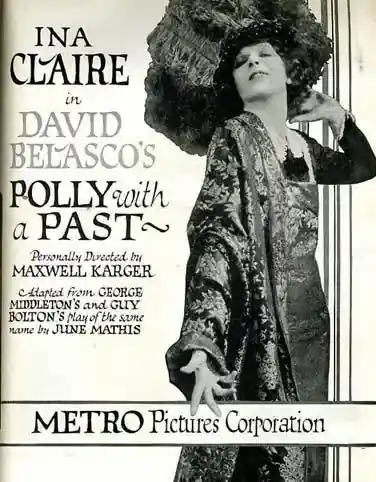
Furthermore, the film’s exploration of romantic disillusionment echoes the sentiments found in La marcia nuziale and Restless Souls. There is a palpable sense that the traditional avenues of courtship are failing the modern individual. Rex’s dejection at the start of the film is not just a personal failure but a failure of a social system that prioritizes 'projects' over people.
In many ways, Polly is the precursor to the 'screwball' heroines of the 1930s. She is an Innocent Adventuress, navigating a world of rigid rules with a wink and a smile. Her journey from the kitchen to the opera house (via a scandalous detour) is a testament to the era's belief in self-invention. The film doesn't punish her for her deception; instead, it rewards her for her ingenuity, a significant departure from the more moralistic endings of films like The Clouded Name or The Beautiful Lie.
The supporting cast, including a young Clifton Webb, provides a sturdy framework for the central conceit. Webb, long before he became the acerbic icon of Laura, displays a flamboyant charm that perfectly complements the film’s theatrical leanings. The ensemble works in harmony to create a world that feels lived-in, despite its heightened reality.
Polly with a Past is more than a mere curiosity of the silent era. It is a vibrant, witty, and surprisingly modern exploration of identity and the performative nature of love. It understands that we are all, in some sense, playing a part to satisfy the expectations of those around us. Whether it is Myrtle playing the saint, Rex playing the lover, or Polly playing the vamp, the film suggests that the only way to find truth is through the artifice of theatre.
For those who appreciate the evolution of the musical comedy, one can see the DNA of future classics like Tin Pan Alley in Polly’s aspirations. And for those interested in the darker side of destiny, the film provides a lighter counterpoint to the fatalism of Le destin est maître. In the end, Polly Shannon doesn't just get her past; she gets her future, and she does so on her own terms. It is a triumphant conclusion to a film that remains as refreshing as a cocktail at the dawn of Prohibition.
A note for the cinephile: While the film captures the levity of the era, it also serves as a poignant reminder of the ephemeral nature of fame. Ina Claire was a titan of her time, and in this film, her brilliance is preserved in amber, waiting to be rediscovered by a new generation of viewers who value wit over spectacle and character over trope.

IMDb 6.7
1929
Community
Log in to comment.