DbcultAccessing Vault...
5.9/10
Senior Film Conservator
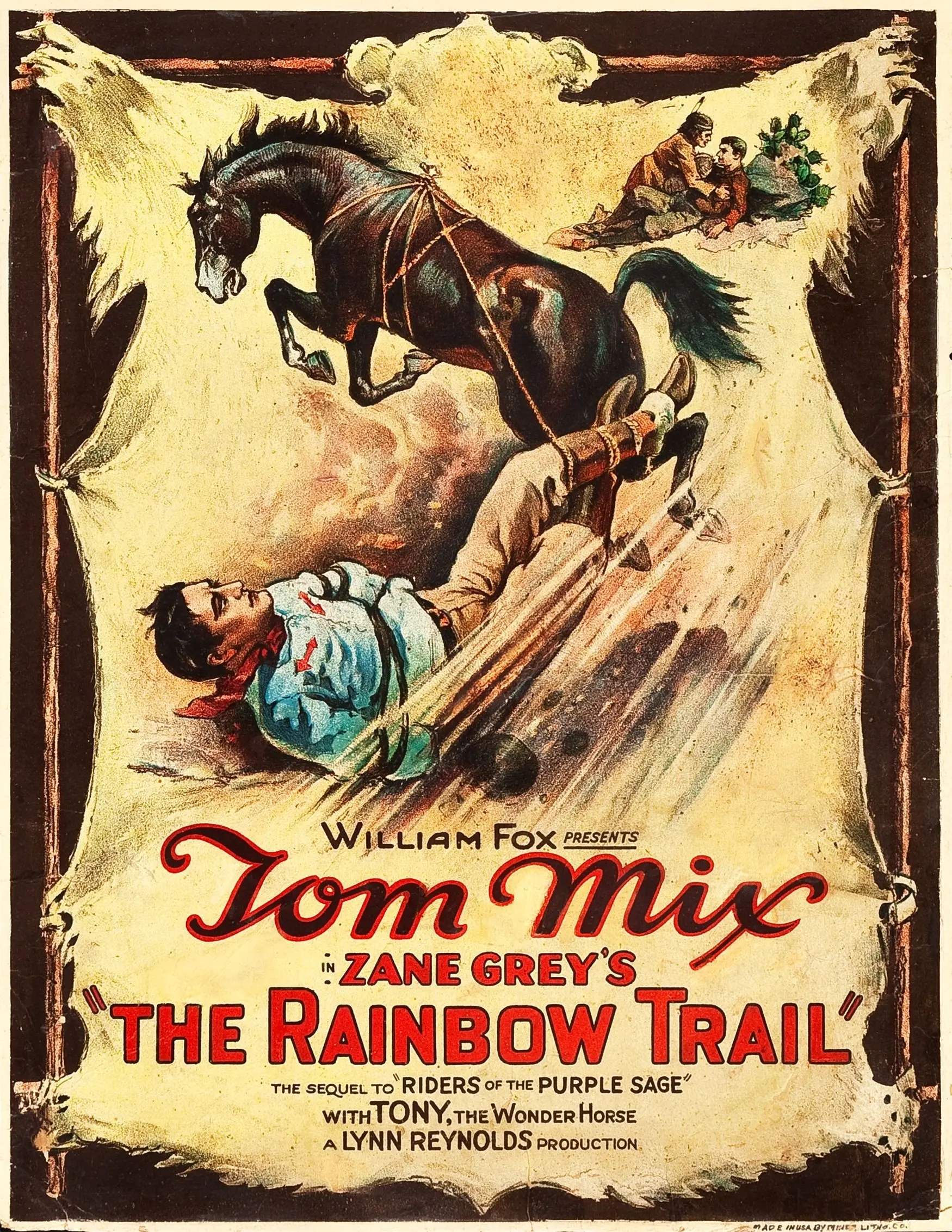
A definitive 5.9/10 rating for a film that redefined the boundaries of cult cinema. The Rainbow Trail remains a cornerstone of transgressive art.
Ah, the silent era! A time when narratives unfolded with a grandeur that transcended spoken dialogue, relying instead on the eloquent ballet of human expression, the sweeping vistas captured by innovative cinematography, and the evocative power of a well-crafted story. Among the many treasures from this bygone epoch, Zane Grey’s ‘The Rainbow Trail,’ brought to the silver screen in 1925, stands as a testament to the enduring appeal of the Western genre and the profound impact of a well-told tale of loyalty, sacrifice, and the untamed spirit of the frontier. This isn't just a film; it's a historical artifact, a vibrant painting rendered in sepia tones, beckoning us to witness a pivotal moment in cinematic history.
The narrative thrust of ‘The Rainbow Trail’ is immediately compelling, drawing viewers into a landscape as perilous as it is picturesque. Our protagonist, John Shefford, portrayed with a quiet intensity that belies the tumultuous journey ahead, embarks on a mission steeped in familial devotion. His objective: to locate his uncle, Venters, a man who, years earlier, had disappeared into the vast, unforgiving wilderness, only to resurface in a fabled, almost mythical hidden valley. This sanctuary, a haven from the encroaching clamor of civilization, was shared with Jane Withersteen and the youthful Fay Larkin. The very premise evokes a sense of romantic adventure, a yearning for discovery that resonates deeply even today, much like the intrepid spirit seen in films such as In Quest of a Kiss, where the pursuit of an elusive ideal drives the entire plot.
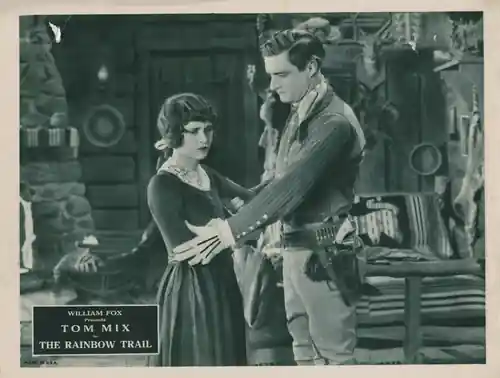
What Shefford uncovers, however, is far from the idyllic reunion he might have envisioned. Instead, he encounters Fay, now a woman of striking resilience and profound sorrow, brought to life with remarkable nuance by Carol Holloway. Holloway’s performance, a masterclass in silent film acting, conveys a world of unspoken pain and unwavering resolve. Fay’s revelation shatters any lingering illusions of peace: the sacred valley, once impenetrable, has been violated by the nefarious Willets and his ruthless band of outlaws. To safeguard the lives of Venters and Jane, Fay has made the ultimate sacrifice, agreeing to marry Willets, a grim pact that underscores the brutality and desperation of their predicament. This act of self-preservation, cloaked in a tragic decision, provides the emotional core of the film, elevating it beyond a simple Western adventure into a poignant drama of human endurance.
The cinematic tapestry of ‘The Rainbow Trail’ owes much to the vision of its creators. Based on Zane Grey’s beloved novel, the screenplay penned by Lynn Reynolds expertly translates the intricate character dynamics and the sweeping landscapes of Grey’s prose into a visual medium. Reynolds, known for his prolific work in the silent era, demonstrates a keen understanding of pacing and visual storytelling, ensuring that the narrative momentum never falters. Grey’s original narratives often explore themes of moral fortitude, the corrupting influence of greed, and the majesty of the American wilderness, all of which are faithfully rendered here. The film’s ability to capture the spirit of its source material, a hallmark of successful adaptations, speaks volumes about Reynolds's skill.
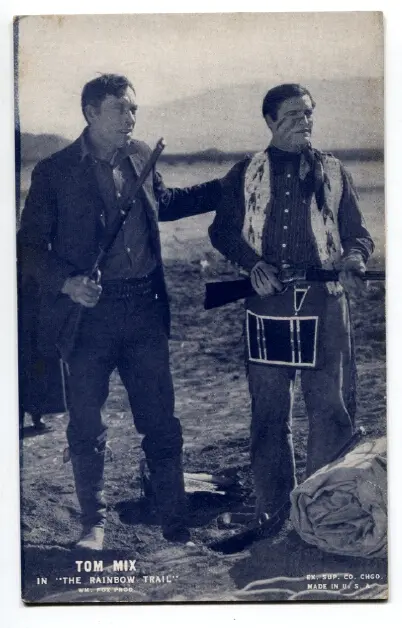
The ensemble cast, a mosaic of silent film luminaries, each contributes to the film's rich texture. Beyond Carol Holloway’s compelling Fay, we see George Bancroft bringing a formidable presence to the screen, his physicality and expressive face perfectly suited to the demands of the genre. Steve Clemente, often cast in villainous or imposing roles, undoubtedly adds a layer of menace, his very demeanor signaling danger. Mark Hamilton, Lucien Littlefield, Diana Miller, Anne Cornwall, and Vivien Oakland, among others, each play their part in populating this vibrant world, contributing to the sense of a community under siege. Even the legendary Tom Mix makes an appearance, bringing his signature charisma and equestrian prowess, often accompanied by his famous horse, Tony, who, in many ways, became a character in his own right, exhibiting an intelligence and presence that few animal actors have matched. The inclusion of Doc Roberts, Fred DeSilva, Fred Dillon, Mabel Ballin, and Thomas Delmar further rounds out a cast dedicated to embodying the rugged spirit of the West.
The Western, in its silent incarnation, was a genre of grand gestures and stark moralities. Without dialogue, emotions had to be writ large, actions had to speak louder than words, and the landscape itself became a character, reflecting the internal turmoil and external conflicts of the protagonists. ‘The Rainbow Trail’ excels in this regard. The sweeping shots of the desert, the treacherous mountain passes, and the isolated valley are not mere backdrops; they are integral to the narrative, amplifying the sense of isolation, danger, and the sheer scale of the challenges faced by John and Fay. The cinematography of the era, while lacking the technical sophistication of later decades, possessed a raw, visceral quality that perfectly suited the rugged themes of the Western. Directors had to be masters of visual storytelling, using composition, lighting, and editing to convey suspense, excitement, and despair.
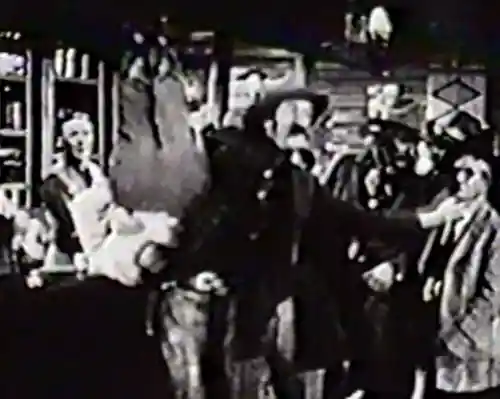
The chase sequences, a staple of the Western, are particularly effective in ‘The Rainbow Trail.’ The urgency of John and Fay's journey towards the valley, with Willets and his men hot on their heels, is palpable. The rapid cuts, the galloping horses, and the expressive faces of the actors create a thrilling sense of pursuit, drawing the audience into the heart of the action. These scenes harken back to the adrenaline-fueled sequences found in other silent action films, where the stakes were always clear, and the heroes’ resolve was tested against overwhelming odds. The film’s commitment to showing rather than telling is a powerful reminder of the unique strengths of silent cinema.
At its core, ‘The Rainbow Trail’ is a profound exploration of sacrifice and the arduous path to redemption. Fay's decision to marry Willets, an act of profound selflessness, echoes the difficult moral choices often presented in films of the era, such as A Soul for Sale, where characters grapple with the price of their integrity. Her plight ignites Shefford's determination, transforming his search for a lost relative into a mission to rescue the innocent and restore justice. This thematic depth elevates the film beyond a simple good-versus-evil narrative, imbuing it with a timeless resonance. The moral ambiguity, the desperation, and the sheer courage required to stand against tyranny are themes that transcend the specific setting of the American West.
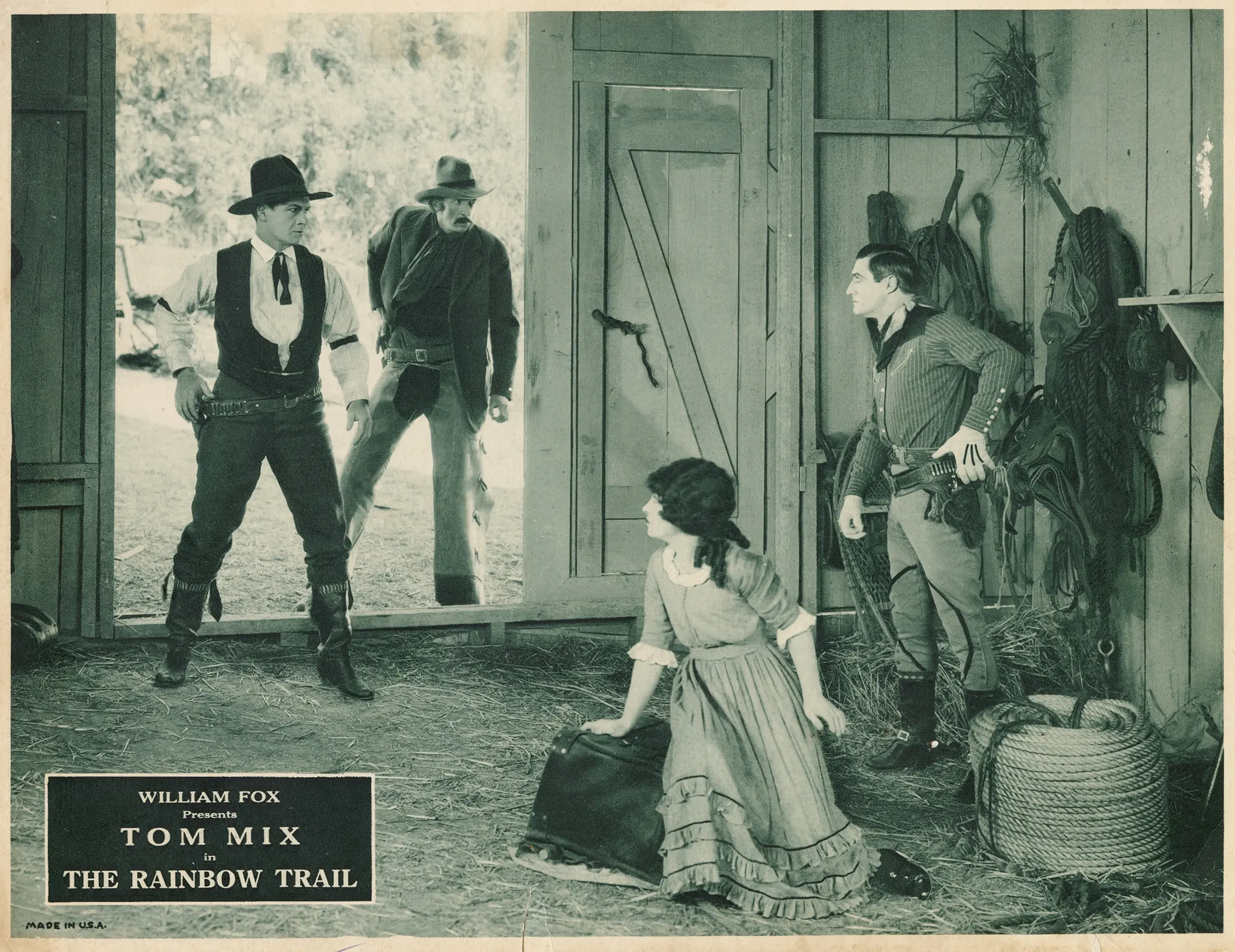
The hidden valley itself serves as a powerful metaphor. It represents purity, an untouched Eden, vulnerable to the encroaching darkness of human depravity. The struggle to protect it becomes a microcosm of the larger battle between civilization and savagery, a recurring motif in Zane Grey's works. The film beautifully captures this dichotomy, presenting the audience with both the breathtaking beauty of nature and the stark ugliness of human greed. The silent film medium, with its reliance on visual symbolism, is particularly adept at conveying these deeper layers of meaning, allowing the audience to project their own interpretations onto the unfolding drama.
When viewing ‘The Rainbow Trail’ within the context of its contemporaries, its strengths become even more apparent. While films like The Reckless Sex might have explored societal taboos and urban dramas, ‘The Rainbow Trail’ anchors itself in the rugged individualism and expansive landscapes characteristic of the Western. It shares a spirit of adventure and high stakes with films like The Great Gamble, where characters risk everything for a chance at a better future or to right a grievous wrong. However, ‘The Rainbow Trail’ maintains a unique identity through its blend of thrilling action, poignant romance, and the moral gravity derived from Zane Grey's original narrative.
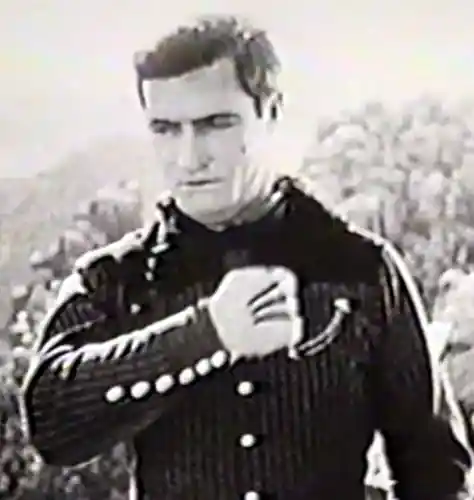
The portrayal of women, particularly Fay, is also noteworthy. While some films of the era, like The Girl from Bohemia, might have depicted women in more traditional or decorative roles, Fay is presented as a character of agency and profound inner strength, despite her desperate circumstances. She is not merely a damsel in distress but a catalyst for the hero's journey, her sacrifice driving the central conflict. This nuanced portrayal adds another layer of sophistication to the film, reflecting a growing complexity in character development even within the constraints of silent cinema.
‘The Rainbow Trail’ (1925) is more than just a historical curiosity; it is a vibrant piece of cinematic art that continues to resonate with audiences who appreciate the artistry of silent film. It reminds us of a time when stories were told with a raw, emotional power, unmediated by dialogue, relying instead on the universal language of human experience. The film's technical achievements, for its time, are commendable, from the impressive location shooting that captures the vastness of the Western landscape to the expressive performances that convey a spectrum of human emotion.
For enthusiasts of the Western genre, silent film, or simply compelling storytelling, ‘The Rainbow Trail’ offers a rich and rewarding viewing experience. It serves as a vital link in the chain of cinematic evolution, demonstrating how early filmmakers, with limited technology but boundless creativity, managed to craft narratives that captivated audiences and laid the groundwork for the cinematic language we understand today. Its themes of courage, sacrifice, and the relentless pursuit of justice are timeless, ensuring its place as a cherished artifact of a golden age of cinema. It is a testament to the enduring power of Zane Grey’s vision, Lynn Reynolds’s adaptation, and the collective talent of a cast and crew who understood how to make silence speak volumes.
So, if you ever find yourself drawn to the dusty trails and moral landscapes of early American cinema, seek out ‘The Rainbow Trail.’ You’ll discover a film that, despite its age, pulses with life, adventure, and a profound understanding of the human heart. It's a journey well worth taking, a silent epic that speaks volumes about the enduring spirit of the West and the magic of moviemaking.
IMDb 7.5
1934
Community
Log in to comment.