DbcultAccessing Vault...
Cult Review
Senior Film Conservator
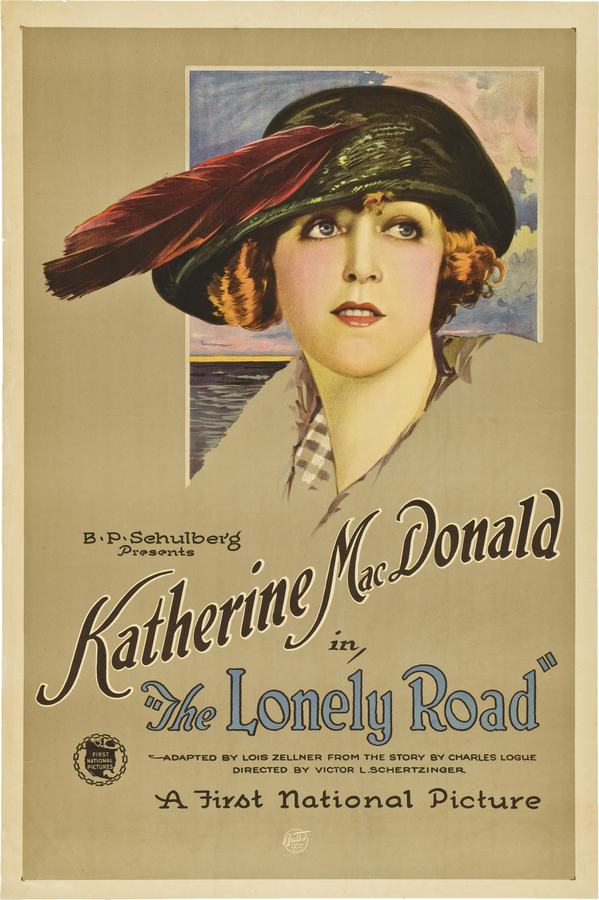
There's an undeniable allure to silent cinema, a captivating power in its reliance on visual storytelling and the nuanced artistry of its performers. Among these forgotten gems, 'The Lonely Road' emerges as a particularly resonant piece, a film that, despite its age, speaks volumes about timeless human struggles, particularly the intricate dance between personal ambition and societal expectation. Directed with a keen eye for emotional depth, this narrative, penned by Lois Zellner and Charles Logue, ventures into the often-unseen interior lives of its characters, exposing the fissures within a seemingly idyllic marriage and the quiet rebellion of a woman seeking her own path.
At its core, 'The Lonely Road' is a character study of Betty Austin, brought to life with compelling grace by the luminous Katherine MacDonald. MacDonald, a prominent figure of her era, imbues Betty with a quiet strength that belies her initial resignation. We meet Betty at a crossroads, poised between the vibrant promise of urban life and the conventional comfort of a rural marriage to Warren Wade, portrayed by William Conklin. It’s a choice many women of the time faced, a stark bifurcation of potential paths. Betty, in a decision that feels both pragmatic and profoundly sacrificing, chooses the latter, relinquishing her dreams of the city for what she hopes will be a fulfilling domestic partnership. This initial concession, however, sets the stage for a slow, agonizing disillusionment.
Conklin's Warren Wade is a fascinating antagonist, not overtly villainous, but rather a product of his patriarchal milieu. He embodies a pervasive societal expectation, insisting that Betty conform to the role of a 'clinging vine'—a delicate, dependent figure whose sole purpose is to adorn and support his life. This archaic ideal, while perhaps comforting to Warren, becomes a suffocating shroud for Betty's spirit. The film masterfully portrays this emotional constriction without needing extensive dialogue; MacDonald’s expressive eyes and subtle gestures convey a profound sense of entrapment and unfulfilled potential. It’s a familiar narrative, one echoed in countless stories of women pushing against the confines of their roles, from the more overtly dramatic struggles in A Woman's Fool to the internal battles depicted in A Hungry Heart, where women navigate societal pressures and personal desires.
The catalyst for Betty’s eventual rebellion is her career-girl chum, Leila Mead (Kathleen Kirkham). Leila represents the alternative path Betty abandoned, a life of independence and professional fulfillment in the bustling metropolis. Disgusted by Warren's emotional tyranny, Betty seeks refuge with Leila in the city, a move that is both an escape and a quest for self-discovery. It is here, amidst the anonymity and opportunity of urban life, that she encounters Dr. Devereaux, played by James Neill. Devereaux is not merely a romantic interest, but a figure who sees Betty not as a 'clinging vine' to be cultivated, but as an intelligent, capable individual. Their interactions, though subtly portrayed, hint at an intellectual and emotional connection that Betty desperately lacks in her marriage. This dynamic is crucial; it’s not about an illicit affair, but about Betty finding validation and respect outside the confines of her stifling domestic sphere. This search for individual identity in the face of societal expectations is a recurring theme in cinema, even in films with very different premises, such as the struggle for personal freedom in Bolshevism on Trial, albeit in a much grander, political context.
The cinematography, while typical of its era, effectively contrasts the bucolic, yet restrictive, rural setting with the liberating, if sometimes overwhelming, energy of the city. The visual language reinforces Betty’s internal conflict, the wide-open spaces of the countryside becoming synonymous with her confined existence, while the towering buildings and busy streets of the city symbolize boundless possibilities. The film’s pacing, a deliberate, measured rhythm, allows the audience to fully absorb Betty’s emotional journey, from quiet despair to burgeoning hope. The supporting cast, including Eugenie Besserer and Orville Caldwell, provide solid performances that anchor the narrative, fleshing out the world Betty inhabits.
The narrative takes a dramatic turn upon Betty's return home with Warren, when their young son (Stanley Goethals) suffers a severe injury. This crisis acts as the pivotal moment, forcing all characters to confront their true selves and motivations. Betty, driven by maternal instinct and a newfound confidence, immediately takes her son to Dr. Devereaux, trusting his medical expertise and perhaps, unconsciously, seeking solace in his understanding. Warren, predictably, follows, his mind clouded by a potent cocktail of fear for his child and festering jealousy. His accusation—that Betty has abandoned him for the doctor—is a stark revelation of his insecurity and his inability to see Betty as an autonomous being capable of independent action, even in a moment of dire urgency.
This confrontation is the emotional climax of the film, a raw exposure of the marital discord that had simmered beneath the surface. It’s a scene that, even without spoken words, crackles with tension, demonstrating the powerful performances of MacDonald and Conklin. The silent film's reliance on exaggerated gestures and facial expressions truly shines here, allowing the audience to fully grasp the depth of Betty’s anguish and Warren’s misguided fury. The resolution of their son’s injury, thankfully, brings not only physical healing but also a profound emotional reckoning for Warren. Witnessing Betty’s strength, her unwavering commitment to their child, and the professional integrity of Dr. Devereaux, he is forced to confront his own possessiveness and the detrimental impact of his 'clinging vine' philosophy.
The film’s conclusion, while perhaps idealistic, offers a compelling vision of marital evolution. Warren, having learned his mistake, grants Betty greater responsibility in managing family money matters. This isn't merely about finances; it's a symbolic acknowledgment of her intelligence, her capability, and her right to agency within their partnership. It signifies a shift from a patriarchal dynamic to one that, at least within the confines of their home, offers a semblance of equality. It's a progressive message for its time, suggesting that true partnership requires mutual respect and shared responsibility, a theme that resonates even today. This kind of nuanced portrayal of domestic shifts can be seen in other films that explore changing social norms, even those with different focuses, such as the social commentary found in Seeing America Thirst, which examines broader societal transformations.
Katherine MacDonald's performance is the undeniable anchor of 'The Lonely Road'. Her portrayal of Betty is a masterclass in subtlety and emotional transparency. She conveys Betty’s internal world with remarkable clarity, navigating the character's journey from hopeful bride to disillusioned wife, from desperate mother to empowered woman, with believable conviction. William Conklin, as Warren, manages to make his character both frustratingly flawed and ultimately redeemable, avoiding a one-dimensional villain portrayal. James Neill's Dr. Devereaux is a calm, reassuring presence, a symbol of professional competence and respectful admiration, providing a stark contrast to Warren's possessiveness. The ensemble, including Frank Leigh and Charles K. French, contribute to the film’s rich tapestry, creating a believable world for these deeply human struggles to unfold.
The film's exploration of gender roles, marital expectations, and the yearning for individual agency remains remarkably pertinent. In an era where women's roles were largely confined to the domestic sphere, 'The Lonely Road' dares to suggest that a woman's dreams and capabilities extend far beyond the narrow confines dictated by society. It champions the idea that true partnership is built on mutual respect and shared responsibility, rather than subjugation. This theme of personal growth and societal challenge is one that recurs throughout cinematic history, sometimes with a heavier hand as in The Empire of Diamonds, or with more romanticized notions as in Sweethearts, but always with a core focus on individual striving.
While not as widely remembered as some of its contemporaries, 'The Lonely Road' offers a valuable glimpse into the societal anxieties and burgeoning feminist sentiments of the early 20th century. Its narrative, while adhering to certain conventions of its time, manages to deliver a message that transcends its historical context. The film serves as a reminder that the struggles for personal freedom and equitable relationships are not new, but rather an ongoing human endeavor. The subtle direction, compelling performances, and thoughtful script elevate it beyond a mere melodrama, positioning it as a significant, albeit understated, contribution to silent cinema.
For enthusiasts of silent film, and indeed for anyone interested in the evolution of storytelling and social commentary through cinema, 'The Lonely Road' is a film well worth rediscovering. It’s a testament to the power of visual narrative to explore complex human emotions and societal dynamics, proving that even without sound, a film can speak volumes. It prompts reflection on how far we've come in understanding gender roles and personal autonomy, and how, in some ways, the echoes of Betty Austin's 'lonely road' still resonate in contemporary relationships. Much like the quiet perseverance found in films like En vinternat, the film's strength lies in its ability to evoke profound human experiences through understated yet powerful means. It’s a compelling piece that reminds us that the quest for self-fulfillment, even within the confines of established institutions like marriage, is a journey often fraught with challenges, but ultimately rewarding when undertaken with courage and conviction.
The enduring appeal of films like 'The Lonely Road' lies in their ability to mirror universal human experiences. Betty’s struggle for recognition and respect within her marriage is a narrative that transcends the silent era, finding echoes in modern relationships where individuals constantly negotiate personal desires against the backdrop of shared lives. The film subtly critiques the stifling expectations placed upon women, advocating for a more egalitarian partnership where both individuals contribute meaningfully, not just financially, but intellectually and emotionally. This forward-thinking perspective, embedded within a seemingly simple domestic drama, is what truly elevates the film and ensures its continued relevance for contemporary audiences. It's a powerful reminder that the 'lonely road' can, with courage and clarity, lead to a shared path of mutual understanding and respect. It's a journey that, much like the winding paths depicted in The Heart of the Hills, ultimately leads to a deeper, more authentic connection.
IMDb —
1921
Community
Log in to comment.