DbcultAccessing Vault...
5.6/10
Senior Film Conservator
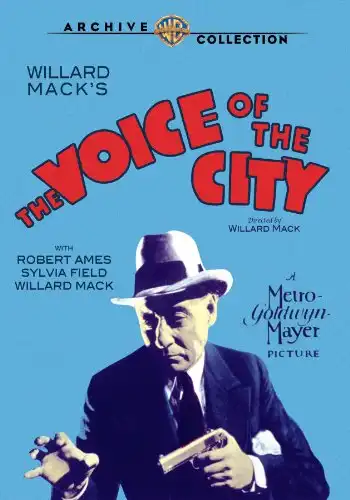
A definitive 5.6/10 rating for a film that redefined the boundaries of cult cinema. The Voice of the City remains a cornerstone of transgressive art.
So, is The Voice of the City worth a spin these days? Well, it depends on what you’re looking for. If you’re like me and fascinated by that strange, clunky period when movies first found their voices, then yeah, it’s a pretty interesting watch. But if you’re hoping for a smooth, fast-paced gangster flick, you’re probably gonna want to skip this one. It's more of a historical curiosity than a slick piece of entertainment.
Right from the start, you can tell this is an early talkie. The sound is… present, but not always *good*. Dialogue often feels a little too loud, then too quiet, almost like someone's constantly fiddling with the mic. You get these moments where actors seem to be shouting their lines, even when they're standing right next to each other. It’s kinda endearing in its own way, showing just how raw this new technology was.
The story kicks off with Joe, played by Robert Ames, escaping from prison. He’s innocent, of course. Framed by some shady characters. Then we meet Detective Ryan (Willard Mack), who’s hot on Joe’s trail. It’s this classic setup, but the film takes a bit of a turn. Instead of just a cat-and-mouse game, these two end up in a weird, unspoken alliance against the real villains. That’s the interesting part.
There’s this one scene, pretty early on, where Joe is trying to lay low, and he ends up in this crowded diner. The background noise, the clatter of dishes, it’s all so *loud*. It almost drowns out the actual dialogue. You can almost feel the sound engineer in the editing room, sweating, trying to figure out how to balance it all. It’s a real snapshot of the era’s technical growing pains. 🔊
Willard Mack, as Detective Ryan, has a very particular way of talking. It’s very deliberate, almost theatrical, even for 1929. He really enunciates every single word, like he’s performing for the back row of a stage play. It contrasts quite a bit with Ames’ Joe, who feels a bit more naturalistic in his desperation, which is kinda cool.
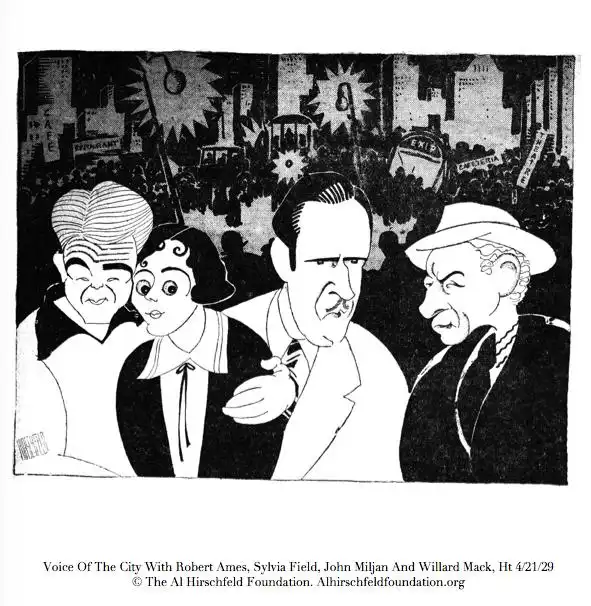
The pacing, though, it’s a bit of a mixed bag. Some scenes really drag. There’s a bit where Ryan is just interviewing some witnesses, and the camera just sits there. It feels like an eternity. Then suddenly, it picks up for a chase sequence, and everything gets frantic. It’s not a consistent rhythm at all.
One detail I found funny: the way they show the gangsters. They’re all these sneering, heavily-perfumed guys in dark suits. Very stock characters, but there’s this one guy, played by John Miljan, who keeps adjusting his tie even when he’s threatening someone. Like, *really* adjusting it. It's such a small thing, but it made him feel less like a threat and more like someone worried about his appearance. Priorities, right? 👔
The plot itself, about Joe clearing his name by working in parallel with Ryan, it’s a neat idea. You don’t see them explicitly team up, which is what makes it work. They're just both doing their own thing, and their paths keep crossing and helping each other out, almost by accident. It’s a subtle dance. Though sometimes the coincidences stretch belief a tad.
Beatrice Banyard, as the female lead – I think she’s Joe’s girl – she doesn’t get a whole lot to do. She mostly worries and looks distressed. It’s a shame, really, as her few moments of agency feel a bit tacked on. You can tell the movie’s focus is squarely on the men and their crime drama. 🕵️♂️
The ending, without giving too much away, feels a little… neat. Like everything suddenly clicks into place a bit too easily. After all the clunky sound and uneven pacing, you almost expect a messier resolution. But hey, it was 1929, maybe audiences wanted that tidy bow. I dunno.
So, yeah. The Voice of the City. It’s a window into cinema’s past. You can see the ambition, even if the execution is often a bit rough around the edges. It’s not going to blow your mind with its story or visuals, but as a historical artifact, a stepping stone for what movies would become, it's pretty **fascinating**. Give it a look if you’re into that kind of thing. Otherwise, there’s plenty of Racing Through or Alias Jimmy Valentine to check out from around the same era.
IMDb —
1918
Community
Log in to comment.