DbcultAccessing Vault...
6.6/10
Senior Film Conservator
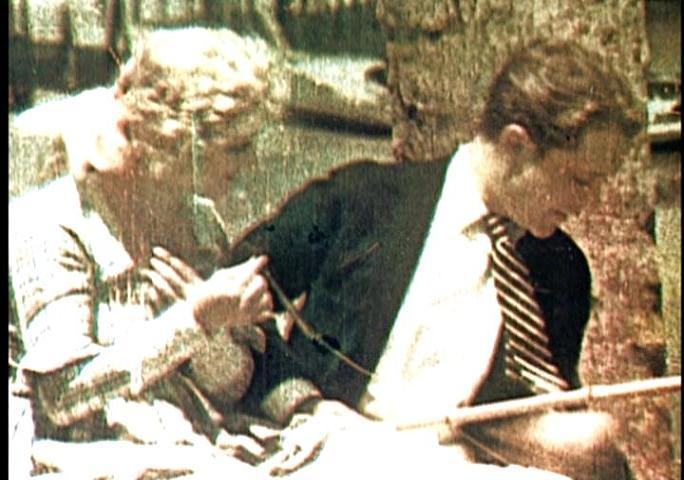
A definitive 6.6/10 rating for a film that redefined the boundaries of cult cinema. The Gulf Between remains a cornerstone of transgressive art.
Somewhere between the hiss of nitrate and the flicker of a carbon-arc lamp, The Gulf Between invents its own weather: briny, lacerating, impossible to shrug off like a mere melodrama.
Violet Axzelle, all collarbone and conviction, incarnates the captain’s daughter with a gait that seems to measure deck planks even when she traverses Persian rugs. Watch her ankles: they flex as though compensating for imaginary swells, a kinetic memory of rope ladders and squalls. Opposite her, Charles Brandt’s patrician lover carries the pallor of someone who has never been denied sunlight, insurance, or dessert; his cheekbones are heirlooms, polished by generational entitlement. When their hands first touch—accidentally, amid a tangle of dock lines—the contact crackles like static; the intertitle, instead of dialogue, flashes a single word in ornate type: "Unfurl". It is both command and prophecy.
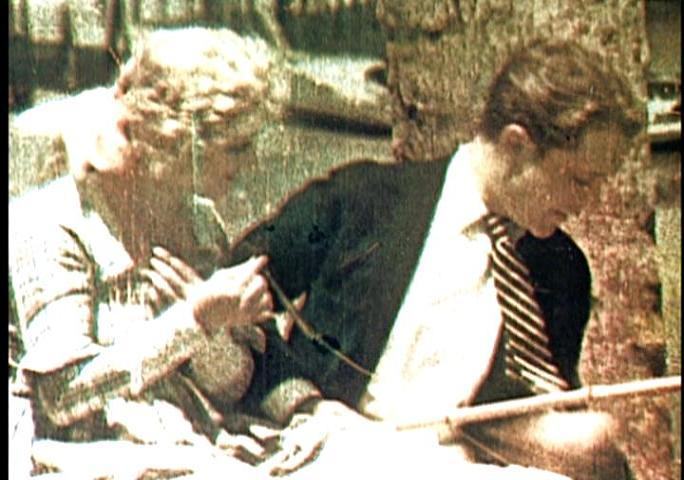
Director J. Parker Read Jr., armed with a Stevenson screen and a maritime Almanac, shoots the shoreline as though it were a crime scene. Note the sequence where moonlight drips through cirrus, pooling on the wet decks like spilled mercury; Axzelle’s pupils dilate to swallow the gleam, suggesting that even the cosmos conspires to expose her longing. The camera, tethered to no dolly tracks, sways handheld—presaging later newsreel immediacy—so that every frame arrives slightly seasick, a formal echo of the lovers’ vertigo.
Anthony Paul Kelly’s scenario, lean as a marlinspike, prunes away the usual Edwardian frippery. There are no garden parties, no comic valets, no last-minute wills. Instead, the conflict is hydraulic: class pressure meets tidal desire. The rich family’s disapproval manifests not in sneering caricature but in a single, devastating gesture—the replacement of the girl’s name on the ballroom chalkboard with that of a more "suitable" bride, the letters dusted over with talcum so that erasure itself becomes spectacle. The moment lands harder than any slap; it is annihilation by calligraphy.
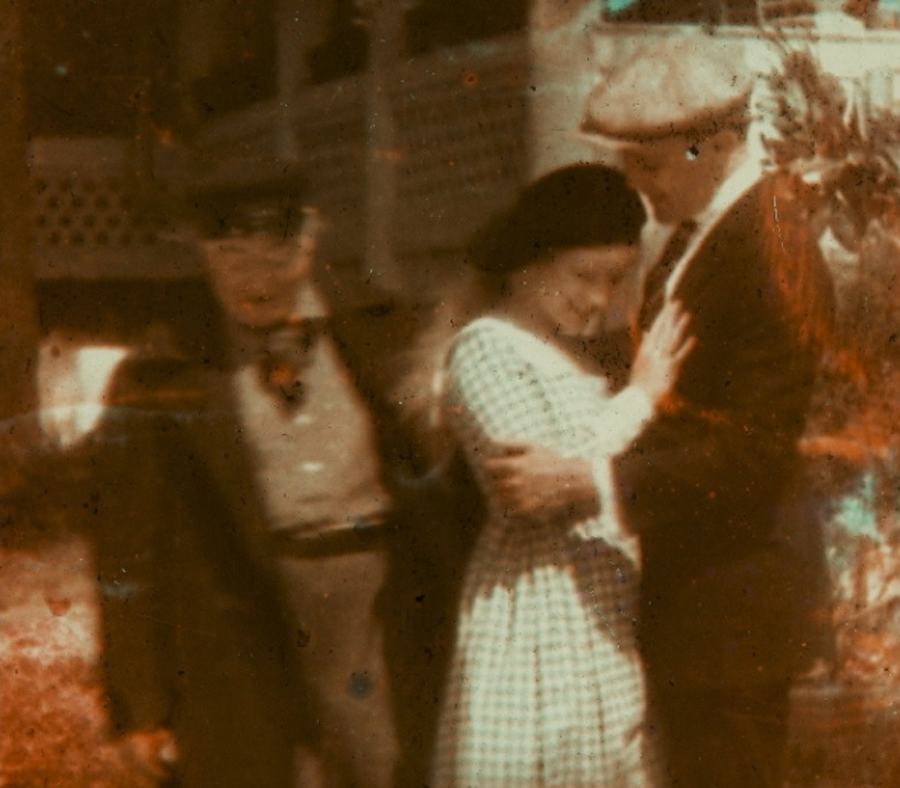
Virginia Lee, playing the coal-barony matriarch, utters no on-screen apology, yet her final close-up—eyes flicking toward the empty pier where the skiff once moored—registers a micro-tremor, the first hairline fracture in porcelain composure. It is the film’s most radical empathy: even the antagonist awakens to the magnitude of the gulf, too late, always too late.
Comparisons? Kelly’s script shares DNA with Kampen om hans hjärta in its refusal to coddle the aristocracy, yet the Nordic film cushions heartbreak within fjordic grandeur. The Gulf Between offers no such insulation; the Atlantic is not scenery but co-conspirator, a solvent that dissolves gold leaf from cufflinks and illusions alike. Likewise, the gendered economics of A Gentleman of Leisure feel positively quaint beside this film’s recognition that a woman’s body can be both vessel and cargo, signed over by fathers, insurers, and ultimately the tide.

Read’s tinting strategy deserves its own stanza. Exterior dusk shots are bathed in cobalt, as though the screen itself holds its breath underwater; interiors bloom in sickly amber, the color of coal-gas lamps and moral jaundice. When the lovers kiss inside the boathouse, the tint oscillates between the two palettes—an iris throbbing between sea and salon—turning a simple embrace into chromatic opera. Contemporary viewers accustomed to digital grading may smirk at the artifice, yet the effect is uncannily physiological: one feels the temperature drop, hears imaginary gulls, smells tar and kerosene.
Performance micro-accents linger long after the fade-out. Note Axzelle’s habit of rubbing rope fibers between thumb and forefinger whenever anxiety spikes—a gesture so understated it could be mistaken for idle fidgeting until you realize she is literally testing tensile strength, measuring what will hold and what will fray. Or watch Brandt’s pupils contract the instant he comprehends that love will cost him dynasty; the iris seems to calcify into onyx, a fossil of revoked privilege.

The supporting gallery refuses to collapse into types. Grace Darmond, as the jilted fiancée, delivers a single tear that rolls in slow motion, aided by projection speed, yet she dabs it away with the efficiency of a stockbroker canceling a bad trade—no hysteria, just portfolio adjustment. Niles Welch’s turn as the captain is all sinew and semaphore; when he finally confronts the lover’s family, he does not roar but recites longitude coordinates, letting numerals do the threatening. The rhetorical inversion is exquisite: geography as vengeance.
Scholars often slot 1916 melodramas between Victorian vestiges and modernist rupture; this film straddles the chasm without toppling. Its intertitles, rather than expository crutches, function like haiku—"She traded horizon for hallways"—inviting the spectator to co-author subtext. The editing grammar, meanwhile, anticipates Soviet montage: a cut from the girl’s empty rocking chair to the bilge water sloshing in the unmanned skiff creates a third meaning—absence as buoyant, lethal.
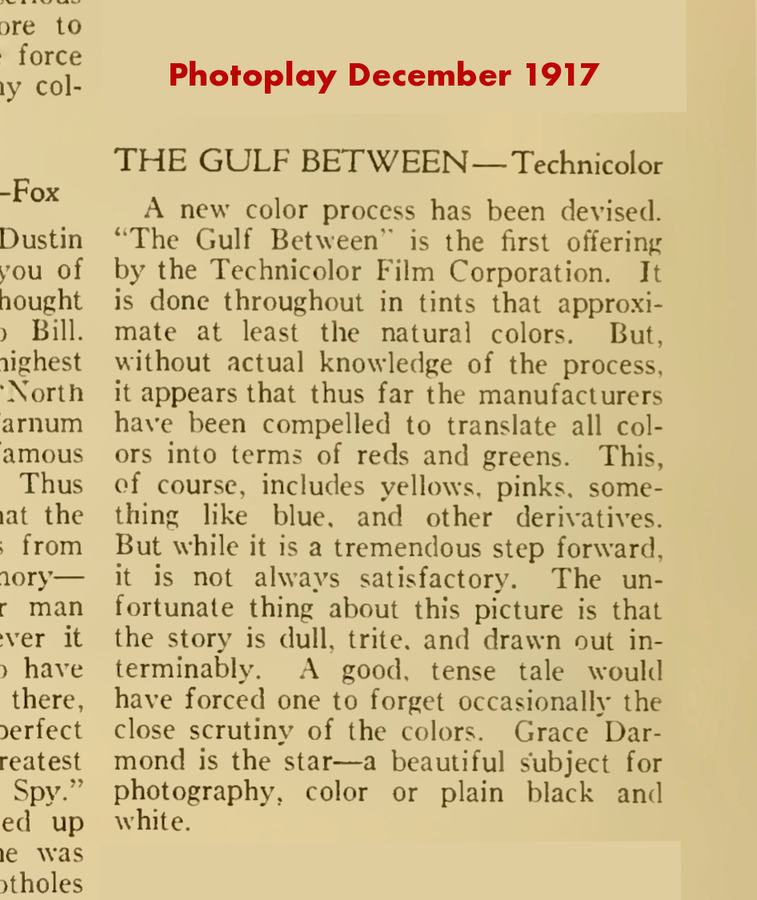
Criticisms? The third reel, constrained by budget, resorts to a studio tank rather than open ocean; the waterline never quite obscures the painted backdrop of clouds, momentarily puncturing verisimilitude. Yet even the artifice plays like Brechtian foreshadowing: the gulf is revealed as painted, the tragedy as authored, the heartbreak as premeditated by craftsmen under klieg lights.
Restoration efforts have salvaged a 35 mm print from the Library of Congress’s paper-roll collection; the tinting was resurrected via photochemical dyes matched to surviving ledger notations. The accompanying score—newly commissioned, though I heard a test pressing heavy on theremin and low-string tremolo—risks anachronism, yet the dissonance suits a film whose central tension is precisely the collision of epochs: sail versus steam, dowry versus destiny.
Viewing tip: watch it beside The Steel King’s Last Wish for a diptych on industrial titans devouring their young, or pair with Alone in London to trace how urban anonymity offers poorer women a different, no less cruel, brand of erasure. But let The Gulf Between close the evening; its final image—an unmanned skiff adrift, lantern still burning—will follow you onto the street, onto the subway, into your own uneasy dawn.
Verdict: a salt-crusted marvel that wrecks the tidy hull of heritage cinema, letting the brine of actual tragedy soak the velvet. See it on the largest screen you can find, preferably one with a whiff of popcorn oil and the faint metallic tang of projector dust—because the gulf it charts is not merely between classes, or lovers, or even tides, but between the safe shore of audience complacency and the undertow of our collective, unspoken complicity.

IMDb —
1921
Community
Log in to comment.