DbcultAccessing Vault...
7.7/10
Senior Film Conservator
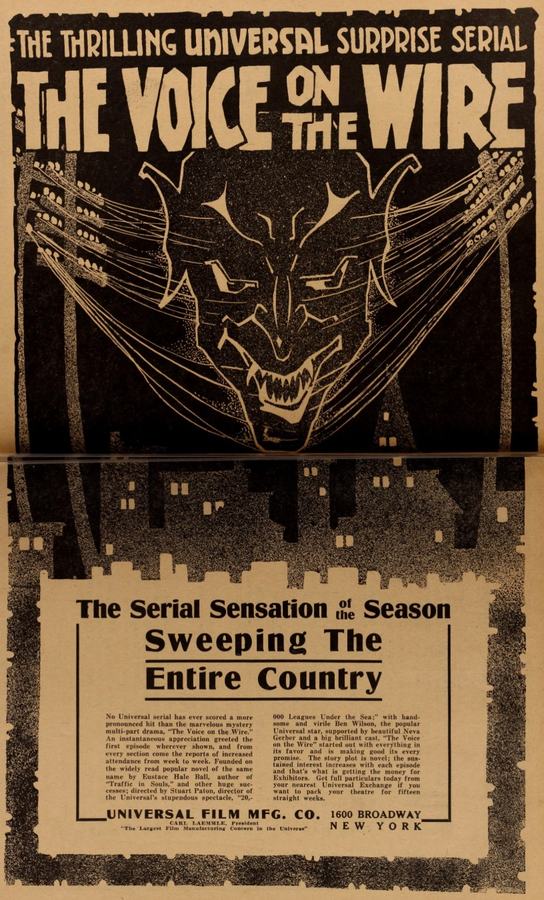
A definitive 7.7/10 rating for a film that redefined the boundaries of cult cinema. The Voice on the Wire remains a cornerstone of transgressive art.
The first time I saw The Voice on the Wire I was wedged into a folding chair at the Museum of Modern Art, eyes still buzzing from the sodium glow of Times Square outside. One flick of the projector later and 1920 Manhattan is reborn: streetlights smeared like butter on celluloid, jazz leaking from speakeasies, taxis nosing through the park like black-swanned gondolas. Then—bam—a disembodied hand creeps into frame, lacquered glove gleaming like beetle shell, and murders a bon vivant without ever revealing the arm it belongs to. The audience gasps, but not at the corpse; we gasp because the camera refuses to flinch, holding steady on negative space where a body should be.
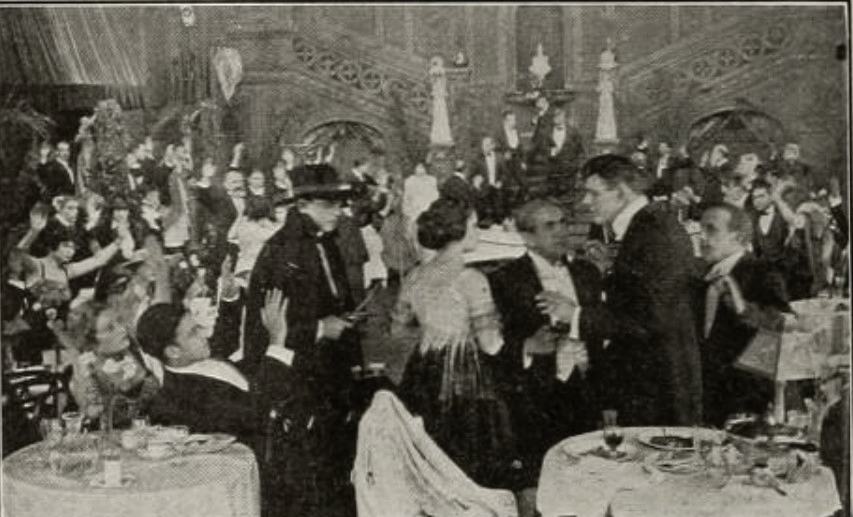
Silent serials usually age into camp, yet episode one of The Voice on the Wire drinks from the same existential well as Weimar paintings: every character is already a ghost, pallid under powder, waiting for a voice on the telephone to pronounce their expiration date. Alvin Van Cleft, whose surname alone drips with Gatsbyan entitlement, exits a café with chorine Polly Marion—note the marquee-ready alliteration—and steps into a taxi that might as well be Charon’s ferry. The driver never speaks; the meter ticks like a metronome for doom. When the lethal hand appears, director Ben F. Wilson withholds every conventional cue—no iris-in, no explanatory title card—just a cutaway to Polly’s feather boa unfurling like a dying bird.
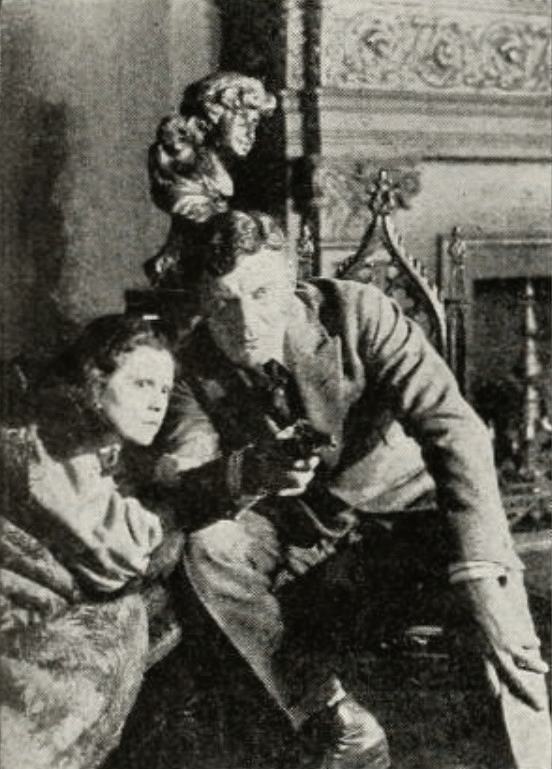
The murder method is billed as Sen Si Yao, the Japanese death punch, a flourish that lets the film peddle yellow-peril myth while coasting on the audience’s orientalist ignorance. Never mind that the technique is anatomically suspect; the film needs an exotic label to render the inexplicable plausible. Enter John Shirley, amateur criminologist who collects poisons the way other men collect stamps, opining that Van Cleft’s heart was stopped by a single pressure-point blow. His deduction lands with the thud of era-appropriate racism, yet the screenplay by Eustace Hale Ball and J. Grubb Alexander isn’t content to leave prejudice unexposed. Later reels reveal the assassins as white thugs in shoe-polish makeup, exposing the real horror: not foreign devils, but homegrown predators weaponizing fear of them.
Charles Dorian plays Van Cleft with the louche swagger of a man who tips in ten-dollar bills and dies mid-smirk. His exit, a narcoleptic slump against taxi leather, is a master-class in minimalist expiration. Josephine Hill’s Polly Marion has the thankless role of professional screamer, yet watch her fingers worry the feather fringe—she conveys terror through accessory abuse, an acting choice that feels oddly modern. Howard Crampton’s Professor Montague steals the episode: watch him powder his temples silver, don a workman’s cap, and vault into the night like a cross between Der Golem and a Yale fencing coach. When he drags two assailants to the precinct, the intertitle reads: “Science and sinew make a formidable jail delivery.” Corny? Absolutely. But Crampton sells it with the smug grin of a man who’s read Nietzsche and decided the Übermensch moonlights as a vigilante.
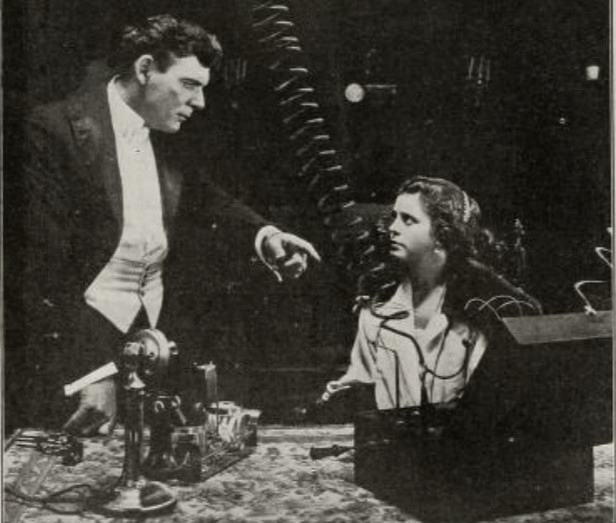
Cinematographer L.M. Wells shoots New York as a series of oblong shadows: alleyways sliced by elevated tracks, hospital corridors yawning like esophagi. The camera lingers on geometric details—taxi wheel spokes, the chevron floor of the detective agency—so that every composition feels like a warning from the Bauhaus god of death. When Shirley receives a telephone threat, Wilson frames the apparatus center-screen, the receiver dangling like a hanged man. The cord coils across the desk in a perfect spiral, a visual motif that foreshadows the serial’s obsession with unseen connections.
Because this is 1920, the titular “voice” manifests via intertitles rendered in jittery font that mimics telephone wire static: “YOUR FATHER IS THE THIRD. YOU WILL BE THE SEVENTH.” Each card vibrates on-screen a beat longer than necessary, simulating the echo of a whisper you can’t quite locate. The absence of actual audio heightens the paranoia; every spectator becomes an eavesdropper straining to hear the killer’s timbre, a ghost frequency that exists only in imagination.
Place The Voice on the Wire beside Trapped by the London Sharks and you’ll notice both exploit urban labyrinth as antagonist, yet the London film treats poverty as a carnival while Wilson’s Manhattan is a velvet-lined sarcophagus. Contrast it with La fièvre de l’or where gold fever unravels moral seams; here the currency is information—who knows, who tells, who dies before they speak. Meanwhile The Cold Deck shares the poker-faced nihilism but replaces urban paranoia with frontier fatalism; both films agree the universe deals from a stacked deck, yet Wilson’s serial insists the dealer is on the telephone line.
Women in episode one function as switchboards for male anxiety: Polly Marion’s scream literalizes the circuit-breaker that propels the plot. Still, Wilson allows her a sliver of agency—note how she pockets Van Cleft’s cigarette case before the cops arrive, a petty larceny that doubles as evidence. Elsewhere, chorus girls form a lattice of potential victims, their bodies mapped in the killer’s ledger. The camera ogles their legs yet lingers on their eyes, hinting that the male gaze will be punished as savagely as the male wallet.
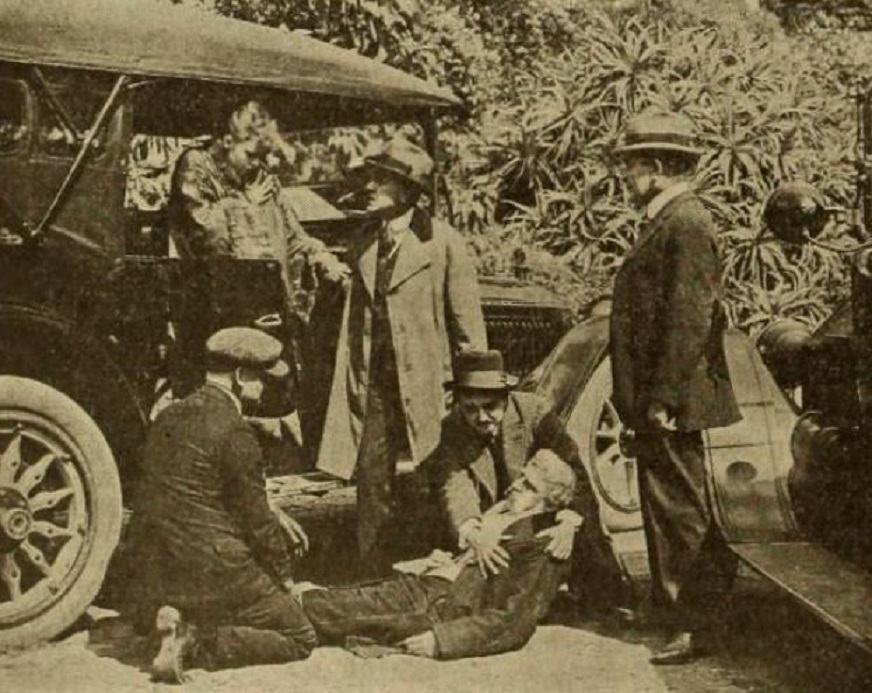
Frank Tokunaga appears briefly as a Japanese herbalist, a role steeped in exotic exposition. His screen time clocks under thirty seconds, enough to dispense cryptic wisdom about pressure points, yet the film needs his Otherness to authenticate the death-punch lore. The irony: Tokunaga, a Japanese actor, is trotted out to validate a Caucasian screenwriter’s fabrication, embodying Hollywood’s habit of outsourcing authenticity to the very people it maligns.
Episode one ends with Montague victorious, but the voice on the wire promises further carnage. The narrative snake eats its tail: every answer spawns two questions, ensuring Monday’s matinee returns next week. Modern prestige television owes its life to this rhythm; binge culture merely removed the seven-day ache.
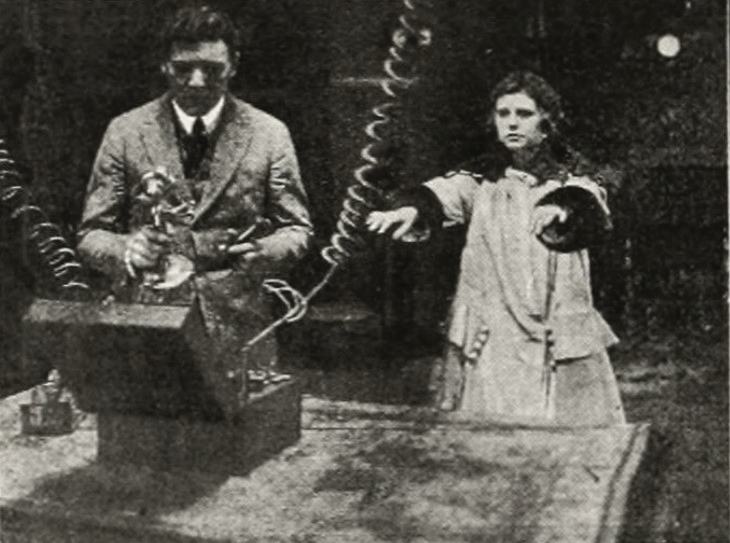
The print MoMA screened was reconstructed from a 16 mm reduction positive discovered in a Buenos Aires basement, water-stained and shrunken. Digital artisans cloned missing frames, grafting textures from contemporaneous Kodak samples. The result: a fluctuating grayscale that ripples like silk in rain, a reminder that film history is stitched together with blind faith and forensic guesswork.
Wilson’s opener is less whodunit than who-will-do-what-to-whom-next, a narrative strategy that flattens morality into mechanics. Yet within its clockwork cruelties lies a pre-code honesty: the world is run by voices you cannot trace, money you cannot see, and fists that belong to no one. Ninety minutes in, you exit the cinema hearing imaginary telephone rings, each peal a reminder that every era has its disembodied power—radio, algorithm, surveillance feed—calling to say you might be the next number in the ledger. The Voice on the Wire may wear the mask of antique cliffhanger, but its heart pulses with perennial dread: that somewhere a stranger already knows your name, your weakness, and the exact price of your pulse.
IMDb 6.2
1914
Community
Log in to comment.