DbcultAccessing Vault...
Cult Review
Senior Film Conservator
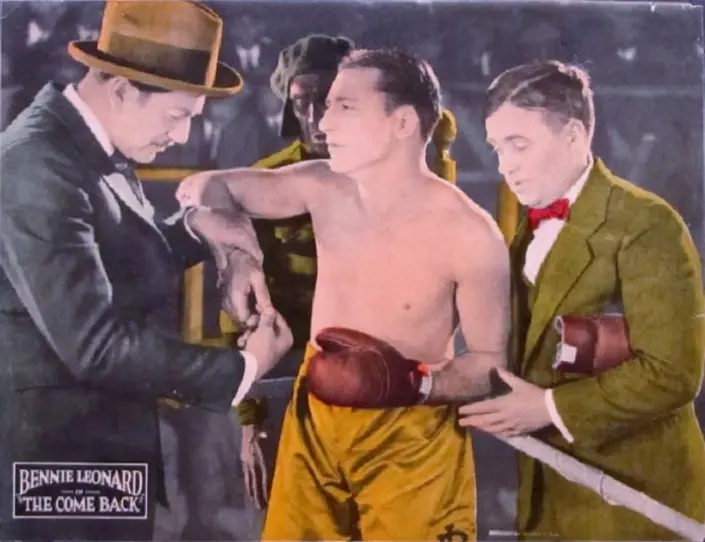
Is The Come-Back worth watching today? Short answer: Yes, but only if you view it as a historical artifact of athletic celebrity rather than a modern cinematic masterpiece. This is a film for those who appreciate the raw, unpolished energy of the silent era and the specific charisma of real-life sports legends.
This film is specifically for boxing historians and silent film completists who want to see a world-class athlete translate his physical grace into visual storytelling. It is emphatically not for those who require fast-paced editing, complex dialogue, or a plot that deviates from the standard 'underdog redemption' template.
1) This film works because it leverages the genuine physical talent of Benny Leonard, making the fight sequences feel more authentic than most contemporary boxing films.
2) This film fails because the narrative structure is painfully predictable, leaning heavily on tropes that were already becoming clichés in 1925.
3) You should watch it if you want to see how early cinema attempted to bridge the gap between real-world sporting fame and fictionalized drama.
Benny Leonard was not an actor by trade, and it shows. But in the context of 1925, that was almost the point. There is a specific kind of magnetism in his movement. When he is in the ring, the film transcends its low-budget roots. You aren't watching a performance; you are watching a master at work. His footwork is rhythmic, almost musical. It’s a stark contrast to the often-stiff acting found in other films of the period like The Devil's Trail.
The camera seems to adore Leonard’s physicality. Director Jack Perry (who also appears in the film) understands that the audience didn't pay for Shakespearean monologues; they paid to see the 'Ghetto Wizard' move. There is a scene early in the second act where Leonard is training in a dimly lit gym. The way the light catches the sweat on his shoulders provides a level of realism that feels decades ahead of its time. It’s gritty. It’s real. It works.
However, when the gloves come off, Leonard struggles. His emotional range is limited to a few variations of 'determined' and 'stoic.' Compared to the more nuanced performances in Her Love Story, Leonard feels like a cardboard cutout. But perhaps that’s an unfair comparison. He wasn't hired to cry; he was hired to hit.
The cinematography in The Come-Back is surprisingly effective for a mid-20s production. While many films of the era, such as The Marriage Maker, relied on static, stage-like wide shots, this film attempts to get inside the action. During the final fight, the camera moves with a frantic energy that mirrors the chaos of the ring. It’s not 'shaky cam' in the modern sense, but there is a palpable vibration to the frame.
The use of shadows is also noteworthy. The gym and the arena are portrayed as spaces of both glory and darkness. There is a sense that the boxing world is a trap, a sentiment echoed in later films like The Boy in Blue. The lighting design by the uncredited crew manages to make the ring feel like an island under a spotlight, isolated from the rest of the world. It’s a powerful visual metaphor for the loneliness of the athlete.
Pacing, however, is where the film stumbles. The middle section drags significantly as it tries to build a romantic subplot between Leonard and Diana Allen. Allen is a capable actress, but her character is written with zero agency. She exists solely to be worried or to be a prize. This lack of character depth makes the non-boxing scenes feel like filler. You find yourself checking your watch, waiting for the next round to start.
If you are looking for a deep, philosophical exploration of the human condition, look elsewhere. Perhaps try Integritas for something with more thematic weight. The Come-Back is a genre film through and through. It knows its audience and it plays to the cheap seats. It’s a popcorn flick from a time before popcorn was a cinema staple.
But there is a charm to its simplicity. In an age of over-complicated blockbusters, there is something refreshing about a story that is just about a man trying to prove he’s still got it. It’s brutally simple. It’s honest. It doesn't pretend to be anything other than a vehicle for a star athlete. For that reason alone, it earns a spot in the library of any serious film fan.
Pros:
- Benny Leonard’s physical presence is undeniable.
- Innovative (for the time) camera work during fight scenes.
- A fascinating look at 1920s sports culture.
- Short runtime makes it an easy watch.
Cons:
- Thin plot and predictable ending.
- Weak supporting performances outside of the lead.
- The romantic subplot feels forced and unnecessary.
- Some of the intertitles are overly melodramatic.
When you compare The Come-Back to other films from 1925 or slightly earlier, like Stop at Nothing or Money Mad, you see a clear divide. Those films often aimed for a broader theatrical appeal, whereas The Come-Back is a niche product. It’s an early example of 'stunt casting' that actually works because the 'stunt' is the core of the film's identity.
It lacks the whimsy of The Slim Princess or the high-seas adventure of S.O.S. Perils of the Sea. Instead, it offers a grounded, almost blue-collar aesthetic. It’s a film about work—the work of the body and the work of the spirit. It’s not pretty, but it’s effective.
The Come-Back is a fascinating relic. It isn't a masterpiece, and it doesn't redefine the medium. It works. But it’s flawed. The film’s greatest strength is its refusal to be anything other than a boxing movie. It doesn't have the artistic pretensions of Komödianten or the experimental nature of Kaliya Mardan. It is a straightforward, punchy, and occasionally dull drama that happens to feature one of the greatest athletes of all time.
If you can look past the dated social dynamics and the formulaic script, you will find a film that captures the soul of the ring. It’s a testament to the power of physical performance. Benny Leonard might not have been a great actor, but he was a great performer. In the world of silent cinema, sometimes that was more than enough.
IMDb —
1919
Community
Log in to comment.