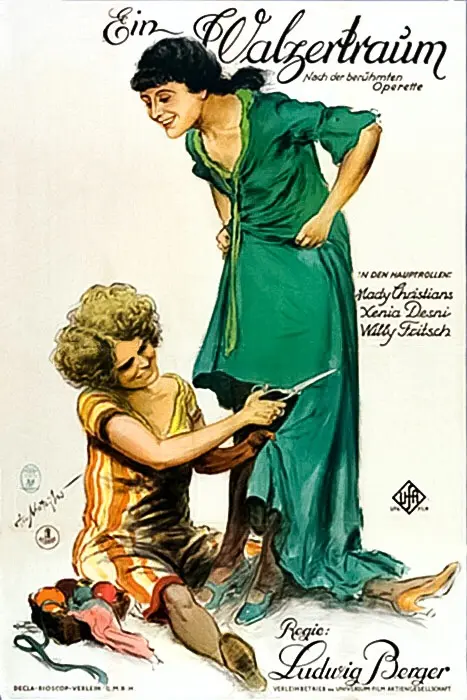
In the bustling streets of Vienna, Count Preyn, a man of jovial disposition and a bubbling Viennese temperament, finds himself ensnared in a web of cold and unyielding obligations. His marriage to the distant and detached Princess of Flausenburg, a court shrouded in a frosty atmosphere, is a stark contrast to his lively and vibrant homeland. The night of their wedding, Preyn's desperation propels him into the comforting embrace of a Viennese cafe, where he encounters Franzi, a talented orchestra leader whose presence holds a peculiar charm.
Franzi, with her modern and spirited nature, becomes a beacon of light in Preyn's otherwise gloomy existence. Their romance blossoms in the shadow of their mutual deception and duty. As Franzi is hired to teach the princess the modern arts in hopes of winning Preyn back, she remains blissfully unaware of the complex emotional dynamics at play. The film delves into the subtleties of their relationship, exploring the nuances of love, duty, and the clash between tradition and modernity.
The narrative masterfully interweaves these elements, creating a tapestry of emotions and conflicts. Count Preyn's initial feelings of duty and obligation are contrasted with his growing affection for Franzi, while Franzi's innocence and unawareness of Preyn's dual life add layers of complexity to the story. The film's exploration of cultural differences and the clash between the rigidly formal courtly life and the vibrant, spontaneous world of Vienna is both poignant and insightful.
The performances of the cast, particularly Xenia Desni and Willy Fritsch, are standout elements of the film. Desni's portrayal of the cold, unemotional princess brings a chilling realism to the character, while Fritsch's Count Preyn is a charming and relatable figure. Mady Christians and Lucie Höflich also contribute significantly to the film's emotional depth, adding richness to the ensemble cast. The film's runtime of 93 minutes is well-paced, allowing for a thorough exploration of the characters and their evolving relationships.
Technically, the film is a visual feast, with a lush and ornate cinematography that captures the grandeur of the Flausenburg court and the lively ambiance of Vienna. The score, composed by Norbert Falk and Oscar Straus, perfectly complements the film's emotional and thematic elements, adding depth and atmosphere. The film's attention to period detail and the meticulous recreation of early 20th-century Vienna and Flausenburg enhance the realism and immersive quality of the storytelling.
Comparatively, 'The Waltz Dream' stands alongside other films of its era, such as 'Phantom Fortunes' and 'The Wrong Woman', which also explore themes of deception and romance. However, its unique blend of cultural clash, personal growth, and intricate character development sets it apart. The film's ability to balance historical authenticity with emotional depth makes it a compelling watch for both film enthusiasts and general audiences.
In conclusion, 'The Waltz Dream' is a beautifully crafted and deeply moving film that offers a rich and layered narrative. Its exploration of love, duty, and cultural identity resonates with universal themes, making it a significant contribution to early 20th-century cinema. The film's technical excellence, coupled with its emotional depth, makes it a must-watch for anyone interested in the complexities of human relationships and the beauty of narrative filmmaking.