DbcultAccessing Vault...
Cult Review
Senior Film Conservator
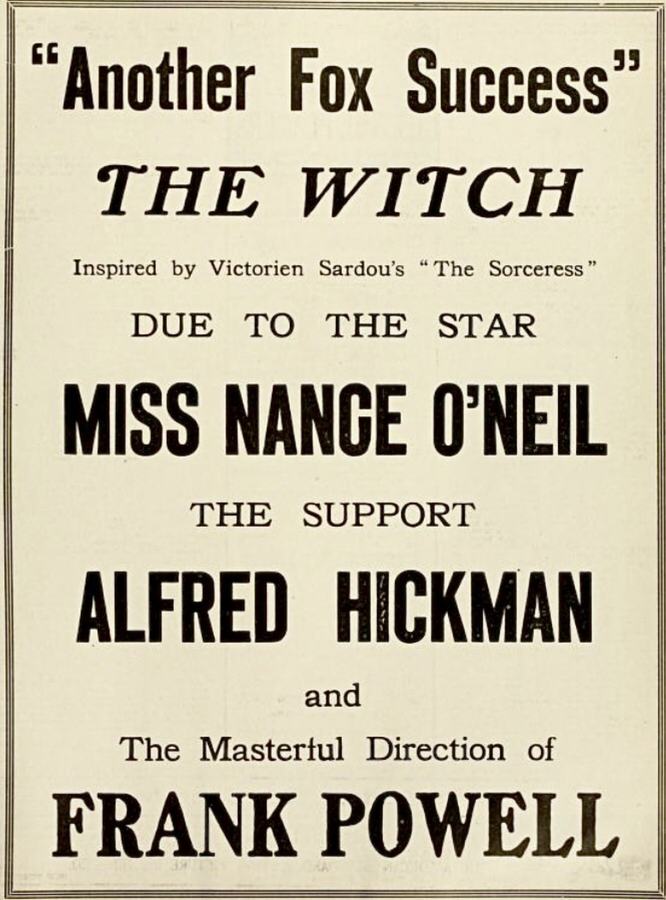
Stepping back into the nascent years of cinema, one occasionally unearths a gem that, despite the constraints of its era, resonates with a surprising potency. Frank Powell’s 1916 drama, The Witch (sometimes known by its alternative title, The Hypnotist, though the former carries a far more evocative, almost primordial weight), is precisely such a discovery. It’s a film that, even a century later, manages to weave a narrative tapestry rich with political intrigue, devastating personal vendettas, and the intoxicating, perilous dance of love and obsession. For those of us accustomed to the cacophony of modern blockbusters, returning to the hushed grandeur of a silent film, especially one so steeped in melodrama and grand gestures, is a fascinating exercise in cinematic archaeology.
At its core, The Witch is a sprawling narrative of interwoven destinies, a story that commences with a simmering animosity between two powerful figures: Dr. Fernandez, a man of intellect and perceived mystical abilities, and Governor Mendoza, a military leader consumed by a passion for Zora, Dr. Fernandez’s daughter. Mendoza’s unrequited love for Zora, a woman whose spirit remains stubbornly unyielding to his advances, quickly curdles into a profound resentment towards her father. He becomes convinced that Dr. Fernandez, with his rumored hypnotic powers, is actively sabotaging his suit, manipulating his daughter’s affections. This initial spark of personal grievance ignites a larger conflagration when Dr. Fernandez, a man of conviction and charisma, throws his lot in with a burgeoning faction of insurrectionists, placing himself at the vanguard of a rebellion against Mendoza’s government. This escalation from private slight to public revolt provides the film with its initial, forceful momentum, setting the stage for a tragic confrontation. The inevitable clash on the battlefield sees Dr. Fernandez fall, a casualty of both political ambition and personal animosity, leaving Zora to navigate a world suddenly devoid of her paternal anchor, yet imbued with his potent, enigmatic legacy.
The narrative, however, is far from a simple tale of political retribution. It deftly pivots to introduce a more intimate, yet equally fraught, domestic drama. Governor Mendoza’s own daughter, Dolores, is afflicted by somnambulism, a condition she desperately seeks to conceal from her formidable father and her fiancé, Riques. The shame and fear associated with such an affliction in that era are palpable, underscoring Dolores’s vulnerability. It is her loyal old nurse, a figure often relegated to the background but here pivotal, who, in a desperate bid to alleviate Dolores’s suffering, seeks out Zora. This moment marks a crucial turning point, revealing Zora’s inheritance of her father’s extraordinary hypnotic abilities. Zora, guided by compassion and perhaps a touch of inherited duty, undertakes Dolores’s treatment, successfully restoring her to a state of calm. The irony, and indeed the dramatic tension, is that Zora remains blissfully unaware that Dolores’s betrothed, Riques, is none other than her own beloved sweetheart. This revelation, when it inevitably crashes down upon Zora, unleashes a torrent of raw, untamed emotion. The injustice, the betrayal, the sheer audacity of fate’s cruel hand, propel Zora into a furious rage, culminating in a desperate act of hypnotic vengeance. She infiltrates the palace under the veil of night, using her formidable powers to plunge Dolores back into a profound, unresponsive trance.
This act, born of a broken heart and a betrayed spirit, has devastating consequences. Zora is swiftly denounced as a witch, a sorceress wielding dark powers, and is dragged before an enraged mob, destined for the stake. It's a chilling depiction of mob mentality, a stark reminder of humanity's historical propensity to condemn and destroy what it fears or fails to comprehend. The tension in these scenes, even without spoken dialogue, is visceral, a testament to the power of visual storytelling in the silent era. Just as the flames threaten to consume her, a dramatic intervention occurs. The sagacious old nurse, witnessing Dolores’s unshakeable stupor, reveals the true nature of her affliction to the Governor: not madness, but a trance, curable only by Zora. In a moment of stark self-interest, facing the potential permanent loss of his own daughter, Mendoza dramatically halts the execution, offering Zora a desperate bargain: her freedom in exchange for Dolores’s recovery. Zora, perhaps naive in her belief in Mendoza’s word, agrees, returning to the palace to awaken Dolores. However, once Dolores is safe, Mendoza, a man whose word is as fickle as the desert wind, reneges on his promise, imprisoning Zora. This act of blatant perfidy underscores the film's cynical view of authority and power, a theme that resonates even today. Yet, Zora, a woman of indomitable spirit, orchestrates a daring escape. Her flight sparks a profound realization in Riques, who, witnessing the depths of Zora’s suffering and the treachery of his own fiancée’s father, finally recognizes the true locus of his affections. He abandons Dolores and flees with Zora, a testament to love’s enduring, defiant power. Their desperate bid for freedom, however, is tragically short-lived, culminating in their capture after a struggle. The film concludes with a heart-wrenching finality: Zora is ultimately put to death, a tragic victim of societal prejudice, political machination, and a love that dared to defy convention. It’s a somber, impactful ending that leaves a lasting impression, cementing Zora’s place as a truly tragic heroine.
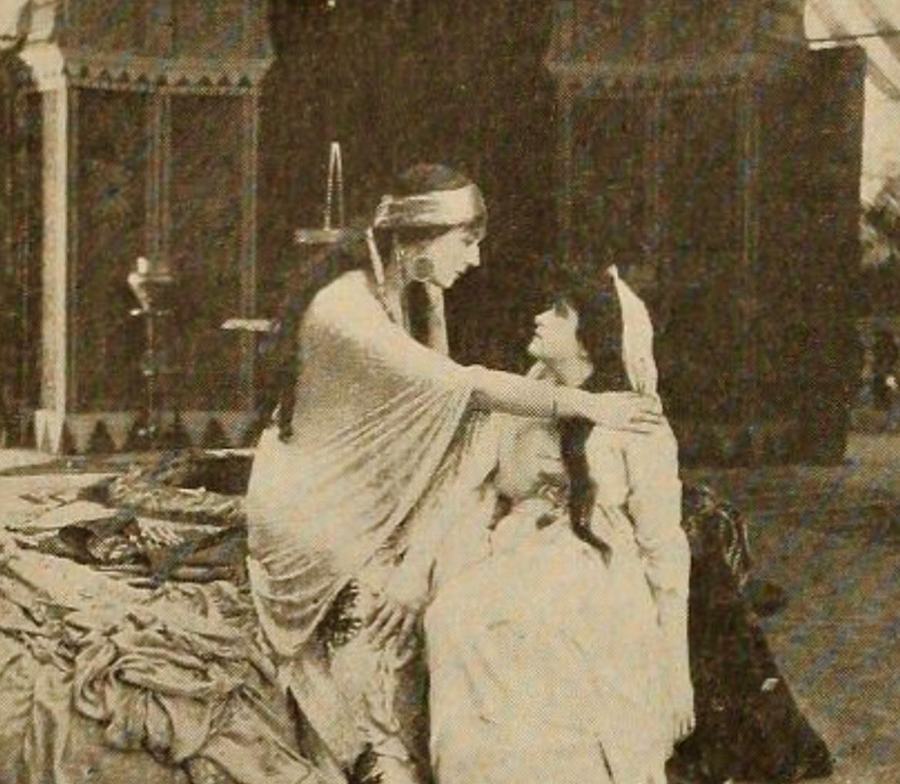
The Witch is far more than a simple melodrama; it’s a complex exploration of power dynamics, societal anxieties, and the destructive force of unbridled passion. The film deftly navigates themes that remain remarkably relevant: the abuse of authority, the dangers of mob mentality, and the plight of women in a patriarchal society. Zora, as a character, embodies a fascinating blend of strength and vulnerability. She possesses a formidable, almost supernatural power, yet she is ultimately crushed by the weight of societal judgment and the machinations of powerful men. Her journey from compassionate healer to vengeful sorceress, and finally to tragic martyr, is compelling and deeply affecting. Ada Sherin, in the titular role, delivers a performance that, even through the lens of early silent film acting, conveys a remarkable range of emotion. Her expressive eyes and gestures communicate volumes, allowing audiences to connect with Zora’s inner turmoil and defiant spirit. Her portrayal of Zora's rage, her heartbreak, and her ultimate resignation is particularly striking, a testament to the power of non-verbal communication in early cinema.
The film’s portrayal of hypnosis, a concept that fascinated and terrified audiences of the early 20th century, is central to its mystique. Dr. Fernandez’s perceived powers, and Zora’s inherited abilities, are depicted with a blend of scientific intrigue and folkloric dread. This duality taps into a primal fear of the unknown, of powers that lie beyond conventional understanding. It’s a thematic thread that echoes through other films of the era exploring the human mind’s darker recesses, such as Madame de Thebes, which similarly delves into the enigmatic world of psychic abilities and their societal implications. The fear of the 'other,' of those who possess unusual talents, is a timeless human failing, and The Witch capitalizes on this, transforming Zora from a healer into a societal outcast simply because her gifts are misunderstood and feared.
One of the most powerful elements of The Witch is its unflinching depiction of mob mentality and the swift, brutal injustice it can unleash. Zora’s condemnation and near-execution by an angry populace serve as a stark warning, a visual representation of how easily fear and prejudice can override reason and compassion. This theme is particularly potent in a historical context where accusations of witchcraft, though perhaps not literal, still manifested in various forms of social ostracization and persecution. The film effectively uses the silent medium to amplify the terror of these scenes; the frantic movements of the crowd, the menacing expressions, and the stark intertitles detailing Zora’s fate combine to create a truly chilling sequence. While not a direct comparison in genre, the visceral fear of an uncontrolled populace can be seen in other narratives of societal breakdown, though perhaps more allegorically in films like The Coward, which explores collective pressure in a different context. The swiftness with which Zora is condemned, without trial or genuine understanding, is a scathing indictment of societal institutions and popular sentiment.
The political backdrop of the film, with Dr. Fernandez leading an insurrection, adds another layer of complexity. It suggests a society ripe for upheaval, where personal grievances can easily ignite larger conflicts. Governor Mendoza is portrayed as a man of power, but one who is ultimately driven by petty jealousy and a willingness to betray his word for self-preservation. His character serves as a chilling reminder that those in positions of authority are not immune to moral failings, and indeed, their failings can have catastrophic consequences for those beneath them. This cynical view of power and politics is a recurring motif in cinema, often seen in dramas exploring corruption and betrayal, though few manage to intertwine it so tightly with a personal love story as The Witch does. The film’s exploration of loyalty and betrayal extends beyond the political sphere, permeating the romantic entanglements as well, creating a web of deceit and broken promises that ensnares all the principal characters.
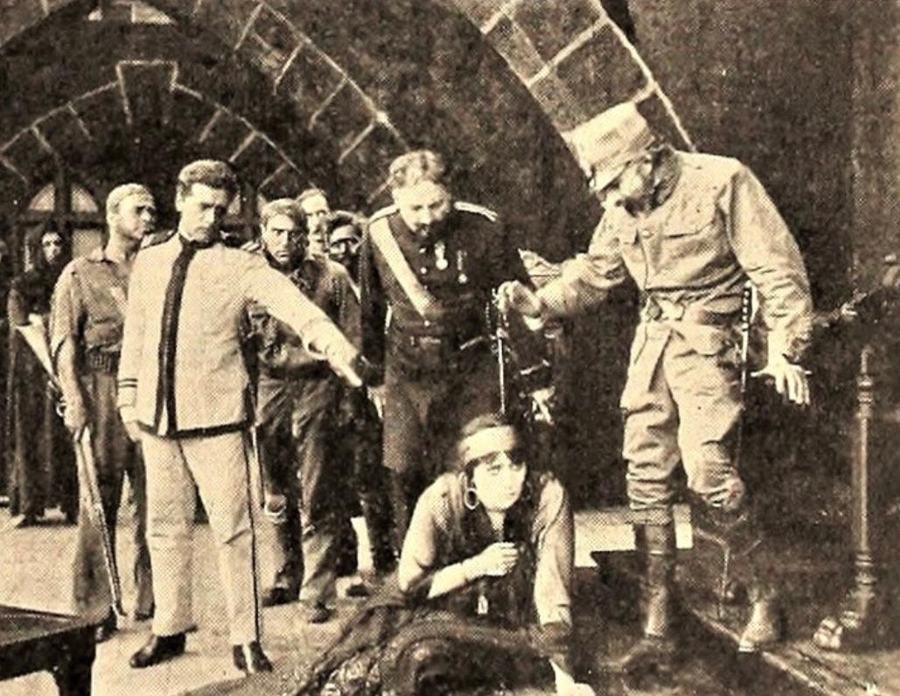
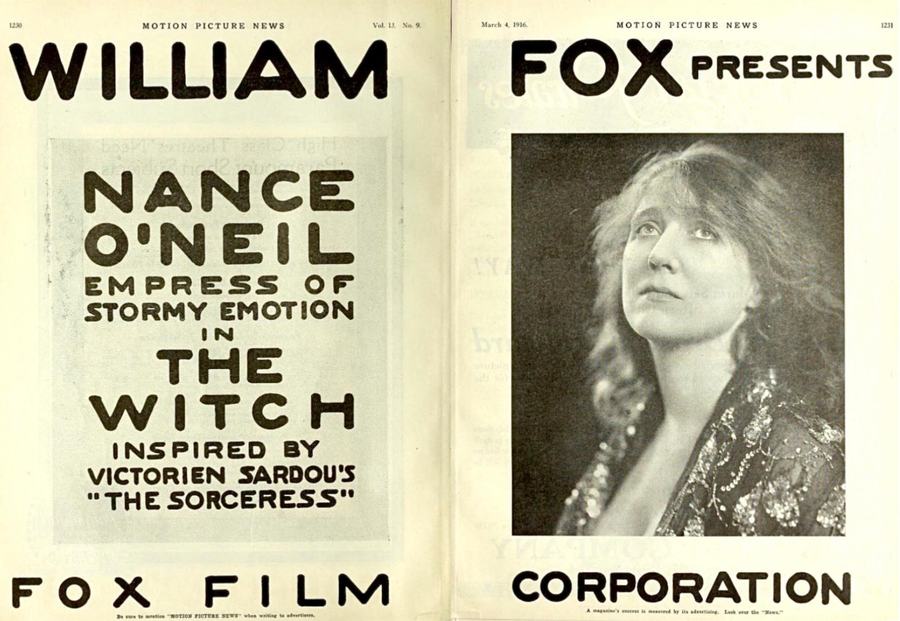
The cast of The Witch, led by Ada Sherin as Zora, delivers performances that, while adhering to the conventions of silent film acting (often characterized by exaggerated gestures and facial expressions), manage to convey a surprising depth of emotion. Sherin, in particular, carries the weight of the film on her shoulders. Her transformation from a serene, compassionate healer to a woman consumed by rage and ultimately, stoic defiance, is compelling. She imbues Zora with a fierce independence that makes her fate all the more tragic. Stuart Holmes, as Governor Mendoza, portrays a man both powerful and petty, his initial arrogance slowly dissolving into desperate pragmatism. Nance O'Neil, as Dolores, captures the fragility and vulnerability of a woman afflicted by a mysterious condition, her performance evoking sympathy and concern. The ensemble, including Ada Neville, Macey Harlam, and Sadie Gross, contribute to the tapestry of characters, each playing their part in the unfolding drama. It’s important to remember that silent film acting required a different skill set, relying heavily on pantomime and facial expressions to communicate internal states. The success of The Witch lies in its cast’s ability to translate complex emotions without the aid of dialogue, a feat that, when done well, can be profoundly impactful.
Frank Powell’s direction, while perhaps not as innovative as some of his more celebrated contemporaries, effectively tells a complicated story with clarity and dramatic flair. The pacing, though occasionally deliberate by modern standards, allows the emotional beats of the story to fully resonate. The use of close-ups to capture the intensity of character reactions, and the wider shots to establish the societal context of the Mexican setting, demonstrate a nascent understanding of cinematic language. The visual storytelling, characteristic of the era, relies on strong compositions and clear blocking to guide the audience through the narrative’s twists and turns. While we lack the detailed production notes of modern films, one can infer a thoughtful approach to staging and character interaction, especially in the more emotionally charged scenes. The film’s strength lies in its ability to build suspense and convey the escalating stakes, particularly in the scenes leading up to Zora’s attempted burning, which remain remarkably tense.
While The Witch may not be as widely known today as some other silent era classics, its thematic richness and dramatic intensity place it firmly within a lineage of films exploring powerful women, societal oppression, and the destructive nature of forbidden love. One could draw parallels to the grand, tragic romances of the period, such as La signora delle camelie, which similarly explores a woman’s sacrifice and societal condemnation. The narrative echoes of a woman accused and persecuted for her perceived powers or defiance can also be found in later, more explicit horror films, establishing a foundational archetype. The film’s exploration of the supernatural, or at least the inexplicable, through the lens of hypnosis, also connects it to a broader fascination with the occult and the mysteries of the human mind that permeated early 20th-century culture. This thread of supernatural intrigue and its consequences is a timeless cinematic device, often used to explore deeper societal fears and prejudices.
The tragic conclusion of The Witch, with Zora’s ultimate demise, underscores the film’s refusal to offer easy answers or a conventional happy ending. It’s a bold choice that lends the narrative a profound sense of realism, despite its melodramatic flourishes. This commitment to a somber, impactful resolution sets it apart from many contemporary films that often opted for more optimistic, if less truthful, conclusions. It’s a film that demands reflection, prompting viewers to consider the enduring themes of justice, betrayal, and the human cost of unchecked power and prejudice. While not necessarily a direct comparison, the tragic consequences of societal judgment and personal ambition can be seen in other powerful dramas like A Woman's Triumph, albeit with different narrative trajectories. The Witch stands as a poignant reminder of the early cinema’s capacity for complex storytelling and emotional resonance, proving that even without sound, films could evoke profound feelings and tackle weighty subjects with remarkable efficacy. Its legacy, though perhaps understated, lies in its contribution to the evolving language of cinema and its enduring thematic power, a compelling artifact from a bygone era that still has something vital to communicate to modern audiences.
In an era where cinema was still finding its voice, The Witch carved out a space for itself as a potent, if ultimately heartbreaking, drama. It's a testament to the enduring power of narrative, the magnetic pull of compelling characters, and the timeless relevance of themes such as love, revenge, and the perilous intersection of personal desire and public judgment. For cinephiles and historians alike, revisiting this film is a rewarding experience, offering not just a glimpse into the past, but a mirror reflecting enduring human truths. Its narrative, though set in a specific historical and cultural context, speaks to universal experiences of love, loss, and the eternal struggle against injustice. The raw emotion, conveyed through the masterful performances and Powell's direction, ensures that Zora’s story, and indeed the story of The Witch, continues to haunt and captivate, a silent scream against the injustices of the world.
IMDb 6.7
1923
Community
Log in to comment.