DbcultAccessing Vault...
6.6/10
Senior Film Conservator

A definitive 6.6/10 rating for a film that redefined the boundaries of cult cinema. The Ware Case remains a cornerstone of transgressive art.
Alright, so The Ware Case. If you’re one for those old-school mysteries, the kind where everyone looks perpetually worried and the tension just *sits* there, this one’s absolutely worth digging up. It’s definitely not for anyone needing fast cuts or big explosions, no. But if you appreciate a slow, almost creeping sense of dread, and some wonderfully over-the-top courtroom drama, pull up a chair. Folks who need everything spelled out, or prefer their films to move at a TikTok pace, will probably find it a real drag. 😴
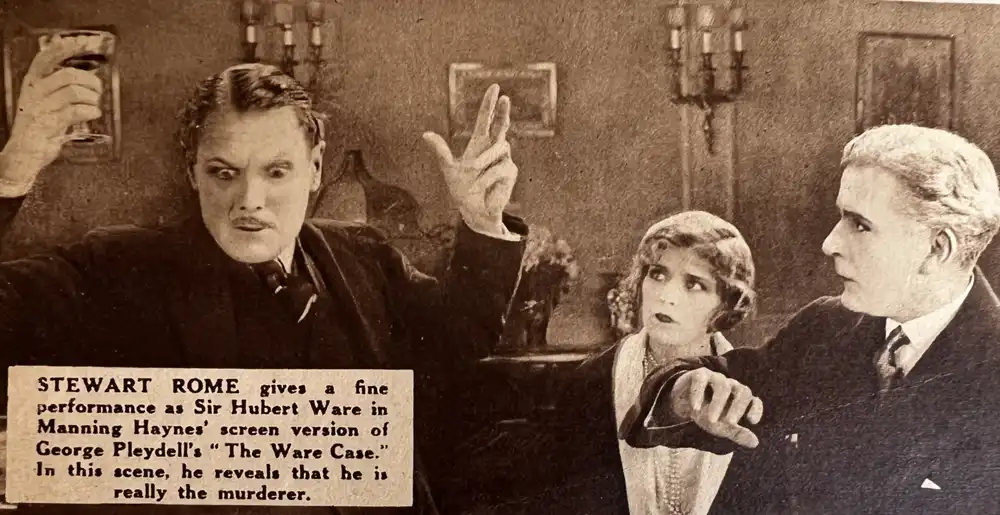
The whole thing kicks off with Sir Hubert Ware, a knight who’s been cleared of drowning his rich brother-in-law. But, you know, being acquitted isn’t quite the same as being innocent in everyone’s eyes. The movie just kinda *leans* into that uncomfortable space.
Syd Ellery, playing Sir Hubert, has this incredible talent for looking utterly haunted. There's a moment, after the trial, where he’s just sitting there, not saying anything, just staring at a wall. His eyes, man, they tell a whole story without a single line of dialogue. It’s almost unsettling how much you read into that stare.
The film mostly lives in these quiet, heavy scenes. Lots of people giving each other significant looks. The pacing sometimes feels like watching paint dry, but then something shifts, a look from Ian Fleming as Michael Amersham, and suddenly you’re right back in it. Not *that* Ian Fleming, obviously, but still.

I kept wondering about Cynthia Murtagh, who plays Lady Ware. She has this sort of fragile strength, like she’s constantly on the verge of collapsing but can’t quite let herself. There’s a scene where she’s talking to a family friend, and her hands are just clenched tight the whole time. You almost feel the movie trying to convince you this moment matters. It does.
Stewart Rome, as Eustace Ede, the barrister, is pretty great too. He doesn’t have a ton of screen time, but when he does, he chews scenery in the best way. His delivery, especially during a few of the more intense questioning bits, is just so… *emphatic*. You can practically feel the spittle.
The courtroom scenes themselves are a masterclass in early cinema drama. Everyone in the gallery is just *riveted*. One reaction shot lingers so long it almost becomes funny, but then you realize it’s actually building this palpable sense of public judgment. The crowd scenes have this oddly empty feeling sometimes, though, like half the extras wandered off for a tea break. ☕
What’s interesting is how little we actually *see* of the alleged crime. It’s all talked about, whispered about. The film trusts the audience to fill in a lot of the blanks, which I quite appreciate. No flashbacks to a shadowy figure pushing someone underwater, thankfully.
There's this one very particular shot of a staircase, quite grand, and it just feels *heavy*. Like every step taken on it is leading to some kind of doom. Or maybe it’s just me overthinking the set design. It happens. 😉
The movie doesn't really offer easy answers, and that’s its strong suit. You’re left wondering long after the credits roll, if Sir Hubert was truly a victim of circumstance or if he just got away with it. It’s a very *human* sort of messiness, not neat and tidy like some thrillers.
Sometimes the dialogue feels a little stilted, even for the era. Like a play that hadn’t quite been adapted for the screen yet. But that just adds to its old-world charm, I suppose. It’s an interesting peek into how suspense was built back then. Definitely a film that rewards patience.
IMDb 5.2
1936
Community
Log in to comment.