DbcultAccessing Vault...
Cult Review
Senior Film Conservator
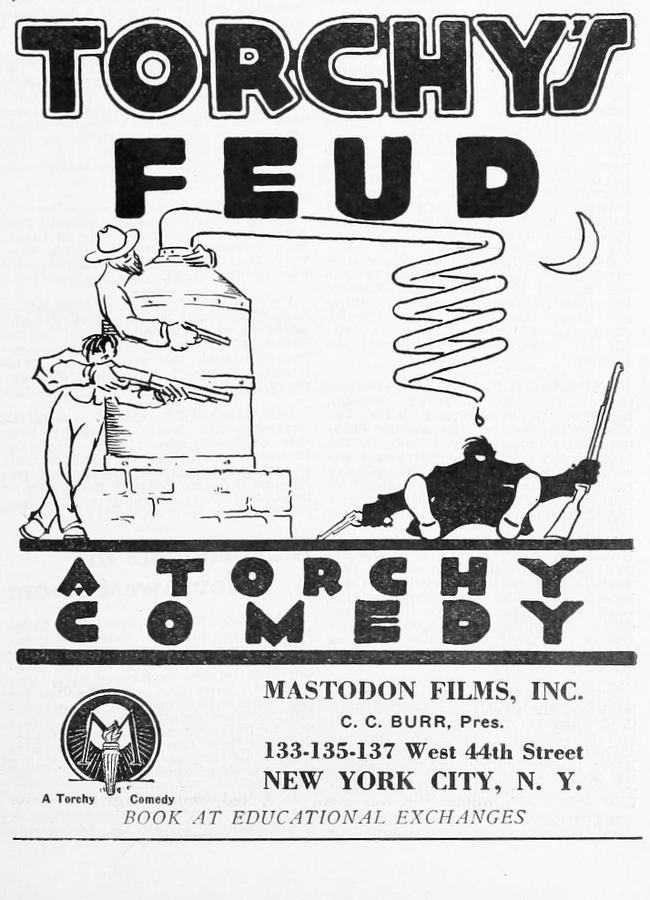
Stepping back into the silent era often feels like unearthing a forgotten language, a cinematic dialect rich in exaggerated gesture and poignant intertitle. Yet, within this historical tapestry, certain films resonate with an enduring human truth, transcending their temporal constraints. Torchy's Feud, a fascinating relic from a bygone epoch, is precisely one such picture. It doesn't boast the grandiosity of an Ivan the Terrible, nor the intricate psychological depth of something like The Oath of Stephan Huller, but instead offers a raw, visceral glimpse into a specific American experience: the Appalachian mountain feud, entangled with the illicit allure of moonshine and the heavy hand of federal law. This film, penned by Sewell Ford, delivers a narrative that, despite its age, still pulsates with a rugged, almost primal energy.
At its heart, Torchy's Feud is a testament to the stubborn persistence of ancestral animosities. The Kentucky mountain feud isn't merely a backdrop; it is the very bedrock upon which every character's existence is built. These aren't just disagreements; they are blood-soaked legacies, passed down through generations like cherished, albeit deadly, heirlooms. The film captures the suffocating atmosphere of such a conflict, where loyalty is paramount and vengeance is a sacred duty. The very air in these cinematic mountains seems thick with unspoken threats and simmering resentments. It’s a world where the law of the land is often superseded by the law of the clan, a concept alien to modern sensibilities but deeply entrenched in the historical fabric of certain isolated communities.
What elevates this particular feud from a simple clash of wills to a multifaceted dramatic exploration is the introduction of the moonshine still. This isn't just a plot device; it's a symbolic nexus. For these mountain clans, the still represents economic independence, a means of survival in a harsh landscape that offers few other opportunities. It's a defiant middle finger to external authority, a tangible embodiment of their self-sufficiency. Thus, the contest over its ownership isn't just about liquor; it's about sovereignty, heritage, and the very right to exist on their own terms. The film expertly illustrates how this illicit enterprise becomes both a source of livelihood and a perpetual trigger for violence, weaving itself inextricably into the fabric of the feud.
The narrative gains an additional layer of complexity and urgency with the arrival of government agents. This federal raid isn't just an external threat; it's an existential one. It forces the rival clans into an uncomfortable, yet perhaps inevitable, reckoning. Do they continue their internecine warfare, or do they unite against a common, more powerful enemy? This dynamic introduces a fascinating ethical and practical dilemma. The government, in its attempt to enforce federal law, inadvertently escalates the local conflict, transforming it from a private vendetta into a broader struggle against perceived oppression. This clash between localized tradition and centralized authority resonates with perennial themes of American identity, echoing anxieties about freedom, control, and the right to self-determination that continue to ripple through society even today. It's a stark contrast to the often more personal, almost melodramatic struggles seen in films like East Lynne, where the focus remains largely on individual suffering rather than communal strife against an external system.
While specific details of Johnny Hines's performance in Torchy's Feud might be scarce for contemporary viewers, his presence as a leading man in the silent era speaks volumes. Hines was known for his energetic, often comedic, portrayals, yet in a drama of this intensity, one can infer a shift in his approach. Silent film acting, by necessity, was a more physical, expressive art form. Emotions were writ large on the face and in grand gestures, communicating complex internal states without the aid of spoken dialogue. For a film about such raw, elemental conflicts, Hines would have had to embody the fierce loyalty, the simmering rage, and perhaps even the burgeoning sense of injustice that defines the mountain people. His character, likely the titular 'Torchy' or a central figure caught within the feud's web, would have served as the audience's emotional anchor, guiding them through the moral ambiguities and violent outbursts. The effectiveness of such a film hinged entirely on the actor's ability to convey profound emotion and narrative progression through sheer physicality and nuanced facial expressions, a skill that contemporary cinema, with its reliance on dialogue and subtle realism, sometimes overlooks.
Silent films often employed visual metaphors and stark contrasts to convey their messages. In Torchy's Feud, one can imagine the stark beauty of the Appalachian landscape serving as a silent, yet powerful, character in itself. The rugged mountains, the dense forests, the hidden hollows—these elements would have underscored the isolation and self-reliance of the clans, while also providing natural cover for illicit activities and ambushes. The cinematography, even if rudimentary by today's standards, would have focused on capturing the authenticity of the setting, perhaps using natural light to emphasize the harsh realities of mountain life. The editing would have been crucial in building suspense during raid sequences or feuding confrontations, relying on quick cuts and dramatic close-ups to heighten tension without a spoken word. Unlike the more fantastical or exotic settings found in films like Das Mädchen aus der Opiumhöhle, Torchy's Feud grounds its drama in a distinctly American, almost ethnographic, realism, even if filtered through the dramatic conventions of the era.
Beyond the immediate thrills of conflict and evasion, Torchy's Feud delves into universal themes that resonate irrespective of the film's vintage. The concept of loyalty, particularly to one's family and clan, is paramount. Characters are often forced to choose between deeply ingrained familial obligations and emerging notions of justice or personal desire. This internal struggle, though conveyed without dialogue, would have been central to the film's emotional core. Then there's the theme of tradition versus progress. The feuding families cling to ancient ways, their identities inextricably linked to their land and their customs, even when those customs lead to bloodshed. The federal agents, by contrast, represent the inexorable march of modern governance and a unified national identity, challenging these deeply rooted traditions. This clash isn't simply good versus evil; it's a nuanced exploration of differing worldviews, each with its own justifications and tragic consequences.
The film also touches upon the brutal realities of survival. In a landscape where resources might be scarce and opportunities limited, the moonshine still becomes a symbol of sheer economic necessity. The willingness to fight, even to kill, for its control speaks to a desperate struggle for subsistence, rather than mere greed. This makes the characters, despite their violent actions, more complex and perhaps even sympathetic figures, driven by forces beyond their immediate control. It’s a far cry from the more lighthearted, almost fantastical adventures one might find in films like Billy Whiskers or A Bear, a Boy and a Dog, which explore survival through a lens of innocence or natural wonder. Here, survival is gritty, morally ambiguous, and often tragic.
While Torchy's Feud might not be as widely recognized as some of its contemporaries, it fits within a broader trend of early American cinema exploring regional identities and conflicts. Films about rural life, often tinged with melodrama or adventure, were popular, offering audiences a glimpse into worlds both familiar and exotic within their own nation. It shares a certain thematic kinship with other films that explore the darker side of human nature and societal pressures, albeit with a focus on a specific cultural milieu. One might consider how it contrasts with the grand historical narratives like Fabiola or the more introspective, character-driven dramas. Torchy's Feud firmly roots itself in a social realism that, while perhaps embellished for dramatic effect, aimed to reflect a perceived truth about a segment of American society. Its portrayal of government intervention and local resistance offers a fascinating historical document of attitudes towards law and order in isolated communities during the Prohibition era's nascent stages.
Moreover, the film's reliance on a specific conflict—the mountain feud—places it in a lineage of storytelling that predates cinema itself, stretching back to oral traditions and folk ballads. This inherent mythic quality lends the narrative a timeless resonance, even as its cinematic techniques mark it as a product of its time. The intensity of the conflict, the moral ambiguity of its characters, and the unforgiving nature of its setting speak to a universal human struggle against adversity and the consequences of deeply held beliefs. In this regard, it offers a different kind of intensity than the often more urban or sophisticated dramas of the period, providing a valuable counterpoint in the mosaic of early 20th-century cinema.
While Torchy's Feud may not grace the lists of canonical silent films, its significance lies in its honest, albeit dramatized, depiction of a particular cultural phenomenon. It provides a window into a part of American history often romanticized or demonized, offering a more complex, if still dramatically heightened, perspective. The film, through its visual storytelling and the expressive performances of its cast, including Johnny Hines, would have offered its contemporary audience a thrilling and perhaps cautionary tale about the perils of unchecked vengeance and the inevitable clash between local autonomy and federal power. It stands as a testament to Sewell Ford's ability to craft a compelling narrative from a familiar, yet endlessly fascinating, subject. It reminds us that even in the absence of spoken words, cinema possesses an unparalleled power to transport us to different worlds and to illuminate the enduring complexities of the human condition.
Moreover, for cinephiles and historians, films like Torchy's Feud are invaluable. They offer insights not just into the specific story they tell, but into the evolution of cinematic language, acting styles, and audience expectations. They show us how filmmakers grappled with conveying complex plots and deep emotions without the crutch of dialogue, relying instead on visual cues, musical accompaniment (often live), and carefully crafted intertitles. It’s a masterclass in silent communication, a form of storytelling that demands active engagement from its viewer. This makes revisiting such films a deeply rewarding experience, akin to deciphering an ancient script that, once understood, reveals timeless truths. It’s a film that, despite its specific setting and era, speaks to universal conflicts that continue to shape human societies, making it a valuable, if often overlooked, piece of cinematic heritage.
IMDb 3.7
1920
Community
Log in to comment.