DbcultAccessing Vault...
Cult Review
Senior Film Conservator
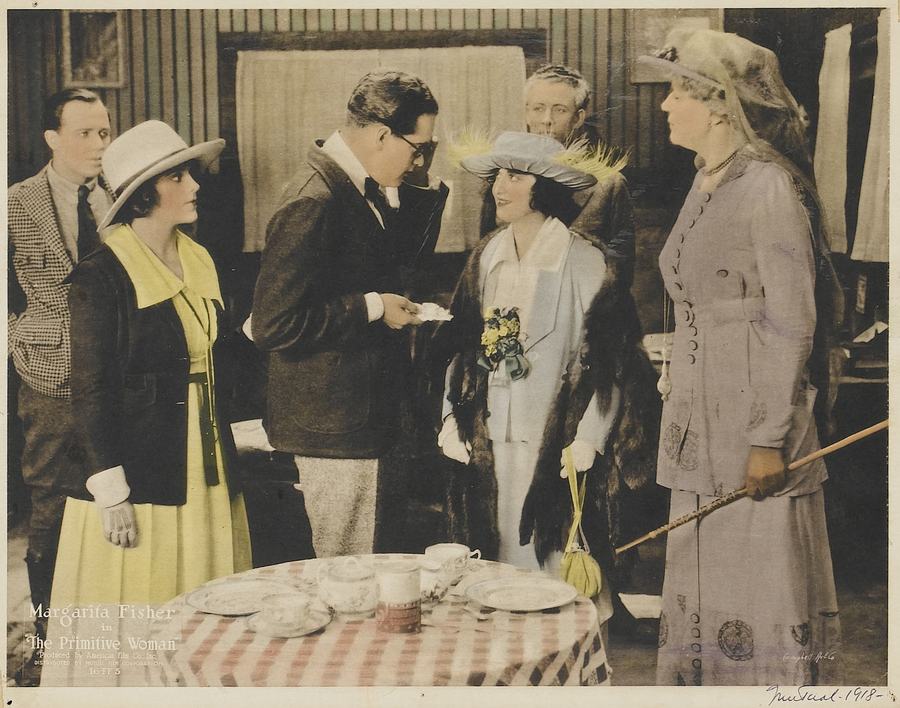
Step into the hushed, sepia-toned world of 1918, where the cinematic landscape, though nascent, was already fertile ground for compelling narratives that dared to challenge societal norms. Among the myriad offerings of that era, The Primitive Woman stands as a fascinating artifact, a silent film that, with surprising prescience, delves into themes of gender dynamics, intellectual arrogance, and the transformative power of wit. Directed by Clarence G. Badger, and penned with a delightful touch of irony by Henry Albert Phillips, this picture is far more than a simple romantic comedy; it’s a meticulously crafted revenge fantasy, executed with a precision that would make any modern-day strategist nod in approval.
At its core, the film presents a classic battle of the sexes, albeit one where the weapons are cunning and charm rather than brute force. We are introduced to a young author, a character brimming with a rather insufferable brand of intellectual hubris, whose pronouncements on women are, to put it mildly, deeply insulting. He is a man convinced of his own superior understanding of the ‘primitive woman,’ a concept he romanticizes from a safe, academic distance while simultaneously dismissing actual women with disdain. His retreat to the isolated solace of the mountains to pen his magnum opus on this very subject is not merely a plot device; it’s a symbolic act of intellectual retreat, a self-imposed exile from the complexities of real human interaction, particularly with the gender he so blithely dismisses.
Enter our protagonist, a woman of considerable wealth and, more importantly, formidable intelligence, portrayed with captivating grace by Margarita Fischer. Her initial encounter with the author’s misogynistic rhetoric ignites not anger, but a spark of mischievous determination. This isn't just about bruised ego; it's a strategic maneuver to dismantle his carefully constructed worldview, to prove that the ‘primitive woman’ he theorizes about is far less potent than the modern woman he underestimates. Her plan is audacious, involving a complete immersion into the very world the author seeks to analyze from afar. She sheds her societal trappings, adopting the guise of a wild girl, a creature of the hills, leveraging the very stereotypes he holds dear against him.
The setup is a delicious exercise in dramatic irony. The author, played by Jack Mower, ensconced in his mountain cabin, has grandly declared his sanctuary inviolable to the feminine presence. His friends, discovering his retreat, bear witness to this solemn vow, further cementing the challenge. This public declaration serves to elevate the stakes of our heroine’s mission, transforming a personal slight into a grand theatrical performance with an audience, albeit a delayed one. Her deliberate ‘accident’ – a staged fall down an embankment – is a stroke of genius, a calculated vulnerability designed to exploit the very chivalry he might still possess, however begrudgingly.
The sequence where he discovers her, injured and seemingly helpless, is pivotal. The author, despite his professed disdain, is compelled to act. He carries her, a symbol of the ‘primitive’ wildness he’s theorizing about, directly into his sacred, woman-free space. Her feigned injury, preventing her immediate departure, extends the charade, forcing an intimate proximity that his intellectual defenses are ill-equipped to handle. The arrival of the mountain woman, played by Emma Kluge, adds a layer of authenticity to the deception, turning a contrived situation into a plausible, if unusual, domestic arrangement.
What unfolds over the subsequent days is a masterclass in psychological warfare, subtle seduction, and the slow, inevitable erosion of preconceived notions. The author, confronted with the vivacious, seemingly untamed spirit of this ‘wild girl,’ begins to see beyond his theoretical constructs. He is forced to engage with a living, breathing woman, one who challenges his intellect not through direct argument, but through her very presence, her natural charm, and the inherent vitality she embodies. This period of forced cohabitation allows for a nuanced exploration of character, a silent dance of wills where the woman’s true strength lies in her ability to adapt and manipulate, while the man’s intellectual arrogance slowly crumbles under the weight of genuine human connection.
The supporting cast, including Millard K. Wilson, Edward Peil Sr., and Mollie McConnell, likely provided the necessary dramatic foil and comedic relief, though in silent films of this era, the focus often remained squarely on the leads. Margarita Fischer, a prominent star of the period, would have brought a compelling blend of beauty, intelligence, and spirited determination to her role, making her character’s elaborate scheme utterly believable and her ultimate triumph deeply satisfying. Her portrayal would have been crucial in conveying the inner workings of a woman orchestrating such a delicate and daring plan, relying heavily on expressive gestures and nuanced facial expressions to communicate her cunning and resolve.
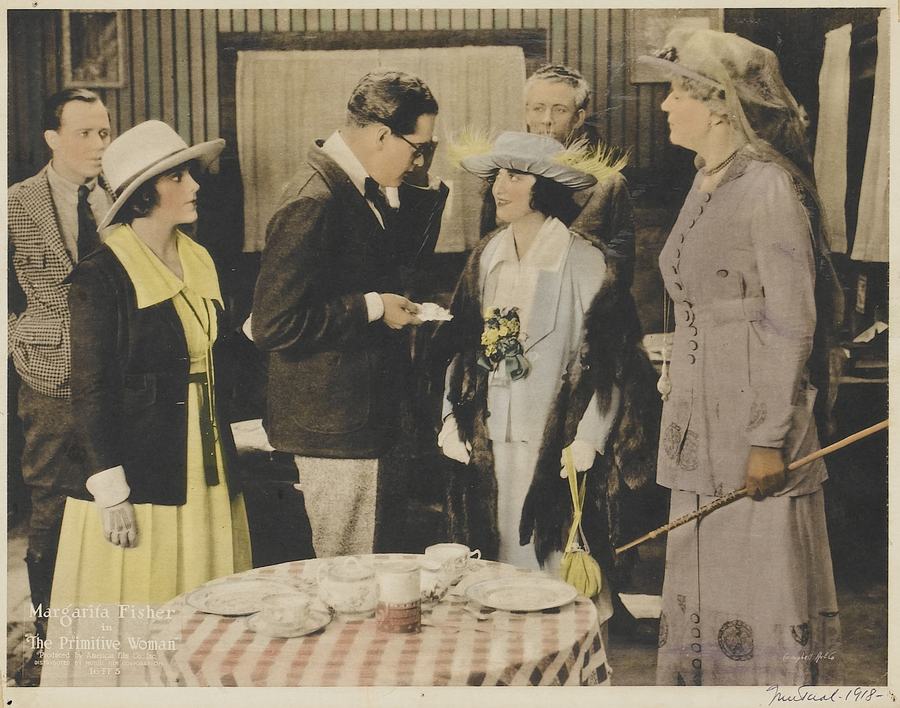
Henry Albert Phillips’s script, without the benefit of spoken dialogue, must have been remarkably well-structured to convey such intricate motivations and emotional shifts. The narrative relies heavily on visual storytelling, a hallmark of the silent era. Intertitles would have provided crucial insights into the characters' thoughts and the progression of the plot, but the performances themselves would have carried the bulk of the emotional weight. The film's ability to communicate the author’s transformation from a dogmatic misogynist to a smitten admirer, purely through visual cues, is a testament to the artistry of silent cinema.
The thematic resonance of The Primitive Woman extends beyond a simple romantic conquest. It’s a commentary on the dangers of intellectual detachment, the folly of judging an entire gender based on abstract theories rather than lived experience. The author's journey is one of enlightenment, forced upon him by a woman who refuses to be confined by his narrow definitions. It’s a subtle yet powerful assertion of female agency, a cinematic precursor to later feminist narratives that would challenge patriarchal structures more overtly. One might draw parallels to the spirited independence seen in films like The Wild Olive, where strong female characters navigate complex romantic and social landscapes with remarkable resilience.
The climax of the film, where the protagonist’s true identity is revealed, is not merely a moment of discovery but a moment of profound irony. The very people who come searching for her inadvertently expose her clever ruse, but in doing so, they also reveal the author’s complete emotional surrender. The man who vowed eternal bachelorhood and a life free from feminine influence has fallen head over heels for the very woman he sought to escape, and one who, moreover, has deliberately orchestrated his downfall. This twist is not humiliating for the author; rather, it's a comedic and satisfying resolution that underscores the triumph of genuine connection over rigid ideology.
From a technical perspective, a film from 1918 would have employed innovative, though rudimentary, cinematography techniques. The use of natural light for the mountain scenes, the staging within the confined space of the cabin, and the editing to build suspense and convey emotional beats would have been crucial. Silent films often relied on exaggerated expressions and gestures, but the best actors, like Fischer, were able to convey a surprising depth of emotion and nuance. The film’s pacing, a critical element in silent storytelling, would have dictated the rhythm of the author’s transformation and the unfolding of the elaborate ruse.
Comparing it to other films of the era, The Primitive Woman shares a certain spirit with narratives that explored challenging societal expectations. While not as overtly dramatic as a film like The Rack or as action-packed as Love's Lariat, it certainly possesses a sharp, intellectual edge that sets it apart. It’s a film that asks its audience to ponder the nature of perception, the power of disguise, and the often-unforeseen consequences of rigid belief systems. The film’s strength lies in its ability to blend social commentary with genuine entertainment, proving that even in the early days of cinema, stories could be both thought-provoking and thoroughly engaging.
The title itself, The Primitive Woman, is a clever misdirection. It refers to the author’s academic ideal, but the true ‘primitive woman’ in the story is the spirited protagonist who, in her natural cunning and resourcefulness, embodies a primal force of nature that no amount of theoretical posturing can withstand. She is not primitive in the sense of being unsophisticated, but primitive in her fundamental human drive for justice and connection, unburdened by the author's intellectual constructs. Her actions are a testament to the enduring power of human ingenuity and the irresistible force of charm when wielded with purpose.
The film’s enduring appeal lies in its timeless themes. The battle against prejudice, the power of a clever woman, and the universal experience of falling in love despite oneself are narratives that resonate across generations. While the setting and cinematic language are distinctly of the silent era, the emotional core of The Primitive Woman remains remarkably fresh. It serves as a gentle reminder that even a century ago, filmmakers were exploring complex character dynamics and societal critiques with an artistry that continues to captivate. It’s a delightful journey into a bygone era, offering not just entertainment, but a thoughtful reflection on the eternal dance between men and women, intellect and emotion.
Ultimately, The Primitive Woman is a charming, intelligent, and subtly subversive film. It’s a testament to the early capabilities of cinema to tell intricate stories without the need for dialogue, relying instead on the evocative power of imagery, performance, and well-crafted narrative. For enthusiasts of silent film, or anyone with an interest in the evolving portrayal of gender roles in cinema, this film offers a rich and rewarding viewing experience. It’s a quiet triumph, a film that proves that even a century ago, a woman could, with enough wit and determination, bring even the most obstinate man to his knees, not through force, but through the irresistible force of her own captivating essence.
IMDb 6.3
1935
Community
Log in to comment.