DbcultAccessing Vault...
7/10
Senior Film Conservator
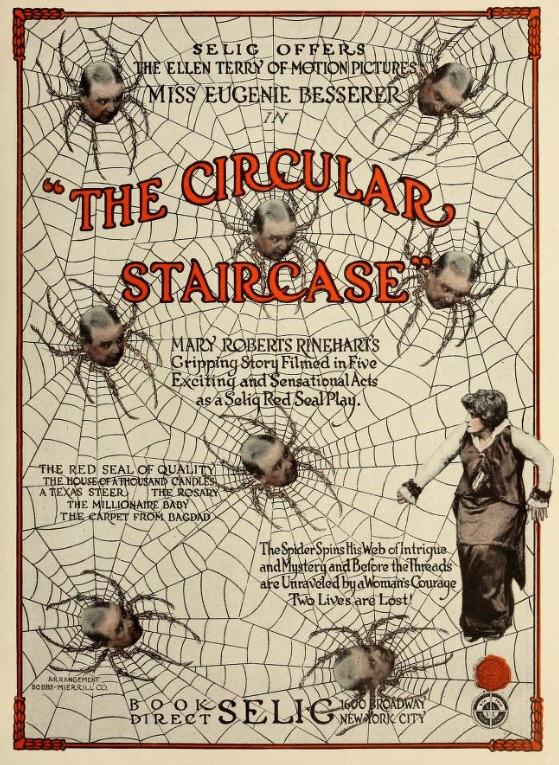
A definitive 7/10 rating for a film that redefined the boundaries of cult cinema. The Circular Staircase remains a cornerstone of transgressive art.
Imagine, if you will, a staircase that coils upward like a serpent devouring its own architectural tail; each tread exhales the chill of embezzled fortunes while gas-jets tremble along banisters of burnished oak. Into this lithograph of dread steps Aunt Ray Innes—spinster, matriarch, accidental sleuth—clutching a lease inked more boldly than her courage. Within hours, the house’s geometry betrays her: a single percussive crack ricochets through the hall at three a.m., and Arnold Armstrong, prodigal son of the owner, sprawls at the base of that very staircase, his starched evening shirt blooming crimson like some obscene night-blooming cereus.
What follows is less a linear investigation than a fever-chart of alliances fracturing and recombining. Director Edward Laemmle, working from Mary Roberts Rinehart’s phenomenally popular novel, refuses to genuflect to theatrical three-act order; instead he splinters chronology, letting gossip, firelight, and forged telegrams leak into the frame so that every character appears guilty of something—if only of breathing the same tainted air. The camera, often stationary in 1920, here glides when least expected, nosing into keyholes, peering down from the balcony as though the house itself were an accomplice cataloguing sins.
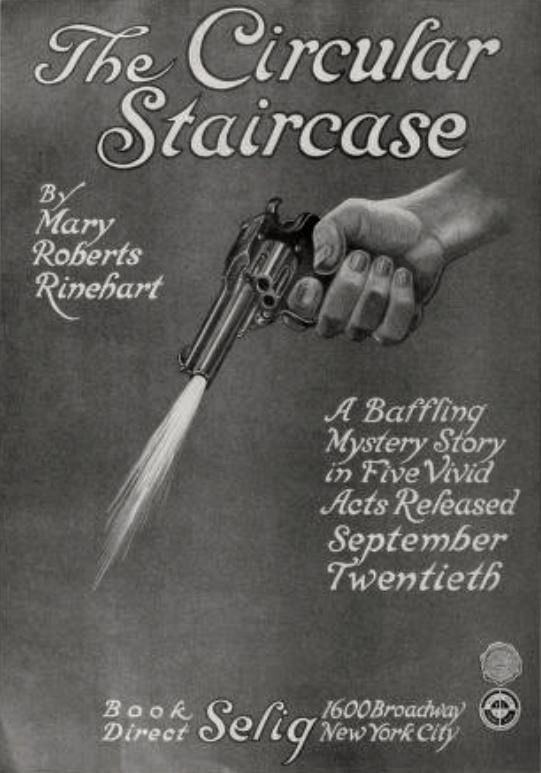
Edith Johnson’s Aunt Ray carries the picture on shoulders that never once permit a diva’s tremor. Notice how her eyelids half-close not in fatigue but in the arithmetic of suspicion; she listens with the entire topography of her face. When she refuses—twice—to vacate Sunnyside despite death threats, the gesture feels less bravado than existential bookkeeping: she has balanced ledgers her whole life; she will balance this one too, even if the currency is blood.
Around her orbit the nebulae of lesser motives. George Hernandez’s Detective Jamieson exudes the wry self-amusement of a man who has read the last page of a whodunit and decided to keep the secret to himself; his eyes twinkle like struck matches that never quite ignite a cigarette. Guy Oliver’s turn as the supposedly deceased banker Paul Armstrong is a masterclass in regal menace—watch how he enters the secret chamber as though stepping onto a throne carved from other people’s pensions. Eugenie Besserer, doomed housekeeper Mrs. Watson, mutates from servile to spectral once gangrene sets in; her death-bed monologue, delivered via florid intertitle, is the film’s moral fulcrum.
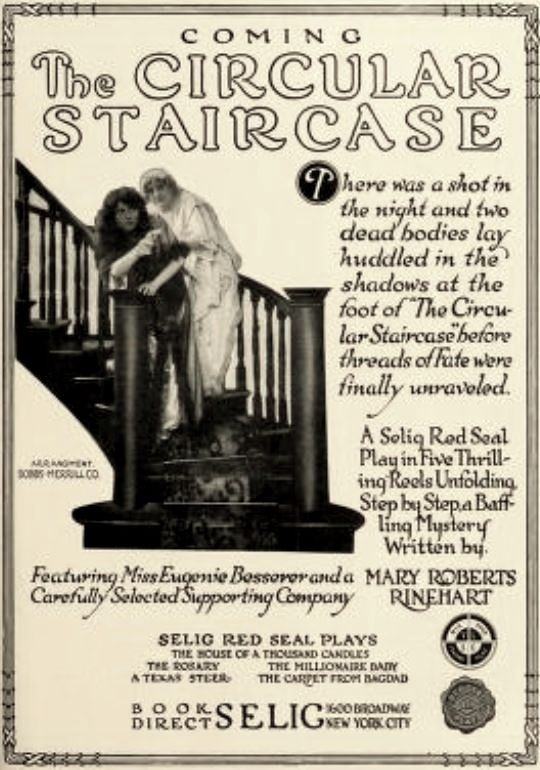
Visually, the picture revels in chiaroscuro that would make German Expressionists purse their envious lips. Candlelight carves elongated silhouettes across Persian rugs; moonshine drips through mullioned windows, pooling like liquid pewter. The titular staircase, shot from a low angle, becomes an helix of fate—every ascent feels like a descent into some fresher circle of complicity. When the stable blaze erupts, Laemmle cross-cuts between inferno crimson and the cool viridian of the women’s parlour, suggesting that calamity, like colour, bleeds into whatever surface it touches.
One cannot discuss The Circular Staircase without acknowledging its narrative DNA in later thrillers. The board-game whirlpool of unreliable testimony anticipates The Student of Prague; the trope of the imperilled spinster amid secret panels predates and arguably outclasses similar mechanics in The Captive. Even the climactic unmasking of the gardener as Jack Bailey feels like an ancestor of the superhero reveal, only here the cape is a straw hat and the superpower is forensic accounting.
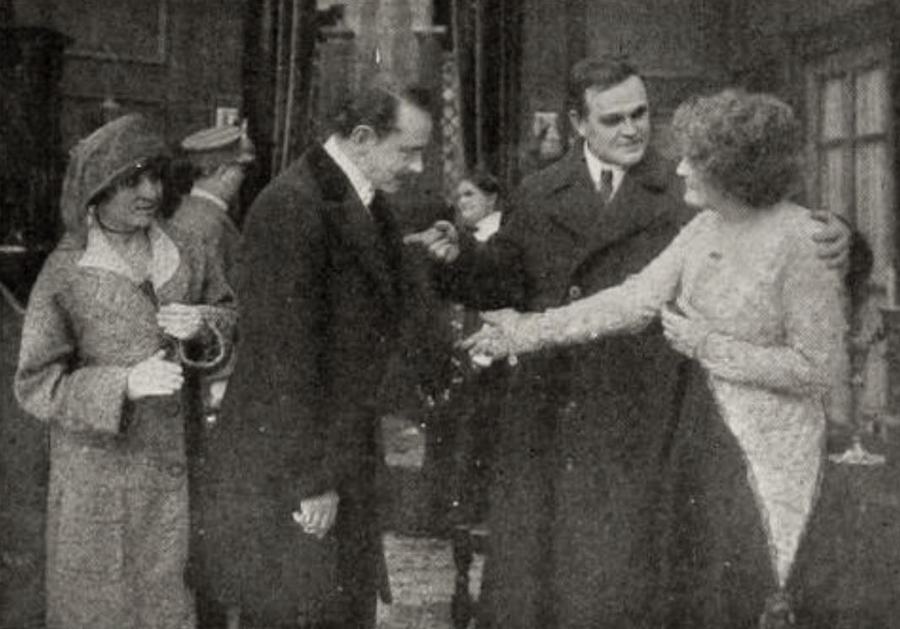
Yet the film is not a pristine museum relic; certain contrivances creak like loose balusters. The sheer multiplicity of secret passages risks farce—after the third panel glides open you half expect the hallway itself to roll its eyes. And while Rinehart’s source novel luxuriates in the domestic minutiae that lend crimes their sour credibility, the celluloid compression jettisons too many fiscal specifics; viewers today may require a second viewing to parse which securities were embezzled, which merely mislaid.
Still, these are hairline cracks in an otherwise lustrous edifice. The movie’s pulse quickens each time the camera tilts down that staircase, as though gravity itself were an accessory to larceny. When Paul Armstrong finally tumbles to his second, definitive death, the thud reverberates through the foyer and, metatextually, through a century of cinema to come, forecasting every noir antihero who will plummet from penthouse or fire escape into retributive asphalt.
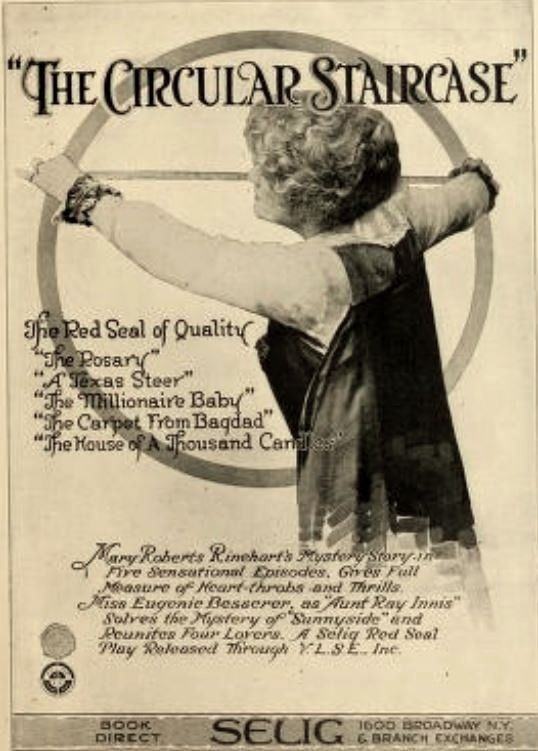
For contemporary audiences, the joy is twofold: first, the gothic comfort of a world where evil is corralled into candle-snuffers and hidden vaults; second, the archaeological thrill of witnessing the DNA of modern thrillers being stitched together frame by frame. Streaming in a crisp 4K restoration on several niche platforms, the print retains the cigarette burns of its roadshow days—each speck a breadcrumb back to 1920.
So, reader, if your nights feel too linear, if your own staircase lacks the vertiginous promise of revelation, queue up The Circular Staircase. Let its shadows lengthen across your living-room wall, let its brass-knuckled coincidences clatter like dropped poker chips. When the lights come up, you may find yourself counting the steps to your basement, half hoping for a hollow tread, half fearing it. Because once you have spiralled through Sunnyside House, the geometry of every home you enter will never feel entirely innocent again.
IMDb 6.2
1929
Community
Log in to comment.