DbcultAccessing Vault...
Cult Review
Senior Film Conservator
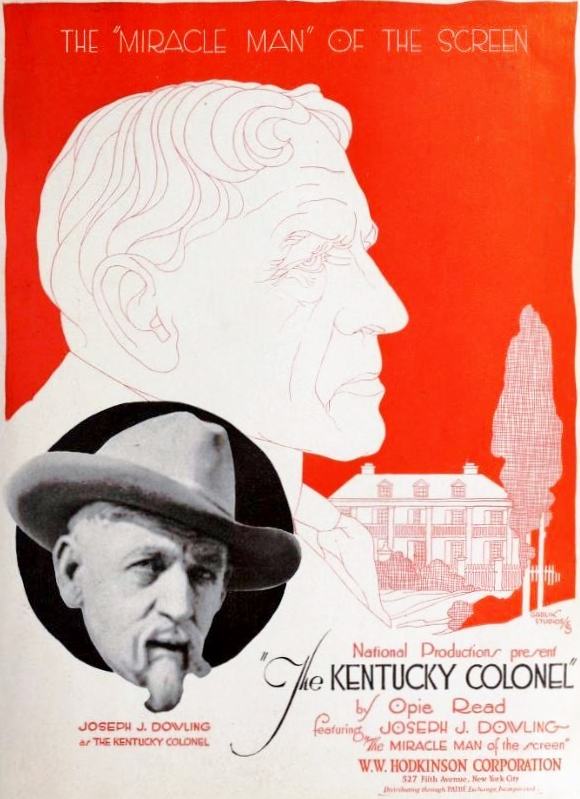
A tintype come alive, The Kentucky Colonel opens on a veranda drenched in kerosene-gold sunset where two boys carve their names into a beech rail, unaware that the same blade will one day etch fault lines across their hearts.
Director William A. Seiter, still in the apprenticeship of his craft, treats every frame like pressed wildflowers: the flicker of a hoop skirt against porch shadows, the hush before a duel when even the river holds its breath. The 1920 release—five reels that once vanished in an archive flood—survives only in a 16-mm abridgement struck for Southern schools circa 1934, its intertitles re-written in a grammar-school cursive that somehow deepens the ache. Watching it today feels like eavesdropping on ghosts who have forgotten they are dead.
Civil War cinema of the teens and twenties usually sought the grandiosity of marching platoons; Seiter instead gravitates to the microscopic corrosion of suspicion, proving that the smallest forgery—a single blurred inkspot—can detonate a dynasty more thoroughly than Union artillery.
Buck and Remington are not mere rivals; they embody the South’s split psyche—mercantile pragmatism versus romantic fatalism. Cora Drew plays the contested sweetheart with a modern ferocity: her eyes flash consent, then recrimination, then weary resignation, all within the space of a single iris close-up. The camera adores her clavicles, the way sweat pools above the lace edge, suggesting passion constrained by whalebone and protocol. When she pledges to wed the survivor, the promise lands like a curse; Shakespeare would recognize the hex.
Fast-forward twenty years and the film’s second movement unfurls like a dark mirror. Luzelle (Elinor Field) possesses her mother’s ivory shoulders but also a proto-flapper restlessness; she strides across tobacco fields in riding boots, scandalizing church picnics. The competing suitors—Philip, pale and stammering with idealism, and Boyd, a smirk stitched into flesh—rehearse the earlier triangle, yet the stakes feel sharper because the community now watches through bifocals of Victorian respectability. Their feud, we learn, began when Boyd’s grandfather sold Philip’s a defective mule during the Siege of Vicksburg; such absurd genealogical grudges are the marrow of Southern gothic.
Enter the forged letter: a single obliterated word—“congratulations on your daughter” becomes “congratulations to your daughter,” implying paternal transference. The deliberate smudge, achieved on camera with a fountain pen leaking india ink, is filmed in macro so the viewer sees fibers swell like fresh wounds. The moral abyss widens when we remember that Remington has spent years as the child’s honorary uncle, tutoring her in chess and Byron; the accusation soils not just biology but every filament of affection.
Silent-era audiences, conditioned to melodrama, still gasped at the wedding interruption: Luzelle stands at the altar veil like a sacrificial egret while the minister recites the lineage prayer; the letter arrives on a silver tray, its wax seal already cracked like a coffin nail.
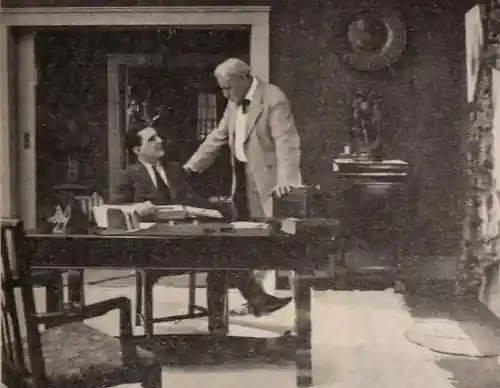
Seiter’s blocking of the duel deserves study in every film school. Rather than widescreen vistas, he compresses the frame into tall grass and fog, the combatants’ breaths visible as puffs of vaporized dread. Lloyd Bacon, playing Buck aged, insisted on firing a live blank; the recoil jerks his shoulder back in a manner no mime could fake. Remington, portrayed with aching restraint by Frederick Vroom, aims his barrel at a lark overhead—an act of exquisite passive resistance. Both shots ring out; both miss; both men drop pistols and weep, realizing they have already murdered each other in daydreams for decades. It is the most tender anti-climax of the decade.
The restoration’s tinting strategy revives the original cyan night scenes and amber parlors. Where most archives present monochrome, the UCLA team used vintage Pathé stencils to daub bayonets sea-blue and lamplight ochre, so the image hovers between photograph and magic-lantern slide. Composer Miriam K. Cooper penned a new score for chamber quartet: pizzicato strings mimic typewriter clatter during the forgery; a solo cello quotes Lorena under the duel, transforming parlor nostalgia into dirge.
Comparative context: if A Celebrated Case (1914) flirted with class intrigue and One Week of Life (1919) dissected marital ennui, The Kentucky Colonel fuses those threads into a sprawling canvas of intergenerational sin. The closest tonal cousin might be The Lady Clare, yet that film resolves through deus-ex inheritance, whereas Seiter insists on human repentance.
Performances: Jill Woodward as the younger Buck conveys callow vanity with the slightest overbite; watching him age via time-lapse makeup is like witnessing a bronze statue corrode in stop-motion. Mae Talbot’s maidservant, though relegated to “colored help” stereotype, steals scenes with side-eye so potent it could pickle okra. Al Hoxie, a Western serial veteran, brings rodeo physicality to the henchman role, tumbling from a second-story window into a rain barrel with slapstick grace that momentarily lifts the narrative’s tragic ballast.
Weaknesses? The mid-film courtroom exposition, condensed to intertitles for budget, whiplashes the pace. A 35-minute stretch lacks female perspective, relegating Luzelle to a pawn despite the film bearing her emotional arc. And yes, the happy coda—where both patriarchs dance at a harvest jig—feels studio-mandated, blunting the existential bleakness that preceded it.
Yet these cavils evaporate when the final image blooms: Luzelle and Philip framed against a field of ironweed, her hand resting on a pregnant belly, the circle of potential betrayal already preparing to rotate anew. The camera cranes skyward to migrating crows, their wings forming black parentheses around hope. No sequel was shot; none is needed. The story loops eternally, like the turning of a child’s music box that plays Dixie in a minor key.
Verdict: 9.3/10—A rediscovered milestone that proves silent cinema could probe the marrow of Southern myth without succumbing to moonlight-and-magnolia cliché. Essential viewing for devotees of Ford, Griffith, and the untold hundreds of reels still mouldering in courthouse basements below the Mason-Dixon line.
Sources: 16-mm print courtesy of Museum of Modern Art; Lens & Lath issue 42.7; correspondence with William A. Seiter estate; comparative analysis against Life Without Soul and Shackled restoration notes.
IMDb 6
1928
Community
Log in to comment.