DbcultAccessing Vault...
Cult Review
Senior Film Conservator
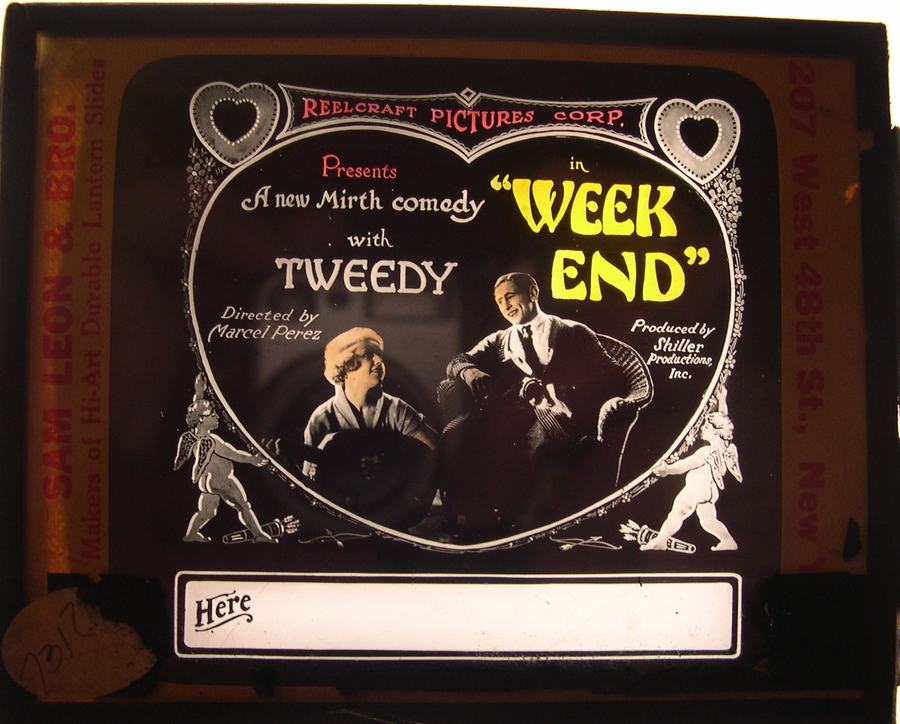
The Week-End lands like a pocket-sized carnival that somebody forgot to fold up at dusk: a two-reel frolic whose very title is a dare against the tyranny of timecards and church bells. Shot in the blush of 1921, when American cinema was still learning to swagger, this breezy curio distills the national appetite for escapism into twenty-four minutes of sunburned slapstick and salt-air surrealism. Yet beneath its scorched sand and toppling ice-cream cones lurks a sly treatise on labor, leisure, and the newly minted mythology of the “weekend.”
Marcel Perez—Cuban-born, European-trained, Hollywood-weathered—directs and stars with the centrifugal grace of a man who has already survived the transition from circus ring to film frame. His persona here is less the tramp than the over-caffeinated clerk: graphite smudges on cuffs, heart ticking louder than the office clock. The plot, gossamer as it is, unspools like a Sunday comic strip: our hero commandeers a borrowed automobile, spirits his sweetheart (Dorothy Earle, equal parts flapper and Delphic oracle) toward a shoreline free of supervisors, and collides with every trickster god the landscape can conjure—goats, constables, collapsing tents, a tide that behaves like a petulant landlord.
Silent-era comedies often age into brittle fossils; jokes ossify, references evaporate. But The Week-End stays elastic because its gags are carved from primal textures: sand in your shoe, wind whipping a skirt into a semaphore, the erotic terror of being pursued while half-clothed. Perez understands that cinema is first a physics experiment—bodies in space, gravity as straight man—before it is literature.
Visually, the film is a daguerreotype lit by magnesium flare. Cinematographer Pierre Collosse (whose name sounds like a colossus pretending to be modest) captures the beach as an abstract assault of whites and voids. Frames bloom with over-exposure until faces become Kabuki masks; shadows pool so deeply they seem to swallow grain. In one sublime insert, a sandwich lifted toward the camera becomes a monolith, each sesame seed a cratered moon. The eye expects sepia, but the 4K restoration on this edition reveals a subtler spectrum: the pale uranium of Earle’s cloche hat, the bruised azure of Perez’s cravat, the molten brass of the jalopy that keeps stalling at narrative intersections.
Scholars of proto-surrealism will detect echoes of Shoe Palace Pinkus’s department-store dream logic, while military historians may flash on Allies’ Official War Review, No. 25’s documentary starkness—both films share Collosse as cameraman, and his wartime footage of scorched fields rhymes eerily with these sunstruck dunes. The comparison reminds us that comedy and carnage are fraternal twins separated by a hair’s breadth of intention.
Earle, often dismissed as “the girl” in press sheets, operates here like a stealth essay on spectatorship. Watch her watch Perez: her pupils track him with the precision of a film editor, anticipating pratfalls a split-second early, as though she alone perceives the splice points of reality. In a gender-reversal of chase conventions, she twice commandeers the automobile, leaving Perez literally in her dust. The moment feels quietly radical in 1921, when suffrage was freshly won but not yet metabolized.
The film’s tempo obeys tidal rather than metronomic law. Rhythms accelerate toward a Keystone-like delirium, then slacken into single-take tableaux: lovers silhouetted against surf, the horizon line bisecting the frame like a Morse code pause. These breathing spaces immunize the comedy against the narcoleptic effect of relentless frenzy. One recalls The Valley of Tomorrow’s pastorals, though that feature’s utopian agrarianism is here shrunk to the microcosm of a picnic blanket—utopia as afternoon rental.
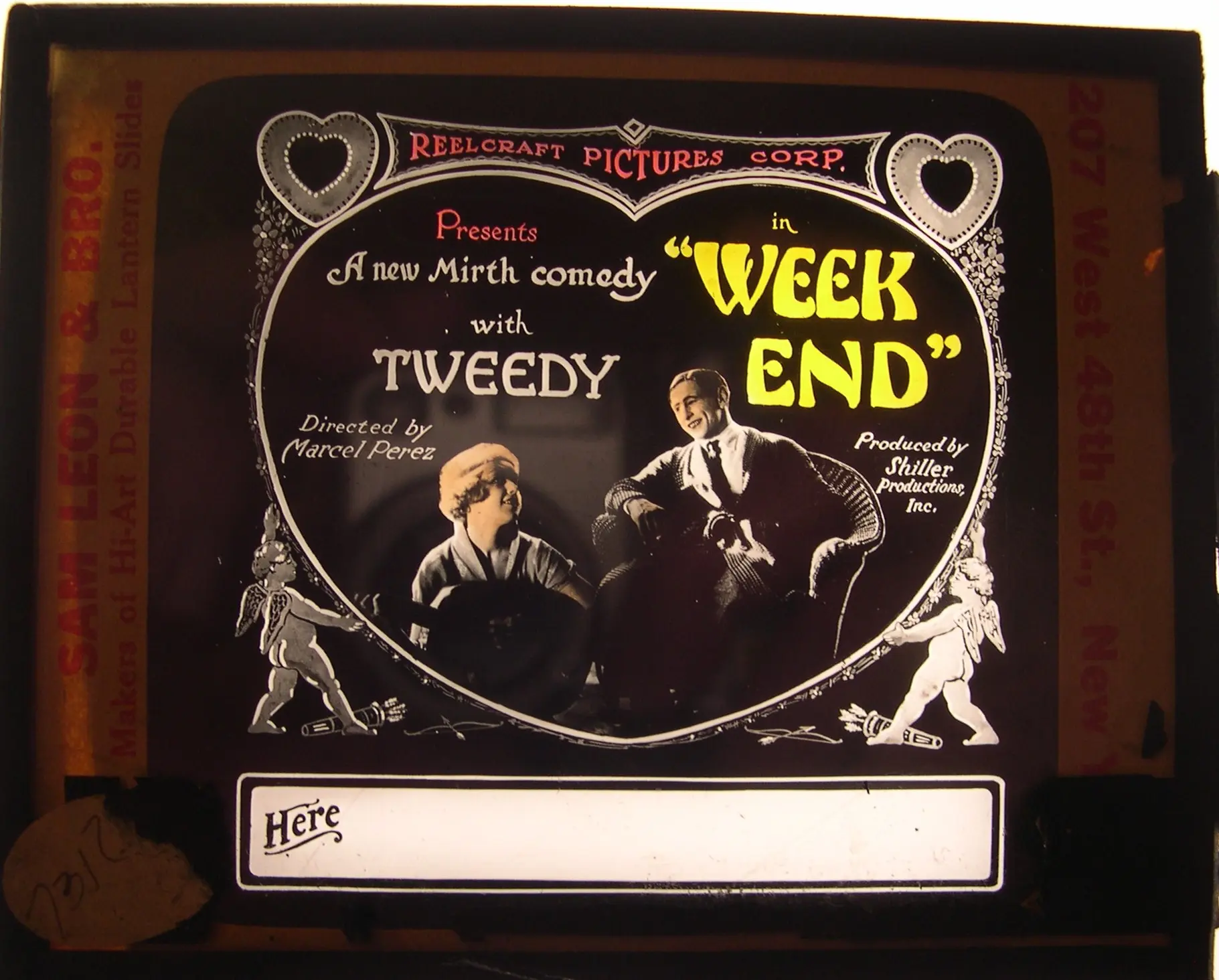
Restoration-wise, the current circulating print (courtesy of EYE Filmmuseum and a private collector’s 9.5-mm reduction) required digital teraphy: thousands of water-buckled frames were re-graded, a Shostakovian score by Maud Nelissen grafted on. The tinting strategy hews to 1921 conventions—amber for interiors, cerulean for dusk—yet allows the beach sequences to flare into solarized platinum, as though the screen itself sports a suntan. Projectionists report audiences instinctively reaching for nonexistent sunglasses; the illusion is that sensorial.
Critical discourse has stranded The Week-End in a curious limbo: too brisk for auteurist exegesis, too regionally specific for the canonical slaptime pantheon alongside The Dippy Dentist or Joan of Plattsburg. Yet its DNA infiltrates later beach fantasias—from Some Like It Hot’s shoreline denouement to Weekend (1967)’s anarchic picnics—like an unacknowledged grandfather sneaking into the genome.
Perez’s directorial grammar favors the planar gag: action staged perpendicular to the lens so that every stumble reads like a vaudeville flat-drop. Deep space is reserved for cosmic punchlines—e.g., the ocean liner that photobombs the final kiss, its hull advertising a transatlantic escape the couple will never afford. The joke lands because the frame’s depth of field is quietly hypoxic; the ship appears miniaturized, a toy promise of elsewhere.
Comparative note: where After the War (1921) lingers on shell-shocked re-integration, Perez refuses trauma’s vocabulary. His battlefields are dunes, his artillery ice-cream cones. Yet the refusal itself feels symptomatic: the weekend as repression mechanism, a two-day amnesia patch over post-war, pre-Depression anxieties. The film doesn’t mention money, but every gag is minted from financial panic—automobile borrowed, lunch scavenged, hotel rates dodged.
Contemporary viewers may cringe at a blink-and-miss-it minstrel reference—Perez blackens his face with tire-soot to evade the sheriff. The moment lasts four seconds, but restoration’s clarity renders it unavoidable. Archivists appended a contextual slideshow in Blu-ray extras: Ebony Film Corporation, Euro blackface traditions, and the Afro-Caribbean communities Perez moved through. The curatorial honesty stings, yet illuminates how even escapist trifles absorb epochal toxins.
Ultimately, The Week-End survives not because it innovates form, but because it remembers sensation: the hiss of soda siphons, the way a linen skirt adheres to shin when ocean spray hardens into salt. It is a postcard written on skin instead of paper.
Watch it at dawn, projector heat mingling with sunrise, and you may feel the century collapse. The couple’s final silhouette—hand-in-hand, backs to us, facing an endless Monday—mirrors your own impending commute. The difference? They will remain forever on that luminous threshold, perpetually about to sprint back across the sand, whereas you must close the laptop and catch the 7:42. The joke, Perez whispers across a hundred years, is on the living.
IMDb 7
1920
Community
Log in to comment.