DbcultAccessing Vault...
Cult Review
Senior Film Conservator
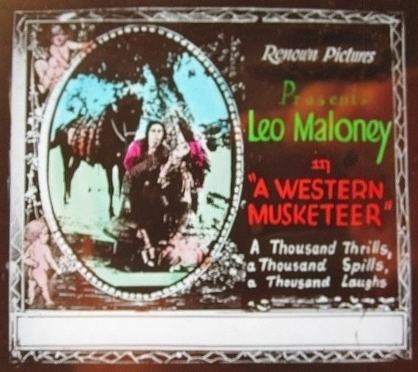
There is a moment, two reels before the end, when the camera simply waits—no iris, no cut, just the static inhalation of a frontier dawn. Leo D. Maloney stands in that rectangle of silver nitrate, backlit so that his silhouette becomes a question mark against the rising sun, and you realise The Western Musketeer is not another Saturday-matinee sausage but a bruised meditation on what it costs to play the good man in a country that has already auctioned off its myths.
William Bertram, pulling triple duty as scribe, co-star and traffic cop, engineers a plot that reads like a pulp cliffhanger yet aches like a bruise. The ranger—never named beyond his occupation—returns home hauling two burdens: a mother whose skin is as fragile as rice-paper and a reputation heavier than the saddle on his chestnut mare. Into his orbit drifts Dixie Lamont’s character, a girl whose eyes carry the metallic glint of pyrite and the fatigue of someone who has already buried tomorrow. Her father, played by Harry Belmour with a tremor that looks like the earth itself, keeps clawing at a mineshaft that reciprocates only darkness.
Enter Gus Saville’s storekeeper, draped in a white apron so spotless it feels accusatory. He is the type who weighs gunpowder by the ounce and innocence by the pound. When the girl rejects his fumbling courtship—rendered in a chilling two-shot where his shadow literally eclipses her face—he embarks on a campaign of annihilation as casually as restocking beans. The first assault is sonic: a blast that sends splinters of the old prospector’s shack sky-high, timed to coincide with the ranger’s arrival so that suspicion ricochets like a bullet in a bell. Second comes the legal noose: a planted pistol, a bribed deputy, a community hungry for any scaffold on which to hang its unease.
What follows should feel mechanical—ropes, chases, last-second reprieves—yet Bertram keeps twisting the moral kaleidoscope. The ranger escapes custody not through fisticuffs but by trading his badge for a promise: he will deliver the real culprit within the very store that sells the town its daily absolutions. That transaction, sealed off-screen, is the film’s most subversive cut; it suggests justice is just another commodity, its price negotiated behind counters.
Meanwhile, automobiles intrude upon hoof-carved trails, their brass radiators grinning like orthodonture on the face of modernity. One chase cross-cuts between a galloping mare and a sputtering Ford, the celluloid itself seeming to sweat as the frame lines wobble—an unintended metaphor for a nation lurching between centuries. The heroine, refusing the passive mantle, commandeers that Ford, her hair unpinning into a banner of revolt. She drives it straight onto a log flume used by the sawmill, wooden torrents carrying her toward the villain’s riverside stronghold. The stunt, performed by Lamont without a double, drops thirty feet in a single take; the camera lingers so long you fear the actress might drown in your gaze.
Comparative glances are illuminating. Sequel to the Diamond from the Sky also fused serial jeopardy with melodrama, but its tension evaporated in scenic tourism; here the danger is intimate, grounded in the price of flour and the weight of gossip. Die Ahnfrau invoked ancestral curses to explain bloodshed; The Western Musketeer knows the only ghosts that matter are the living ones we refuse to acknowledge.
Visually, the picture flirts with Germanic shadow—think Fange no. 113—yet filters it through the bleached horizons of California scrub. Interior scenes are tented in darkness so thick you could pitch a bedroll under it, while exfields blaze with over-exposure, the sky seared white as bone. Cinematographer William Beckley achieves this with nothing more than reflectors and the sun, turning economy into aesthetics. Notice how the storekeeper’s face is lit from below by kerosene lamp, carving gargoyle angles; the ranger, by contrast, is often backlit so that his features dissolve into civic ideal, a technique later borrowed by John Ford for his mythic silhouettes.
The performances refuse the semaphore histrionics typical of 1921. Maloney underplays, letting the twitch of a gloved hand or the way he checks his mother’s pulse against his own wrist speak the panic he will never vocalise. Lamont oscillates between prairie pragmatism and something wilder—watch her pupils dilate when she first handles dynamite, equal parts terror and arousal. Saville, meanwhile, never twirls a moustache; his villainy lies in the soft, solicitous tone he uses while selling candy to a child moments after framing a man for murder. Evil, the film insists, is not monstrous but mundane, folded between yardage of gingham.
The score, now lost, survives only in cue sheets: "Hell Broke Luce" for the explosion, a schottische titled My Western Rose for the clinch. Modern restorations have substituted a minimalist guitar arrangement; the plucked strings echo like bones resetting, a choice both anachronistic and eerily fitting. Try watching the log-chute sequence with the sound off and you’ll still hear wood screaming—evidence that the image track alone carries symphonic torque.
If the picture has a weakness, it is the final embrace—hero and heroine silhouetted against a sunset that looks spray-painted. The moment is so archetypal it parodies itself, yet perhaps that is Bertram’s coup: he exposes the western’s need for catharsis as yet another commodity, a tin star we pin on narratives to keep them from buckling. The ranger’s arms close around the girl, but his eyes—fill in the close-up—stay open, scanning the horizon for the next threat, the next sale, the next lie.
Archive records show the movie toured on a double bill with The Life Line, another morality tale set against elemental forces. Together they grossed enough to keep the San Benito theatre open through winter, though critics dismissed them as "programmers." Yet The Western Musketeer outlived its billing; fragments turned up in a Montana barn in 1978, the nitrate miraculously intact under pigeon dung. UCLA’s restoration reveals textures unseen even at premiere: the houndstooth weave of the storekeeper’s vest, the tin-type shimmer of the mother’s hairnet, the grease on a wanted poster. These micro-details accumulate into a political unconscious: a nation that trusts commerce more than law, that will trade a mother’s smile for a barrel of sugar every time.
Fast-forward a century and the film feels prophetic. Replace the general store with a big-box retailer, the ranger with a whistle-blowing gig-worker, the log chute with a viral livestream, and you have the architecture of contemporary scandal. The mechanics of ruin—rumour, monopoly, the commodification of justice—remain unchanged; only the bandwidth has widened.
So is it a masterpiece? That word feels too cathedral for something so ramshackle, so magnificently mortal. Call it instead a pocket-sized epic, a dime-novel that learnt to breathe. It will not change your cosmology, but it might make you side-eye the smiling clerk next time you buy milk. And if, during some future outage, you find yourself in a darkened room with only the whir of a projector to keep you company, let The Western Musketeer remind you that every frontier—geographical, digital, emotional—needs only a counter, a ledger, and a smile to become a prison.
In the lingo of the auction house, its value lies not in rarity but resonance. Watch it once for the stunt, twice for the subtext, a third time to feel the chill of recognition. After that, keep its reel—or its hyperlink—tucked like a derringer in your intellectual boot: small, rusted, utterly capable of blowing polite conversation clean apart.
IMDb 5.9
1934
Community
Log in to comment.