DbcultAccessing Vault...
Cult Review
Senior Film Conservator
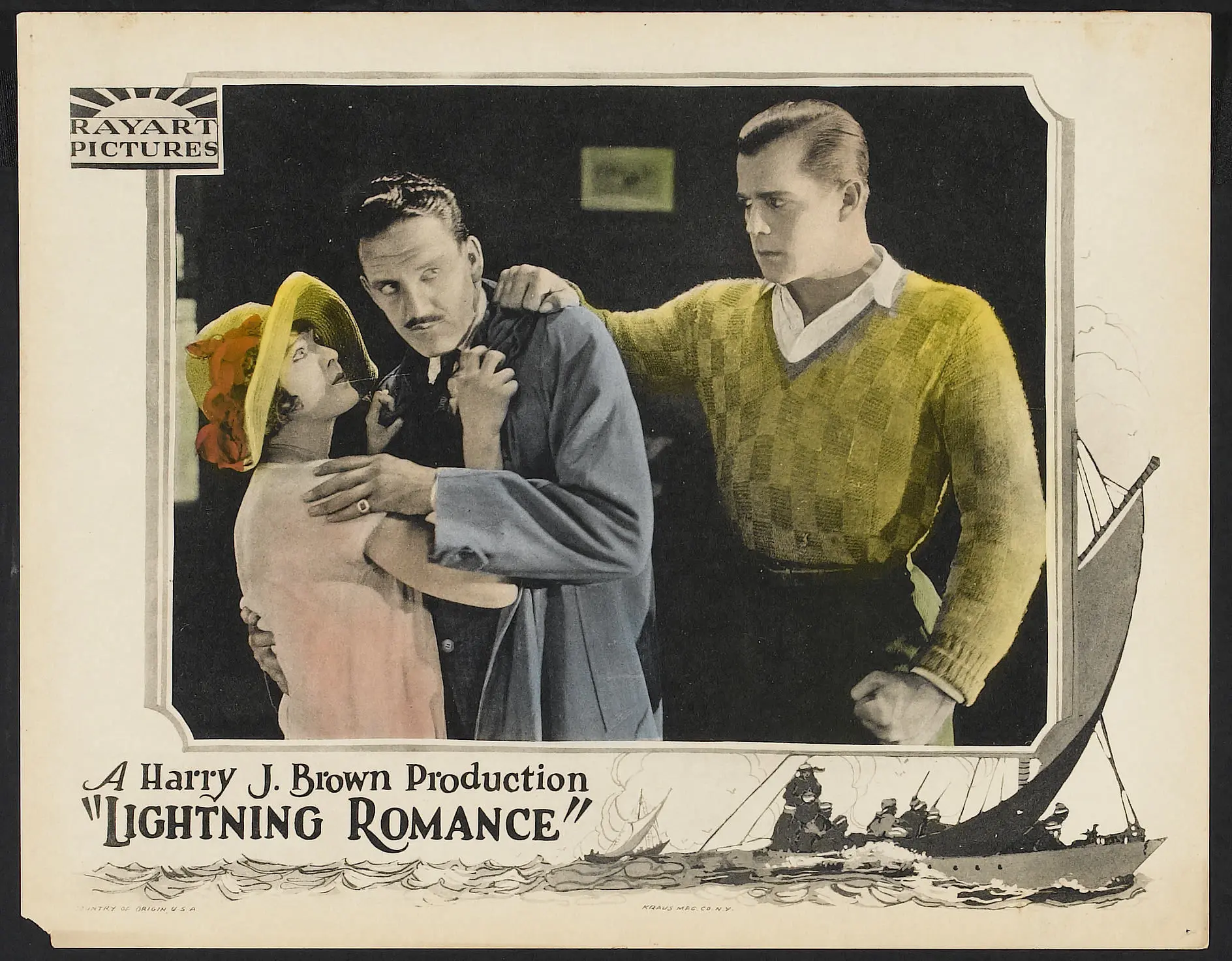
To watch Lightning Romance (1924) in the modern age is to witness the birth of the pure action aesthetic. Long before the CGI-laden spectacles of the twenty-first century, filmmakers relied on the sheer physicality of their leads and the rhythmic precision of the edit. This film, a product of the mid-silent era, captures a specific moment when the medium had fully mastered the art of visual storytelling without the crutch of synchronized dialogue. It is a work of breathless momentum, operating on a frequency that feels remarkably contemporary despite its century-old celluloid skin.
Unlike the heavy-handed moralism found in Oliver Twist or the societal weight of Tess of the D'Urbervilles, Lightning Romance doesn't ask the audience to ponder the existential dread of the human condition. Instead, it invites us to revel in the mechanics of the chase. It is a film of gears, hooves, and heartbeats. The narrative, penned by the prolific Marion Jackson, serves as a lean skeletal structure upon which director and cast hang a series of increasingly daring set pieces. Jackson’s writing here is a masterclass in economy, ensuring that every title card serves the forward motion of the plot.
At the center of this whirlwind is Reed Howes. Often referred to as 'The Advertised Man' due to his modeling background, Howes brings a level of athleticism to the screen that rivals the greats of his time. He possesses a screen presence that is both rugged and refined, a precursor to the swashbuckling archetypes that would later dominate the talkies. In this film, his movements are choreographed with a frantic elegance. Whether he is navigating the treacherous terrain of a rural escape or engaging in the high-stakes emotional negotiations of the heart, Howes maintains a charismatic intensity that keeps the viewer anchored.
His performance offers a fascinating contrast to the more theatrical styles seen in Idolators. While many silent actors struggled with the transition from the stage to the intimate gaze of the camera, Howes seems perfectly at home in the close-up. He understands that in an action-romance, the eyes must work as hard as the limbs. His chemistry with Ethel Shannon is palpable, providing the necessary emotional stakes to justify the film’s perilous climax.
No thriller can succeed without a formidable wall for the hero to climb, and Wilfred Lucas and Frank Hagney provide a masterclass in silent villainy. Lucas, a veteran of the D.W. Griffith school of acting, brings a nuanced menace to the screen. He doesn't need to twirl a mustache to convey corruption; it is written in the set of his jaw and the stillness of his gaze. Hagney, conversely, provides the physical threat—a looming presence that makes the 'lightning' aspect of the romance feel like a necessary survival tactic rather than just a poetic title.
The interplay between these characters reminds one of the darker social undertones found in From Gutter to Footlights, though here the conflict is stripped of its vaudevillian trappings and replaced with a more rugged, Western-adjacent sensibility. The villains in Lightning Romance are not merely obstacles; they are representatives of an old-world cynicism that the youthful protagonists must outrun to reach the promised land of the twentieth-century American dream.
One cannot discuss this film without acknowledging Rex. In an era where canine stars like Rin Tin Tin were major box office draws, Rex holds his own with a performance that is surprisingly grounded. He is not merely a gimmick or a mascot; he is a narrative engine. His presence adds a layer of instinctual urgency to the proceedings. While the humans are bogged down by societal expectations and complex deceptions, the dog represents the pure, unadulterated drive for loyalty and protection. The scenes involving Rex are some of the most technically impressive in the film, showcasing a level of animal training and directorial patience that is often overlooked in historical retrospectives.
The use of animals as emotional anchors was a common trope, yet in Lightning Romance, it feels less like the sentimentality of The Girl I Loved and more like a functional element of the thriller genre. Rex is the silent witness and the ultimate catalyst, bridging the gap between the film’s romantic aspirations and its rugged action roots.
Technically, the film is a marvel of location shooting. The cinematography captures the sprawling, dusty vistas of the American landscape with a clarity that belies the primitive equipment of the time. There is a grit to the frames that contrasts beautifully with the soft-focus glamour of the interior scenes. The lighting, particularly in the evening sequences, uses the high-contrast chiaroscuro that would later define film noir. This visual language elevates the film from a standard 'B-picture' to something more atmospheric and enduring.
When compared to the domestic visual style of The Good Provider or the satirical brightness of The Fotygraft Gallery, Lightning Romance feels remarkably modern. It utilizes the 'moving camera' in ways that were still being perfected, following the action with a fluidity that suggests a director and crew willing to take significant physical risks. The editing, too, is sharp. The cross-cutting during the final act creates a sense of temporal pressure that is the hallmark of great suspense cinema.
Lightning Romance is an fascinating example of genre hybridity. It sits at the intersection of the Western, the romantic melodrama, and the burgeoning 'stunt' film. This fluidity was common in the silent era, before the rigid studio systems of the 1930s began to silo stories into specific boxes. It shares the adventurous spirit of Brigadier Gerard but grounds it in an American vernacular of speed and industry.
The film also touches upon themes of class and redemption, much like The Clean-Up. Reed Howes’ character is often fighting not just for the girl, but for his right to exist within a social hierarchy that is stacked against him. This 'underdog' narrative resonated deeply with 1920s audiences, who were themselves navigating a rapidly changing economic and social landscape. The 'lightning' in the title refers not just to the speed of the romance, but to the electric spark of modernity itself—the idea that life, love, and fortune can be won or lost in an instant.
While the film is largely a celebration of forward motion, it is haunted by the 'chains of the past'—a theme explored more somberly in Chains of the Past. The secrets held by the older characters, particularly those played by Wilfred Lucas and David Kirby, provide the friction that generates the film’s heat. This tension between the sins of the fathers and the aspirations of the children is a recurring motif in 1920s cinema, reflecting a post-war generation’s desire to break free from the Victorian moralities of their predecessors.
Even the more lighthearted elements of the film, such as the flirtations between Howes and Shannon, carry a weight of urgency. In the world of Lightning Romance, there is no time for the slow-burn courtships of Rose o' Paradise or the whimsical detours of Silk Stockings. Here, love is a tactical necessity, a beacon of light in a world of shadows and speeding locomotives.
Lightning Romance is more than just a historical curiosity. It is a vibrant, living piece of cinema that demonstrates the power of visual storytelling. While it may lack the experimental surrealism of The Ouija Board or the international intrigue of Kærlighedsspekulanten, it succeeds on its own terms as a high-octane entertainment. It is a reminder that the basic components of cinema—movement, conflict, and resolution—were perfected very early in the game.
For the modern viewer, the film offers a window into a world that was both simpler and more physically demanding. It celebrates a type of heroism that is found in the muscles and the will, aided by a loyal dog and a fast car. As we look back through the lens of a century, Lightning Romance stands as a testament to the enduring appeal of the chase. It is a film that moves with the grace of a sprinter and the heart of a romantic, capturing a fleeting moment of cinematic purity before the coming of sound changed the language of the screen forever. Like Passing Night, it reminds us that even the most ephemeral of stories can leave a lasting impression if told with enough energy and conviction.
Technical Specs: Directed by Albert Rogell | Written by Marion Jackson | Starring Reed Howes, Ethel Shannon, Wilfred Lucas, Frank Hagney | Released: 1924 | Runtime: Approx 55-60 minutes (varies by print).
IMDb 5
1927
Community
Log in to comment.