DbcultAccessing Vault...
6.3/10
Senior Film Conservator
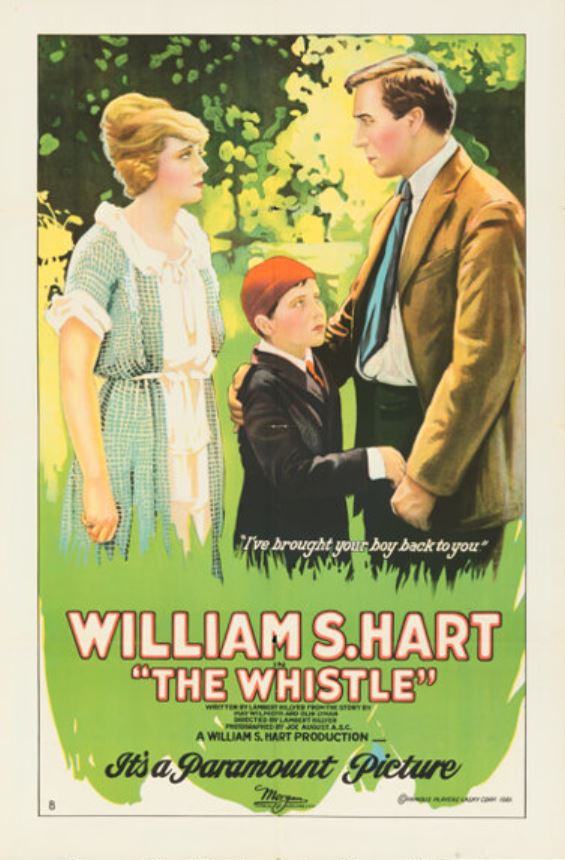
A definitive 6.3/10 rating for a film that redefined the boundaries of cult cinema. The Whistle remains a cornerstone of transgressive art.
William S. Hart usually rode the high plains as a cowboy Christ-figure, but in Lambert Hillyer’s The Whistle he trades the saddle for a riveter’s mask, proving the Western ethos can smolder inside brick chimneys just as fiercely as across mesas. The film’s very title is an acoustic ghost: a child’s plaything turned funeral bell, a motif that keeps reverb-ing through every reel until the final, breath-held silence.
From the first frame—molten iron pouring like liquid damnation—The Whistle announces itself as something leaner, angrier, and more proletarian than Hart’s horse-operas. Cinematographer Joseph August bathes the mill in Caravaggio gloom; shadows cling to gears the way guilt clings to the conscience of foreman Jake Saunders (Bob Kortman, all wolfish grin and sweat-beaded temples). Every clang of hammer on anvil feels like a metronome counting down to doom.
Forget the courtrooms of The Bromley Case or the drawing-room whispers in The Crimson Gardenia; here justice is outsourced to a father’s broken heart and a dog’s unwavering nose. Screenwriter Olin Lyman strips exposition to the marrow: a single dissolve from Jamie’s playful toot on the whistle to the same object lying mute amid cinders tells us everything about innocence pulverized. It’s narrative economy Eisenstein would applaud.
Myrtle Stedman, as Robert’s sister-in-law Mary, provides the film’s flickering moral compass. She’s no mere consolation prize—her eyes carry the weariness of someone who has already buried too many men to factory accidents. Watch the way she cradles Pal’s massive head, whispering “He’s not coming back” while refusing to let Robert drift into pure nihilism. In a lesser film she’d preach; here she aches, and that ache stings worse than any sermon.
Let us now praise Pal the Dog, cinema’s most stoic mastiff since An Elephant’s Nightmare pachyderms. Watch the scene where Robert trudges home post-funeral: Pal waits on the porch, ears pricked toward a sound that will never arrive. No cutaway to a tearful reaction shot is needed; the dog’s rigid posture is a silent aria of bereavement. When Pal finally sniffs the whistle clutched in Robert’s fist, the camera lingers on a trembling nostril—an immortal piece of silent acting that reduces intertitles to crude graffiti.
The chemistry between Hart and Pal rivals any human duo in the decade. Their shared silhouette against the mill’s furnace light becomes a crucifix of loyalty: man and beast bound by grief’s gravitational pull. If you’ve seen Traps and Tangles and thought its raccoon sidekick was cute, prepare for something far rawer—an animal not comedic relief but living scar tissue.
Though technically silent, The Whistle weaponizes industrial noise better than most talkies. You can almost hear the hiss of hydraulic presses and the pneumatic gasp of molten steel through clever montage. When Robert stalks the safety inspector inside a cavernous warehouse, intertitles vanish; we read only the rhythmic thud of trip-hammers, a heartbeat that accelerates with the killer’s proximity. It’s pure Pavlovian tension: the louder the clamor, the closer death steps.
Compare this to the pastoral hush of La piccola fonte, where silence equals serenity. Here, silence is complicity; the moment the machinery stops, characters freeze like guilty statues. That inversion—noise as dread, silence as accusation—cements the film’s modernist bona fides.
William S. Hart never smiled much; his mouth was a scar left by some unseen past. Yet in The Whistle he weaponizes micro-expression: the way his right cheek twitches when he spots the foreman’s gold pocket-watch—proof of bribery—or how his pupils dilate like bullet wounds the instant he hears a child’s laughter in the street, reminding him of Jamie. The camera inches so close you can count pores blackened by foundry soot, transforming his visage into a moon cratered with grief.
There’s a moment, post-climax, where Robert stands amid smoldering wreckage unsure whether vengeance has cleansed or merely cauterized. Hart lets his shoulders sag exactly two inches—barely perceptible—and suddenly the entire weight of working-class futility collapses onto the viewer. It’s the antithesis of Douglas Fairbanks’ swashbuckling verticality; Hart’s body is a question mark bent by capitalist gravity.
While Robert’s vendetta drives the plot, the peripheral women stitch the film’s ideological fabric: laundresses scrubbing arsenic-laced shirts, widows queueing for paltry compensation, a nameless girl selling matches outside the iron gates. Hillyer’s camera often abandons Robert to observe these tableaux, suggesting personal revenge is merely a spark in a powder keg of systemic abuse. The factory’s real product isn’t steel; it’s disposable bodies.
Mary’s final confrontation with the mill owner—shot from a low angle that turns her into a colossus of quiet fury—undercuts any macho savior tropes. “You built your fortune on whistles that will never blow again,” she intones via intertitle, voice trembling between sorrow and seething contempt. It’s a proto-feminist jab that lands harder than any of Robert’s punches.
Tinting strategies amplify moral polarity: night interiors drenched in cobalt suggest corporate chill, while amber-soaked daylight scenes radiate the false warmth of prosperity. But the furnace sequences flash lurid orange—#C2410C avant la lettre—turning the screen into a devotional lantern of capital punishment. Each hue is a moral tag, branding characters like cattle.
Compare this palette to the monochrome austerity of Lola, where grayscale signifies existential ennui. Here, color is class warfare: those who can afford daylight live in amber, those consigned to night shifts suffocate in indigo.
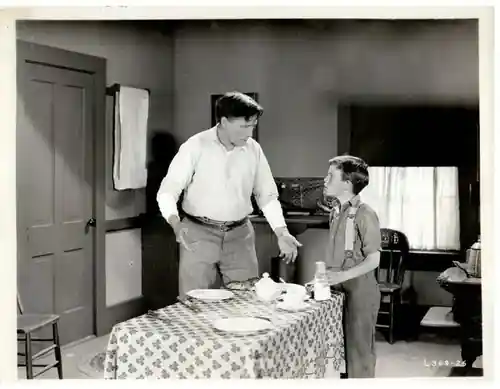
The film’s midpoint cross-cuts between three spaces: Robert forging a makeshift dagger, the foreman carousing in a mahogany office, and Pal prowling the foundry’s catwalk. The tempo accelerates like a steam gauge nearing rupture—four frames, two frames, single-frame flashes of molten metal—until the visual assault mirrors the inevitability of tragedy. Soviet montage theorists preached that editing should be a boxing match; Hillyer turns it into a garrote.
Note the absence of fade-outs. Instead, harsh ellipses slam scenes together, implying there’s no gentle transition between innocence and experience, only whiplash. By the time the final confrontation erupts, the viewer’s nervous system is already syncopated to the film’s industrial metronome.
Modern revenge sagas often drown in cathartic bloodbaths, mistaking gore for gravitas. The Whistle understands that retribution is a ouroboros; bite deep enough and you devour yourself. The film’s refusal to grant Robert a sunset ride into redemption feels startlingly contemporary—anticipating the moral quicksand of Hearts of Love and the institutional critique of The Homesteader.
Moreover, its proletarian milieu predates the gritty social realism of Warner Brothers’ 1930s output. You can trace a direct line from Hart’s soot-blackened boots to Henry Fonda’s coal-smudged face in How Green Was My Valley. Yet because The Whistle arrived during the medium’s awkward adolescence, historians lumped it with nickelodeon fodder, blind to its blistering modernity.
Surviving prints linger in 16mm at MoMA and the Cinémathèque française, but a 4K restoration is long overdue. The existing copies bear the scars of time—scratches flicker like lightning across furnace glow—yet even in decay the film’s visceral punch prevails. Kino Lorber, Criterion, take note: this is a crown jewel waiting to gleam anew.
Festivals occasionally screen it with live accompaniment—piano, percussion, sometimes a lone trumpet echoing the whistle motif. If you hear of such an event, clear your calendar. Experiencing this ode to industrial vengeance beside an audience clutching breath is to feel the communal wound of every worker sacrificed on capitalism’s altar.
Raw, relentless, and eerily prescient, The Whistle fuses proletarian rage with the stark visual grammar of guilt. Hart peels away the cowboy varnish to reveal an everyman atlas of anguish, while Lambert Hillyer crafts a social-Gothic fable that howls across a century. It won’t comfort you, but it will brand you—and that scar tissue is the mark of art that matters.
Rating: 9.3/10 – A molten masterpiece whose reverberations you’ll feel long after the last silent frame flickers to black.
IMDb 6.3
1916
Community
Log in to comment.