DbcultAccessing Vault...
6.2/10
Senior Film Conservator
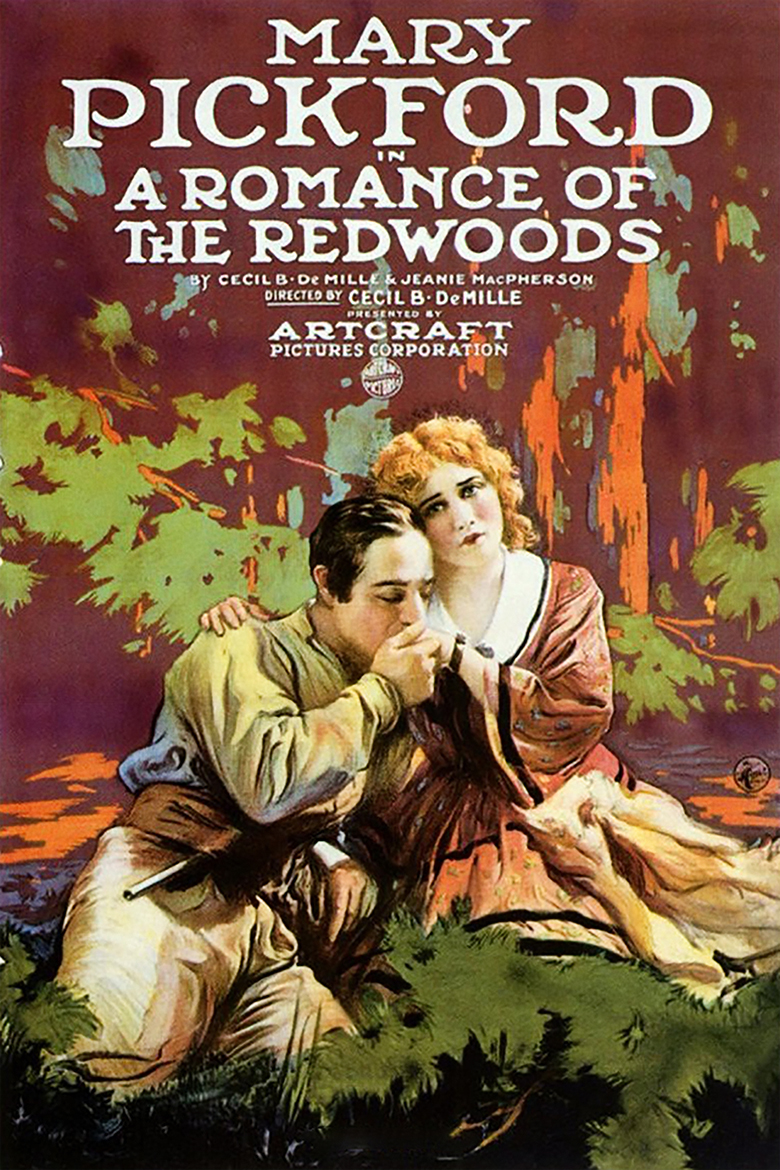
A definitive 6.2/10 rating for a film that redefined the boundaries of cult cinema. A Romance of the Redwoods remains a cornerstone of transgressive art.
In the annals of early American cinema, few figures cast a shadow as long and as luminous as Mary Pickford. Her persona, a delicate blend of waif-like innocence and steely resolve, resonated deeply with audiences of the nascent film industry. In Cecil B. DeMille's 1917 silent epic, A Romance of the Redwoods, Pickford is once again positioned as the innocent thrust into a maelstrom of frontier hardship and moral ambiguity, delivering a performance that cemented her status as 'America's Sweetheart' while subtly hinting at the complexities that would define her enduring legacy. This isn't merely a tale of a young girl's journey west; it's a profound exploration of identity, deception, and the surprising resilience of the human spirit when confronted with the raw, untamed forces of nature and human malevolence.
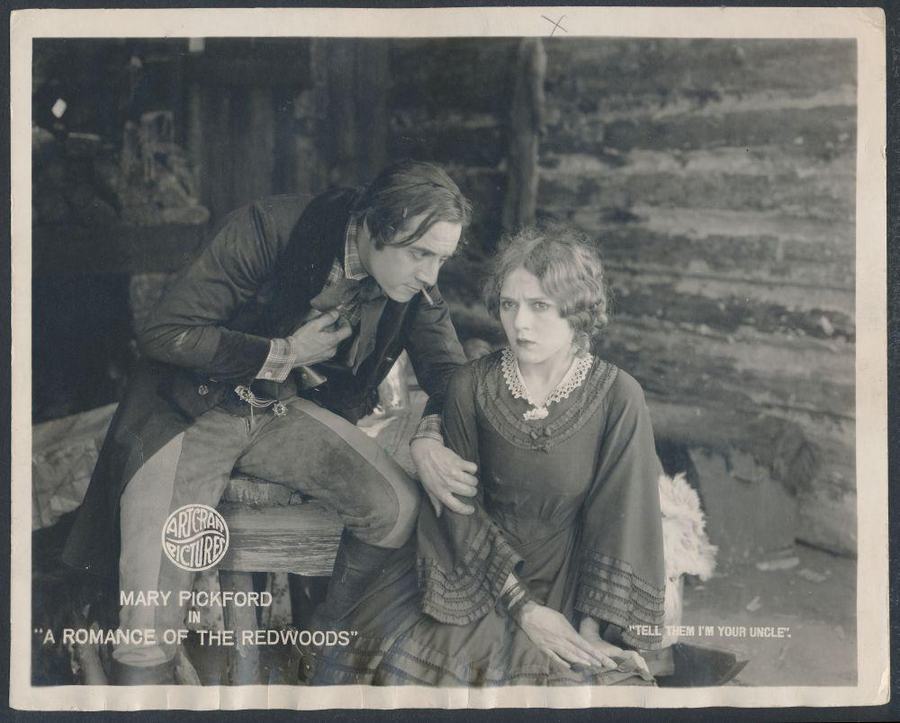
The film unfolds against the breathtaking, yet often unforgiving, backdrop of the California Gold Rush – a period synonymous with boundless ambition, desperate struggle, and a distinct lack of legal niceties. Pickford portrays Jenny Lawrence, a young woman whose sheltered existence in the East is abruptly uprooted, compelling her to seek refuge with her uncle in a remote outpost nestled within the majestic redwoods. Her journey is steeped in a naive optimism, a belief in the inherent goodness of familial bonds and the promise of a new beginning. However, the West, in DeMille's vision, is a crucible, not a sanctuary. Upon her arrival, Jenny discovers a horrifying truth: her uncle has been brutally murdered by Native Americans, and his identity has been brazenly assumed by a ruthless outlaw, played with chilling efficacy by Elliott Dexter. This deception forms the narrative's central pillar, a precarious house of cards built on a foundation of violence and sustained by the outlaw’s desperate need for a cover. Jenny, trapped in this terrifying masquerade, is forced to play along, a silent witness to the man who wears her uncle's face, her every interaction fraught with the unspoken terror of discovery.
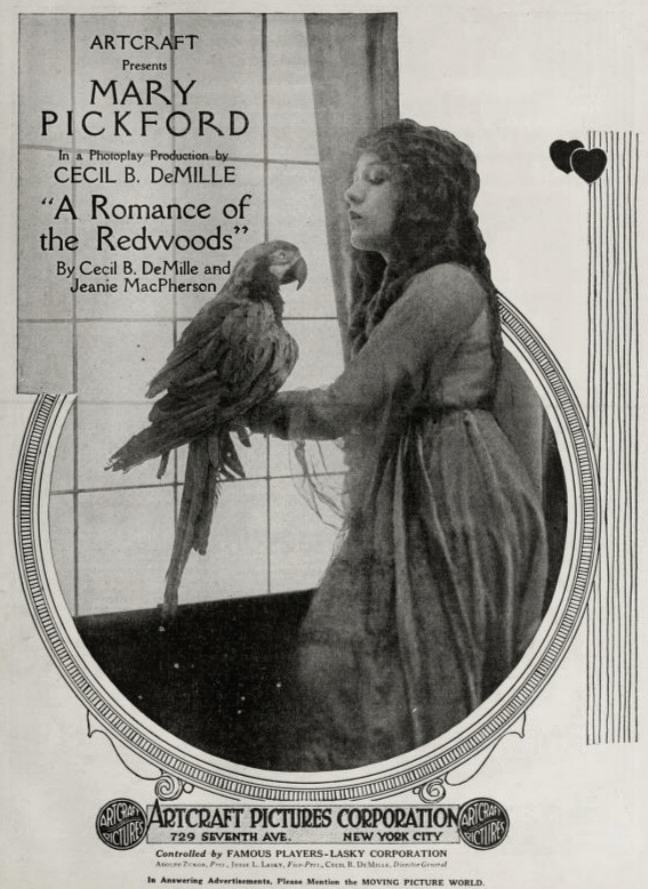
DeMille, even in his early career, demonstrated an uncanny knack for crafting narratives that were both grand in scope and intensely personal in their emotional core. Here, he masterfully juxtaposes the sweeping vistas of the redwood forests with the claustrophobic tension of Jenny's predicament. The vastness of the wilderness, traditionally a symbol of freedom and possibility, becomes, in this context, a sprawling prison, isolating Jenny from any hope of rescue or revelation. The film's visual language, a hallmark of silent cinema, is particularly effective in conveying this duality. The towering trees, shot with a reverent eye, loom over the human drama, silent sentinels to the unfolding tragedy and burgeoning, unexpected romance. The use of natural light and expansive outdoor sets gives the film an authentic, almost documentary-like feel, grounding the melodrama in a palpable sense of place and time.
Mary Pickford's performance as Jenny is nothing short of captivating. She navigates the emotional landscape of her character with remarkable depth, conveying terror, confusion, simmering anger, and eventually, a complex affection, all without uttering a single word. Her wide, expressive eyes become windows to a soul in turmoil, reflecting the constant internal struggle between her moral compass and the instinct for self-preservation. The transformation of Jenny from a naive Easterner to a woman hardened by the frontier's cruel realities, yet softened by an unforeseen emotional connection, is rendered with exquisite subtlety. Pickford's ability to elicit profound empathy from the audience was legendary, and A Romance of the Redwoods showcases this talent in spades. Her vulnerability is palpable, yet beneath it lies a nascent strength, a quiet determination that prevents her from becoming a mere victim. This nuanced portrayal of female resilience in the face of overwhelming odds is a recurring motif in Pickford's oeuvre, resonating with similar themes of a young woman finding her footing in a harsh world seen in films like The Foundling, though here the deception adds a layer of psychological complexity that feels uniquely unsettling.
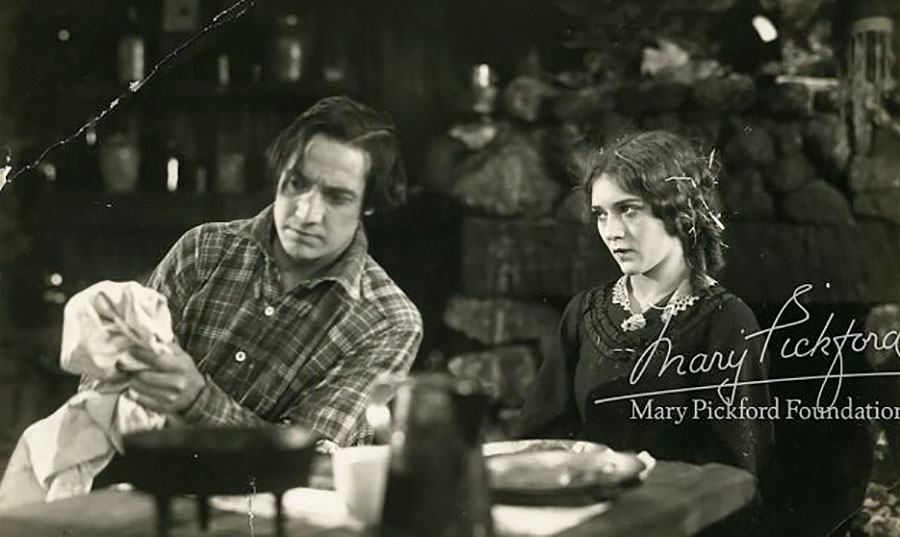
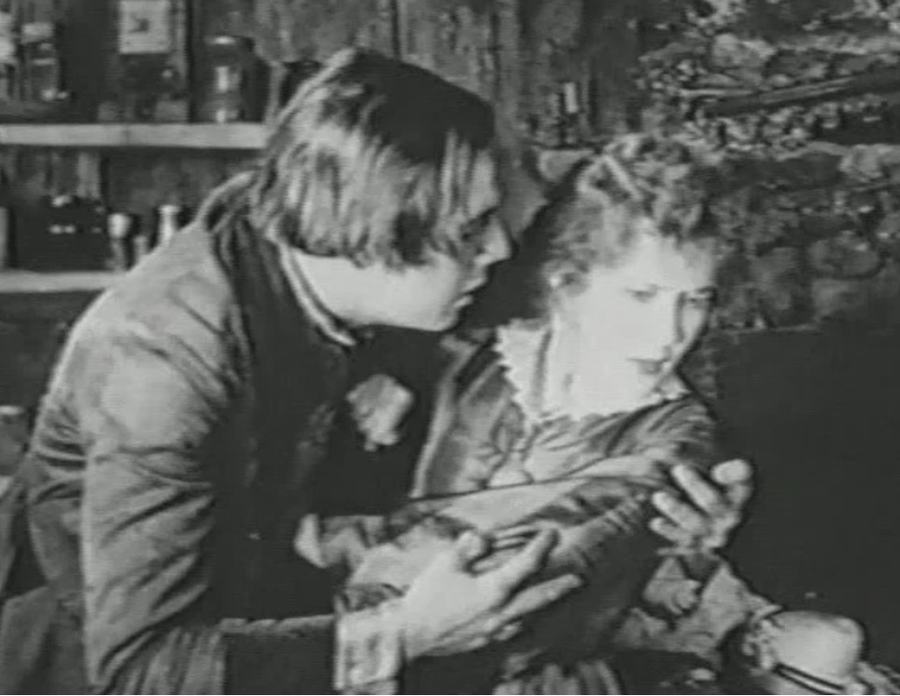
Elliott Dexter, as the outlaw impersonating the uncle, delivers a performance that is equally compelling in its darker hues. He is not a one-dimensional villain; Dexter imbues the character with a brooding intensity, a flicker of humanity that occasionally pierces through his hardened exterior. This complexity is crucial to the film's success, as it allows for the gradual, almost imperceptible shift in Jenny's feelings towards him. What begins as pure terror and revulsion slowly evolves into a complicated mix of fear, pity, and perhaps, a nascent understanding. The dynamic between Pickford and Dexter is the emotional engine of the film, a delicate dance of power and vulnerability, mistrust and burgeoning connection. The tension is palpable in every shared glance, every hesitant gesture, as Jenny grapples with the man she knows to be a killer, yet who, in moments, displays unexpected kindness or a surprising vulnerability.
Cecil B. DeMille's directorial hand is evident throughout A Romance of the Redwoods. While he would later become synonymous with grand biblical epics and opulent historical dramas, his early work often explored more intimate, character-driven narratives, albeit still with a keen eye for dramatic spectacle. Here, the spectacle comes from the natural world itself – the imposing redwoods, the untamed rivers, the rugged landscape that defines the Gold Rush era. DeMille employs a relatively straightforward narrative style, allowing the performances and the inherent drama of the situation to carry the weight of the story. His direction is precise, ensuring that every gesture, every facial expression, every intertitle serves to advance the plot and deepen the emotional resonance. He understood the power of visual storytelling in an era devoid of spoken dialogue, using camera angles, editing, and mise-en-scène to communicate complex ideas and emotions.
The film also touches upon the brutal realities of the American frontier, including the often-problematic portrayal of Native Americans common in films of this era. While the initial act of violence is attributed to them, the narrative quickly shifts its focus to the internal human drama, using the 'Indian attack' primarily as a plot device to establish the outlaw's presence and the subsequent deception. It’s a reflection of the prevailing attitudes and storytelling conventions of the time, and while it warrants critical acknowledgment, it doesn't detract from the film's central exploration of its protagonists' ethical dilemmas and psychological journeys. This exploration of moral gray areas, even within the context of a seemingly clear-cut good vs. evil scenario, is a subtle strength of DeMille's early work, a characteristic that would evolve and become more pronounced in his later, more ambitious projects.
The supporting cast, though perhaps overshadowed by Pickford's star power, contributes significantly to the film's atmosphere and narrative depth. Walter Long, often cast as villains or formidable figures, likely adds to the general sense of danger and lawlessness prevalent in the Gold Rush setting, reinforcing the precariousness of Jenny's situation. Charles Ogle and Winter Hall, veterans of the silent screen, provide the necessary gravitas and character grounding that help to flesh out the world around Jenny and the outlaw. Their presence, even in smaller roles, helps to paint a picture of a community struggling to forge a semblance of order amidst chaos, a microcosm of the larger American frontier experience. The film, like many Westerns of its time, establishes a clear sense of community and the individual's place within it, even if that place is one of deception and isolation.
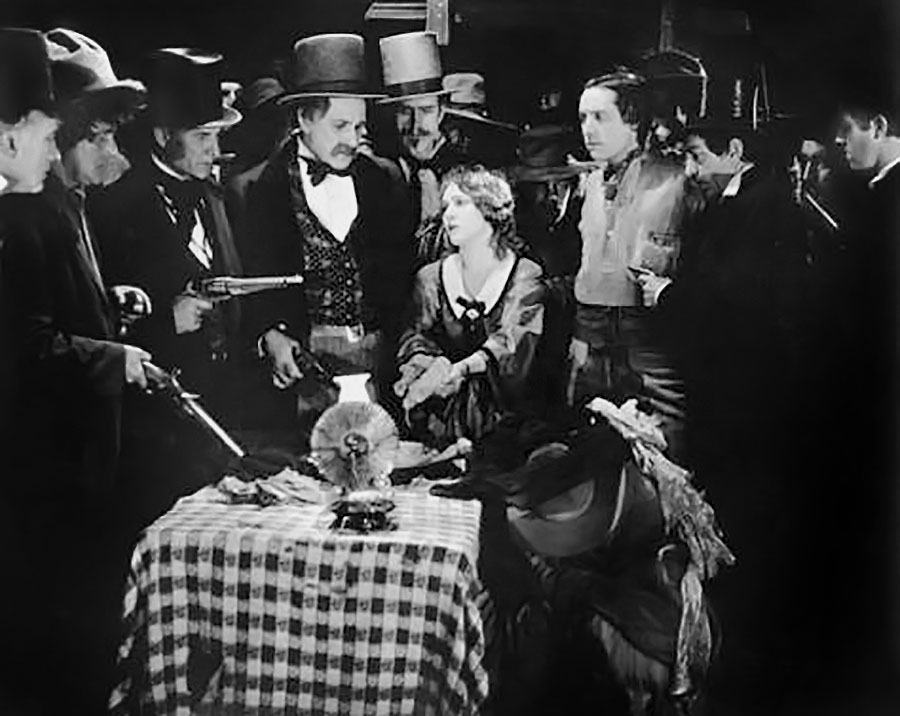
The screenplay, penned by Jeanie Macpherson and Cecil B. DeMille himself, is a testament to the efficient and emotionally resonant storytelling prevalent in silent film. Macpherson, a frequent collaborator with DeMille, was instrumental in developing strong female characters and intricate plots. Here, the narrative arc is elegantly constructed, moving from initial shock and terror to a gradual, almost reluctant, emotional entanglement, culminating in a resolution that, while perhaps adhering to the conventions of the era, feels earned through the characters' arduous journey. The script wisely avoids overly complex subplots, focusing instead on the intense psychological drama between Jenny and her unwitting captor, allowing the emotional beats to land with maximum impact.
Viewing A Romance of the Redwoods today offers a fascinating glimpse into the artistry and conventions of early silent cinema. The reliance on exaggerated gestures, expressive close-ups, and carefully crafted intertitles might seem quaint to modern audiences accustomed to dialogue-driven narratives, yet there's an undeniable power in this form of storytelling. The absence of sound forces the viewer to engage more actively, to interpret emotions and intentions through visual cues. The film serves as a potent reminder of the ingenuity of early filmmakers in conveying complex human emotions and intricate plots without the benefit of spoken words or synchronized sound. It's a masterclass in visual communication, where every tilt of the head, every shift in gaze, carries significant narrative weight.
The themes explored in A Romance of the Redwoods – identity, deception, survival, and the unexpected twists of fate – are timeless. The initial premise of mistaken identity and forced cohabitation, while rooted in a specific historical context, taps into universal anxieties about trust and appearances. This thematic depth elevates the film beyond a simple Western melodrama, placing it in conversation with other narratives that explore the psychological toll of living a lie or being trapped by circumstance. One might draw parallels to the psychological intensity found in films like The Case of Becky, where the fragility of identity and the pervasive sense of being controlled by external forces are central to the dramatic tension. Here, however, the external force is a living, breathing man, adding a layer of immediate, visceral threat.
Beyond the human drama, the titular redwoods themselves function almost as a character in the film. Their colossal scale and ancient grandeur provide a majestic, almost spiritual, backdrop to the raw human emotions playing out beneath their canopy. DeMille's choice to film in such a striking natural environment was not merely aesthetic; it imbued the narrative with a sense of isolation and grandeur that amplified the stakes for Jenny. The wilderness is both a refuge and a threat, a place of breathtaking beauty and formidable danger. This interplay between humanity and nature is a recurring motif in American cinema, particularly in the Western genre, and A Romance of the Redwoods leverages it to great effect. The sense of being dwarfed by nature's immensity only serves to highlight the vulnerability of the human characters, making their struggles feel all the more poignant. The raw, untamed landscape mirrors the untamed nature of the Gold Rush, a period where societal norms were often suspended in the pursuit of wealth, creating a fertile ground for characters like the outlaw.
The film's exploration of redemption, albeit a complicated and perhaps morally ambiguous one, is another compelling aspect. The outlaw, initially presented as a figure of pure menace, undergoes a subtle transformation, influenced by Jenny's unwavering innocence and perhaps by the sheer weight of his own deception. This arc, while not necessarily a full conversion to righteousness, offers a glimpse into the possibility of change, even in the most hardened of hearts. It's a theme that resonates across many cinematic genres, but within the confines of a silent Western, it takes on a particular poignancy, relying entirely on visual cues and the actors' abilities to convey internal shifts. This nuanced approach to character morality suggests a more sophisticated understanding of human nature than often attributed to early genre films.
A Romance of the Redwoods stands as a significant entry in both Mary Pickford's and Cecil B. DeMille's filmographies. For Pickford, it's another showcase of her unparalleled ability to embody the innocent heroine facing extraordinary circumstances, a persona that captivated millions. For DeMille, it represents an important step in his evolution as a director, demonstrating his early mastery of cinematic storytelling and his burgeoning interest in combining grand settings with deeply personal dramas. The film's enduring appeal lies in its timeless themes and the compelling performances at its core. It's a testament to the power of silent film to transcend the limitations of its medium and deliver a narrative that is both thrilling and emotionally resonant. While it may not possess the sprawling scale of DeMille's later epics, its focused intensity and powerful character work make it a standout.
In an era where cinema was still finding its voice, films like A Romance of the Redwoods proved that compelling narratives and profound emotional experiences were possible without synchronized sound. It's a film that asks profound questions about identity, morality, and the nature of love forged in the crucible of adversity. The journey of Jenny Lawrence, from terrified victim to an agent of her own destiny, however constrained, remains a powerful testament to the human spirit's capacity for adaptation and, ultimately, for finding connection in the most unexpected and dangerous of places. The film doesn't shy away from the harshness of its setting, but it also allows for moments of tender humanity, showcasing the multifaceted nature of survival and the complex emotional landscape of the frontier. It’s a silent classic that continues to speak volumes about the human condition.
IMDb —
1928
Community
Log in to comment.