DbcultAccessing Vault...
Cult Review
Senior Film Conservator
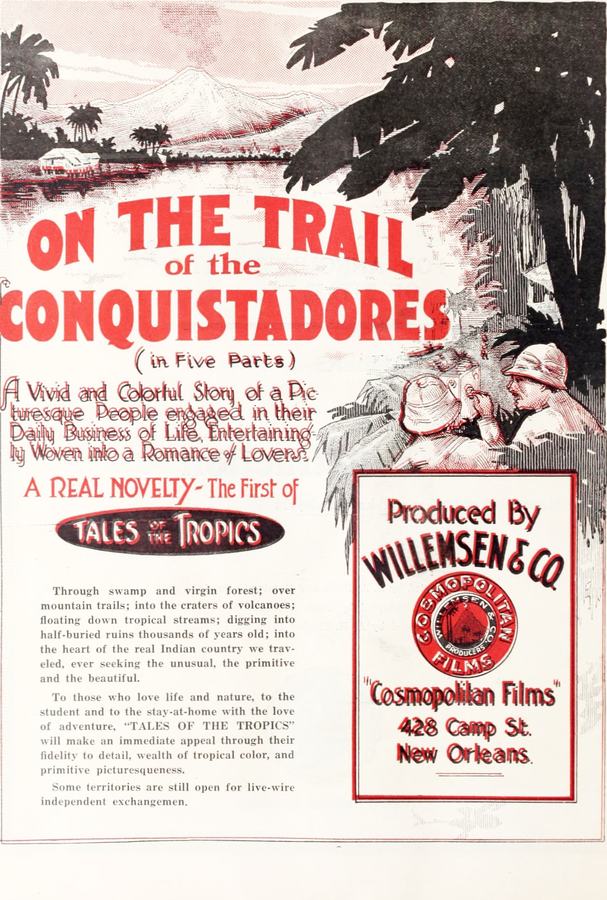
The screen ignites like a copper plate held to candlelight: ochre shadows, indigo midnights, and the vermilion flare of a girl’s skirt as she spins clay on a wheel older than the aqueducts. On the Trail of the Conquistadores is less a narrative than a fevered mural, a procession of silhouettes who refuse to remain trapped beneath the gilded boot of historiography.
Director Joaquín Páramo—unknown beyond ethnographic circles—unfurls 16mm frames that appear hand-tinted with cochineal and tobacco juice. Note the opening dolly: it glides past cathedral bells, lingers on the oxidized crown of a conquistador statue, then tilts down to discover our heroine, Luz, trading her grandmother’s thimble for a bird-of-paradise bloom. In that single shot, colonial iconography is decapitated; flora supersedes steel.
Forget orchestral schmaltz; Páramo overdubs indigenous drums onto church organ pipes, birthing a syncretic heartbeat. When Luz’s lover, Rafael, pedals his bicycle across cobblestones, the spokes clack in 5/8 rhythm against cards clipped by street urchins—an accidental son montuno that seduces the ear more than any symphonic swell. The result feels like The Moonshine Trail if its bootleggers hummed Gregorian chants while distilling corn whisky.
Amid carnival masks carved from avocado wood, performers’ visages retain sweat, freckles, the asymmetrical grin of lived experience. Luz’s front teeth overlap—an imperfection Hollywood orthodontists would exile, yet here it amplifies verisimilitude. Compare this to the symmetrical perfection of The Merry Widow operetta stars; Páramo’s rebels sport calloused thumbs, sun-creased necks, the ontological texture of labor.
Halfway through, a travelling cinematograph arrives, hand-cranked by a bespectacled anarchist. He screens fragments of Allies’ Official War Review, No. 1—trench footage that, within this plaza, becomes surreal collage. Villagers watch Europe implode into mud while their own plaza’s fountain trickles. The juxtaposition is Brechtian: viewers confront empire’s export of violence, then dance bamba to exorcise it. Cinema itself turns sacrament and weapon.
Romantic plots customarily hinge on property: inheritances, dowries, dynastic mergers. Here, affection subverts drought. Townsfolk believe the heavens withhold rain because the patron saint’s effigy—an armored Spaniard—still stands. Luz and Rafael’s nightly trysts beneath the statue become ritual; petals from their embrace accumulate like evidence. Finally, the lovers topple the effigy, replacing it with a clay ocarina shaped like a hummingbird. Storm clouds rupture the next dawn. Love, not conquest, commands meteorology.
Scholars of magical realism may yawn—“seen it since García Márquez.” Yet Páramo’s magic refuses literary gentrification. The miracle is collective: grandmothers ululate, children splash charcoal on canvas, a boy recites a poem whose final line dissolves into thunder. Agency disperses among the multitude, unlike The Apostle of Vengeance, where retribution is solitary masculine fantasy.
Dialogue arrives sparingly—half-whispered, half-sung. Subtitles almost insult the imagery; you glean meaning from the rasp of a metate, the squeak of a wooden cart axle, the way candlelight carves amber triangles across Rafael’s clavicle. Páramo trusts the sensorial; he is closer to silent-era poetry like Toton than to chatty rom-coms such as Wet and Warmer.
Notice the mayor’s sash: embroidered with tiny gold pesos. When he demands a tax on every clay pot sold, Luz slips a scorpion into his pocket—playful, not lethal. Authority is mocked, not martyred. The film dodges didacticism; it prefers carnival subversion, echoing Rabelaisian pranksterism found in The Hayseeds Come to Sydney.
Three hues dominate: the ochre of roof tiles, the indigo of twilight, the arterial crimson of bougainvillea. Each carries semiotic weight. Ochre equals ancestral labor; indigo, the veil between living and dead; crimson, menstrual rites transmuted into floral excess. When Rafael bleeds from a broken bottle, his blood seeps into the dust, converting to the very pigment Luz will use to paint fertility symbols on wedding jars. Pigment circulates like memory—indebted yet liberated.
Editors slice scenes with jump cuts reminiscent of 1920s Soviet montage, yet the soundtrack overlaps, creating temporal accordion. A child’s laugh from shot A bleeds into shot B set three centuries earlier—Conquistadors forging chains. History folds like nopal leaves. Viewers feel vertigo, akin to bingeing La La Lucille then waking inside a pre-Hispanic codex.
Luz’s desire is neither sanitized nor scandalized. She sketches Rafael’s erect penis by firelight, charcoal scratching parchment. The camera does not drool; it observes her observation. Pleasure is reciprocal, cerebral, tactile. Compare this to objectified showgirls in Champagneruset; here, bodies retain interiority.
At dawn following the statue’s topple, townsfolk gather around fresh maize stalks that have sprouted overnight—unreal yet accepted. The camera ascends in a makeshift drone-like shot (achieved via kite). From the sky, lovers resemble two kernels touching inside a husk. Fade to white, not black. No kiss seals the tale; instead, a chorus of cicadas swells. The absence of closure invites re-entry; the story belongs to whoever replays it, like oral legend.
Post-1920 cultural nationalism in Latin America often romanticized indigeneity for state-building myths. Páramo sidesteps that agitprop by foregrounding mestizo hybridity—African, Iberian, Taino, Andalusian—without hierarchy. The film anticipates later Third Cinema manifestos, yet predates them by months, perhaps indicating underground circulation of anti-imperialist pamphlets among film clubs.
Moreover, the scarcity of written records about the shoot—no call sheets, just a mildewed ledger listing actors paid in beans—adds aura. Compare this archival void to the meticulous documentation of The Betrothed (1913). Absence births legend; myth invites reinterpretation. Each screening becomes restoration, rebellion, rumour.
Where The Flying Twins uses trapeze to literalize escape from poverty, Conquistadores grounds flight in the quotidian: a kite fashioned from rebel pamphlets. Ascendency is symbolic, collective. Gravity remains; liberation is perception.
Some will complain about the lack of star power, the whisper-thin plot, the flickering exposure marks. These scars are fingerprints. They remind us cinema began as tactile vandalism of light, smeared by hands that pickled chilies by day. To sterilize those prints would be to embalm the very life Páramo resurrects.
Watch it on the largest screen you can find, volume cranked until drums throb against ribcage. Let the scent of imaginary cacao sneak into your living room. And when the final frame whites out, step outside, listen for hummingbirds. They might just be ocarinas, beckoning rain.
IMDb 6.6
1925
Community
Log in to comment.