Summary
In the stark, sprawling expanse of the Dakota frontier, Jean Baptiste, a solitary African American homesteader, cultivates not just the land but a quiet existence. His world, however, is irrevocably altered by the arrival of Jack Stewart, a Scotsman, accompanied by his enigmatic, motherless daughter, Agnes. Unbeknownst to Agnes, her heritage is a complex tapestry of biracial origins, a truth veiled from her. Baptiste, drawn to Agnes with an undeniable magnetic force, finds in her the embodiment of his deepest desires. Yet, the prevailing societal strictures of the era, perceiving Agnes as white and Baptiste as Black, render their burgeoning affection an illicit transgression, a love condemned by the very laws designed to uphold racial segregation. In a profound act of self-abnegation, Baptiste renounces this forbidden passion, retreating to the embrace of his own community. There, he enters into a marriage of convenience with Orlean, the daughter of the revered, albeit deeply flawed, preacher McCarthy. This McCarthy, a veritable paragon of sanctimony and disingenuousness, revels in the perceived social elevation of his daughter's union, extolling Baptiste's "wealth" and virtue, yet covertly hungering for sycophantic adulation, a craving Baptiste, with his unyielding integrity, cannot fulfill. This fundamental discord becomes the insidious root of Baptiste's marital tragedy with the gentle, well-meaning Orlean, whose inherent goodness is unfortunately undermined by a lack of fortitude mirroring her mother's. As Baptiste endures the relentless machinations of McCarthy and his venomous daughter, Ethel—a woman whose malevolence rivals her father's—the innocent Orlean, driven to the precipice of madness by the very evil she inadvertently enables, ultimately orchestrates a redemptive reversal. This catalyst propels Baptiste back to his Dakota homestead, where fate, with its peculiar grace, reunites him with Agnes. The subsequent revelation of her true racial identity culminates in a poignant and harmonious resolution, defying the societal prejudices that initially sought to tear them asunder.
Synopsis
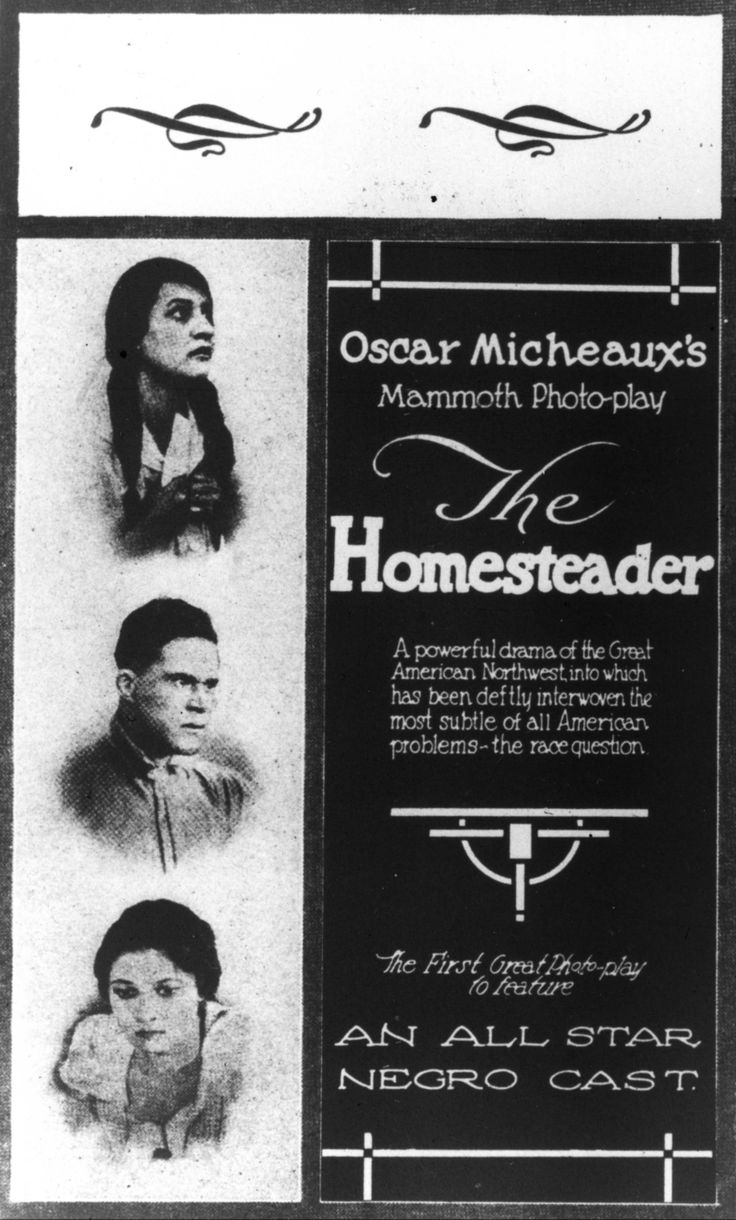
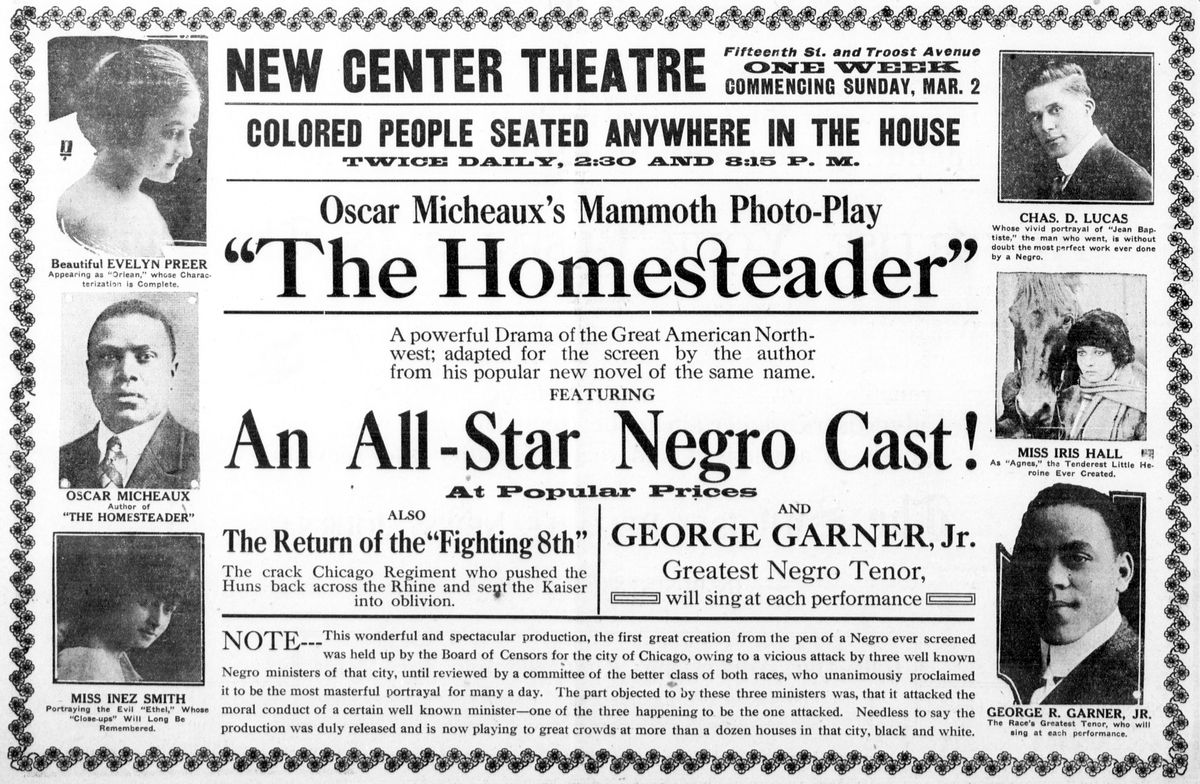
The Homesteader involves six principal characters, the leading one being Jean Baptiste (Charles Lucas), a homesteader far off in the Dakotas, the lone African American living in the area. To this wilderness arrives Jack Stewart, a Scotsman, with his motherless daughter, Agnes (Iris Hall), who doesn't know that she is biracial. In Agnes, Baptiste meets the girl of his dreams. Peculiar fate threw her in the company of the Homesteader, but, because Baptiste is black and Agnes is presumably white, their love is forbidden by law. Baptiste eventually sacrifices the love of this girl of his dreams, goes back to his own people and marries Orlean, the daughter of a black preacher named McCarthy. McCarthy, the embodiment of vanity, deceit and hypocrisy, really admires the marriage his daughter has made. He speaks of the "rich" young man she has married, praises him to the highest. Baptiste does not know, however, that McCarthy requires and is in the habit of having people praise him. Baptiste does not do it because he is not of the temperament to do so. Because of this failure grows the tragedy of mismarriage to Orlean (Evelyn Preer), a sweet girl, kind and good, but like her mother, without the strength of her convictions. Baptiste, Orlean having failed him, is persecuted by McCarthy and by Ethel (McCarthy's other daughter), who, like her father, possesses all the evil a woman is capable of; she is married to weak-kneed Glavis. In the end, Orlean, driven insane by the evil she had been the innocent cause of, rights a wrong which causes Baptiste to go back to his land in the Dakotas, where he finds the girl he first discovered. Later, he learns[by whom?] the truth about her race and the story has a beautiful ending.
Review Excerpt
"
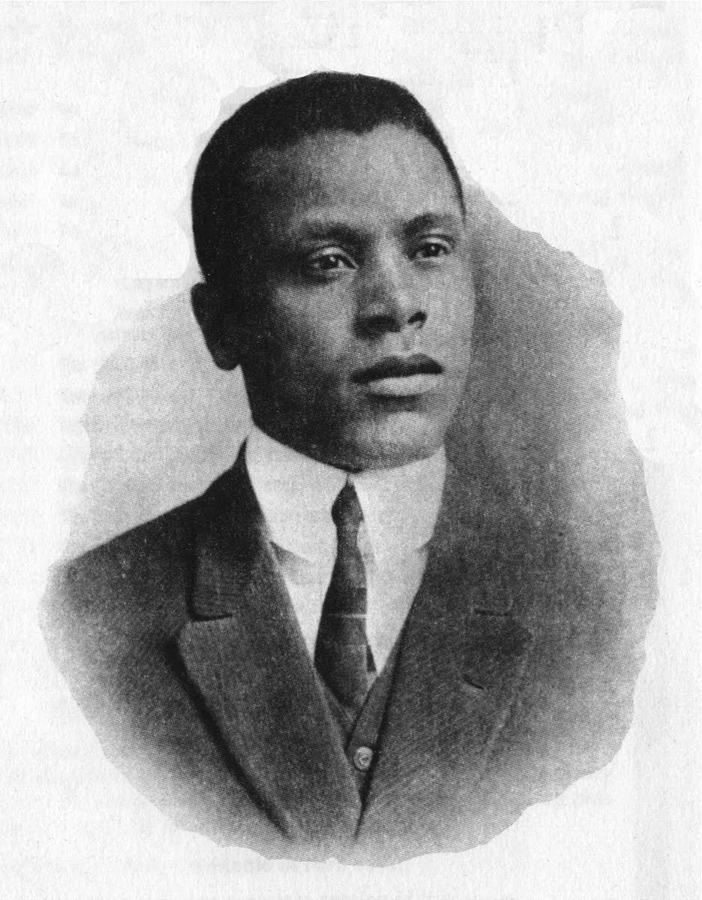
Unearthing a Cinematic Cornerstone: The Enduring Resonance of Oscar Micheaux's The Homesteader
In the annals of American cinema, few figures loom as large, or as courageously, as Oscar Micheaux. His 1919 masterpiece, The Homesteader, stands not merely as a film, but as a declaration—a bold, unwavering assertion of Black identity and narrative agency in an era that systematically denied both. This wasn't just a motion picture; it was a cultural phenomenon, a self-financed, independently..."