DbcultAccessing Vault...
Cult Review
Senior Film Conservator
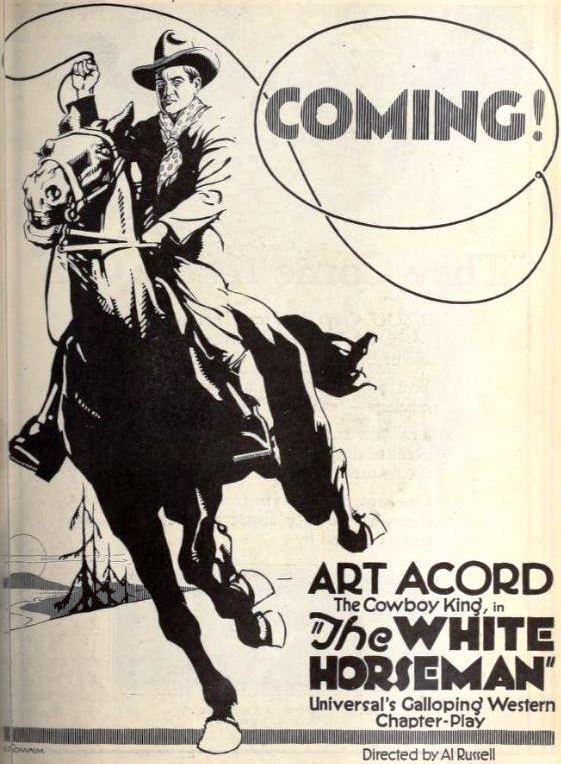
There’s a particular kind of desolation that only the American West can conjure—a silence so vast it swallows sound, a landscape so unyielding it molds men into legends. 'The White Horseman' (1935) leans into this mythos with the solemnity of a tombstone, its narrative etched in the dust of forgotten mines and the blood of those who dare covet what the land has buried. Directed by Ford Beebe and Albert Russell with a precision honed in the tradition of B-Westerns, the film is less a story of treasure and more a meditation on the cyclical nature of greed and the ghosts that haunt those who seek to unearth it.
Wayne Allen (Tote Du Crow) is the archetypal anti-hero with a moral spine, though his heroism feels less like a choice and more like an inheritance—a legacy passed down with the land itself. The film opens with a quiet inheritance, a transaction as dry as the Arizona soil. The land, initially perceived as worthless, becomes a metaphor for the characters’ fates: barren on the surface, teeming with rot beneath. The discovery of the mine system, a relic of indigenous craftsmanship, is not a triumph but a curse, a reminder that the past is never truly buried in a genre that thrives on ghosts.
The treasure, hidden by an extinct tribe, is rendered with a reverence that borders on sacrilege. It’s not just gold; it’s artifacts, symbols of cultural erasure, repurposed as a MacGuffin to drive the film’s violent stakes. The White Spider (Art Acord), the antagonist whose white duster and cold demeanor evoke both a phantom and a predator, becomes the embodiment of this exploitation. His uncle (Hank Bell), the girl’s villainous uncle, is a more conventional villain, but his greed feels almost quaint compared to the Spider’s existential menace. The tension between them—between calculated malice and primal hunger—fuels the film’s tautest moments.
Eva Forrestor’s performance as Wayne’s love interest is a study in restraint, her character a silent counterweight to the chaos around her. She’s not merely a damsel in distress but a symbol of the land itself—beautiful, resilient, and ultimately untouchable by the men who orbit her. Beatrice Dominguez and Marie Tropic, in supporting roles, add texture to the film’s moral gray areas, their characters neither wholly virtuous nor entirely corrupt.
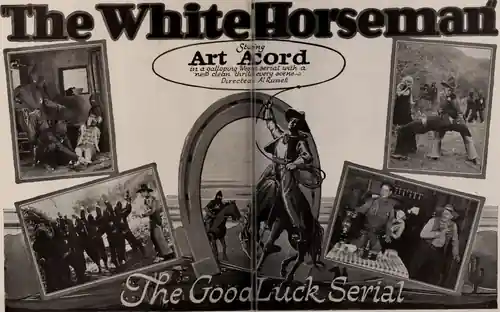
Technically, the film is a triumph of practicality. The mine sequences are claustrophobic in their detail, the camera lingering on rusted tools and timeworn inscriptions to evoke a sense of history both immediate and ancient. The contrast between the sun-bleached exteriors and the shadow-drenched interiors mirrors the duality of the characters’ souls. When Wayne descends into the mines, it’s not just a physical journey but a symbolic one—a plunge into the subconscious of a genre that often forgets its own roots.
The score, though uncredited, is a character in its own right. A single, haunting melody recurs throughout, its notes echoing like a warning from the earth itself. This auditory motif is most effective during the film’s quieter moments, when the absence of dialogue forces the audience to confront the silence between acts of violence.
Thematically, 'The White Horseman' is a film about the weight of history. The treasure isn’t just a plot device; it’s a reckoning. The indigenous tribe’s artifacts are not romanticized relics but contested symbols of a past that the film’s white characters can only understand through violence and possession. This is a theme that resonates with later Westerns like 'Uncharted Channels,' which similarly grapples with the ethics of land ownership, though 'The White Horseman' arrives at a more cynical conclusion: that the West is not a land of opportunity but a graveyard for those who forget its cost.
The film’s pacing is deliberate, its tension built through implication rather than overt action. Where many Westerns of the era rely on shootouts and horseback chases, 'The White Horseman' favors psychological warfare. The White Spider’s first appearance is a masterstroke of visual storytelling—a figure emerging from a dust storm, his face obscured by a scarf, his presence felt long before he speaks. This is a villain who exists in the margins, a force of nature as much as a human being.
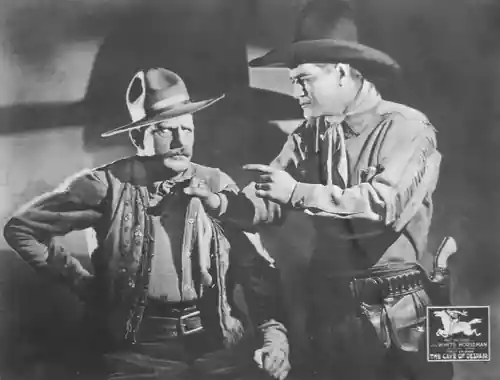
The final act, in which Wayne confronts the White Spider, is less a showdown than an exorcism. The mine becomes a stage for a symbolic duel, the two men representing opposing forces: one bound by a code of honor, the other by a nihilistic hunger. The resolution is bittersweet, the victory hollow. The treasure remains untouched, a reminder that some things are not meant to be claimed. This ending echoes the moral ambiguity of 'My Lady Nicotine,' though 'The White Horseman' grounds its existential musings in the physicality of the desert, where survival is as much a test of will as a test of skill.
For modern audiences, 'The White Horseman' is a fascinating artifact of its time. It revels in the same tropes it deconstructs, offering a frontier mythos that is both celebration and cautionary tale. The film’s treatment of indigenous culture—while not overtly exploitative—is still filtered through a colonial lens, a limitation that feels more poignant in the 21st century. Yet, it’s precisely this duality that makes the film endure. It’s a mirror held up to the genre’s contradictions, its contradictions made manifest in the very soil that buries its treasure.
Visually, the film is a triumph of contrast. The use of light and shadow is primitive by today’s standards but effective in its simplicity. Wide shots emphasize the isolation of the characters, their small figures dwarfed by the vastness of the landscape. Close-ups, particularly in scenes of confrontation, reveal the toll of the treasure hunt on their psyches. The cinematography, though uncredited, deserves special mention for its ability to render the desert as both character and crucible.
The performances, while rooted in the theatricality typical of the era, bring a rawness to the material. Tote Du Crow’s Wayne Allen is a study in understatement, his stoicism a mask for a man constantly on the brink of breakdown. Art Acord’s White Spider is a more nuanced villain, his charm disarming in a way that makes his menace all the more insidious. This dynamic is reminiscent of 'Bringing Home Father,' where familial bonds are tested by external threats, though 'The White Horseman' replaces domestic tension with existential stakes.
The film’s greatest strength lies in its ability to balance action with introspection. While it features the expected Western set pieces—gunfights, chases, and a climactic mine collapse—it never loses sight of the deeper questions at play. The treasure is not just a prize; it’s a symbol of the American dream, corrupted by the very hands that seek to claim it. This thematic depth elevates 'The White Horseman' beyond mere genre fare, placing it in conversation with more modern works like 'The Reincarnation of Karma,' which similarly interrogates the consequences of past actions.
In conclusion, 'The White Horseman' is a film that rewards careful viewing. Its surface simplicity belies a complex meditation on greed, legacy, and the inescapable weight of history. While it may lack the polish of later Western classics, its raw, unvarnished storytelling gives it a timeless quality. It’s a film that understands the West not as a land of promise but as a place where every claim is a theft, and every treasure a wound. For those willing to look beyond the action, 'The White Horseman' offers a haunting, if flawed, reflection on the American psyche.
IMDb —
1925
Community
Log in to comment.