DbcultAccessing Vault...
Cult Review
Senior Film Conservator
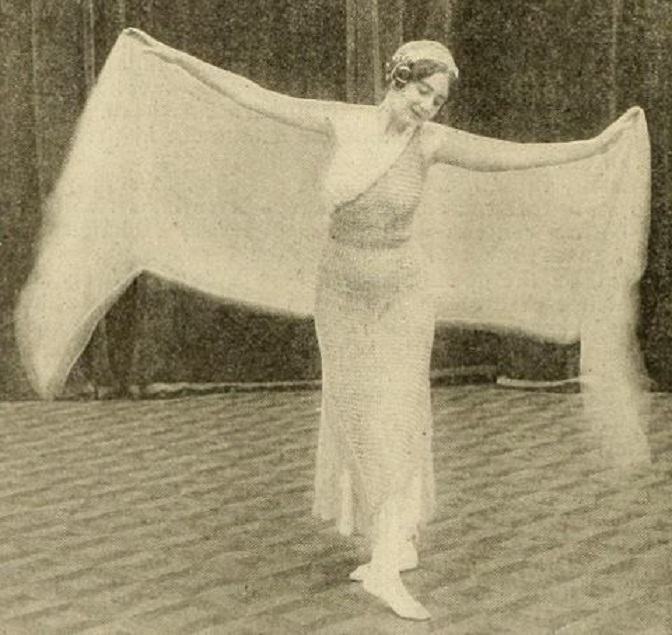
In the annals of cinematic history, certain narratives, despite their deceptive simplicity, achieve a profound resonance, capturing the eternal dance of human desire and the often-comic futility of infatuation. Midnight at Maxim's stands as a testament to this enduring power, a film that, with an almost minimalist grace, unravels a universal tale of love at first sight, competitive romance, and the sharp, ironic sting of reality. It's a vignette, yes, but one imbued with a surprising depth, a playful yet poignant exploration of how easily we can be swayed by an image, a fleeting moment of beauty, and the elaborate fantasies we construct around them.
Our story commences not amidst the glittering lights of a Parisian cabaret, but in the quiet, contemplative shade of a seminary tree. Here, Shye, a scholar ostensibly devoted to his studies, finds his intellectual rigor momentarily—and then entirely—derailed. The catalyst? A simple, almost mundane act: a woman, Tottie, stooping to tie her shoelace, inadvertently revealing a trim ankle. From this innocuous detail, Shye’s gaze ascends, drawn inexorably upward to her face, and in that instant, the world of academia, of ancient texts and theological debates, dissolves. It is a moment of pure, unadulterated aesthetic disruption, an interruption of the cerebral by the visceral, a testament to the potent, often irrational, power of beauty to reorient one's entire trajectory.
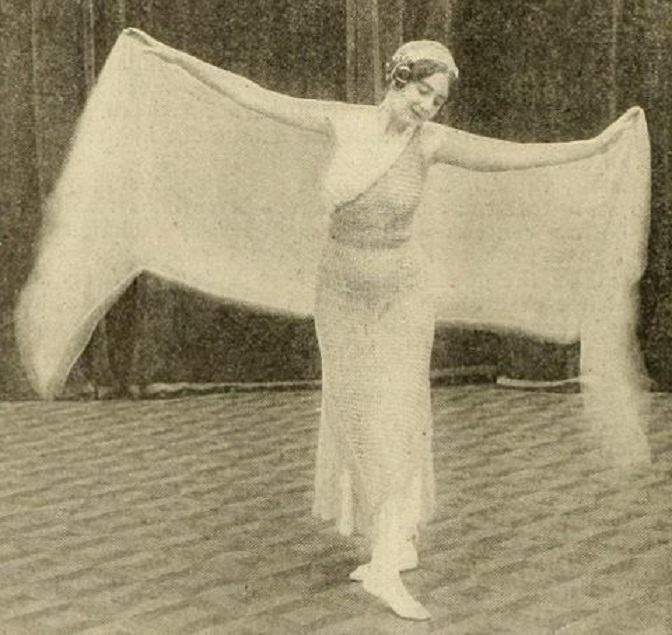
Shye's transformation is immediate and absolute. The scholar becomes the ardent pursuer, trailing Tottie through the bustling streets, his previous life now a distant, irrelevant echo. His destination, and by extension, his new obsession’s professional milieu, is Maxim's, a name synonymous with Parisian nightlife, a crucible of performance and spectacle. Tottie, it turns out, is not merely a passerby but a performer, a central figure in the evening's entertainment. This revelation only intensifies Shye’s infatuation, elevating her from a chance encounter to a luminous, unattainable star. His subsequent recruitment of his three friends for an evening excursion to Maxim's speaks volumes about the persuasive power of his newfound zeal, an almost evangelical fervor for the object of his affection. Their initial astonishment quickly gives way to curiosity, perhaps even a shared, nascent fascination, setting the stage for a collective descent into romantic folly.
The waiting for midnight, for the cabaret's commencement, is depicted as an agony of impatience for Shye. This temporal dilation underscores the intensity of his desire, each ticking moment a further turn of the screw. When Tottie finally appears on stage, bathed in the theatrical glow, Shye's reaction is nothing short of ecstasy. Her various numbers, her every gesture, are amplified in his lovestruck perception, transforming mere performance into a personal serenade, a direct communication from performer to smitten admirer. It's a classic portrayal of the audience's projection of desire onto the stage, a common trope found in many narratives exploring the allure of performance, from the grand operas to the intimate vaudevilles. One might even draw a parallel to the intoxicating pull of the exotic and unknown, much like the cultural fascination explored in films such as Moora Neya, or The Message of the Spear, where a distant, alluring world captivates and transforms the protagonist's perspective.
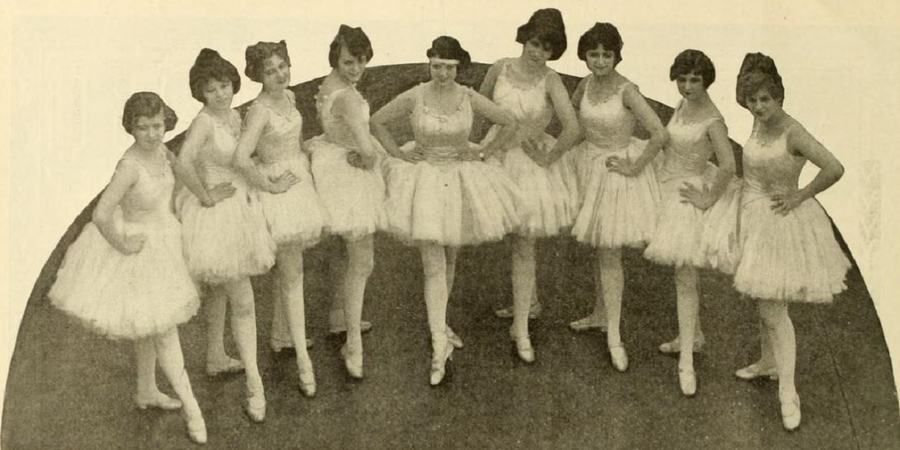
The interlude between acts offers Shye an opportunity to transition from passive admirer to active suitor. His collection of flowers from the tables, a quaint, almost childlike gesture, signifies his intent to bridge the chasm between stage and reality. However, the path to Tottie’s dressing room is not paved with blossoms and good intentions. It is guarded, quite literally, by a pragmatic individual whose loyalty is measured in currency. This encounter introduces a cynical, transactional layer to Shye’s romantic quest. The act of "greasing his palm" is a stark reminder that even in the pursuit of love, or what one perceives as love, the mundane realities of commerce and influence often hold sway. It’s a moment that subtly critiques the idealized nature of romantic pursuit, suggesting that access to the object of desire often comes with a tangible price, a theme that might find echoes in the cynical machinations depicted in a film like The Truth Wagon, where ulterior motives often drive seemingly noble pursuits.
Tottie’s reception of Shye, seemingly "glad to meet him" and promising supper, is a masterstroke of ambiguity. Is it genuine pleasure, a performer’s practiced charm, or simply an expedient acceptance of an admirer’s attention? The film leaves this tantalizingly open, allowing the audience to project their own interpretations onto her actions. For Shye, however, it is validation, a confirmation of his hopes, propelling him further into his romantic fantasy. He exits the dressing room, undoubtedly buoyed by this success, unaware that his friends, equally smitten by the "little blonde," have embarked on identical, parallel quests. Each, in turn, has likely navigated the same pecuniary gatekeeper, each has received the same supper promise, creating a web of simultaneous, unwitting deception.
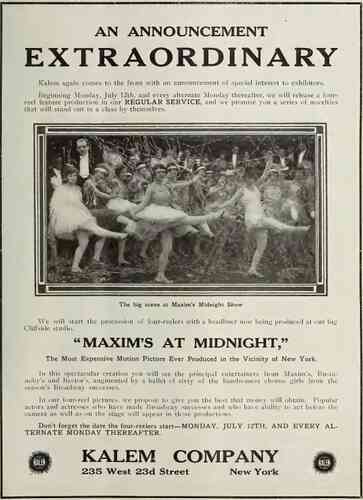
The narrative builds to its inevitable, darkly comedic climax at the rear entrance of Maxim's. Here, the four suitors, each convinced of his unique success, converge. The sight of their rivals, all waiting for the same girl, ignites a predictable, primal ire. The air crackles with competitive tension, a potential brawl brewing amidst the shadows, a testament to the fragility of male ego when confronted with perceived romantic betrayal. It's a scene ripe with dramatic irony, the audience aware of the shared delusion even as the characters remain oblivious. This moment of impending conflict, however, is not resolved through fisticuffs but through a far more devastating, disarming revelation.
Just as the tension reaches its zenith, Tottie emerges, not alone, but clinging to the arm of the very man who had so readily accepted their bribes. The gatekeeper, the cynic, the purveyor of access, is revealed as her husband. His calm introduction of Tottie as his wife to the stunned, love-stricken youths is a moment of exquisite, brutal irony. All their efforts, their infatuation, their bribes, their burgeoning rivalry, are rendered utterly meaningless in a single, unceremonious declaration. The romantic bubble bursts with a deflating hiss, leaving the suitors stranded in the wreckage of their illusions. It’s a twist that echoes the abrupt disillusions found in narratives like The Leap of Despair, where protagonists confront a harsh truth that shatters their preconceived notions, or even the grander, more tragic deceptions of Rablélek, though here, the tone remains distinctly comedic.
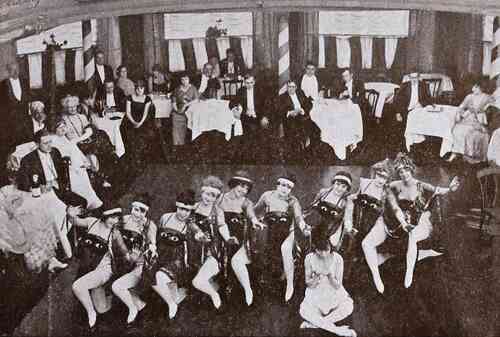
At its core, Midnight at Maxim's is a masterful study in illusion versus reality. Shye and his friends are not merely captivated by Tottie, the woman; they are entranced by Tottie, the performer, the idealized object of desire projected onto the stage. The cabaret itself is a realm of artifice, where light and shadow, costume and makeup, create a world separate from the mundane. The suitors fall prey to this theatrical enchantment, mistaking the carefully constructed persona for an accessible reality. Their pursuit is not of Tottie, but of the fantasy she embodies, a fantasy that is ultimately protected, not by a rival suitor, but by the very structure of her domestic life, guarded by the very man they sought to circumvent.
The film subtly critiques the male gaze and the often-unquestioning nature of infatuation. The men are so consumed by their own desires, so certain of their individual charm, that they fail to see the obvious transactional nature of their interactions, or indeed, the simple truth. The guard, far from being an obstacle, is an integral, if cynical, part of the system, a silent partner in Tottie's subtle management of her admirers. His role as both gatekeeper and husband adds a layer of economic and personal agency to Tottie and her spouse, turning the tables on the presumptuous suitors. This dynamic offers a fascinating counterpoint to more straightforward romantic pursuits, perhaps even a subtle commentary on the roles and expectations within relationships, much like the familial dynamics explored in The General's Children, albeit with a far more humorous bent.
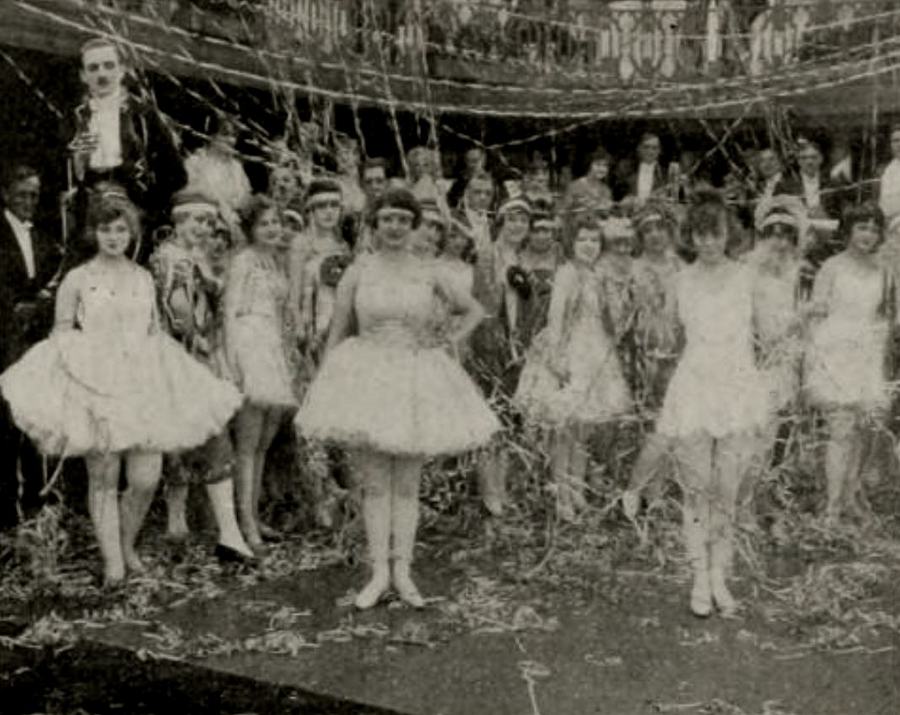
While the film's brevity might preclude deep psychological dives, the performances, particularly from Frank Wunderlee as Shye and Alice Rodier as Tottie, are crucial in conveying the narrative's emotional beats and comedic timing. Wunderlee's portrayal of Shye's initial scholarly detachment giving way to wide-eyed, almost frantic obsession is key to the film's humor. His transformation from academic to romantic fool is both relatable and amusing. Rodier, as Tottie, must embody both the alluring performer and the pragmatic wife. Her ability to maintain an air of approachable charm while simultaneously orchestrating the subtle deception (or at least benefiting from it) is central to the film's cleverness. The supporting cast, including Frank Searight, Rollo Lloyd, and Ralph Stuart as Shye’s equally smitten friends, contribute to the escalating absurdity, their collective eagerness and eventual deflation providing much of the film's comedic impact.
The guard, played by an unnamed actor in the plot description but implied to be the husband, is perhaps the most intriguing character. His quiet, businesslike acceptance of bribes, followed by his calm, almost mundane revelation of his marital status, positions him as the ultimate victor in this game of romantic chess. He is the grounded reality, the cynical counterpoint to the suitors' lofty ideals. His character provides the anchor that ultimately shatters the illusion, embodying the practical over the poetic. This sort of pragmatic realism, cutting through romantic fantasy, can be seen as a recurring motif in cinema, challenging audiences to look beyond superficial charm, a theme that resonates even in more dramatic contexts where harsh realities dismantle idyllic visions, much like the sobering truths presented in Woe to the Conqueror; or, The Law of War, albeit with a different emotional register.
Given the likely vintage of Midnight at Maxim's, its narrative economy and visual storytelling would have been paramount. The contrast between the initial serene setting and the vibrant, bustling Maxim’s would have been a deliberate visual choice, emphasizing Shye’s journey from one world to another. The staging of Tottie’s performance, even if depicted through simple camera angles, would have been designed to convey her allure. The climactic confrontation at the rear entrance, with its brewing tension and sudden, deflating resolution, showcases an understanding of comedic pacing and dramatic reveal that transcends mere technical limitations.
The enduring appeal of such a film lies in its timeless themes. The allure of the unattainable, the folly of infatuation, the competitive nature of male desire, and the humbling power of an unexpected truth are all universally recognizable human experiences. It’s a story that could be retold in any era, with any setting, and still resonate. While it might not possess the grand scope of an epic like In Search of the Castaways, its intimate focus on human foibles makes it equally compelling. It’s a reminder that sometimes, the most profound lessons are learned not through grand adventures, but through the mundane, often embarrassing, missteps of the heart.
The film’s conclusion, with Tottie and her husband calmly walking away, leaving the quartet of disappointed suitors in their wake, is a perfect encapsulation of its thematic message. It’s a quiet triumph of practicality over romantic idealism, of established reality over fleeting fantasy. The suitors are left not with a broken heart, perhaps, but with a bruised ego and a valuable, if humiliating, lesson in perception. Midnight at Maxim's, therefore, isn't just a simple romantic comedy; it's a shrewd observation on the human condition, delivered with an elegant, understated wit that ensures its enduring charm. It serves as a delightful, if cautionary, tale for anyone who has ever fallen head-over-heels for an illusion, reminding us that sometimes, the most captivating stage lights merely illuminate a well-practiced role, and the most charming smiles hide a perfectly ordinary life.
IMDb —
1921
Community
Log in to comment.