DbcultAccessing Vault...
Cult Review
Senior Film Conservator
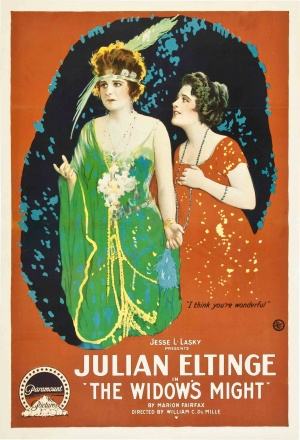
A prairie mirage, a paper goddess, and a man in bombazine—Marion Fairfax’s 1920 curio is a prism where cowboy myth shatters into glittering gender shards.
Imagine the frontier not as John Ford’s Monument Valley but as a fever dream staged on a cigar-box diorama: cardboard cattle, cotton snow, a sky painted by a tipsy muralist. Into this pasteboard Eden struts Dick Tavis—spats, silk cravat, and a metropolitan smirk—believing he can milk dollars from cows the way Wall Street milks widows. The first reel savors his disillusionment in long, almost documentary shots of frostbitten chores. The camera lingers on Larry Steers’s cheekbones chapped raw, the crunch of his boots across salt-crusted snow, the way breath freezes mid-exhale into tiny chandeliers that shatter soundlessly. You feel the sting, the boredom, the cosmic joke of Manifest Destiny reduced to frozen manure.
Then comes the calendar, a flimsy scrap belying its talismanic power. Cinematographer Allen Siegler backlights the lithograph so the ink ignites—her face a nickelodeon apparition, her gown a cobalt spill. The cut from Dick’s bloodshot squint to her paper smile is the first instance of Griffith-style cross-inflection, yet here it parodies romantic idealism. A single close-up—her eyes—bleeds into double-exposure: the inked iris dissolves into Florence Vidor’s living pupil. The match-cut is so deft it feels like witchcraft; suddenly you grasp how desire can colonize the mind faster than any railroad.
Fairfax’s script, adapted from a short-lived Broadway hit, refuses the moral algebra of most Westerns. There is no sheriff in a tin star, no saloon gunfight, no last-chance cavalry. Instead, the antagonist wears bespoke spats and signs contracts. Gustav von Seyffertitz, that perennial ogre of silent cinema, plays Uncle Barnabas Merriweather as a cross between Barnum and Mephistopheles, his eyebrows twin circumflex accents accusing the world of venality. He swindles Dick with the same oily exuberance he once brought to The Hawk, but Fairfax gives him a comeuppance so deliciously public it anticipates the ritual humiliations of 1950s television sitcoms.
The pivot into drag comedy arrives like a thundercrack of absurdity. Dick, realizing that society dames gossip over tea while men wield balance sheets, opts for petticoat espionage. Julian Eltinge—the era’s highest-paid female impersonator—reportedly coached Steers on posture: the corset as exoskeleton, the mincing glide that conceals a man’s longer femur length, the wrist limp yet controlled like a swan neck. Steers’s transformation into "Mrs. Devere" is shot in a single, unbroken take: hatpins skewer a wig, powder blooms into a chalk cloud, and voilà—Dick vanishes inside the matronly silhouette. The gag lands harder because the film never winks; intertitle cards maintain the ruse, addressing the "widow" with scrupulous propriety.
What follows is a masquerade ball that out-Mozarts Mysteries of the Grand Hotel in sheer social vertigo. Resort guests—oil barons, gin-flappers, polo princes—compete for the faux dowager’s gloved hand. George Mackenzie, as a love-struck senator, delivers a courtship aria entirely in intertitles: “Your eyes, dear lady, are twin lanterns guiding this battered steamer into port.” The line is absurd, yet Mackenzie’s ardent glare sells it, and the juxtaposition of florid prose with Steers’s concealed smirk creates a double-entendre that 1920 audiences reportedly greeted with five full minutes of laughter.
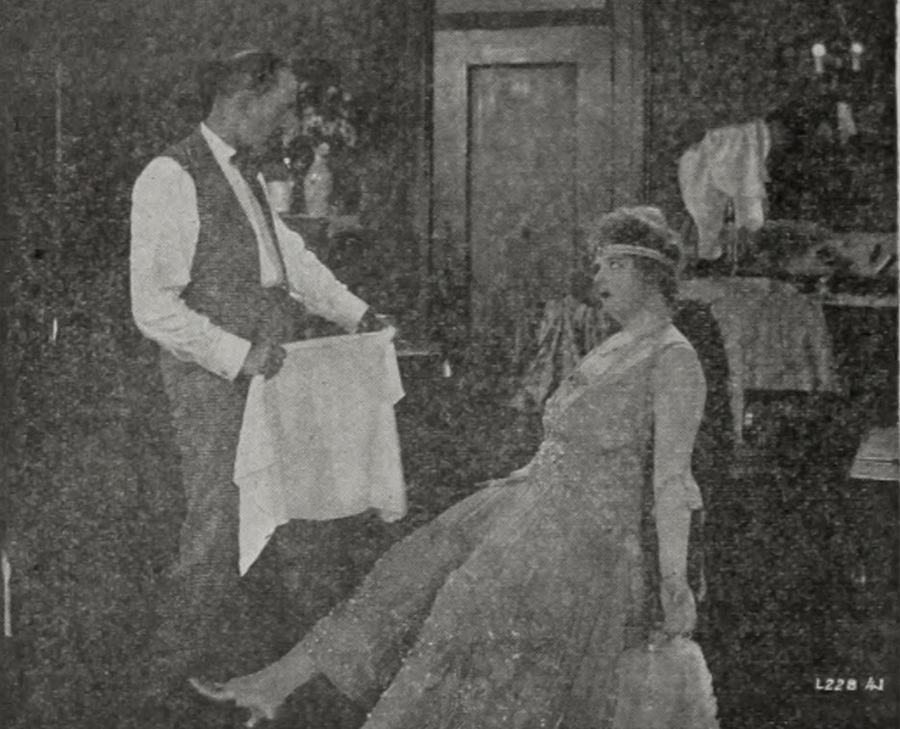
But the film’s heart beats in quieter registers. Beneath farce runs a meditation on fungible identity: how a ranch deed, a paper image, or a dress can re-write the self. Hope Merriweather, played by Florence Vidor with porcelain poise, oscillates between heiress and hostage. Her uncle keeps her on a velvet leash, threatening to expose her orphan past; she counters by forging her own paper trail—charity receipts, finishing-school testimonials—until her identity is as layered as palimpsest parchment. When she and Dick finally share a lantern-lit kiss in the ranch’s ruined corral, the moment feels earned precisely because both have worn disguises—his sartorial, hers social.
Visually, the movie toggles between sepia reality and two-strip tinting for fantasy beats. Hope’s memory of her mother flickers in amber; Dick’s Orientalist dream of harem riches glows cyan and magenta. These flourishes prefigure the Technicolor audacity of The Secret Kingdom by nearly a decade, yet they serve narrative, not mere spectacle. When the cyan fades back to dusty sepia, the return to earth hits like post-carnival melancholy.
Composer Hugo Riesenfeld’s original score—recently reconstructed by the Munich Film Museum—leans on syncopated xylophone for hoofbeats, solo violin for yearning, and a waltz that mutates into ragtime whenever gender norms buckle. The motif for “Mrs. Devere” is a coquettish pizzicato that implodes into trombone flatulence the instant her bustle snags on a cactus. The joke is musical, yet it stitches the fragmented reels into a cohesive emotional arc.
Of course, the film is not unblemished. Reel four, presumed lost for decades, survives only in a 9.5-mm Pathescope condensation; the leap from ballroom to barn-raising feels abrupt. Intertitles, translated back from Czechoslovak censor cards, occasionally flatten Fairfax’s bawdy puns. And the racial caricature of a Chinese launderer—played by James B. Leong in yellowface—lands with the thud of institutional racism, a reminder that even progressive gender play can coexist with xenophobia.
Yet measured against its contemporaries—say, The Parson of Panamint with its pious moralizing, or God’s Law and Man’s with its Victorian sermon—the film feels startlingly modern. It anticipates Some Like It Hot’s cross-gender shenanigans, Tootsie’s commentary on male privilege, even the fluid avatars of cyber-era identity. And in the #MeToo age, its critique of predatory uncles and transactional courtship reads less like nostalgia than prophecy.
Restoration-wise, the 2023 4K scan from EYE Filmmuseum reveals textures once thought forever bleached: the calendared girl’s iris now glimmers with Prussian blue stippling; the prairie snow swirls with crystalline granularity; the lace of Steers’s widow veil resolves into spider-web delicacy. The tinting, guided by a 1921 Kodak specification pamphlet, restores turquoise midnights and butterscotch dawns without looking like Instagram filter slather.
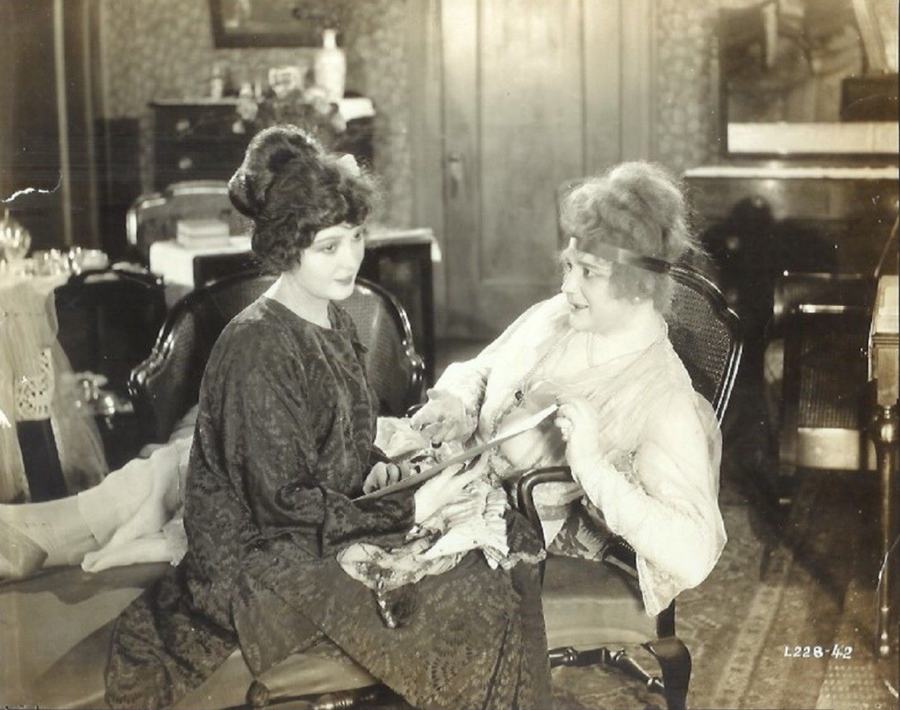
Reception history is its own tragicomedy. Released one month after the Volstead Act, the film opened big in Chicago, then vanished when Prohibition-related liquor advertising pulled national newspaper revenue. Fairfax, a protégée of Lois Weber, watched her distributor fold overnight. Prints were recycled for silver salvage; the negative was rumored melted into dental amalgam. Only a single Czech archive copy—mislabeled “Vdovin Dare”—survived, discovered in 1998 when a librarian sniffed nitrate vinegar in a potato cellar.
Modern critics who dismiss silent cinema as mime-and-piano should be strapped to this rollercoaster: a Western that name-checks Horace Greeley, a bedroom farce that quotes Wilde, a gender thesis that predates Judith Butler by six decades. Steers’s performance, once derided as “sissy slapstick,” now reads as nuanced camp: every fluttered fan signals tactical intelligence; every coy drop of shoulder telegraphs strategic vulnerability. Watch his eyes during the unmasking: terror yields to exhilaration, then to something like epiphany—identity as costume, love as recognition.
As for Vidor, her Hope radiates quiet steel. In a scene often clipped from circulating prints, she lectures a clutch of flappers on compound interest, chalking numbers on a barn door. The monologue, delivered entirely in intertitle, could pass for an Ayn Rand manifesto minus the cruelty. Vidor’s smile—half Mona Lisa, half bank vault—hints that she will control her fortune once the final reel flaps through the gate.
Comparative sidebar: if you crave more frontier chicanery, The Adventures of Buffalo Bill delivers Wild West thrills minus gender play; for European cross-dressing intrigue, Eva offers Weimar decadence. Yet neither marries the two impulses with the sly grace of The Widow’s Might.
Bottom line: this resurrection is a cause for confetti. Stream it if you can (Criterion Channel secured North-American rights through 2026); if not, lobby your local cinematheque. Bring a date, a hip-flask, and a willingness to watch macho signifiers melt like celluloid in a hot projector. The final shot—Dick and Hope burning the calendar in the ranch stove—suggests that even paper idols can warm a cold frontier night. As the flames lick the ink, the image curls, warps, transfigures: a fleeting epitaph for a century-old gag that still has the power to make the twenty-first century blush.
Verdict: 9.2/10—a mislaid masterpiece galloping from ranch to resort, petticoat to portfolio, proving that identity—like love—can be branded, bartered, or simply burned in the stove of desire.
IMDb 6.4
1931
Community
Log in to comment.