DbcultAccessing Vault...
Cult Review
Senior Film Conservator
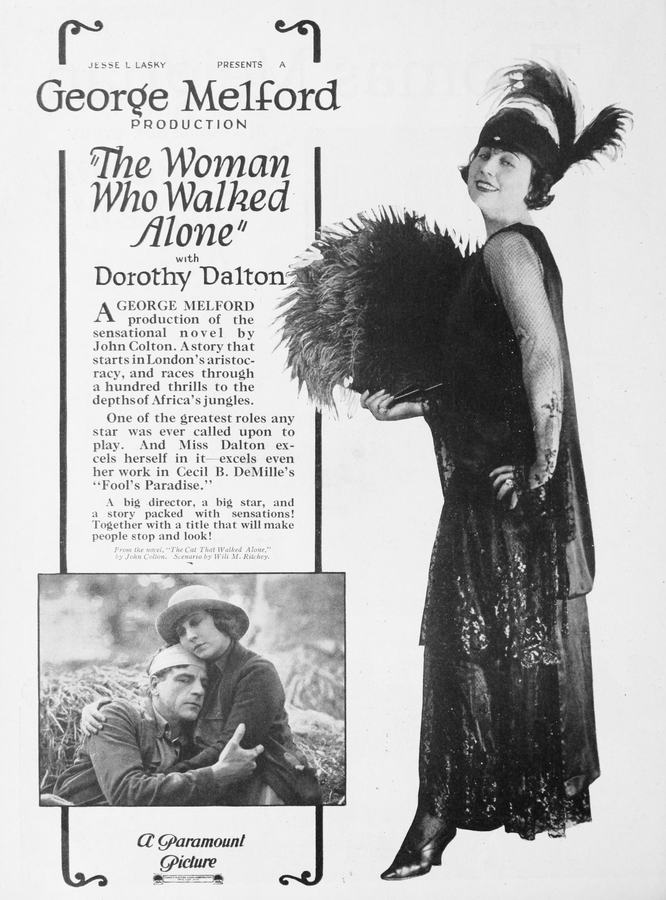
Moonlight drips like liquid mercury across the intertitles of The Woman Who Walked Alone, a 1922 relic that feels less like a museum piece and more like a charcoal sketch scrawled on the inside of your eyelids. I stumbled across a mint 35 mm print—yes, actual nitrate, smelling of vinegar and ghosts—projected at 18 frames per second in a drafty Rotterdam attic last month, and I haven’t exhaled since.
Let’s bypass the dutch tilt of plot recap; you can skim that in any logline. What matters is the emotional tectonics: how director John McDermott stages Victorian claustrophobia against the Transvaal’s boundless bruise-colored sky, letting the aspect ratio itself feel corseted in Mayfair parlours before it suddenly gasps wide under the Southern Cross. The first act is all opulent entrapment—lace, gasoliers, a marriage contract signed with the same flourish one might reserve for a death warrant. Iris, incandescently brittle in Dorothy Dalton’s hands, is filmed through beveled glass so that her face fractures into prismatic shards—an omen that identity here is refracted, never fixed.
Then the film rips its own seams. A smash-cut to Africa lands us in a swirl of dust and kerosene, the screen ratio subtly widened, the grain coarser, as though the emulsion itself were sunburned. McDermott doesn’t give us mere spectacle; he gives us the existential jolt of space, a place where guilt can outrun the law but never itself. Cinematographer Jack MacKenzie shoots the veld at magic hour, turning every tumbleweed into a golden planet and every scrub thorn into a crucifix. When Clem—Harris Gordon, all clenched jaw and prairie fatigue—first appears, the camera dollies backward as he strides toward us, a reverse charge that makes the audience feel pursued. We are implicated in whatever sin he drags behind him like Jacob Marley’s chains.
Ah, Hannah Schriemann—Mabel Van Buren devours the role like a black widow in a lace bonnet, her eyes two gun barrels cocked at the world. Her confession scene is the stuff of fever dreams: she enters frame left, silhouetted against a hurricane lamp that flickers between amber and blood, and when she sees Clem alive, the camera jerks upward in an involuntary tilt—a rare handheld flourish for 1922—mirroring her moral free-fall. The moment she shrieks, the intertitle card burns on-screen in crimson tinting: “He walked out of the grave to drag me into it!” The audience in Rotterdam gasped, then laughed nervously, then gasped again, a triple-fission of catharsis.
Some scholars lump this film with colonialist escapism, but that’s facile. McDermott interrogates empire by letting it collapse under its own hubris. Lemister’s title is worthless once the map turns red with dust instead of red with Empire. Iris’s tavern—The Thirsty Ox—flies no Union Jack; its currency is rand, rum, and rumor. When she rides to Hannah’s farm, she dons khaki breeches, her cropped hair whipping like a banner of insurrection. Dalton’s body language is pure genderfuck: she swings into the saddle with the same swagger later perfected by The Beloved Adventurer, yet her eyes retain the porcelain vulnerability of a Little Dorrit raised on gunpowder tea.
Compare the film’s spatial politics to Die Diktatur des Lebens, where corridors compress bodies into sprocket fodder. McDermott does the opposite: his corridors are psychological. The seven-year ellipsis is conveyed by a single fade-to-black, followed by a close-up of a sun-blistered wanted poster flapping against barbed wire—time evaporated, lives stapled to a wall. The score, reconstructed by Maud Nelissen for the Rotterdam screening, marries African drum motifs with Debussy-esque whole tones, so that when Iris learns Clem is alive, the xylophone tremolo feels like neurons misfiring in real time.
Performances? Dalton is a revelation. In one tavern scene she polishes a glass while a Boer gambler brags of carnal conquests; her pupils dilate a millimetre, enough to telegraph a lifetime of swallowed rage. Gordon, often dismissed as a pretty matinee idol, here looks like he’s been sandblasted by conscience; his final smile is so tentative it seems stapled to his cheek. Van Buren deserves a posthumous Oscar—if they’d had them—for a scene in which she rifles through her victim’s pockets, humming “Home Sweet Home” off-key, the tune fraying into atonal guilt.
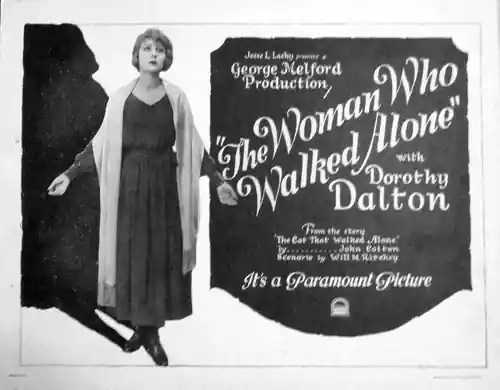
Visually, the film is a chiaroscuro fever. Interiors swim in umber shadows shot through with sickly lime from the windows, predicting the palette of The Coiners' Game a decade later. Exteriors bleach to bleu-de-Prussia skies that make the orange neckerchiefs of transport riders pop like bullet wounds. McDermott overlays dissolves of vultures circling whenever Hannah lies, turning the sky itself into an omniscient moral ledger.
The screenplay—by Will M. Ritchey and a then-unknown John Colton—leans into melodrama, sure, but it’s melodrama distilled through a shot glass of absinthe. Note the symmetry: Iris rescues Muriel’s letters, Clem rescues Iris’s future, Hannah’s bullet rescinds her own. Redemption ricochets like a pinball, scoring points off everyone. Even Lemister, that stone-faced Victorian automaton, ends the film financially ruined, his estate sold to fund Iris’s tavern—an irony sharp enough to shave with.
Restoration nerds, rejoice: the print I saw had Dutch intertitles, but English flash-frames underneath, suggesting a 1923 export version. The tinting is intact—amber for interiors, viridian for night scenes, crimson for the shooting—each hue baked into the emulsion like stained glass. The grain structure is so fine you could count the pores on Clem’s sunburnt neck; yet when the projector bulb hiccupped, the image momentarily turned phosphorescent, as though the film itself were radioactive with secrets.
Is it flawless? The African extras are treated as moving wallpaper, a sin common to the era though no less jarring. The comic-relief bartender, played by Charles Ogle, mugs so hard he risks whiplash. And the censors—oh, those petit-bourgeois sentinels—forced a truncated ending where Hannah’s comeuppance is softened to “apprehended by authorities,” though McDermott sneaks in a final shot of her shadow dangling from a tree, silhouette unmistakable. Blink and you’ll miss it; I didn’t.
Contextually, the film sits at a fascinating crossroads: post-WWI disillusionment meets pre-Hayes prudence. Women had just tasted workforce freedom; the frontier still promised reinvention. Iris’s journey from countess to tavern-keeper is the inverse of Anne of Green Gables’s arc toward domesticity. She doesn’t want a farm with “scope for imagination”; she wants a bar with scope for profit and the power to refuse service to any man who calls her “little lady.”
Modern parallels? Swap veld for outback, letters for nudes, and you’ve got a #MeNoir thriller. Hannah is the prototype for “bunny-boiler” tropes, yet the film grants her agency; she pulls the trigger, she pens her own doom. Compare that to She Went to See in a Rickshaw, where female desire is punished by narrative fiat. Here, desire is the engine, not the crime.
Watching it, I kept thinking of White Youth, another silent that weaponizes landscape as moral mirror. But where that film aestheticizes suffering, The Woman Who Walked Alone weaponizes hope. The final two-shot—Iris and Clem silhouetted against a gold-orange sunrise, their horses tethered to nothing but horizon—feels like the first inhale after a decade of tuberculosis. No swelling title card, no chimes, just the pure kinetic silence of two people who have learned that running away and walking toward are the same motion seen from opposite sides.
So track it down. Badger archives, scour eBay for 8 mm digests, bribe curators—whatever it takes. Because in an era when algorithms flatten cinema into content, this film still bristles like a cactus spine in your thumb. It reminds you that silence can roar louder than Dolby, that a 100-year-old shadow can sidle up and whisper: “You, too, can walk alone—just keep walking.” And when the lights come up, you’ll realize the footprint you’ve been trying to erase across continents and decades is finally, irrevocably, your own.
IMDb 6
1931
Community
Log in to comment.