DbcultAccessing Vault...
Cult Review
Senior Film Conservator
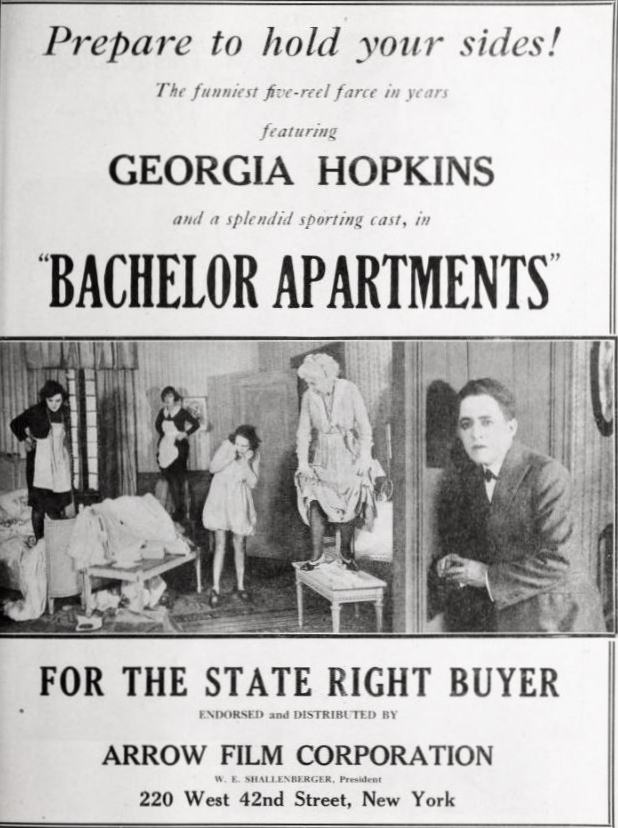
Stepping into the world of Bachelor Apartments, a delightful cinematic offering from 1921, is akin to unearthing a forgotten treasure chest brimming with effervescent humor and the charming simplicity characteristic of the silent era. This film, penned by Walter R. Hall, stands as a testament to the enduring appeal of farcical narratives, where the delicate threads of societal expectations are gleefully unraveled by the robust tug of circumstance and human folly. It’s a riotous romp that, despite its vintage, resonates with a timeless comedic energy, proving that the language of laughter transcends the spoken word.
The premise itself is a masterclass in comedic setup. We are introduced to I. O. Underwood, portrayed with a commendable blend of earnestness and bewildered charm by Joseph Donohue. Underwood finds himself at a pivotal crossroads, a common enough predicament for many a protagonist: the choice between embracing the perceived stability of matrimony and clinging to the vestiges of his unencumbered bachelor existence. The film wastes no time in establishing his rather pragmatic, if a touch misguided, approach to this life-altering decision. He opts for a logistical solution, subletting his apartment and dispatching his personal effects to the home of his fiancée, June Shelton (Eva Gordon), whose father, we are quickly apprised, harbors a distinct lack of enthusiasm for his prospective son-in-law. This initial tension, a subtle undercurrent of paternal disapproval, serves as a crucial foundation upon which the subsequent edifice of comedic chaos is meticulously constructed.
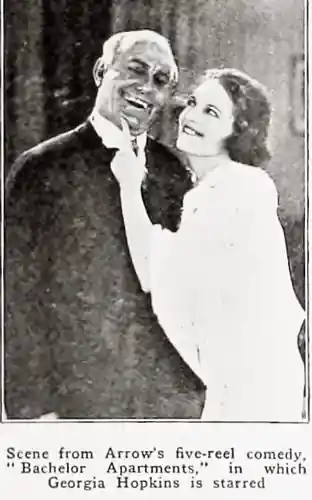
The narrative truly ignites when Underwood, having temporarily settled into the Shelton household during the elder Shelton's absence – a classic narrative contrivance designed to facilitate maximum comedic potential – attends a bachelor party. Ah, the bachelor party! A venerable institution, often depicted in cinema as a prelude to liberation or, more frequently, to utter disarray. In Bachelor Apartments, it is unequivocally the latter. Underwood's indulgence in the celebratory libations leads to a state of profound inebriation, a condition that proves to be the catalyst for the film's central, glorious misunderstanding. His drunken stumble through the urban labyrinth culminates not in a return to his temporary lodging, but rather to the familiar, yet now unfamiliar, threshold of his recently vacated apartment. This apartment, to his oblivious mind, is still his sanctuary; in reality, it has been leased to Howard Thorpe (George Reynolds) and his daughter, Pearl (Georgia Hopkins).
The ensuing scene, where Thorpe discovers a disoriented Underwood in his daughter's bedroom, is a brilliant piece of visual comedy. The immediate assumption, fueled by Thorpe's prior ignorance of his daughter's actual sweetheart, is that Underwood is the man he has never seen, the one destined to marry Pearl. This swift, erroneous conclusion propels the plot into a higher gear of absurdity. Thorpe, a man of decisive action and perhaps a touch of overzealous moral rectitude, insists upon an immediate wedding. The sheer speed with which this misunderstanding escalates is a hallmark of excellent farce, leaving the audience simultaneously gasping and guffawing. The performers, particularly George Reynolds as Thorpe, embody their roles with a convincing earnestness that only heightens the comedic impact of their misguided actions.
What follows is a meticulously orchestrated march towards matrimonial mayhem. Underwood and Pearl are literally paraded to the very same church where Underwood is scheduled to marry June. The confluence of these two separate, yet now inextricably linked, wedding parties creates a scene of unparalleled comedic tension. The moment the two brides—June, resplendent and unsuspecting, and Pearl, bewildered but compliant—come face to face is the film's undeniable zenith. It's a masterful stroke of writing by Walter R. Hall, bringing to a head all the disparate threads of the narrative in a single, explosive confrontation. The awkwardness, the confusion, the sheer mortification of the characters involved are palpable, even through the silent medium, a testament to the skilled pantomime of the cast.
The resolution, while somewhat convenient, is entirely satisfying within the conventions of the genre. The timely arrival of Pearl's actual sweetheart untangles the Gordian knot of mistaken identity, allowing both couples to be married on the spot. It's a conclusion that prioritizes neatness and happy endings, as is often the case in comedies of this vintage, reinforcing a sense of order restored after a delightful period of chaos. The film doesn't linger on the psychological implications of such a traumatic near-miss, choosing instead to revel in the sheer joy of comedic resolution.
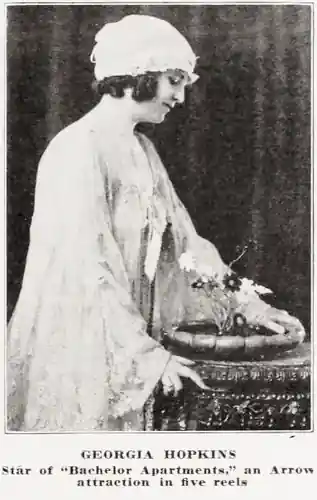
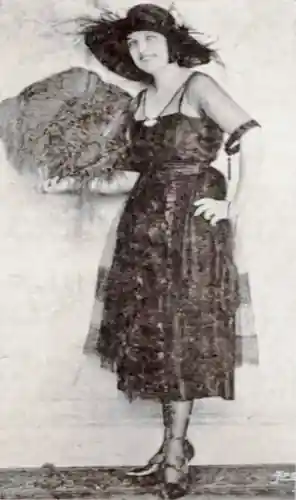
The performances across the board are commendable, capturing the broad strokes of emotion and physical comedy essential for silent film. Joseph Donohue, as the hapless I. O. Underwood, carries much of the film's comedic weight, his expressions shifting from determined bachelor to befuddled drunkard to utterly bewildered groom with impressive fluidity. Eva Gordon, as June Shelton, portrays the fiancée with a charming blend of innocence and burgeoning exasperation, while Georgia Hopkins infuses Pearl with a quiet, almost bewildered compliance that makes her situation all the more amusing. Supporting players like Edward M. Favor, Edward Boulden, George Dupree, and Bernard Nedell, along with Zadee Burbank, Frederick Howard, and Ruby Davis, contribute to the vibrant tapestry of characters that populate this bustling farce, each adding their distinct flavor to the comedic brew.
Walter R. Hall's screenplay demonstrates a keen understanding of comedic timing and structure. The pacing is brisk, never allowing the audience to dwell too long on any single plot point before propelling them into the next absurd scenario. The use of intertitles is effective, providing not just dialogue but also crucial exposition and witty commentary that enhances the viewing experience. The film's reliance on visual gags and physical comedy is a hallmark of the era, and Bachelor Apartments executes these elements with precision and flair. One can draw parallels to other physical comedies of the time, such as Buster Keaton's Hard Luck (1921), released in the same year, which also capitalizes on a series of escalating misfortunes, though Keaton's brand of humor often leaned towards the surreal and stoic, whereas Bachelor Apartments embraces a more boisterous, almost theatrical style of farce.
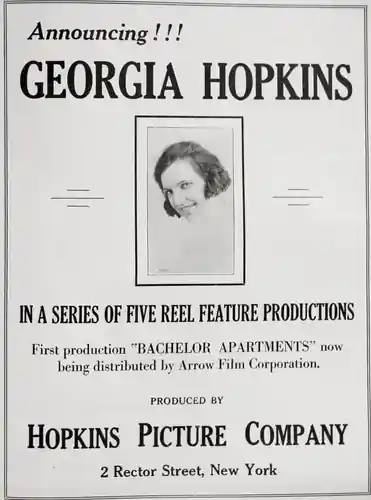
The film also inadvertently offers a fascinating glimpse into the social mores of the early 1920s. The emphasis on marriage as a societal expectation, the role of the disapproving father, and the sanctity of the wedding ceremony all speak to a particular cultural moment. The very idea of a bachelor apartment, a symbol of masculine independence, transitioning into a marital home, represents a significant rite of passage, one that Bachelor Apartments satirizes with good-natured humor. The rapid insistence on marriage once a young man is found in a young woman's bedroom, regardless of the circumstances, highlights the prevailing conservative attitudes towards reputation and propriety. This subtext, while not overtly explored, adds an intriguing layer to the otherwise straightforward comedic plot.
From a technical standpoint, the cinematography, while perhaps not groundbreaking, is perfectly adequate for conveying the narrative. The camera work is functional, allowing the actors' expressions and physical actions to take center stage. Set designs are simple yet effective, clearly delineating the different environments—the bachelor apartment, the Shelton home, the church—each playing its part in the unfolding drama. The editing maintains a good rhythm, crucial for a comedy where timing is everything. The lack of an original score, typical for silent films, means that the experience is heavily reliant on the skill of the accompanying musicians in a live setting, but the visual storytelling is strong enough to carry the narrative even without this auditory embellishment.
Comparing Bachelor Apartments to other films of its era, one finds it comfortably nestled within the popular genre of domestic comedies and farces. While it may not possess the grand scale or dramatic depth of epics like Potop or the adventurous spirit of Riders of the Dawn, its strength lies in its focused, character-driven humor. It shares a thematic kinship with films that explore the complexities of relationships and social standing, albeit through a comedic lens, not unlike the subtle societal pressures sometimes seen in a film like The Sudden Gentleman, though that film might lean more into the dramatic potential of such pressures. The sheer joy of watching the intricate dance of misunderstandings unfold is a universal pleasure, and this film delivers it in spades.
The film's exploration of identity, albeit superficial, is also noteworthy. Underwood, stripped of his usual environment and in a state of altered consciousness, is mistakenly ascribed a new identity—Pearl's sweetheart. This temporary identity crisis, resolved only by the intervention of the true suitor, highlights how easily one's perception can be skewed by context and expectation. It's a lighthearted take on a theme that more serious dramas might explore with profound gravity, but here, it serves as a vehicle for laughter.
In an era of cinematic experimentation and rapid evolution, Bachelor Apartments represents a refined example of a well-established genre. It doesn't attempt to reinvent the wheel but rather to execute a proven formula with panache and skill. The comedic beats are well-timed, the characterizations are clear, and the escalating absurdity is expertly managed. It's a film that would have undoubtedly entertained audiences of its time, providing a much-needed escape into a world where even the most dire social blunders could be resolved with a laugh and a convenient plot twist.
Ultimately, Bachelor Apartments is more than just a historical artifact; it's a vibrant, engaging piece of entertainment that continues to charm. For those interested in the roots of cinematic comedy, or simply in need of a good, old-fashioned laugh, this silent film offers a delightful excursion into a world where mistaken identities and drunken escapades lead to the most unexpected, and ultimately joyous, conclusions. It’s a testament to the enduring power of simple storytelling executed with genuine comedic intent, reminding us that sometimes, the greatest joy in cinema comes from watching well-meaning individuals stumble through life's absurdities with hilarious results. Walter R. Hall's vision, brought to life by a dedicated cast, ensures that this apartment, though technically 'bachelor,' is anything but lonely, filled instead with the echoes of timeless laughter.
IMDb —
1928
Community
Log in to comment.