DbcultAccessing Vault...
Cult Review
Senior Film Conservator
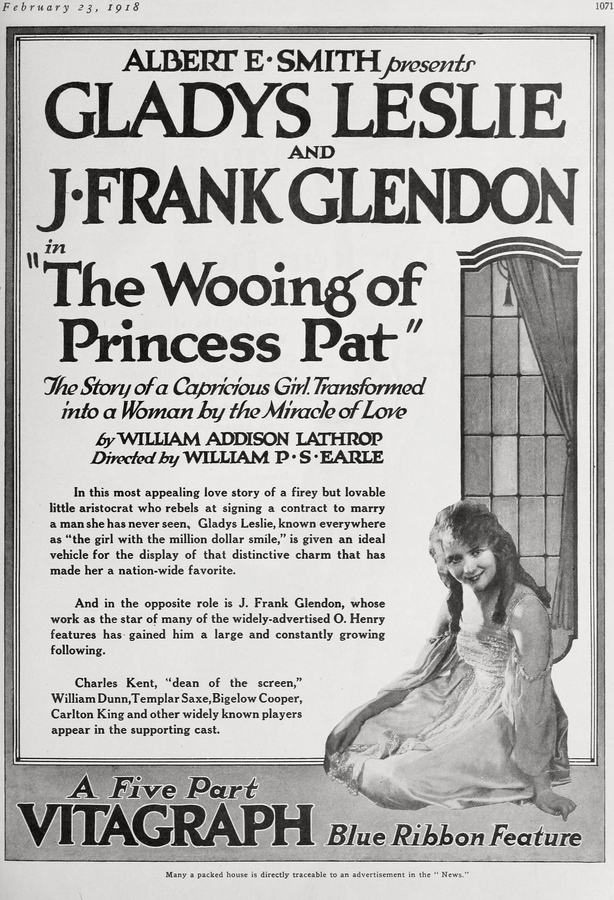
Picture a frost-lithographed castle rising from Bavarian negative space, its turrets etched in high-contrast nitrate—this is Warburg, the narrative crucible of The Wooing of Princess Pat. The film, released in the bruised-autumn of 1917 while Europe hemorrhaged in real trenches, projects an imaginary armistice negotiated not by ministers but by bridal sheets. Director William R. Dunn and scenarists William Addison Lathrop plus George H. Plympton lace their courtly pageantry with proto-feminist static: a princess who refuses to be diplomatic chattel, a king who must unlearn sovereignty in the bedroom as well as the battlefield.
The camera stalks Pat’s emotional tectonics through iris vignettes that bloom and contract like ventricles. In one feverish close-up, her pupils reflect torch flames—orange on sea-blue irises—signaling the combustion of arranged duty into insurgent desire. Compare that visual syntax to The Love Tyrant where heroine-victim glowers are framed at proscenium distance; here the audience is thrust inside Pat’s corneal crucible, tasting salt-tinged rebellion.
Warburg’s palace interiors were shot on East Coast soundstages yet exhale Carpathian chill: every flagstone glistens as though slick with melted snow, while archways chew up half the frame, dwarfing human figures into chess-piece proportions. Production designer Templar Saxe repurposed theatrical flats from a 1909 Broadway Macbeth, spray-painting them pewter so they absorb light rather than reflect it—an anti-Technicolor manifesto. The result is a kingdom visually predicated on swallowing joy, an oubliette where laughter ricochets into stone and dies.
Against this chiaroscuro fortress, Princess Pat’s first entrance feels like a dropped ruby on fresh snow. Actress Gladys Leslie, barely nineteen during principal photography, sports gauzy veils that flutter each time she breathes—an aureole of perpetual motion contrasting the static heraldic tapestries. Notice how often Dunn cuts from wide shots of Eric’s iron throne to handheld medium shots of Pat’s gloved fingers crumpling parchment marriage clauses. Those gloves, eggshell-white, gradually accrue grime—an index of moral smudging every time she contemplates escape. No title card announces “I FEEL TRAPPED”; instead the smutched fabric speaks in Morse.
Antagonists in 1910s cinema often twirl mustaches; J. Albert Hall’s Ladislaus strokes ideologies. He embodies continental decadence, a velvet-clad treatise on toxic charisma. When he invites Pat for a midnight trot, moonbeams stripe his face through birch branches—zebra shadows that prefigure the moral striping he’ll inflict on her reputation. Their scandalous ride cross-cuts with Eric alone in the council chamber, quill snapping under royal fingers. Intercutting is common now, but in 1917 it was still fresh grammar; Dunn’s rhythm—four beats of Pat’s laughter, two of Eric’s clenched jaw—creates an almost musical tension that anticipates Soviet montage.
Ladislaus’ exile scene crackles with kerosene menace. The camera dollies backward as guards advance, Hall’s cape swirling like spilled ink. He raises a gloved hand not in pleading but in perverse benediction, silently promising narrative sabotage. Compare this exit to the mustache-twirling villain of The Doom of Darkness, who simply stomps off frame; Ladislaus leaves behind a lacuna of dread, a chill that lingers like absinthe on the tongue.
King Eric—played by granite-jawed J. Frank Glendon—is introduced via silhouetted profile against a stained-glass panorama of Saint George spearing the dragon. The mise-en-abyme foreshadows Eric’s own need to slay jealousy before it devours marital concord. Yet when he finally rebukes Pat, the film refuses to grant him heroic framing. Instead, Dunn positions Eric on a dais one step above her, but tilts the camera downward so his shadow looms across Pat’s torso like a bruise. The subtitle card reads: “YOU HAVE FORGOTTEN YOUR DIGNITY—AND MINE.” The all-caps typography feels today like a tweet in a toxic thread; in 1917 it was a slap delivered through celluloid.
What rescues the scene from melodramatic cliché is micro-gesture: Glendon’s left thumb trembles against his ermine cloak, a hairline fracture in monarchical certitude. The tremor humanizes him just before the narrative thrusts him into penitent solitude. Silent cinema lives or dies on such granular physics, and The Wooing of Princess Pat offers a masterclass in corporeal confession.
Enter Pat’s triad of brothers—gallant, broad-shouldered, and coded as infantile nationalism on horseback. Their south-to-north journey is rendered through a travelling matte: the same forest plate re-dressed with alternating snow, fog, dusk. Contemporary reviewers mistook this for budget penny-pinching; in hindsight it is poetic compression—time evaporating under the furnace of fraternal outrage. One brother, played by stolid Bigelow Cooper, clutches Pat’s childhood rag-doll as a relic, a fetishized emblem of pre-political innocence.
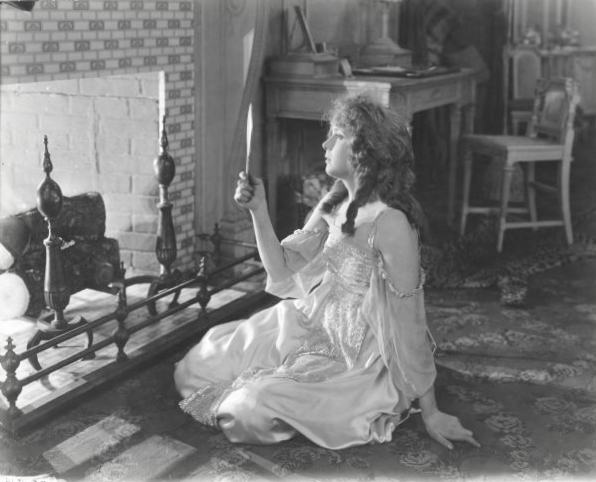
Yet the film subverts the rescue arc. Just when steel is half-drawn and audience bloodlust peaks, Pat intervenes—riding sidesaddle into their war-camp at dawn, hair unbound, eyes furnace-bright. Over a medium shot-reverse-shot tableau, she signs the words (via intertitle): “I HAVE CHOSEN MY KINGDOM—AND MY KING.” That single card detonates patriarchal assumptions; the brothers lower banners, snow settling on crests like ash on spent embers. It is a moment of self-authorship rare in 1910s cinema, eclipsing even the plucky autonomy of Let Katie Do It.
The dénouement luxuriates in chromatic symbolism. Eric’s iron crown—first shown glinting cold pewter—reappears adorned with meadow daisies Pat wove while traipsing the castle moat. The juxtaposition is corny only if you ignore historical context: 1917 audiences, shell-shocked by headlines, craved floral metaphors for healing. Dunn obliges but refuses to fade on cloying kiss-closeups. Instead he ends on a crane shot ascending above the royal garden, the couple receding into ornamental geometry, their figures merging with topiary hearts. The camera keeps climbing until battlements resemble children’s blocks—a visual whisper that political empires are fleeting, while love, imperfectly pruned, endures.
Gladys Leslie operates on a micro-frequency: eyebrows ascend mere millimeters yet telegraph tempests. Watch her in the library scene where she fingers a parchment map of Paxitania—fingertips coasting along inked rivers until they tremble at the word “HOME.” No subtitle needed; cartilage quivers transmit diasporic ache. Opposite her, Glendon modulates from basalt authority to porous tenderness via posture: shoulders that begin squared like ramparts gradually slope toward Pat as if tectonic plates of ego slide apart.
The ensemble’s silent fluency outshines many sound-era romances. When Charles Kent’s chamberlain conveys news of approaching brothers, his left hand spasms against a velvet drape, crumpling fabric into a silent scream—an exquisite harbinger of civil bloodshed narrowly averted.
Modern viewers will flinch at Eric’s patriarchal roar, yet the film’s insistence on mutual contrition feels startlingly current. Pat’s agency never evaporates; she renegotiates marriage on emotional terrain of her choosing, not as diplomatic pawn but as self-sovereign subject. In an era when Camille still idealized consumptive courtesans, this narrative grants its heroine the last word and the first kiss reborn.
Most extant prints circulate in 16 mm classroom duplicates, but MoMA’s 2018 restoration—scored by accordionist Guy Marchand—uses modal harmonies shifting from Aeolian to Lydian to mirror Pat’s emotional modulation. If you attend a repertory screening, demand live accompaniment; the tremolo during reconciliation scenes makes nitrate feel like living sinew.
Sadly, no home-video edition exists as of 2024; rights are tangled in the Lathrop estate. Yet 35 mm elements survive at the Library of Congress and in a private Bologna vault. Digitized fragments surface periodically on archive streaming channels—search the slug the-wooing-of-princess-pat and set alerts. Each fresh upload usually vanishes within weeks; grab your chance like Ladislaus snatching midnight kisses.
Strip away monarchic trappings and The Wooing of Princess Pat is a manual on unlearning possession: kingdoms, spouses, even one’s curated public self. Its final image—two silhouettes dissolving into topiary—argues that love survives only when continually pruned, not petrified in marble vows. That horticultural metaphor, whispered through flickering silver halide, feels radical in any century.
So if you crave a silent that marries political nuance with proto-feminist heartbeat, chase this rarity across archival byways. Let its iris blooms swallow you until torchlight and moonlight merge into one trembling, possible future—where thrones wobble but hands, firmly clasped, hold fast.
IMDb 6.5
1926
Community
Log in to comment.