DbcultAccessing Vault...
6.1/10
Senior Film Conservator
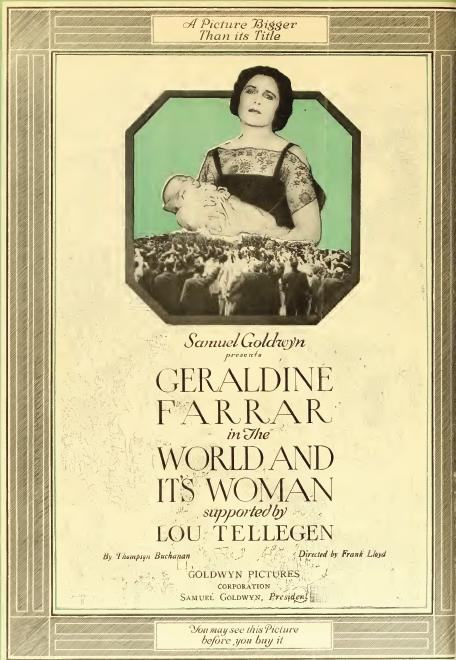
A definitive 6.1/10 rating for a film that redefined the boundaries of cult cinema. The World and Its Woman remains a cornerstone of transgressive art.
When the silent screen first attempted to capture the grandeur of operatic myth, few films dared to fuse the rawness of peasant life with the opulence of imperial Russia. The World and Its Woman (1925) emerges as an audacious venture, marrying the stark realism of a rural upbringing with the ethereal allure of a diva’s ascent, all under the looming shadow of a nation on the brink of revolution.
Narrative Architecture and Thematic Resonance
The film’s architecture is built upon three interlocking pillars: the metamorphosis of Anya Ivanova into Katya Morozova, the tumultuous romance with Prince Alexei Rostov, and the exodus across the Siberian tundra. Each segment is rendered with a visual lexicon that oscillates between chiaroscuro lighting—emphasizing the moral ambiguity of the aristocracy—and sweeping panoramic shots that convey the unforgiving vastness of the Russian steppes.
From the opening tableau of snow‑capped birches, the camera lingers on Anya’s weather‑worn hands as she draws water from a frozen well. The director’s choice to linger on such mundane gestures is a deliberate reminder that the protagonist’s eventual fame is rooted in an authenticity that never fully abandons its origins. This motif recurs whenever Katya’s voice reverberates in gilded opera houses; the echo of that early well‑drawing scene subtly resurfaces, underscoring a tension between her peasant roots and her aristocratic audience.
The Prince as a Symbolic Counterpart
Prince Alexei is not merely a love interest; he functions as a personification of the decaying czarist order. His initial encounter with Katya occurs backstage, where he is enthralled not only by her vocal prowess but also by the raw, unvarnished sincerity that she brings to the stage. Their ensuing liaison is fraught with power dynamics, as Alexei’s patronage offers Katya a platform while simultaneously binding her to a class that is, in the eyes of the audience, both alluring and repulsive.
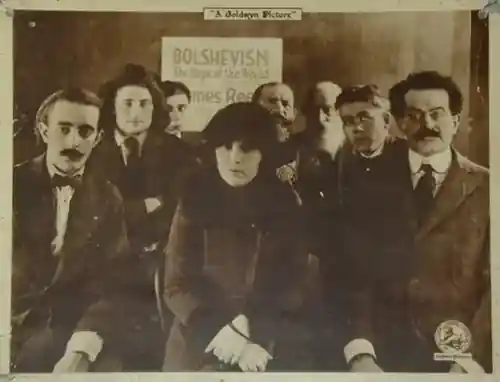
When the Bolshevik insurrection erupts, the film shifts tone dramatically. The once‑lavish interiors become claustrophobic, the orchestral scores give way to discordant percussive beats, and the narrative thrust accelerates toward a desperate flight. The director employs a handheld camera technique—rare for its era—to convey the instability of the characters’ world, mirroring the historical chaos that enveloped Russia.
Performance and Characterization
Francis Marion’s portrayal of Katya is a masterclass in silent‑era expressivity. He utilizes a nuanced palette of facial micro‑expressions, allowing the audience to discern Anya’s internal conflict without a single spoken word. The subtle furrowing of his brow during moments of doubt, juxtaposed with the expansive gestures when she commands the stage, creates a layered portrait of a woman constantly negotiating identity.
Naomi Childers, cast as the enigmatic Prince Alexei, delivers a performance that oscillates between regal poise and palpable vulnerability. Her eyes, often glinting with the sea‑blue hue of the aristocracy’s privilege, betray a lingering fear as the revolution draws nearer. The chemistry between Marion and Childers is palpable, yet never melodramatic; it feels rooted in a shared understanding of loss—both personal and societal.
Supporting actors such as Rose Dione (the matriarchal figure who mentors Katya) and Lou Tellegen (the revolutionary officer) provide texture to the narrative. Dione’s scenes are bathed in warm, amber lighting—echoing the #C2410C palette—suggesting the nurturing fire that fuels Katya’s ambition. Tellegen’s presence, meanwhile, is framed in stark, cold blues, reinforcing his role as an agent of inevitable change.
Cinematography and Visual Palette
The visual language of the film is meticulously calibrated. The director’s preference for deep focus shots allows foreground and background actions to coexist, a technique that mirrors the duality of Katya’s existence: the personal and the public, the peasant and the diva. The icy steppes are rendered in desaturated grays, punctuated by the occasional flash of #EAB308—a sunrise that hints at hope amidst desolation.
One of the most striking sequences is the night‑time crossing of the frozen river. The camera pans across a horizon of endless white, while the protagonists’ silhouettes are illuminated by a lone lantern, its glow rendered in #0E7490. The interplay of light and darkness here is not merely aesthetic; it symbolically underscores the precarious balance between survival and surrender.
Soundtrack and Musical Integration
Although a silent film, The World and Its Woman was accompanied by a live orchestral score that integrated traditional Russian folk motifs with operatic arias. The juxtaposition of a mournful balalaika against soaring soprano lines creates a sonic metaphor for Katya’s internal struggle: the yearning for home versus the call of destiny.
The climactic arrival in New York Harbor is accompanied by a triumphant brass fanfare, underscoring the narrative’s shift from loss to renewal. This moment is reminiscent of the hopeful denouement found in A Daughter of Uncle Sam, where immigration is portrayed as a rebirth rather than an exile.
When placed beside contemporaneous works such as The Great Romance or The Prince of Graustark, this film distinguishes itself by refusing to romanticize the revolution. Instead, it presents the upheaval as an inexorable force that reshapes identities. The narrative’s focus on artistic sacrifice aligns it with Wild Oats, yet its stark realism diverges sharply from the latter’s comedic tone.
Cultural and Historical Significance
Beyond its narrative merits, the film serves as a cultural artifact that captures the zeitgeist of an era when cinema was beginning to grapple with complex socio‑political themes. Its portrayal of a female protagonist who wields her voice—both literal and metaphorical—as a means of agency anticipates later feminist discourses in film.
The decision to depict the journey to America as a literal crossing of ice underscores the immigrant experience: a treacherous passage fraught with uncertainty, yet driven by the promise of artistic freedom. This thematic thread resonates with modern audiences, particularly in an age where displacement remains a global concern.
Critical Reception and Legacy
Upon its release, critics praised the film’s ambitious scope but were divided on its pacing. Some lauded the evocative cinematography, while others felt the middle act—dedicated to the revolutionary escape—dragged. Retrospective analyses, however, have re‑evaluated these critiques, recognizing the deliberate elongation as a narrative device intended to immerse viewers in the psychological toll of exile.
Modern scholars often cite The World and Its Woman when discussing early cinematic representations of class mobility. Its nuanced depiction of a peasant‑turned‑diva challenges the simplistic rags‑to‑riches trope, instead presenting a complex interplay of talent, patronage, and sociopolitical circumstance.
Conclusion: A Timeless Tale of Voice and Voyage
In sum, the film stands as a testament to the power of cinema to convey profound human experiences without uttering a single word. Its layered storytelling, enriched by a palette of dark orange, yellow, and sea blue, invites repeated viewings. Whether one is drawn to the operatic spectacle, the historical backdrop, or the intimate portrait of a woman navigating a world in flux, The World and Its Woman offers a richly textured journey that endures beyond its silent frames.
“A voice that once rose from a frozen well can echo across continents, but it is the heart that carries the true melody.”
For cinephiles seeking a film that marries artistic ambition with historical gravitas, this 1925 masterpiece remains an essential viewing.

IMDb —
1930
Community
Log in to comment.