DbcultAccessing Vault...
Cult Review
Senior Film Conservator
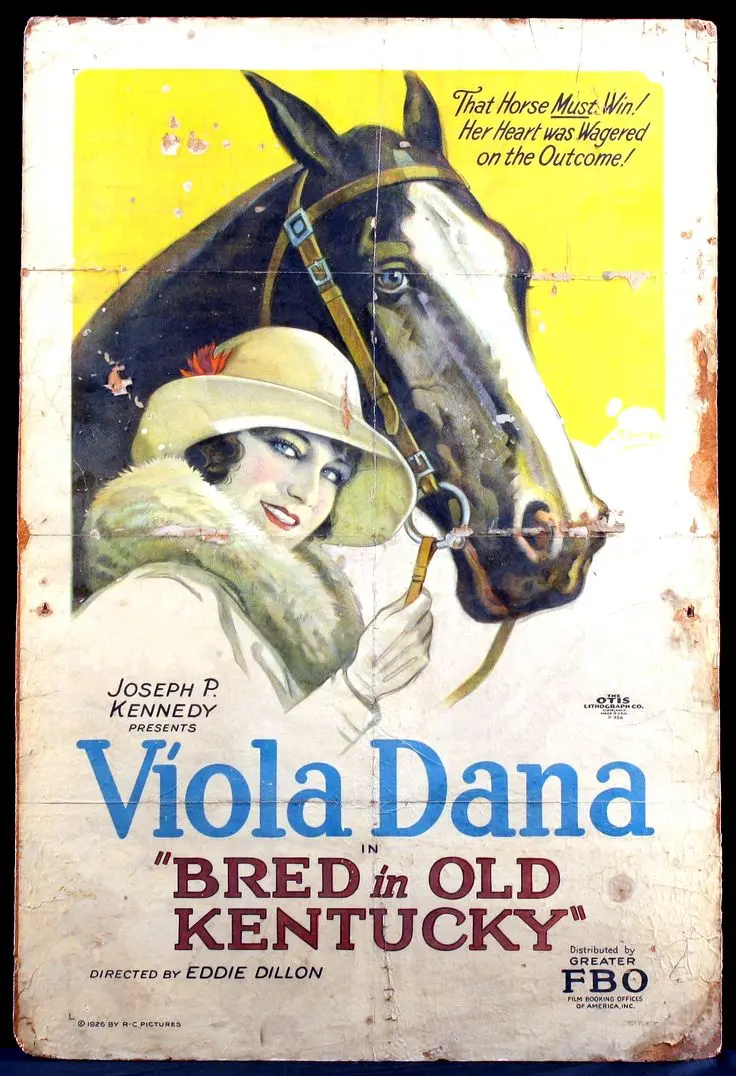
Should you spend your time on this silent-era horse racing drama? Short answer: yes, if you crave a sports film with the soul of a noir thriller. This isn't a family-friendly romp; it’s a story for those who appreciate the desperate measures people take when their legacy is pushed to the brink.
This film is for the historian of the 'dead-ringer' trope and fans of pre-Code grit. It is definitely not for those who demand high-speed modern editing or a purely heroic protagonist.
1) This film works because it leans into the bitterness of its protagonist rather than forcing her into a mold of silent-film Victorian virtue.
2) This film fails because the male lead, Dennis Reilly, is written with a blandness that makes Katie’s intense hatred feel occasionally one-sided and underdeveloped.
3) You should watch it if you want to see how the 1920s cinema handled themes of class warfare and corporate-style cheating on the race track.
Bred in Old Kentucky starts with a familiar setup: the impoverished heir. However, director Edward Dillon (uncredited but felt) quickly pivots. When Katie O'Doone mortgages her soul for a chance at the Derby, the stakes are physical. You can feel the dust. When the collision happens, it isn't just a race-day accident; it's the destruction of a woman’s last link to her father.
The pacing in the first act is deliberate, establishing the decay of the O'Doone estate. It feels heavy. This isn't the bright, polished Kentucky of later Technicolor films. It’s a place of shadows and unpaid bills. The transition into the second act, where Katie aligns herself with Jake Trumbull (Jim Mason) and Tod Cuyler (Jerry Miley), is where the film finds its teeth.
The 'dead-ringer' plot—replacing a champion horse with a lookalike to manipulate betting odds—is handled with a surprising amount of technical detail. Unlike Ride for Your Life, which focuses on the thrill of the chase, this film focuses on the mechanics of the con. The scenes in the dimly lit stables, where the switch is discussed, carry a tension that predates the great heist films of the 1950s.
Viola Dana is the engine of this movie. In an era where actresses were often asked to be either 'The Vamp' or 'The Ingenue,' Dana finds a middle ground: 'The Desperate.' Her performance when she realizes her horse has lost is not one of weeping, but of cold, hard calculation. It’s a pivot point that defines the film’s moral complexity.
Compare her performance here to the more stylized acting in Bobbie of the Ballet. Dana is grounded. When she looks at Dennis Reilly (Jerry Miley), there is a genuine sense of class resentment. She isn't just mad about a horse race; she’s mad that his wealth allows him to be 'accidental' while her poverty makes every mistake fatal.
The supporting cast is equally effective, particularly Jim Mason as the crooked bookie. Mason plays Trumbull not as a mustache-twirling villain, but as a businessman who happens to deal in fraud. His interactions with Katie are transactional and cold. It adds a layer of realism that keeps the film from sliding into melodrama.
The racing sequences in Bred in Old Kentucky are remarkably sophisticated for 1926. The camera isn't just a static observer at the rail. There are moments where the lens seems to be right in the thick of the thundering hooves. This creates a visceral sense of danger that is often missing from other films of the period, such as The Yankee Consul.
The use of light and shadow in the bookie dens is also noteworthy. The film utilizes high-contrast lighting to differentiate between the 'clean' world of the wealthy sportsmen and the 'dirty' world of the betting parlors. It’s a visual shorthand for Katie’s moral descent. She starts in the sun-drenched fields and ends up in the smoky backrooms.
"The film doesn't just ask for sympathy; it demands a reckoning. It's a dirty movie in a clean era."
Yes, Bred in Old Kentucky is worth watching for anyone interested in the evolution of the crime and sports genres. While many silent films of the mid-20s were leaning into escapism, this film offers a cynical look at the corruption inherent in high-stakes gambling. It manages to balance a traditional revenge narrative with a nuanced look at how poverty can drive even the most principled person toward criminality.
The film’s resolution might feel a bit tidy for modern audiences, but the journey there is filled with enough grit to satisfy fans of early cinema. It’s a rare example of a horse racing movie that cares more about the people in the shadows than the horse in the winner's circle.
Bred in Old Kentucky is a fascinating relic. It works. But it’s flawed. The film’s greatest strength is its refusal to play it safe with its heroine. By allowing Katie O'Doone to become a conspirator in a crime, the writers (Louis Weadock, G.B. Lancaster, and Gerald C. Duffy) created a character with more agency than most of her contemporaries in films like Miss Jackie of the Navy.
If you can look past the somewhat dated romantic subplot, you are left with a taut, well-constructed drama about the lengths one will go to protect a dying legacy. It’s a film that understands that on the race track, as in life, the person who plays fair is often the one who finishes last. For a movie made nearly a century ago, that is a surprisingly modern sentiment.
Ultimately, this is a must-watch for those exploring the roots of the heist genre. It’s a gritty, focused, and visually compelling piece of cinema that proves horse racing has always been a dirty business.
IMDb —
1915
Community
Log in to comment.