DbcultAccessing Vault...
Cult Review
Senior Film Conservator
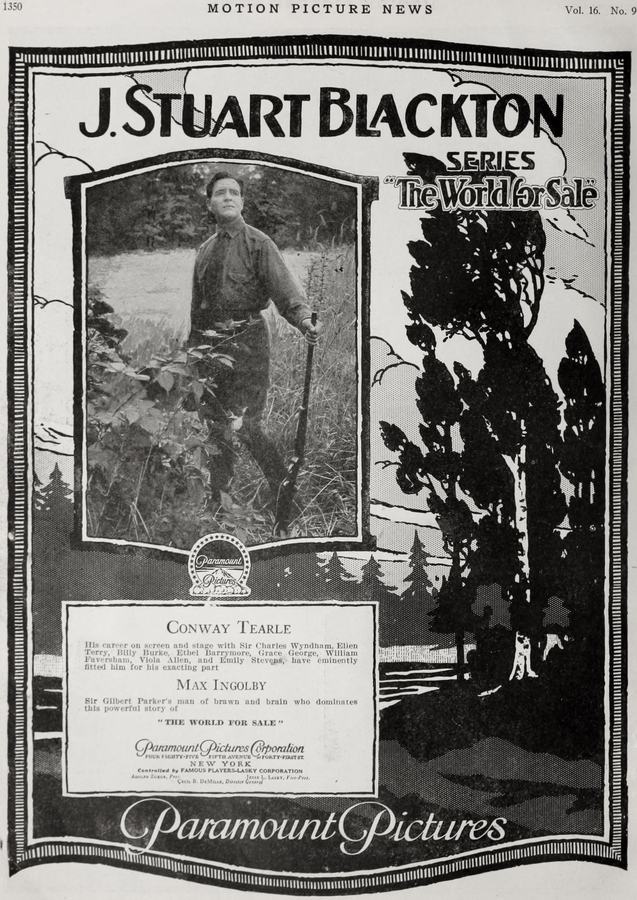
Stepping back into the cinematic landscape of 1918, one encounters a fascinating artifact in 'The World for Sale,' a film that, even a century later, manages to articulate profound themes with an earnestness characteristic of its era. Based on the literary work of Gilbert Parker, this feature plunges us into a distinctly Canadian frontier, a setting ripe with both the promise of new beginnings and the harsh realities of human friction. It’s a narrative tapestry woven with threads of ambition, survival, and the inescapable allure of an untamed spirit, all set against a backdrop where the very concept of 'order' is still finding its footing.
The premise itself is elegantly simple yet pregnant with dramatic potential: two antagonistic towns in the Canadian Northwest, their only physical connection a solitary, perhaps symbolic, bridge. This bridge, a marvel of human ingenuity, paradoxically links communities defined by their mutual animosity. It’s a clever metaphor for the tenuous nature of peace and cooperation in a burgeoning society, a theme that echoes in other frontier narratives like The Chechako, where the struggle to establish order in the wilderness is paramount. The film introduces us to Ingolby, an engineer whose idealism is as sturdy as the structures he dreams of building. He is a man driven by a vision of progress, of taming the wild expanse and forging connections where none existed. His determination, however, places him in peril, bringing him to the brink of destruction. It is here that the narrative takes a pivotal turn, introducing a character who embodies the very essence of the wilderness Ingolby seeks to conquer: Fleda Druse.
Fleda Druse is not merely a damsel in distress; she is a force of nature, her 'wild-eyed' demeanor hinting at a spirit unburdened by societal conventions. Her intervention, saving Ingolby from a perilous fate, immediately establishes her as a pivotal figure, a counterpoint to the engineer's structured rationality. She is the daughter of a figure described only as the local 'gypsy monarch,' a term that conjures images of an enigmatic, perhaps even autocratic, leader whose authority stems not from legal decree but from an unspoken understanding of the land and its people. This unique familial background imbues Fleda with a distinct identity, setting her apart from the more conventional inhabitants of the rival towns. Her character brings a necessary dynamism, a spark of unpredictability that prevents the narrative from devolving into a simplistic tale of good versus evil.
The portrayal of characters, especially by the ensemble cast, is a cornerstone of the film's appeal. Norbert Wicki, in the role of Ingolby, manages to convey both the unwavering resolve and the underlying vulnerability of a man committed to his ideals. His performance is nuanced, capturing the quiet strength required to push against the tide of entrenched rivalries and natural obstacles. Emile La Croix and E.L. Fernandez, though their specific roles might be less central to the initial synopsis, undoubtedly contribute to the rich tapestry of the frontier community, lending authenticity to the fraught relationships between the towns. The presence of Crazy Thunder and Joseph Donohue suggests a narrative that engages with Indigenous perspectives or at least the diverse cultural landscape of the Canadian Northwest, a progressive inclusion for its time, echoing the broader societal shifts seen in films like In the Days of the Thundering Herd, which also attempted to depict aspects of Native American life, albeit through a specific lens of the era.
Maude Scofield and W.W. Bitner, likely portraying figures within the communities or perhaps aligned with the 'gypsy monarch,' would have added texture to the film's social dynamics. However, it is the interplay between Conway Tearle and Ann Little, particularly in their depiction of the central romantic or antagonistic forces, that would have truly captivated audiences. Ann Little, in particular, would have been tasked with bringing Fleda Druse's wild spirit to life, a challenge that, if met with the right balance of ferocity and charm, could elevate the character beyond a mere plot device. Her performance would have been crucial in grounding the more fantastical elements of the 'gypsy monarch' lineage while making Fleda’s independent spirit believable and compelling. This kind of strong female character, navigating a challenging environment, can be seen in other films of the period, though perhaps not always with the same romanticized 'wildness' as Fleda.
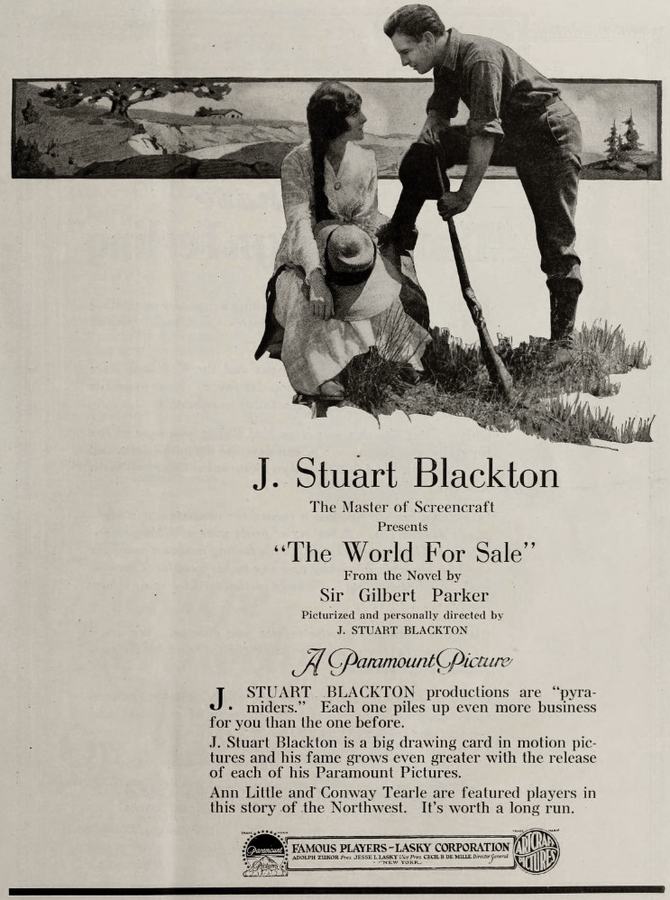
At its core, 'The World for Sale' grapples with the eternal conflict between civilization and the untamed wilderness, both external and internal. Ingolby represents the former, an embodiment of human ambition to impose order, build, and connect. His bridge is not just a physical structure but a symbol of progress, of overcoming natural barriers and human divisions. Fleda, on the other hand, personifies the latter – the raw, unadulterated spirit of the land, resistant to constraints, yet capable of profound acts of compassion and loyalty. This dichotomy is not presented as a simple good-vs-evil struggle but as a complex interplay of forces that ultimately must find a way to coexist. The film suggests that true progress might lie not in conquering nature, but in understanding and integrating with its rhythms, much like the subtle balance explored in Bushranger's Ransom, or A Ride for Life, where survival often depended on a deep understanding of the harsh Australian landscape.
The 'gypsy monarch' figure, Fleda’s father, adds another layer to this thematic exploration. He represents an alternative form of governance and community, one rooted in tradition and perhaps a different set of laws than those of the nascent towns. His presence challenges the viewer to consider what constitutes legitimate authority and how different communities can coexist, or clash, when their foundational principles diverge. This aspect of the narrative resonates with the broader societal questions of the time, as nations grappled with defining their identities and integrating diverse populations. The film, through its characters, asks whether progress necessitates the eradication of older ways of life, or if a synthesis is possible.
Gilbert Parker's original story provides a sturdy framework, allowing for a narrative that balances adventure with deeper character introspection. The script, even in its silent film incarnation, would have relied heavily on visual storytelling and the expressive power of its actors. The director's challenge would have been to translate Parker's rich prose into compelling imagery, utilizing the vast Canadian landscapes to their full potential. One can imagine sweeping shots of the wilderness, contrasting with the more confined, tense scenes within the rival towns or on the perilous bridge. The pacing would have been crucial, building suspense around Ingolby's engineering feats and the ongoing tensions between the communities, punctuated by Fleda's impactful interventions.
The direction, though uncredited in the provided information, would have needed to master the art of visual narrative prevalent in the silent era. The use of close-ups to convey emotion, wide shots to establish setting, and dynamic editing to build action sequences would have been essential. For a film centered around a bridge and rival towns, the spatial relationship between these elements would have needed careful consideration. The very act of Ingolby being 'saved from destruction' by Fleda implies a sequence of high drama, perhaps a perilous fall or a confrontation that demands quick, decisive action from both characters. This kind of physical drama was a staple of early cinema, often seen in adventure serials or Westerns of the period, providing thrilling moments for audiences.
'The World for Sale' emerged during a fascinating period in cinema history, a time when the medium was rapidly evolving from novelty to a sophisticated art form. Films like The Pageant of San Francisco showcased grand scale and historical ambition, while character-driven dramas like Such a Little Queen explored more intimate human conflicts. 'The World for Sale' seems to occupy a space that blends both, offering an epic frontier setting with deeply personal stakes. Its themes of community building, the clash of cultures, and the struggle for survival in a harsh environment are timeless. Even today, as societies grapple with globalization and the preservation of unique cultural identities, the film's central questions about progress versus tradition, and the integration of diverse ways of life, remain remarkably pertinent.
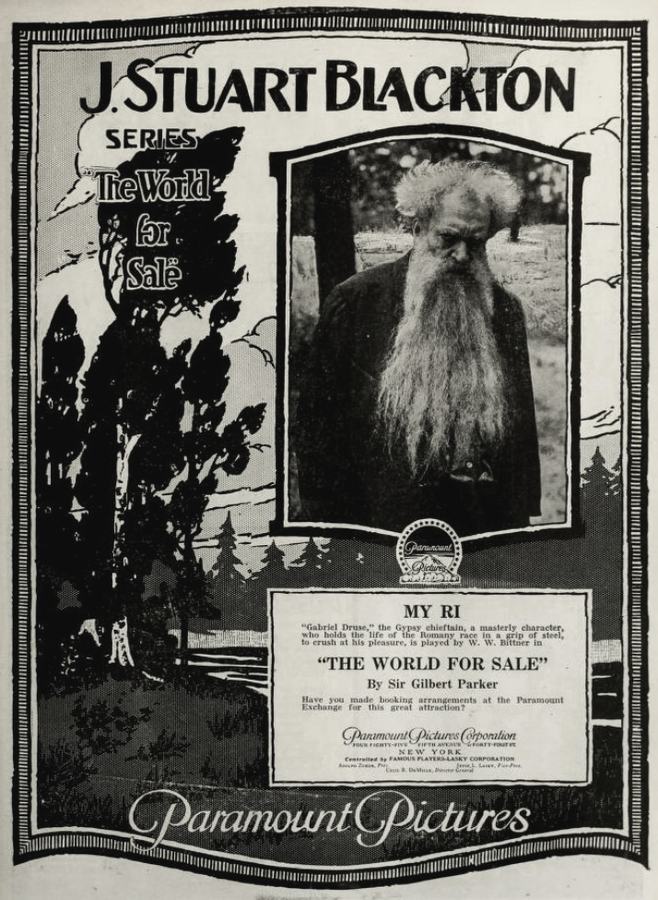
The representation of the Canadian Northwest, a region often romanticized yet rarely explored in early cinema with such specific detail, offers a glimpse into the cultural imagination of the time. The notion of a 'gypsy monarch' might be viewed through a contemporary lens as problematic, perhaps exoticizing a culture. However, within the context of 1918, it likely aimed to portray a vibrant, unconventional community that stood outside the rigid structures of colonial settlement, adding an element of mystique and intrigue. This approach to character and community, while potentially dated in its terminology, nevertheless speaks to an attempt to depict the rich, multicultural tapestry of the frontier, even if through a romanticized filter.
Comparing it to other films of the era, 'The World for Sale' stands out for its blend of engineering ambition and untamed romance. While films like Reaching for the Moon focused on grander, often futuristic, visions of progress, 'The World for Sale' grounds its idealism in the gritty reality of a frontier. The tension between the rival towns, a microcosm of larger societal conflicts, finds echoes in various dramas of the period, from family feuds to political struggles. The very notion of a single bridge connecting two antagonistic entities is a powerful visual metaphor that resonates far beyond its immediate setting, speaking to universal human experiences of division and the yearning for unity.
Ultimately, 'The World for Sale' is more than just a historical curiosity; it is a testament to the power of storytelling, even in its nascent cinematic form. It captures a moment in time when the Canadian frontier was still being defined, when individuals like Ingolby and Fleda Druse, whether historical or fictional, played crucial roles in shaping the collective consciousness. The film, through its dramatic narrative and compelling characters, explores the enduring human desire to build, to connect, and to find a place within a world that is both beautiful and brutal. It reminds us that even in the most remote corners, human drama unfolds with all the complexity and passion found in the grandest urban settings.
The film's impact, even if its availability today is limited, lies in its contribution to the nascent Canadian cinematic identity and its reflection of broader North American frontier narratives. It demonstrates how early filmmakers tackled significant themes with limited technology, relying on strong performances and engaging plots to captivate audiences. The interplay between Norbert Wicki's determined engineer and the spirited Fleda Druse, brought to life by Ann Little, would have been the heart of this drama, providing both the conflict and the eventual resolution that audiences craved. It is a narrative that, like the bridge it features, strives to connect disparate elements, ultimately forging a path towards understanding and perhaps, a fragile peace in a world still very much for sale to those with the vision and courage to claim it.
The exploration of loyalty, betrayal, and the forging of new alliances against a backdrop of natural grandeur and human conflict ensures that 'The World for Sale' remains a compelling subject of study. Its narrative complexity, particularly concerning the 'gypsy monarch' and the rival towns, offers rich ground for discussions on power dynamics, cultural representation, and the very definition of progress in a rapidly changing world. The film, in its own quiet way, contributes to the grand cinematic tradition of exploring the human spirit's resilience when confronted with both external challenges and internal moral dilemmas, much like the intense moral struggles depicted in Fear Not or the complex relationships in Her Man. It is a piece of cinematic history that, when re-examined, reveals layers of meaning relevant even to contemporary viewers.
IMDb 7.2
1929
Community
Log in to comment.