DbcultAccessing Vault...
Cult Review
Senior Film Conservator
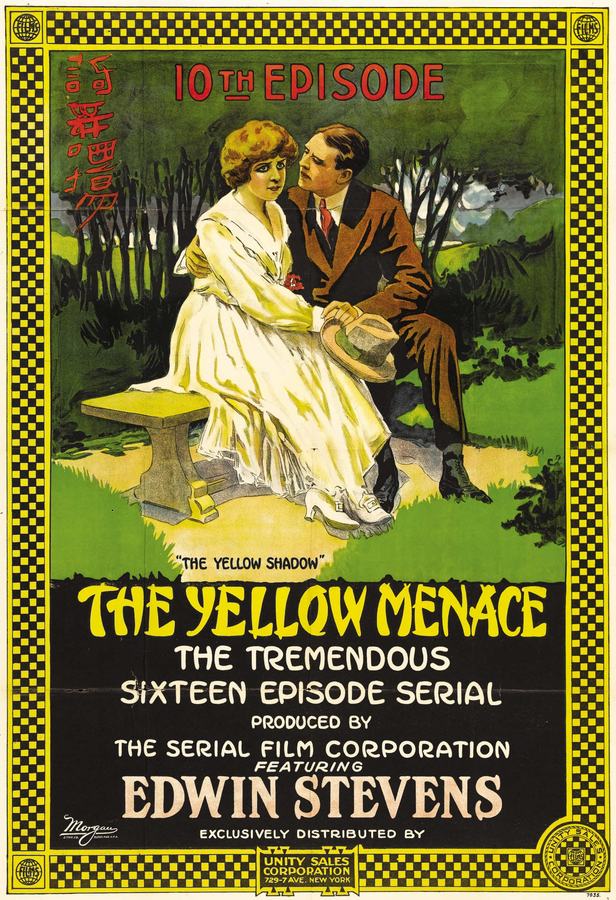
Stepping back into the cinematic landscape of the early 20th century, we encounter The Yellow Menace, a serial production from 1915 that serves as a stark, albeit troubling, artifact of its era. This isn't merely a film; it's a cultural document, a mirror reflecting the profound anxieties and pervasive xenophobia that gripped Western societies during a pivotal moment in global history. Its very title, unapologetically provocative, immediately signals its thematic core: a sensationalized narrative built upon racial fear and the perceived threat of 'the other.' For modern viewers, approaching such a work requires not just a critical eye for cinematic craft, but a deep understanding of the historical context that birthed it, a context rife with racial stereotyping and geopolitical tension.
The serial format itself, a dominant entertainment medium of the time, was perfectly suited for such a sprawling, confrontational narrative. It offered weekly doses of suspense, ensuring audiences would return to witness the next installment of this grand, often melodramatic, struggle. Much like the episodic thrillers such as Mysteries of London, these serials thrived on building intricate plots, often featuring larger-than-life villains and heroes locked in an endless dance of capture and escape. However, where Mysteries of London might have delved into urban crime or social ills, The Yellow Menace pivots entirely on racial conflict, painting an entire ethnic group as an existential threat.
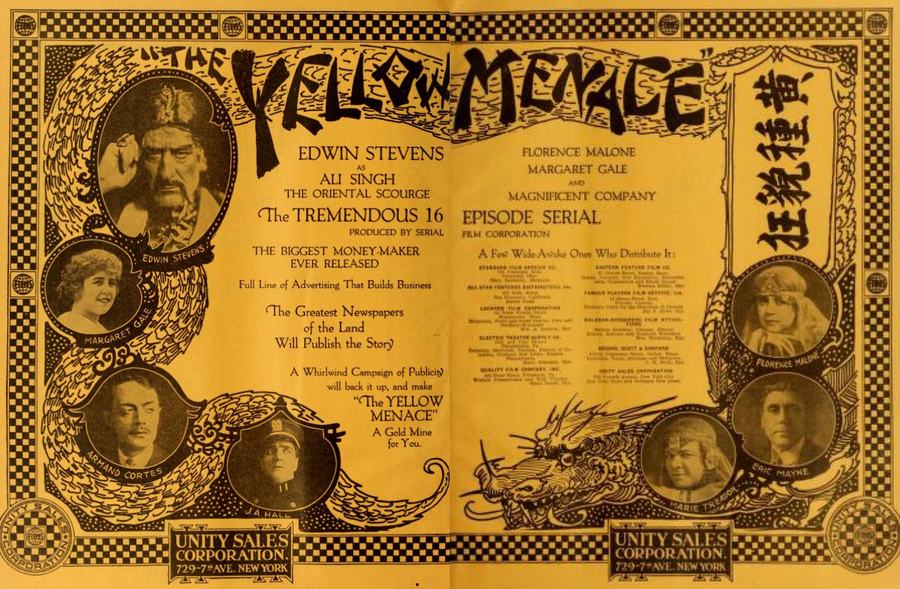
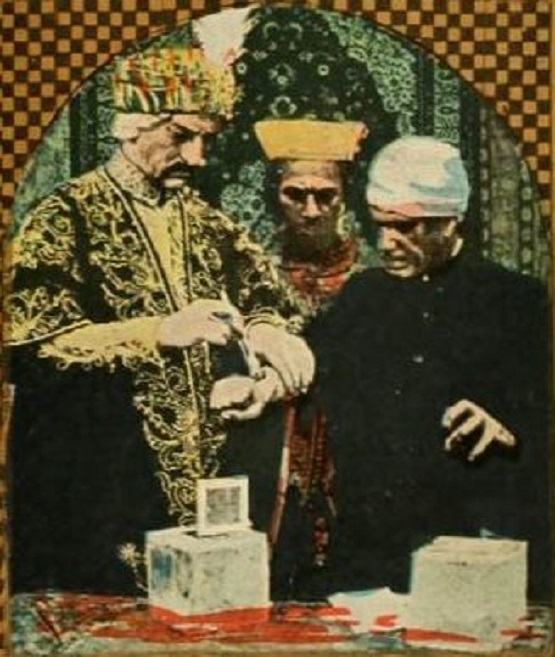
At the heart of this sixteen-episode saga is Ali Singh, portrayed with a sinister gravitas by Frank Lackteen, whose screen presence alone often conveyed an air of exotic menace. Singh is introduced not merely as a villain, but as a figure of paradoxical depth: a scientist and an original thinker whose intellectual prowess is perverted into a fanatical devotion to racial supremacy. Episode 1, "The Higher Power," immediately establishes his formidable character. We witness his almost mystical ability to quell a violent Chinese riot in Hung Kai, a chaotic scene threatening the very existence of the White colonists. This moment is crucial; it’s not just an act of power, but a demonstration of his magnetic authority, a charisma that transcends mere leadership and borders on cult-like adoration. Lackteen, even in the silent era, manages to imbue Singh with a chilling intensity, his piercing gaze and deliberate movements conveying a mind utterly consumed by its own grand, destructive vision. This portrayal is reminiscent of other powerful, albeit morally ambiguous, figures from the era, perhaps even touching upon the archetypal 'mastermind' villain seen in works like Zatansteins Bande, where a singular, powerful will drives the narrative's conflict.
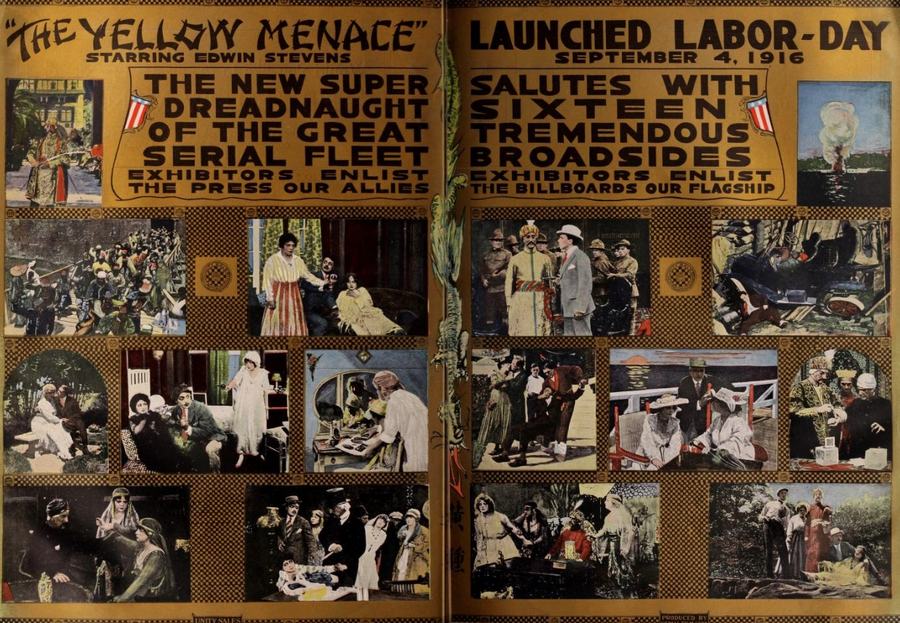
Singh's subsequent relocation to America marks the true commencement of his grand scheme. Here, his multitude of followers, described as being 'at his beck and call,' are presented as an almost monolithic entity, unthinking instruments of his will. This depiction, while certainly designed to amplify the sense of threat, also strips the 'other' of individual agency, a common trope in xenophobic narratives. The narrative quickly introduces Mr. Bronson, an international banker whose advocacy for an Anti-Alien law becomes the immediate flashpoint for conflict. This law, explicitly targeting 'yellow men,' provides Singh with a tangible antagonist and a clear political battleground, elevating the struggle from mere street brawls to a high-stakes clash of ideologies. The dramatic delivery of a threatening note to Bronson, hurled through a window at knife-point, is a classic serial cliffhanger tactic, designed to send shivers down the spine and propel the audience into the next thrilling installment. It's a raw, visceral act that immediately establishes the stakes and Singh's uncompromising nature, setting the stage for a protracted battle against the combined might of the police and secret service.
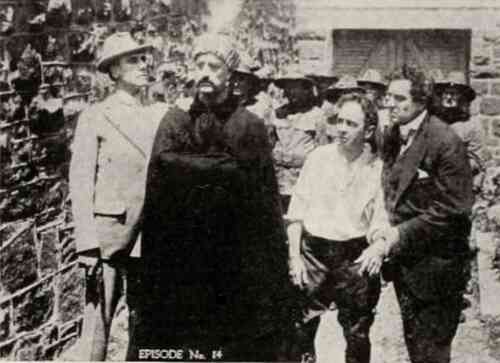
The cast, a roster of familiar faces from the early silent film circuit including Gerald Griffin, Florence Malone, and Mary T. Rose, mostly serve as foils to Lackteen's commanding presence. Their performances, while adhering to the often exaggerated style of silent cinema, effectively convey the alarm and determination required by the plot. The writing, credited to Louis Tracy and Aubrey M. Kennedy, is clearly geared towards maximizing suspense and dramatic tension, even at the expense of nuanced character development or realistic motivations. This was, after all, popular entertainment, designed to thrill and excite rather than to provoke deep philosophical contemplation. The plot's reliance on a clear-cut 'good versus evil' dynamic, with the 'White race' as the inherent good and the 'Yellow Race' (under Singh's leadership) as the unequivocal evil, simplifies complex geopolitical realities into an easily digestible, if highly problematic, narrative. This black-and-white morality, while common in popular serials, is particularly jarring when tied to racial identity.
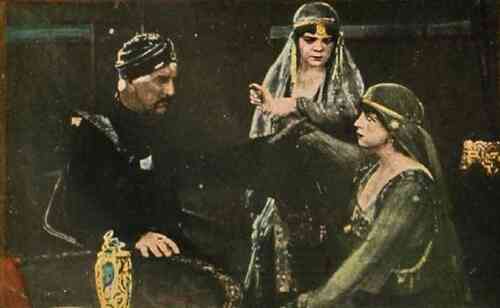
From a purely cinematic perspective, The Yellow Menace showcases the burgeoning techniques of the era. The use of close-ups to emphasize facial expressions, rapid cuts to heighten action, and the construction of elaborate sets for the riot scenes all speak to a developing cinematic language. While not groundbreaking in the way some contemporary dramas might have been, it effectively utilizes the tools at hand to create an engaging, if ideologically suspect, spectacle. One can draw parallels to the sensationalism found in films like Traffic in Souls, which also tackled societal 'ills' with a dramatic flair, though The Yellow Menace channels its sensationalism through a distinctly racial lens. The pacing, crucial for a serial, is relentless, with each episode designed to end on a tantalizing note, ensuring viewer commitment for the following week. This mastery of suspense is perhaps the film's strongest technical achievement, demonstrating an understanding of audience psychology that would influence filmmaking for decades.
However, it is impossible to discuss The Yellow Menace without confronting its deeply problematic racial politics. The film is a product of its time, yes, but that doesn't excuse its perpetuation of harmful stereotypes. The concept of the 'Yellow Peril' was a real and powerful fear in Western countries, fueled by economic anxieties, immigration debates, and imperialistic rivalries. This serial capitalized on those fears, presenting an entire race as a monolithic, existential threat, led by a charismatic, yet utterly ruthless, figure. Ali Singh is not just a villain; he is the embodiment of a racialized fear, a 'higher power' bent on overturning the established world order. This narrative choice, while effective in generating fear and excitement for contemporary audiences, is profoundly disturbing through a modern lens. It contrasts sharply with more nuanced, albeit still imperfect, portrayals of cultural exchange or conflict seen in other films of the period, which might have explored individual motivations more deeply rather than resorting to broad racial generalizations.
Despite its troubling narrative, The Yellow Menace remains an important piece for film historians and cultural scholars. It offers invaluable insight into the popular entertainment of the early 20th century, demonstrating how serials captivated audiences with their blend of action, melodrama, and often, social commentary – however skewed that commentary might be. It showcases the foundational elements of serial storytelling that would evolve into modern television series, with its emphasis on continuous narrative, character arcs (even if simplistic), and the ever-present cliffhanger. The film, therefore, is not merely a curiosity; it is a vital, if problematic, link in the chain of cinematic evolution, reflecting the nascent power of moving images to shape public opinion and tap into collective consciousness, for better or for worse.
In conclusion, The Yellow Menace is more than just an antiquated film serial; it's a historical document that speaks volumes about the fears and prejudices of its time. While its technical execution aligns with the developing cinematic language of the era, its narrative, driven by a deeply xenophobic premise, stands as a stark reminder of the problematic side of early cinema. For those interested in understanding the full spectrum of film history, including its less flattering chapters, this serial offers a compelling, if uncomfortable, glimpse into a past that continues to inform our present. Its examination of a charismatic, fanatical leader like Ali Singh, and the societal forces he manipulates, provides a chilling case study in the power of demagoguery, even in a silent, serialized format.

IMDb —
1918
Community
Log in to comment.