DbcultAccessing Vault...
6.3/10
Senior Film Conservator
A definitive 6.3/10 rating for a film that redefined the boundaries of cult cinema. The Boxing Kangaroo remains a cornerstone of transgressive art.
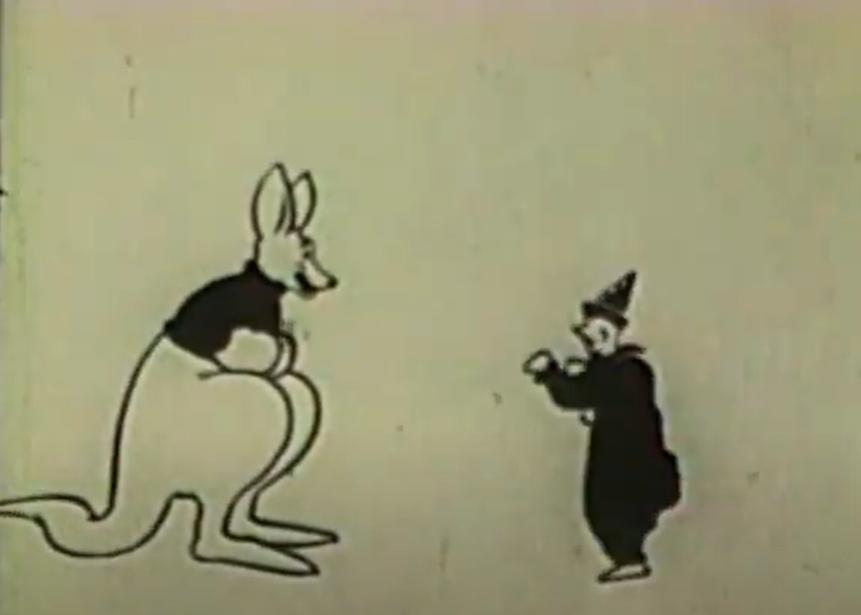
Max Fleischer’s inkwell spills open and out scrambles a harlequin with knees like wishbones, eyes like boiled eggs, and a grin that knows it’s being watched. A ring is drawn around him the way a child chalks a crime-scene on pavement; the line quivers, still wet, still listening for the next gag. Into this trembling corral hops a kangaroo wearing regulation red gloves, its ears pinned back like a prizefighter’s curls, its pouch a velvet purse that might jingle with coins or with the bones of last season’s clowns.
We are 480 frames deep into 1920, that hinge-year between vaudeville and voltage, when cartoons still carried the soot of the studio chimney and animators smelled of turpentine and cheap coffee. The Boxing Kangaroo is not a narrative; it is a priapic doodle, a single-reel blood-orange squeezed until pips squeak. Each cel is a hand-wringing confession that violence can be adorable if the victim is made of rubber and the aggressor has a tail.
Fleischer’s clown—sometimes called Ko-Ko, sometimes just “the Inkwell clown”—possesses the provisional anatomy of a doodle that refuses to stay doodled. Arms corkscrew off the page, then snap back like tape-measures hungry for their own length. The kangaroo’s jab is a semaphore spelling out ouch in seventeen dialects. Watch one frame under a loupe and you’ll see the graphite ghosts where Max erased the gloves in order to move them three microns left; the entire film is a palimpsest of second thoughts.
This is slapstick as quantum mechanics: every punch fractures the film into superpositions—simultaneously lethal and laughable. The clown’s head, once flattened, inflates again with a fweee that sounds (in the silent version) like the projectionist sneezing. You giggle, then wonder if the giggle is complicit. The kangaroo never bleeds, yet the gloves grow redder. The color is only your brain tinting the grey.
Compare it to Intrigue or Ambition—those live-action morality plays where fate wears a top-hat and twirls his mustache. They lecture; Fleischer tickles until bruises bloom. The Boxing Kangaroo is the first cinematic evidence that modernity will express itself not through manifestos but through a verminous giggle and a glove to the snout. The kangaroo is not a punchline; it is punctuation—a colonic jab that divides the nineteenth century from whatever comes next.
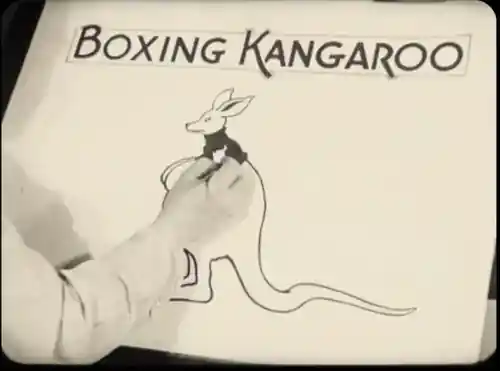
And the soundtrack? In 1920 you supplied it yourself: a piano thumping like a heart on amphetamines, maybe a kazoo solo when the clown’s trousers drop. Today, stream it mute and the silence itself seems to sweat. Each absence of noise is a cavity where your own gasp nests.
We have, by 2024, grown tender toward animals; Fleischer’s beast is both prop and protagonist. The kangaroo’s snout curls into a sneer that would shame a Dickensian landlord. Yet those gloves—laced so tight the claws must fold like guilty secrets—speak of coercion. Is the animal unionized? Does it get reel-time royalties? The film refuses to tell, so the unease metastasizes into something voluptuous. You laugh louder to drown out the ethical tinnitus.
Meanwhile the clown is every gig-economy grunt: zero-hour contract, no dental, his body a company asset that reverts to the rubber-plantation at closing time. When the kangaroo uppercuts him into the rafters, gravity itself files a workplace grievance.
Mid-bout, the clown grabs the frame-line like a ladder and climbs into the next cel, only for the kangaroo to peel that layer off, crumple it, and stuff it down the clown’s throat. Cinema becomes origami assault. Compare to the florid literalism of The Queen of Hearts where playing cards merely impersonate people; here the very substrate of animation is drafted into the brawl. You are reminded that celluloid bruises easier than skin.
Fleischer would refine this self-erasing wit in later Ko-Ko shorts, but the kangaroo bout is the primordial soup from which Bugs Bunny, Daffy Duck, and all the other self-aware masochists will crawl. Call it the Big Bang of fourth-wall fracture, only instead of cosmic background radiation we’re left with the echo of glove on rubber.
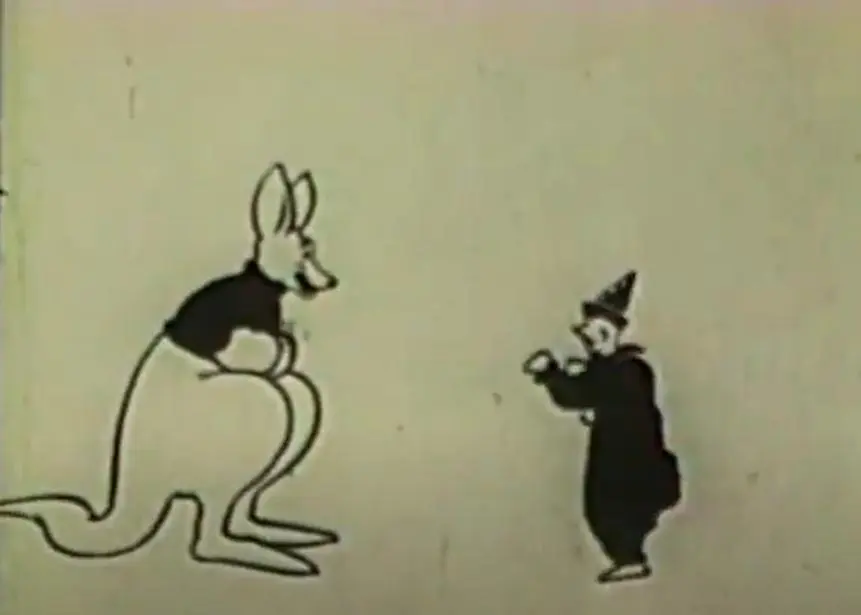
Most silent reels survive like scarred fossils; this one arrives scuffed yet gloriously undead. Scratches jitter across the print like ants sampling the chemistry. The left corner burns, perhaps from a projector riot in 1923 Kansas City. These wounds are not flaws; they are footnotes from a century of itinerant audiences who, for a nickel, inhaled the musk of coal-oil lamps and communal breath. Each scuff is a ghost applauding.
Watch the final knockout: the kangaroo winds up, gloves orbit like twin moons, then delivers a blow so ferocious the clown rockets off the emulsion entirely—leaving only a white silhouette, a chalk outline of hilarity. For six frames the screen is pure absence, a mini-morgue of mirth. Then the clown drops back from the upper margin, dazed, transformed into a blinking question mark that curls into a heart. Love and violence share a cot, as they always have.
When the lights rise you feel oddly impeached, as if you’d paid to watch your own innocence get TKO’d. You half expect the usherette to hand you a condolence card. Yet by bedtime the memory has fermented into something effervescent; you replay the kangaroo’s footwork on the ceiling of your eyelids and snort into the dark like a child sneaking sips of champagne.
That is Fleischer’s alchemy: transforming cruelty into cotton candy, then leaving a needle inside for you to discover later—preferably when licking your wounds. The Boxing Kangaroo is not a nostalgic curio; it is a hand-grenade filled with laughing gas. Approach with caution, leave with hiccups of joy that taste faintly of iron.
Slot it between By Indian Post’s colonial melodrama and Close to Nature’s pastoral piety. Those films plead for empathy through human faces; Fleischer earns it by flattening a face until it’s just a smear of black mercury that somehow still manages to beg for mercy. It is the missing link between circus sideshow and post-modern meme, between The Penalty’s masochistic spectacle and the anarchy of a TikTok loop.
Stream it at 3 a.m. with the sound off and the room hot. Let the projector’s stutter sync with your pulse. When the kangaroo hops straight at the lens, fists cocked, you will flinch—not from fear of injury, but from recognition that every cartoon ever drawn is still hunting for the first throat to clear, the first belly to bruise. Fleischer simply let the gloves connect.
Verdict: a cracked jewel of sadistic whimsy, indispensable for anyone tracing how Western culture learned to giggle at its own concussion.
IMDb —
1917
Community
Log in to comment.