DbcultAccessing Vault...
6.7/10
Senior Film Conservator
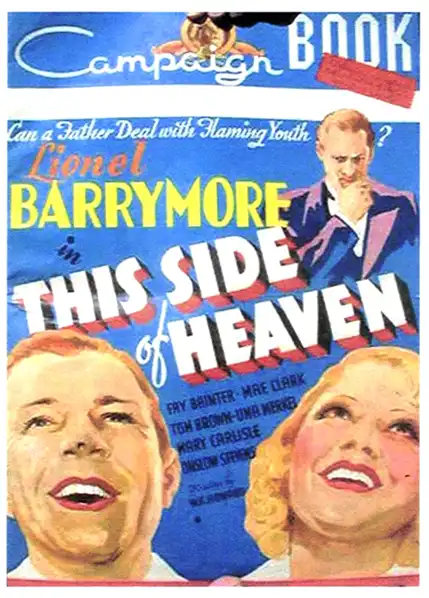
A definitive 6.7/10 rating for a film that redefined the boundaries of cult cinema. This Side of Heaven remains a cornerstone of transgressive art.
This Side of Heaven is a curious one, a sort of gentle, old-fashioned melodrama that might just charm you. It's a good pick if you’re into digging up forgotten pre-Code gems. Definitely not for folks who need fast plots or explosions, this movie is all about quiet troubles and moral quandaries. If you appreciate seeing actors like Lionel Barrymore and Helen Hayes navigate everyday messes, you'll probably find something here. But if slow burns and subtle domestic dramas aren't your thing, you'll likely be checking your watch. 🕰️
The film centers on Robert Hammond, a small-town bank manager played by Lionel Barrymore. He's this genuinely good-hearted guy, maybe a little too trusting sometimes. Robert finds himself in a really sticky situation involving money that's gone missing.
It’s not a grand scheme or anything, just a quiet, escalating mess that starts to choke him.
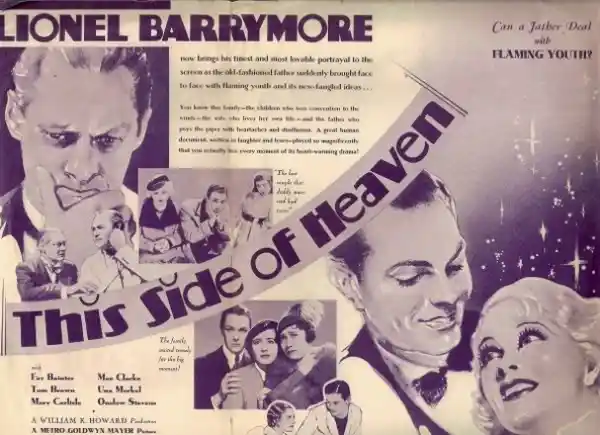
Helen Hayes plays his wife, Jane. She's the rock of the family, trying to hold things together while Robert’s world starts to unravel. You can see the worry etched on her face, even when she's trying to be strong for the kids.
There's this scene where Robert is just sitting at his desk, staring into space. The camera stays on him for a beat too long. You really feel the weight of his problem.
It’s not flashy acting, just a man lost in thought, the quiet desperation sinking in.

The way the town gossips starts small, little whispers. It builds slowly, subtly. One moment, a woman just stares at Jane a little too long at the grocery store. It's a small detail, but it speaks volumes, you know?
Una Merkel has a small role, but she’s got this knack for making even brief appearances feel lived-in. She plays a friend who offers some blunt advice, and you can practically hear the clinking of teacups in the background. Her delivery feels very natural.
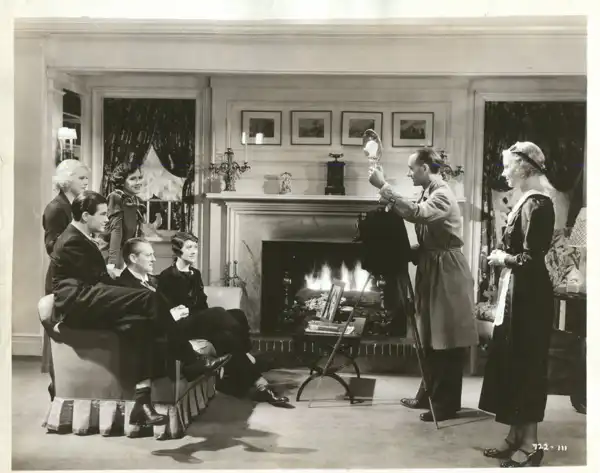
I kept noticing the details in the Hammond home, too. The furniture, the little knick-knacks. It feels like a real place, not just a set, which helps ground the quiet drama.
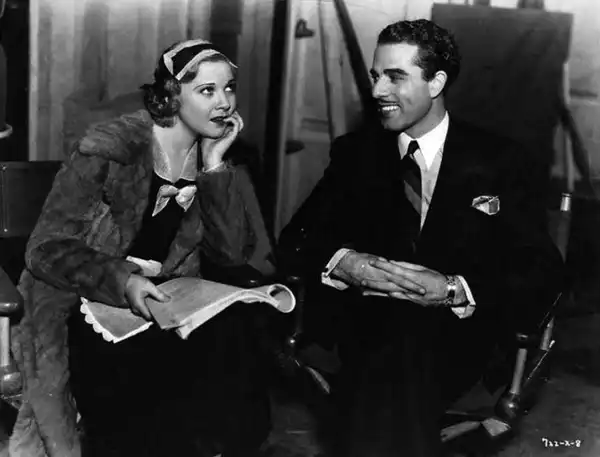
The kids in the film are pretty typical, not overly precocious, which is a relief. Dickie Moore, as the youngest, just looks confused a lot, which felt very authentic for a child caught in adult troubles.
There’s a moment where Robert tries to explain things to his wife, and he keeps fumbling his words. It’s painful to watch, but in a good way. You understand his shame and fear without him having to make a big speech.
The movie really leans into the everyday. There are no sudden twists or big courtroom scenes, not really. It’s more about the slow, crushing pressure on a decent man.
Sometimes, the pacing feels a little too leisurely. You can almost feel the film taking a deep breath before moving to the next conversation. It’s not a flaw, exactly, just something you have to settle into.
The dialogue, for an older film, mostly holds up. It feels like how people actually talked, not overly theatrical. Except for one or two lines, maybe. There's a particular line from a bank official that felt a little too on-the-nose.
The embezzlement itself is handled very... subtly. It’s not about who did it or how, but the fallout. Robert's involvement is framed as almost accidental, a tragic series of misunderstandings. You feel his helplessness throughout.

One small scene: Robert is trying to balance the books, and he keeps re-checking the numbers, his brow furrowed. It’s a very quiet depiction of a man realizing he’s in over his head. You see the stress build in his shoulders.
I was thinking about how different these older films are. No huge special effects, just people talking in rooms. It’s kind of refreshing, in a way. It forces you to actually listen. You notice things.
There’s a small subplot about a younger couple, played by Mary Carlisle and Henry Wadsworth. Their romance feels a bit tacked on sometimes, like the film needed a little bit of youthful hope to balance the gloom. It’s sweet, though. A tiny distraction from the main worry.
And Fay Bainter, she pops up as a woman connected to the whole financial mess. She has this way of looking at Robert that makes you wonder if she knows more than she's letting on. Or maybe it's just her acting, making you think that. 🤔
This Side of Heaven isn't going to set your world on fire. It's a modest, character-driven story about integrity and reputation. It sticks with you, though, because of the performances, especially Barrymore and Hayes. Their quiet despair is pretty powerful.
It's one of those films that makes you think about how easily a good person can get caught in a bad situation. And how quickly rumors can spread, just like a brush fire. The ending isn't a huge surprise, but it feels earned, every bit of it.
IMDb —
1921
Community
Log in to comment.