DbcultAccessing Vault...
Cult Review
Senior Film Conservator
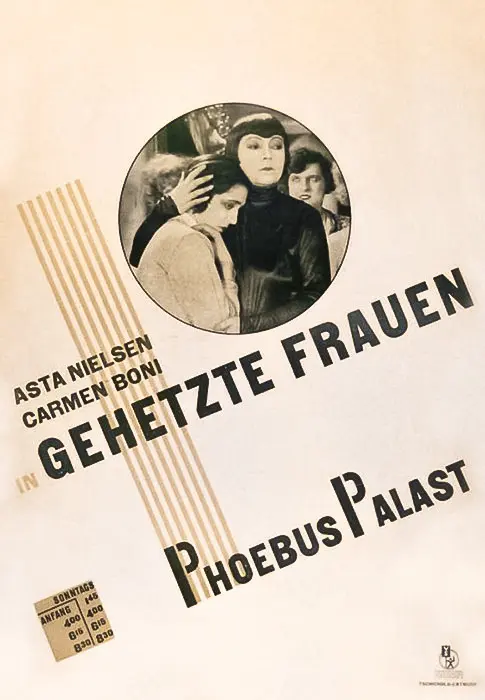
Is Gehetzte Frauen worth watching today? Short answer: yes, but with significant caveats that demand a specific kind of viewer. This film, a product of early German cinema, offers a fascinating, if occasionally challenging, glimpse into the dramatic sensibilities of its era.
It is primarily for ardent silent film enthusiasts, cinephiles interested in the historical progression of cinema, and those captivated by the legendary Asta Nielsen's commanding screen presence. It is decidedly not for viewers seeking fast-paced narratives, contemporary emotional realism, or light, escapist entertainment. Its melodrama, while potent for its time, can feel jarring to modern eyes accustomed to subtler storytelling.
Let's cut directly to the core of it.
This film works because: It showcases Asta Nielsen's unparalleled ability to convey complex emotions through raw, physical performance, anchoring a narrative that, despite its simplicity, grapples with profound themes of maternal protection and societal judgment. Its historical significance as an early German production also provides invaluable insight into the era's filmmaking techniques and popular storytelling.
This film fails because: Its pacing can be excruciatingly slow by modern standards, and the heightened melodrama, a hallmark of silent cinema, often veers into unintentional theatricality. The narrative, while emotionally charged, lacks the nuanced character development that contemporary audiences expect, leaving some motivations feeling underdeveloped.
You should watch it if: You are a dedicated student of film history, a fan of silent-era acting, particularly Asta Nielsen, or if you possess the patience to appreciate a foundational piece of German cinematic art, understanding its context and limitations.
'Gehetzte Frauen' (Hunted Women) unfolds with a stark, almost primal simplicity, centering on Clarina, a mother driven to extreme lengths for her daughter, Angelica. The opening act, where Clarina kills an attacker to protect Angelica, establishes a tone of brutal necessity and immediate consequence. This isn't a story of casual heroism; it's a raw depiction of a mother's instinct overriding all else, a foundational act that ripples through every subsequent event.
The film's title, while evocative, feels less about a literal hunt and more about the relentless pursuit of fate and societal pressures. Clarina's subsequent departure, leaving Angelica to pursue a respectable engagement with a nobleman, is framed as a sacrifice, a desperate attempt to cleanse her daughter's future of the stain of violence. It’s a move that, in its era, might have been seen as noble, but today feels like a tragic relinquishing of agency, a mother forced to choose between presence and perceived purity for her child.
The final dramatic turn – the nobleman's injury in a duel and the subsequent deathbed marriage to Angelica – cements the film's commitment to operatic tragedy. It's a plot device designed to amplify sorrow and underscore the fragility of happiness. While emotionally potent, it also feels like a convenient, almost predetermined, twist of fate rather than an organic progression of character. The writers, Georg C. Klaren, Annie von Brabenetz, and Herbert Juttke, clearly prioritized dramatic impact over intricate psychological realism.
No discussion of 'Gehetzte Frauen' can begin without acknowledging the towering presence of Asta Nielsen. As Clarina, Nielsen delivers a performance that transcends the limitations of silent cinema, imbuing her character with a visceral intensity that remains compelling even a century later. Her ability to convey profound emotion through subtle shifts in posture, the anguish in her eyes, or the tremor of her hands is nothing short of masterful.
Consider the scene where Clarina commits the act of violence. Nielsen doesn't just react; she embodies the raw, animalistic terror and resolve of a mother cornered. It's not theatrical; it's an almost terrifying display of protective instinct. Later, when she makes the heart-wrenching decision to leave Angelica, her internal conflict is palpable, communicated through a series of forlorn glances and a heavy, deliberate gait that speaks volumes without a single intertitle.
While Nielsen is undoubtedly the film's anchor, the supporting cast provides a solid, if less luminous, foundation. Carmen Boni, as Angelica, projects an innocence that makes her later misfortunes all the more poignant. Kurt Gerron, a familiar face of the era, brings a certain gravitas to his role, though his screen time might not allow for the full exploration of his character's complexities. The ensemble, including Jakob Tiedtke and Adolphe Engers, collectively contributes to the film's melodramatic atmosphere, each playing their part with the heightened expressiveness characteristic of the period.
However, it’s Nielsen who truly elevates the material. Without her, the film might easily slip into forgotten melodrama. With her, it becomes a crucial document of early screen acting, demonstrating how a true artist could command attention and convey depth in a medium still finding its voice. Her performance alone is a strong argument for the film's continued study.
Georg C. Klaren's direction in 'Gehetzte Frauen' is a fascinating blend of nascent cinematic language and theatrical staging. The film often utilizes wide shots that emphasize the grandeur of the sets and the isolation of the characters within them, a common technique in early German productions. Yet, Klaren also understands the power of the close-up, particularly when focusing on Nielsen's face, allowing her expressions to carry the dramatic weight.
The cinematography, while not groundbreaking for its time, effectively establishes a somber, often oppressive mood. Lighting is used to create stark contrasts, highlighting the shadows that seem to perpetually cling to Clarina's fate. There are moments of effective visual storytelling, such as the way a doorway is framed to emphasize Clarina's solitary departure, or the almost suffocating interior shots that reflect the characters' emotional confinement.
One unconventional observation: the film's visual style, particularly its reliance on static cameras and deliberate blocking, inadvertently makes the characters feel less like individuals and more like pawns in a grand, tragic play. This isn't necessarily a flaw, but rather a stylistic choice that underscores the fatalistic tone. It feels less about individual choices and more about the relentless march of predetermined misfortune.
Compared to contemporaries like Die Flucht in die Nacht, which might have explored similar themes with a more dynamic visual flair, 'Gehetzte Frauen' opts for a more restrained, almost classical approach. This gives it a certain timeless quality in its tragedy, even if it sacrifices some narrative immediacy.
The pacing of 'Gehetzte Frauen' is undeniably deliberate, a characteristic that will test the patience of many modern viewers. The early scenes, building towards Clarina's violent act, unfold with a slow, almost agonizing tension. This measured approach allows for the emotional weight of her desperation to sink in, but it also means that the narrative takes its time to develop, often lingering on scenes that, by today's standards, might be condensed.
The film's tone is overtly melodramatic, a hallmark of silent cinema that sought to convey emotion through exaggerated gestures and heightened situations. Every joy is fleeting, every sorrow profound. The dramatic irony of Clarina's sacrifice leading to Angelica's equally tragic fate is laid on thick, ensuring that the audience feels the full weight of the characters' suffering. It works. But it’s flawed.
There's a constant sense of impending doom that permeates the film, from the initial act of violence to the final, sorrowful marriage. This pervasive sadness, while authentic to the narrative, can become emotionally exhausting. It lacks the moments of levity or nuanced emotional shifts that might provide a more well-rounded viewing experience. The film commits fully to its tragic vision, which is admirable in its conviction, but also makes it a demanding watch.
For the casual movie watcher, Gehetzte Frauen will likely prove a challenging experience. Its silent film conventions, deliberate pacing, and overt melodrama are significant hurdles. It demands an appreciation for historical context.
However, for cinephiles, film students, and particularly fans of early German cinema or Asta Nielsen, it is absolutely worth seeking out. It offers a rare opportunity to witness Nielsen's profound talent. It provides a window into the narrative and aesthetic choices of the era. It's a foundational piece, not just a curiosity.
The film is a testament to the power of pure performance in a pre-sound era. It's a raw, unfiltered look at a specific dramatic tradition. Don't expect a modern thriller. Expect a powerful, if dated, emotional journey.
'Gehetzte Frauen' is a film that demands an audience willing to meet it on its own terms. It is not a universally accessible classic, nor does it attempt to be. What it offers, instead, is a potent, if somewhat dated, slice of early German melodrama, elevated immeasurably by Asta Nielsen's extraordinary performance.
If you approach it with an understanding of its historical context and a genuine appreciation for the art of silent cinema, you will find a compelling, emotionally raw experience. It’s a powerful testament to a mother's desperation and the cruel hand of fate, even if its narrative mechanics occasionally creak under the weight of time.
Ultimately, its value lies not just in its story, but in its ability to transport us to a pivotal moment in cinematic history, showcasing the raw power of visual storytelling before the advent of sound. It's a film for the dedicated, and for them, it's a rewarding, if somber, journey.
IMDb 7.7
1931
Community
Log in to comment.