
DbcultAccessing Vault...
Cult Review
Senior Film Conservator
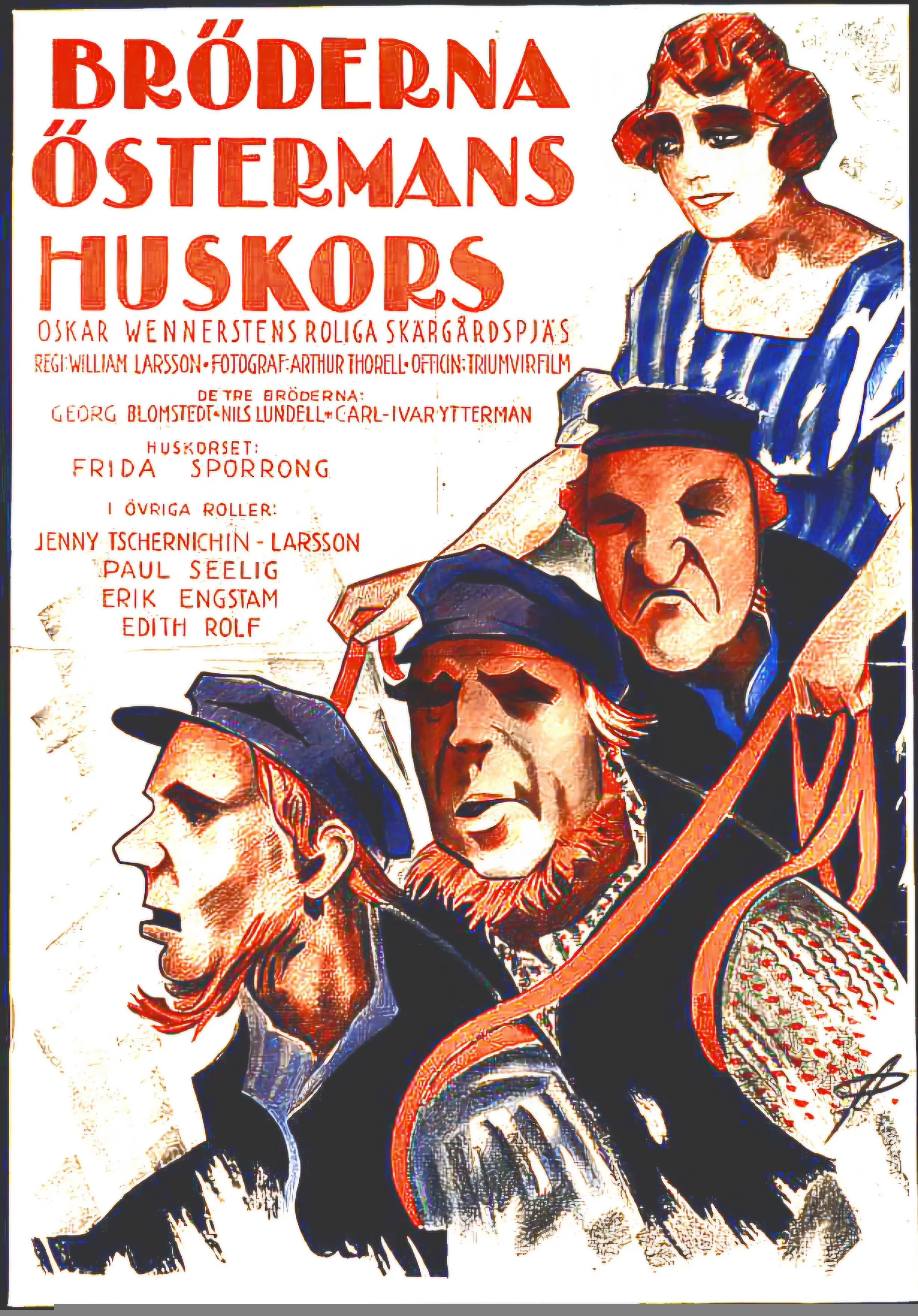
Short answer: yes, but with significant caveats that demand a specific kind of viewer. Bröderna Östermans huskors, a lesser-known Swedish silent comedy, offers a peculiar blend of historical charm and narrative simplicity that won't appeal to everyone. This film is unequivocally for the dedicated cinephile, the silent film enthusiast, or anyone with a deep curiosity about the foundational moments of Swedish cinema and early 20th-century domestic life. It is decidedly not for those seeking fast-paced action, complex character arcs, or modern comedic sensibilities; its humor is subtle, often observational, and intrinsically tied to the period in which it was made.
The film opens on Svanö, a setting immediately establishing a sense of placid, perhaps even isolated, domesticity. Director Georg af Klercker, a prolific figure in early Swedish cinema, wastes little time in sketching the established routine of the Österman brothers. Their existence, as presented, is one defined by the quiet rhythms of bachelorhood, a state that has presumably persisted for many years. There’s an immediate visual language at play here, even in the absence of spoken dialogue, that communicates their self-contained world. One can almost smell the stale air, see the accumulating dust, and feel the weight of their long-standing habits. This initial portrayal, though brief, is crucial; it sets the stage for the comedic disruption that is to follow, making the eventual decision to seek a housekeeper feel less like a narrative contrivance and more like an inevitable, if long-delayed, reckoning with their own domestic shortcomings.
The cinematography, typical of its era, relies on static shots and clear framing to convey information. There are no elaborate camera movements or dynamic edits to distract from the central conceit. Instead, the camera acts as a silent observer, allowing the performances and the mise-en-scène to tell the story. This deliberate, almost theatrical, approach to framing is a hallmark of early silent films, and in Bröderna Östermans huskors, it effectively highlights the insular nature of the brothers' world. When we see the brothers in their home, perhaps slumped in chairs or engaging in some mundane task, the frame emphasizes their self-sufficiency, but also their isolation. This visual strategy is surprisingly effective in building an immediate, if subtle, empathy for their predicament, allowing the audience to understand why a change, however

IMDb —
1919