DbcultAccessing Vault...
Cult Review
Senior Film Conservator
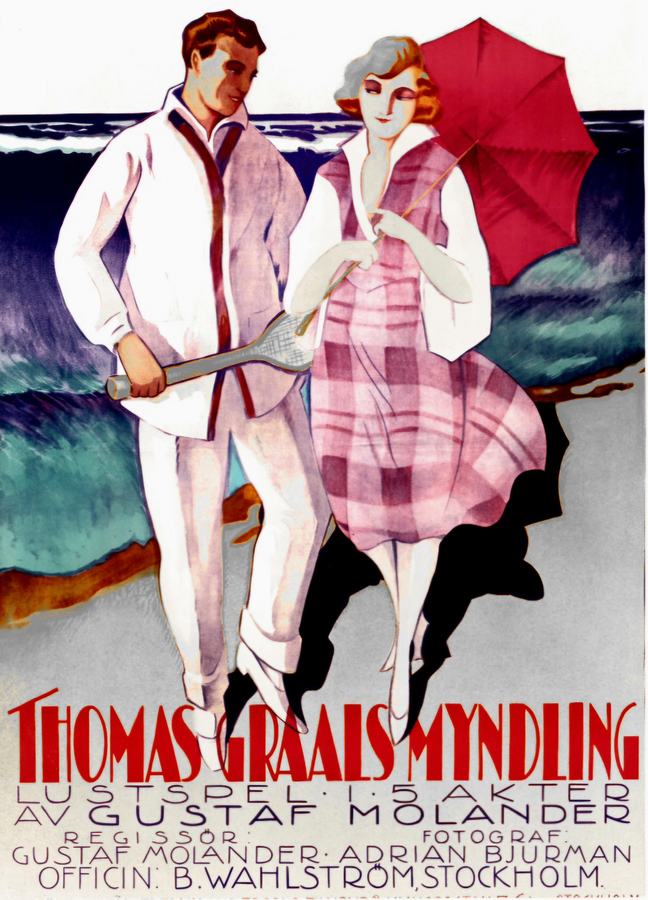
A title card in Thomas Graals Myndling cheekily labels Stockholm “the Paris of the North that forgets to pay its gas bill,” and for the next seventy-five minutes Gustaf Molander keeps the lights flickering just enough to expose every moth-eaten corner of the Nordic Belle Époque. The film—released in February 1918 while Europe still trembled from wartime privation—smuggles savage social satire inside a breezy romantic romp. Think champagne with strychnine bubbles.
Edvin Adolphson’s Paul is a flaneur sculpted from idle afternoons: the collar always half-popped, the textbooks permanently unopened, the smile calibrated to suggest he knows the maître d’ will grant him one more week of credit. His opposite number, Babette—played by a dazzlingly mercenary Gull Natorp—enters wearing a borrowed tiara and exits clutching a one-way ticket to somewhere warmer. Together they perform a pantomime of desire where banknotes replace Cupid’s arrows.
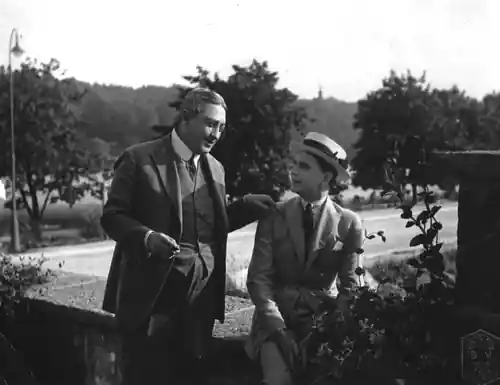
Molander’s visual lexicon predates German Expressionism yet feels too puckish for gloom. Intertitles appear inside champagne bubbles that burst to reveal new locations; a dissolve from Babette’s mascara-laced tears transforms into a stock-market ticker, literalizing the film’s equation of romance with liquidity. The director repeatedly frames characters through door keyholes or shop windows, implying that modern love is always a commodity on display.
Cinematographer Ragnar Arvedson bathes night exteriors in sodium-orange halos that make cobblestones resemble hot coals—perfect for a story where every step forward risks scorching the protagonists’ soles. Interior scenes deploy sea-blue gels that tint drawing rooms like aquariums, reinforcing the notion that these socialites swim in tanks of their own vanity.
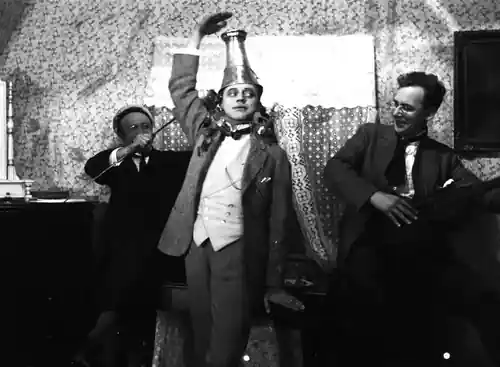
Adolphson never begs sympathy; he leans into Paul’s fecklessness with vaudevillian bravado—eyebrow lifts timed to orchestral stings, a shrug that could sell sand in the Sahara. Natorp counterbalances via micro-gestures: the fractional widening of pupils whenever diamonds enter frame, the way she pockets a cigar band as though it were a deed to property. Their chemistry is less sparks than static electricity—thrilling, but you sense someone will get shocked.
Supporting players enrich the tapestry: Carl Browallius as the cuckolded banker stalks scenes like a walrus in tails, while Vera Schmiterlöw’s acid-tongued confidante dispenses aphorisms worthy of Wilde. Even bit roles—delivery boys, janitors, cloakroom gossips—deliver sly reaction shots that deepen the class critique.

Casual cinephiles often lump Thomas Graals Myndling with other 1918 escapism like Red Powder, yet Molander’s film crackles where the latter merely smolders. Both movies chronicle upward mobility through sexual transaction, but Red Powder ultimately moralizes, punishing its adventuress with penitent poverty. Molander refuses such hymn-book closure; he leaves Paul and Babette suspended in a sun-blanched train station, destitute yet deluded—an ending truer to capitalism’s perpetual hustle.
Elsewhere, Danish fare like Hamlet, Prince of Denmark mines tragedy from royal corridors, whereas Thomas Graals Myndling locates equal doom in the democratized scramble for status. And if you crave slapstick Scandinavia, Ambrose in Turkey delivers pratfalls, yet lacks the bruised heart beating beneath Paul’s tuxedo.
Molander’s montage anticipates the Soviet theorists by slicing ballroom waltzes into machine-gun cuts—four frames of a violinist’s bow, three of a spinning sequin, two of a stockbroker’s twitching eye. The tempo mirrors jazz before jazz reached Sweden: syncopated, restless, slightly dangerous. When the narrative decamps to the Riviera, the rhythm elongates; lingering wide shots of azure emptiness evoke not freedom but void.
Though originally screened with live pit orchestras, modern restorations often pair the film with contemporary scores—everything atonal cellos to electro-swing. I recently caught a 4K print at Cinemateket in Copenhagen accompanied by Minima, a Danish trio wielding bowed guitar and lap-steel. Their score—equal parts tango and feedback—proved how Molander’s images metabolize new sonic contexts without losing their sardonic sting.
If you stream at home, I recommend queuing up Recomposed by Max Richter: Vivaldi – The Four Seasons on low volume beneath the intertitles; the anachronism weirdly amplifies the film’s meditation on recycled desires.
Critics of prior generations dismissed Babette as gold-digging trope; 21st-century eyes discern a woman weaponizing the only market available. Molander teases but never condemns: note the insert shot of her ledger where she records suitors’ gifts with accountant precision. The film aligns her quest for luxury with Paul’s for leisure; both treat human relationships as asset portfolios. In that sense, Thomas Graals Myndling prefigures second-wave feminist critiques of unpaid domestic labor—Babette simply prices hers upfront.
Like many Swedish silents, the negative perished in a 1941 studio fire; what circulates today is a 1923 export print discovered in a Rio de Janeiro warehouse, its Portuguese intertitles translated back to Swedish, then English. The wear—scratches like comet tails—ironically beautifies the narrative of decay. Meanwhile, home-brew restorations float on YouTube, though beware 240p bootlegs that reduce Molander’s visual wit to mush. Opt for the Swedish Film Institute 2019 Blu-ray if region-locked players allow.
In an era when influencer culture peddles overnight riches and crypto-princes promise moons, Thomas Graals Myndling feels eerily prescient. Molander’s lovers chase brands before the term existed; they curate lifestyles for phantom audiences, gamble on futures they cannot name, and mistake indebtedness for freedom. Watching them implode offers catharsis sweeter than schadenfreude—it’s a vaccine against our own venality.
So queue it up, pour something sparkling, and let the flicker remind you: the roulette wheel of capital spins long after the ball drops. Just ask Paul and Babette—if you can catch them between trains.
IMDb 5.3
1928
Community
Log in to comment.