DbcultAccessing Vault...
6.1/10
Senior Film Conservator
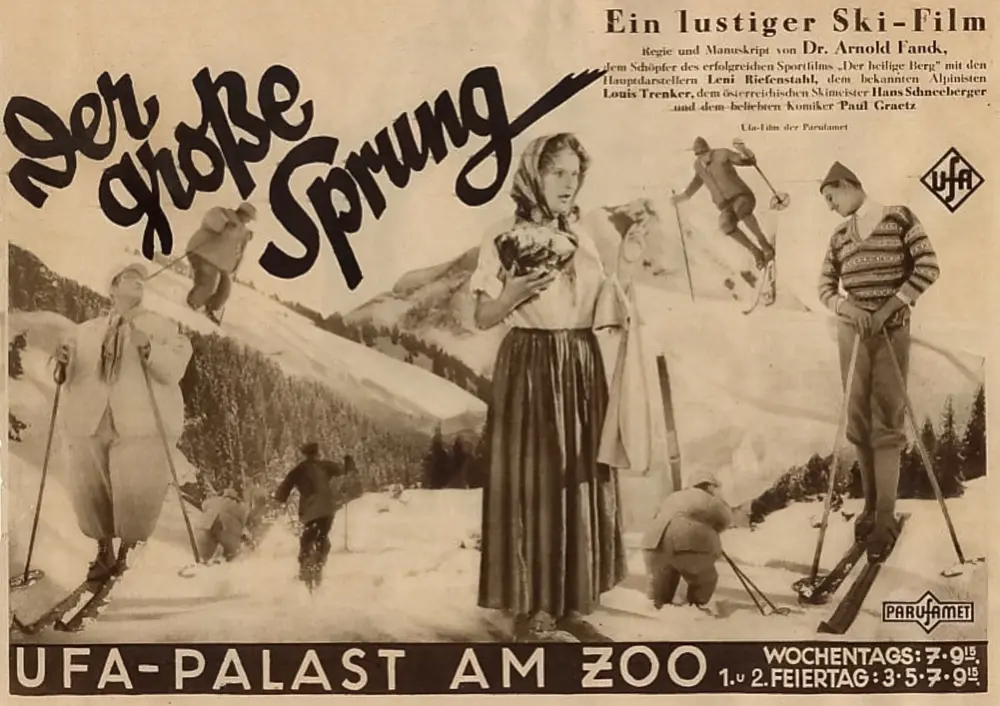
A definitive 6.1/10 rating for a film that redefined the boundaries of cult cinema. The Great Leap remains a cornerstone of transgressive art.
Is The Great Leap actually worth your time in the modern era? Short answer: Yes, but only if you view it as a high-octane physical document rather than a traditional narrative. This film is essential viewing for those interested in the evolution of action cinematography and the roots of the 'mountain film,' but it is absolutely not for viewers who demand character development or a plot that moves beyond the superficial.
Before we dive into the technical mastery on display, we must address the film's basic utility. It occupies a strange space in cinema history—halfway between a sporting documentary and a romantic comedy. It is a relic that feels surprisingly modern in its pacing, even if its social politics are firmly planted in the 1920s.
1) This film works because the camera work by Hans Schneeberger is decades ahead of its time, capturing the sheer velocity of skiing with a clarity that puts many modern digital efforts to shame.
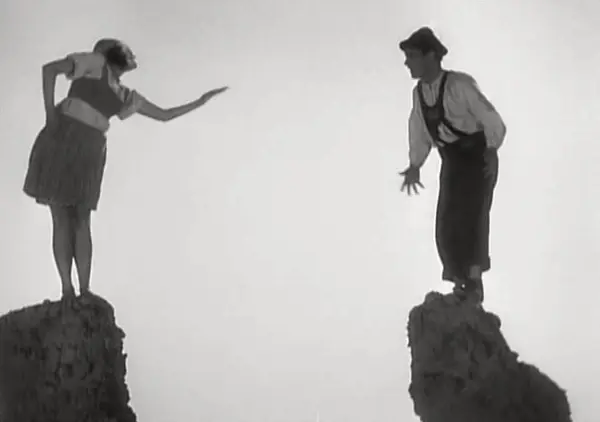
2) This film fails because the slapstick humor is often repetitive, relying on the same 'clumsy tourist' tropes that were already becoming tired by the late silent era.
3) You should watch it if you want to see the literal birth of the action-sports genre and how directors managed to film at extreme altitudes without modern safety equipment.
Arnold Fanck was less a storyteller and more a choreographer of nature. In The Great Leap, he treats his actors like elements of the landscape. When we see Michael tumbling down a slope, it isn't just a gag; it is a study of gravity. The way the snow sprays across the lens in the high-speed descents provides a tactile quality that is missing from studio-bound films of the same period, such as The Temptress.
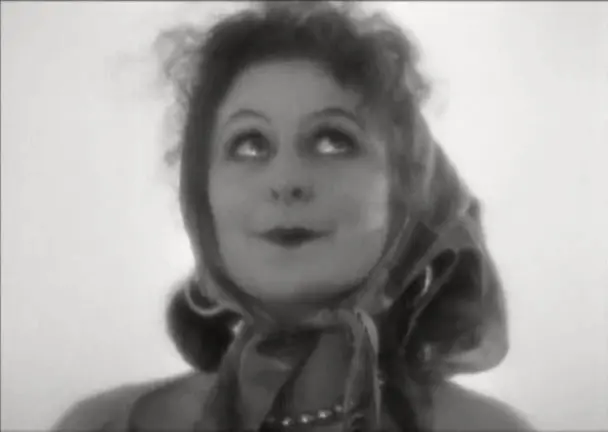
Consider the sequence where the ski party navigates a narrow ridge. There is no green screen here. The genuine peril faced by the performers adds a layer of tension that the script itself fails to provide. The camera isn't just observing; it is participating. This isn't the static, theatrical framing found in The Vamp; it is a fluid, aggressive style of filmmaking that demands the viewer's attention.
The editing is equally frenetic. Fanck cuts between wide shots of the majestic peaks and tight, rhythmic shots of skis cutting through powder. It creates a visual music. It’s a stark contrast to the more deliberate, socially conscious pacing of Kino-pravda no. 21. Fanck isn't trying to change the world; he’s trying to capture the thrill of falling through it.
Long before her name became synonymous with propaganda, Leni Riefenstahl was a physical powerhouse. In this film, she displays a level of athletic grace that is frankly startling. She isn't the delicate flower often seen in 1920s romances like The Beloved Impostor. She is a woman of the mountains—tough, fast, and capable. Her performance is less about dialogue (which is absent) and more about how she occupies space.
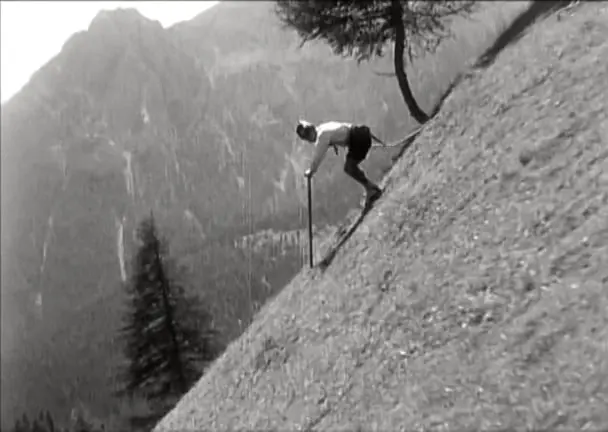
There is a specific moment where she scales a rock face that feels entirely authentic. You can see the strain in her muscles and the focus in her eyes. It’s a performance of the body. While the romantic subplot with Luis Trenker is thin, their physical chemistry is undeniable. They move together with the synchronized precision of professional athletes, which, in many ways, they were.
However, the humor often undercuts this power. The film insists on making Riefenstahl's Gita a figure of fun at times, which feels at odds with her obvious competence. It’s a tonal clash that the film never quite resolves. One moment we are in awe of the mountain, the next we are watching a predictable pratfall. It’s jarring. But it’s also uniquely human.
Yes, The Great Leap is worth watching for its technical achievements and historical significance. If you can look past the dated slapstick, you will find some of the most impressive outdoor cinematography of the silent era. It is a visual feast that compensates for its narrative simplicity with sheer kinetic energy.
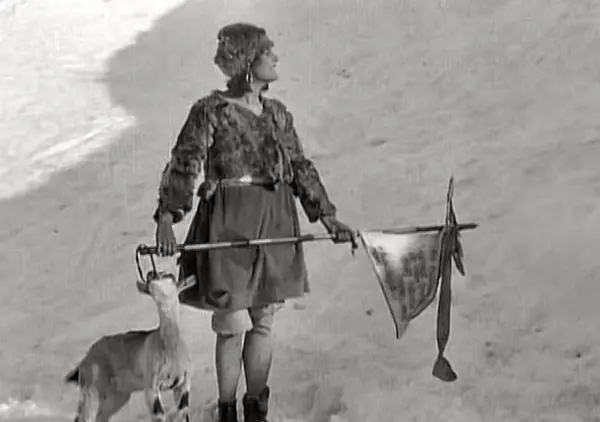
For those who enjoy the ruggedness of The Yellow Back or the survivalist themes in Tol'able David, this film offers a European counterpart that is more focused on the joy of the environment than the tragedy of the human condition. It is a light, airy experience that leaves you breathless, even if it doesn't leave you with much to think about.
The mountains are not just a setting; they are the protagonist. Fanck uses light and shadow on the snow to create a sense of depth that was revolutionary for 1927. The way the morning sun hits the crags of the Dolomites creates a high-contrast world that feels almost alien. It is far removed from the urban grit of Underworld.
There is an unconventional observation to be made here: the film is actually a precursor to the modern 'found footage' or 'POV' action movie. During the ski chases, the camera often feels like it's strapped to a participant. This immersion is what keeps the film relevant. You aren't just watching a story about the mountains; you are feeling the cold and the speed. It’s a visceral experience that transcends the limitations of its era.
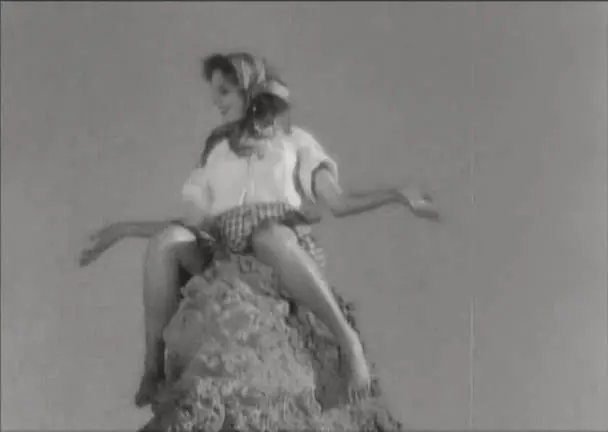
"Fanck’s camera doesn't just record the mountains; it worships them, often at the expense of the humans scurrying across their surface."
This worship of nature can be seen as a retreat from the complexities of post-war German life. While other directors were focusing on the psychological decay of the city, Fanck was looking upward. This makes The Great Leap a fascinating piece of escapism. It’s a film that refuses to be grounded. It wants to fly.
Pros:
The location shooting is unparalleled for the time. The physical performances of Riefenstahl and Trenker are genuinely impressive. The film has a brisk, energetic pace that prevents it from ever becoming boring.
Cons:
The plot is paper-thin and serves only as a vehicle for stunts. Some of the comedic timing feels clunky by modern standards. The character motivations are non-existent beyond basic attraction.
When compared to contemporary works like The Money Mill or The Innocent Cheat, The Great Leap feels like it belongs to a different medium entirely. While those films are preoccupied with social mores and domestic drama, Fanck is preoccupied with the horizon. It shares more DNA with the adventurous spirit of Forbidden Fruit, yet it lacks that film's narrative sophistication.
Ultimately, the film is a triumph of logistics. How they managed to get these heavy cameras into these positions is a mystery that adds to the film's allure. It is a testament to the madness of early filmmakers. They were willing to risk life and limb for a shot of a man falling into a snowbank. There is something noble in that absurdity.
The Great Leap is a flawed, beautiful, and utterly unique piece of cinema. It isn't a masterpiece of storytelling, but it is a masterpiece of vision. It works. But it’s flawed. If you go in expecting a deep romantic journey, you will be disappointed. If you go in expecting to be dazzled by the raw power of the natural world and the audacity of early stunt work, you will be enthralled. It is a film that reminds us that cinema, at its heart, is about the wonder of seeing something we’ve never seen before. Even if that something is just a man on two planks of wood, hurtling down a mountain at breakneck speed.
IMDb —
1918
Community
Log in to comment.