DbcultAccessing Vault...
Cult Review
Senior Film Conservator
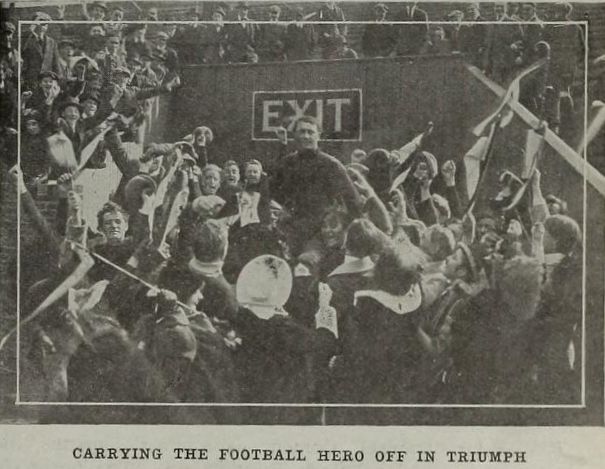
Imagine a Midwest autumn that smells of crushed pigskin, coal smoke, and theological one-upmanship. Into this arena The College Widow drops like a nitrate firework: part recruitment caper, part bedroom farce, part sermon on the seductive sins of winning at any cost. The film—released in the twilight of silent cinema, when talkies were already whispering promises—survives today only in brittle stills and the breathless recollections of those who saw it at a campus chapel converted into a movie-house. Yet its ghost still clatters across the yardlines of film history, pigskin tucked under one arm, heart impaled on the other.
George Ade’s source play, a Broadway smash in 1904, had already been filmed twice before this 1927 iteration. What adapter Clay M. Greene and director Joseph Kaufman bring to the table is a distinctly Jazz-Age cynicism: the college as corporation, love as hostile takeover, football as holy war. The Presbyterian Atwater campus is sketched in Calvinist greys—steeple shadows slicing across goal posts—while the rival Baptist Hingham glows in smug, well-funded gold. Somewhere between them stands Jane Witherspoon, the president’s daughter whose engagement ring finger bears more scars than a lineman’s knees.
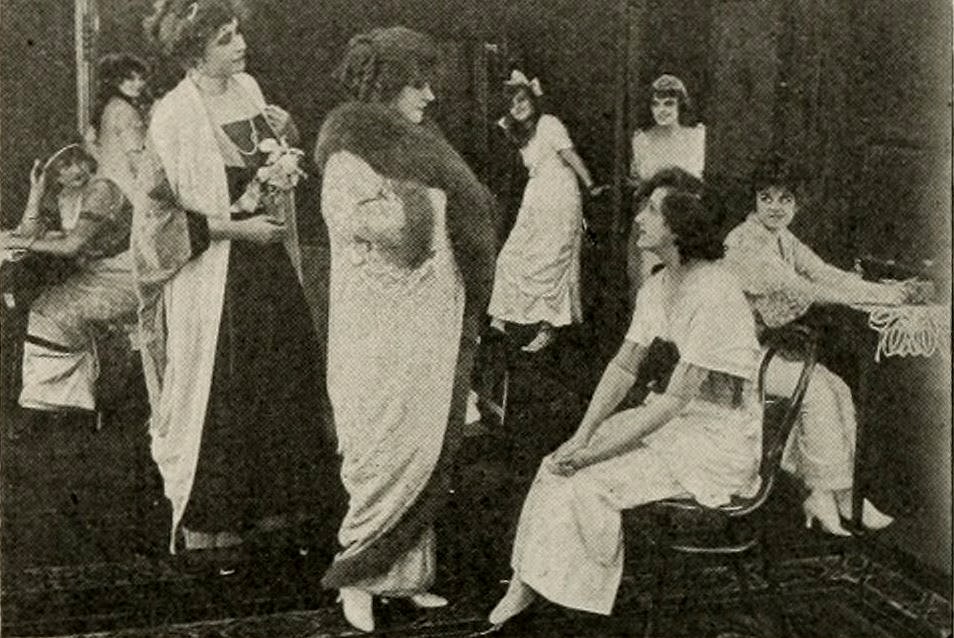
Jane’s nickname is no campus joke; it’s a modus operandi. Each May she buries another romance beneath lilacs and commencement marches. Ruth Bryan plays her with a porcelain bravado that cracks only when the camera ventures into chiaroscuro close-up, revealing a woman who has weaponized heartbreak the way a halfback feints a lateral. When coach Jack Larrabee—Clarence Elmer, all jutting jaw and varsity sweater—asks her to dangle Billy Bolton like a lure before a trout, Jane’s eyes flicker with the arithmetic of desire: win the game, lose another fiancé, repeat ad infinitum.
The scheme is deliciously mercenary. Billy, heir to a Pittsburgh steel fortune, has spent three lackadaisical freshman years at Hingham, running touchdowns while barely running a tab at the library. His father, played by Richard Wangermann with the gusto of a man who buys stained-glass windows for the tax write-off, drops a thousand-dollar bet against Atwater before sailing for Europe. Jane’s mission: make Billy defect, pocket paternal cash, guarantee gridiron glory. The twist—Jane herself defecting into love—lands like an illegal block below the heart.
If Jane is the film’s stealth quarterback, the men around her are linemen who never learned to pull their punches. Jack Larrabee’s moral arc bends from opportunistic puppet-master to self-immolating suitor; his climactic dash through fire feels less like heroism than penance for pimping out affection. Meanwhile, Ferdinand Tidmarsh’s Murphy—a farm-boy Goliath recruited from the silos—embodies the film’s uneasy marriage of amateur purity and professional cynicism. Murphy can’t parse a playbook, but he can toss a plow like a discus; his enrollment in “a special course of art” is the film’s sly jab at the sham scholastics that still prop up NCAA scandals.
The gridiron sequences, shot in late-October twilight with handheld Bell & Howells, anticipate the kinetic haze of The Luck of Roaring Camp’s barroom brawls. Bodies pile like cordwood; mud splatters the lens, turning each frame into a daguerreotype of bruised valour. Yet Kaufman repeatedly undercuts triumphalism: a touchdown is followed by a cut to Jane in the stands, eyes shining with tears that could be pride or self-loathing.
What lingers longest is the film’s sly interrogation of denominational smugness. Atwater’s Presbyterian elders, clutching rulebooks like second Bibles, decry “ungentlemanly” football while secretly craving the enrolment boost victory brings. Hingham’s Baptists, flush with Bolton cash, preach humility from a stadium box. The screenplay delights in exposing both brands of hypocrisy: a chapel bell rings the instant a referee’s whistle blows; a deacon bets on the coin toss. The movie may be 96 years old, but its portrait of institutional moral contortion remains freshly unflattering.
The Thanksgiving-game victory is mere prologue to the film’s true set-piece: a hotel conflagration that erupts during the celebratory banquet. Cinematographer Arthur Matthews reportedly burned two reels testing magnesium flares to achieve the orange snow of embers drifting across the dance floor. Characters scramble like broken plays: Billy, ankle twisted from a跳楼 leap, crawls toward the inferno convinced Jane is still inside; Jack, realizing he has engineered both triumph and tragedy, rallies the team into a flying wedge normally reserved for fourth-and-inches. They burst through firemen, axes clanging off shoulder pads, in a sequence that fuses Red Powder’s anarchic energy with the mortified grace of Called Back’s last-minute rescues.
When Jack re-emerges—face blackened, jersey smouldering—cradling Jane, the film refuses a tidy romantic payoff. Billy limps forward, accepting her transferred hand not as trophy but as burden. Jack’s heroism has purchased not reunion but exile; the final tableau shows him alone on the 50-yard line at dawn, steam rising from turf and tear ducts alike. Fade-out.
Ruth Bryan’s Jane carries the picture with a flirtatious tremor that never curdles into vampish cliché; her silent-era eyes speak whole dissertations on transactional affection. Clarence Elmer’s Jack is less polished—his gestures occasionally spill into barn-storming—but that rawness suits a man coaching from guilt as much as playbook. In smaller roles, Edith Ritchie’s grass-widow chaperone supplies comic relief that ages surprisingly well: she measures propriety in champagne flutes, tallying each illicit sip like a bursar.
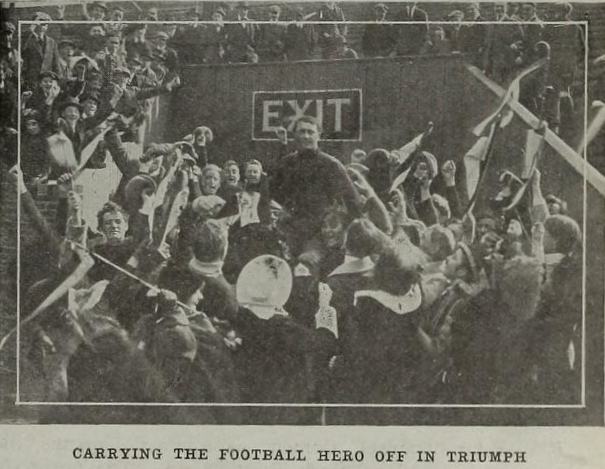
The film’s intertitles, penned by Ade himself, snap with Midwestern aphorism: “A diploma ain’t proof of learnin’ any more than a collar proves a dog’s manners.” Such vernacular keeps the narrative from sagging under moral gravity; even the fire is introduced with a wink: “The kitchen’s idea of rare roast became the hotel’s idea of well-done.”
No complete print is known to survive; what circulates among collectors is a 42-minute condensation salvaged from a deaccessioned seminary in Illinois. Nitrate decomposition has chewed the edges, turning night games into impressionist smears. Yet scarcity has only amplified the film’s mystique. Contemporary critics compared its moral unease to Ten Nights in a Barroom’s temperance trauma; modern viewers detect pre-echoes of He Got Game’s recruitment paranoia.
Would The College Widow feel stage-bound if restored? Possibly. Its second act still creaks with the mechanics of farce: mistaken class schedules, overheard proposals, a comic Irish trainer who speaks exclusively in malapropisms. Yet those seams are part of the artifact’s charm—reminders that early cinema bartered in theatrical bones before discovering its own skeleton.
Viewed today, the film plays like a ghostwritten confession from the birth of big-time college sports, candid about the price of ticket sales and the currency of hearts. It winks at boosters, sighs at co-eds, and finally throws both into the bonfire. For cinephiles, it’s a missing link between the ring-u-ding campus capers of Harold Lloyd and the bleacher cynicism of Blue Chips. For romantics, it’s a cautionary fable: love recruited under false pretences may still score, but the victory lap ends at an abyss.
Seek it out in whatever mangled form archive.org or a private collector’s basement can muster. Squint through the emulsion damage, listen past the clacking of the Bell & Howell, and you’ll hear the faint crunch of shoulder pads on frost, the hiss of a fire consuming both chapel and grandstand, the echo of a woman’s farewell that finally, devastatingly, is not a widow’s farewell at all—but a lover’s. That sound, brittle yet defiant, is the reason silents still speak.
IMDb 5.8
1926
Community
Log in to comment.