DbcultAccessing Vault...
Cult Review
Senior Film Conservator
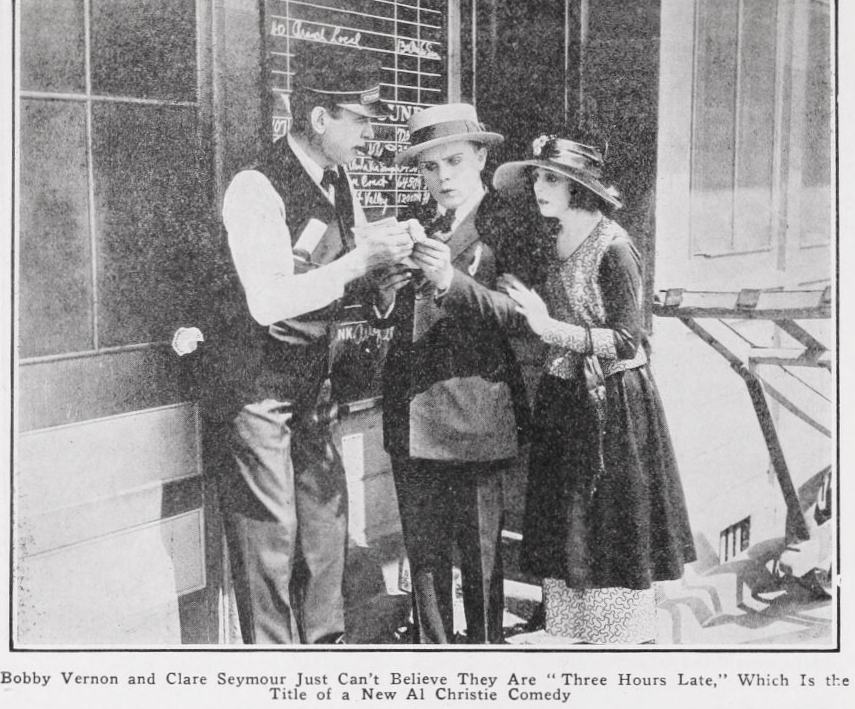
In the pantheon of silent-era slapstick, the Al Christie brand stood as a sophisticated alternative to the visceral, often bone-crunching mayhem of Mack Sennett’s Keystone. Three Hours Late (1918) serves as a quintessential artifact of this era, showcasing a brand of humor that relied as much on situational irony and social anxiety as it did on physical dexterity. The film captures a specific American zeitgeist—an era obsessed with punctuality, the burgeoning middle class, and the precariousness of professional standing. Bobby Vernon, portraying the quintessential harried clerk, embodies the nervous energy of a generation caught between Victorian decorum and the accelerating pace of the industrial age.
The narrative premise is deceptively pedestrian: a delivery of a five-thousand-dollar check. Yet, in the hands of the Christie writers, this MacGuffin becomes the catalyst for a profound exploration of human fallibility. Much like the tension found in Time Locks and Diamonds, the ticking clock functions as an invisible antagonist, heightening the stakes of every missed train and every lingering glance. Vernon’s performance is a masterclass in frantic gesticulation, his eyes conveying a mounting hysteria that resonates even a century later.
To discuss Three Hours Late without paying homage to Clarine Seymour would be a critical oversight. Seymour, whose career was tragically curtailed by an early death, possessed a screen presence that was simultaneously ethereal and grounded. In this film, she plays the catalyst of Bobby’s distraction with a nuanced charm that elevates the role beyond the standard "love interest" trope. Her chemistry with Vernon is palpable, creating a romantic friction that justifies the protagonist’s lapse in professional judgment.
While films like Sally in a Hurry utilized speed as a purely comedic device, Seymour introduces a rhythmic counterpoint to the film’s velocity. She represents the "three hours" of the title—the pause, the delay, the human element that interrupts the mechanical efficiency of the clerk’s world. Her character’s eventual integration into the Brown household plot adds a layer of domestic mystery that mirrors the narrative complexity of The Vanderhoff Affair.
The structural integrity of the film’s second half is where the brilliance of the Christie formula truly shines. The transition from the public space of the railway junction to the private, high-stakes environment of Mr. Brown’s residence is handled with a seamlessness that modern screenwriters should envy. The introduction of Dorothy Dane adds a third point to the narrative triangle, complicating the mistaken identity trope that fuels the film’s climax.
This is not merely a series of gags; it is a meticulously constructed house of cards. The check—that five-thousand-dollar symbol of duty—remains the anchor, but the emotional stakes shift toward social survival. How does one explain the presence of a beautiful stranger to a client who might be her husband? The tension here is reminiscent of the social pitfalls explored in The Pitfall or the marital misunderstandings in Woman and Wife. The film deftly balances the absurdity of the situation with the genuine anxiety of its protagonist.
Visually, Three Hours Late utilizes the constraints of 1918 technology to create a sense of claustrophobia and release. The interior of the train carriages and the junction station are shot with a focus on depth, allowing background action to comment on Bobby’s foregrounded panic. The lighting, though primitive by contemporary standards, effectively distinguishes between the stark reality of the workplace and the soft-focus allure of the romantic interludes.
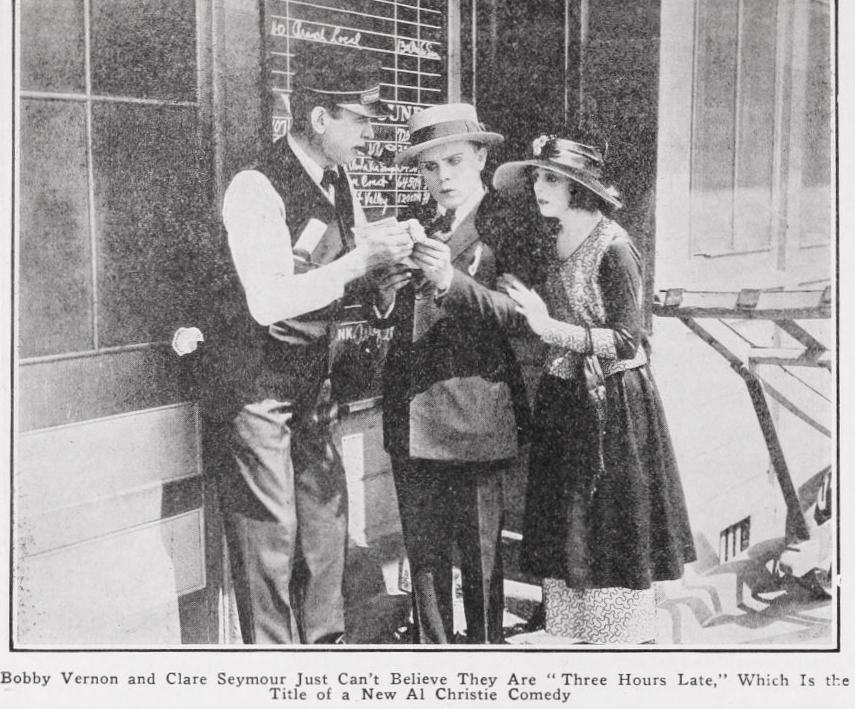
Comparing this to the more epic scale of America Preparing, one sees the intimacy of the Christie short as a vital component of its success. It doesn't need grand vistas; the landscape of Bobby Vernon’s face as he realizes the magnitude of his mistake provides all the spectacle required. The editing maintains a brisk tempo, ensuring that the three-hour delay within the story never translates to a delay in the audience’s engagement. It is a lean, muscular piece of filmmaking that avoids the narrative bloat often found in longer features of the period like Tih Minh.
Beneath the surface of the laughter, there is a subtle critique of the transactional nature of human relationships. Bobby is defined by his task; the girl is initially defined by her proximity; Mr. Brown is defined by his wealth. The film plays with these definitions, throwing them into a blender of circumstance. The check itself is a cold, impersonal object, yet it dictates the movement of every character. This interplay between the financial and the personal is a recurring theme in silent cinema, seen in various shades in Blue Blood and The Scarlet Road.
The film also touches upon the vulnerability of the working man. Bobby’s terror at the prospect of failure is not just comedic; it reflects the real-world precarity of the clerical class. One is reminded of the struggles portrayed in The Mate of the Sally Ann or the gritty realism of The Luck of Roaring Camp. By cloaking these anxieties in the robes of farce, Christie makes them palatable, yet the underlying tension remains, giving the film a weight that persists after the final title card fades.
Bobby Vernon’s transition from a confident clerk to a crumbling wreck is a masterclass in character arc within a short-form medium. His physical comedy is less about the "fall" and more about the "stumble"—the desperate attempt to maintain dignity while the world collapses. This subtle approach distinguishes him from his contemporaries and aligns him more with the sophisticated flirtation styles seen in Suzanne, professeur de flirt.
The supporting cast, including the often-overlooked Dorothy Dane, provides the necessary friction to keep the plot from becoming a mere slapstick routine. The "wife" plotline introduces a layer of melodrama that wouldn't be out of place in The Red Woman or the atmospheric Black Orchids. Even the supernatural or psychological elements found in contemporary films like Spiritisten are mirrored here in the way Bobby begins to doubt his own reality as the identities around him shift.
Ultimately, Three Hours Late is a testament to the sophistication of early American comedy. It proves that the genre was never just about pies in faces; it was about the intricate dance of human error and the relentless march of time. The film’s ability to weave a complex narrative of mistaken identity, financial peril, and romantic yearning into a concise runtime is a feat of editorial and directorial precision.
As we look back through the lens of history, the film stands as a vibrant, breathing document of its time. It captures the fashion, the manners, and the anxieties of 1918 with a clarity that many more "serious" films failed to achieve. For the modern viewer, it offers not just a series of laughs, but a window into a world where a three-hour delay could change the entire course of a life. It remains a sparkling example of why the silent era continues to fascinate, offering a purity of visual storytelling that is as effective today as it was a century ago. The frantic clerk, the mysterious woman, and the elusive Mr. Brown form a triad of comedic perfection that ensures the film’s place in the annals of cinematic history.
IMDb —
1917
Community
Log in to comment.