DbcultAccessing Vault...
Cult Review
Senior Film Conservator
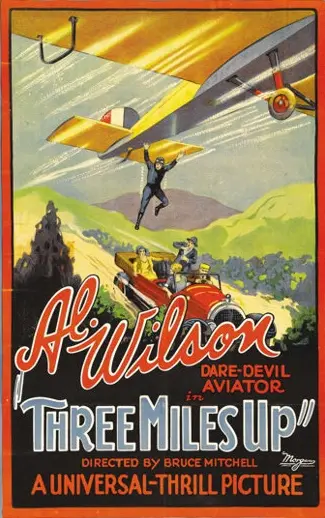
Is 'Three Miles Up' worth watching today? Short answer: absolutely, especially if you appreciate the raw, unpolished charm of early silent cinema. This film is a fascinating historical artifact for cinephiles, aviation enthusiasts, and those curious about early narrative conventions, but it is decidedly not for viewers expecting modern pacing, sophisticated character arcs, or high-fidelity visuals.
It's a journey back to a foundational era of filmmaking, offering a unique blend of high-stakes aerial action and a surprisingly resonant psychological undercurrent, albeit one filtered through the melodramatic lens of the 1920s.
This film works because of its audacious aerial sequences, which were genuinely groundbreaking for 1927, offering a visceral thrill that few contemporary films could match.
This film fails because its narrative, while intriguing, often succumbs to the melodramatic conventions of its era, sacrificing nuance for broad strokes of good versus evil.
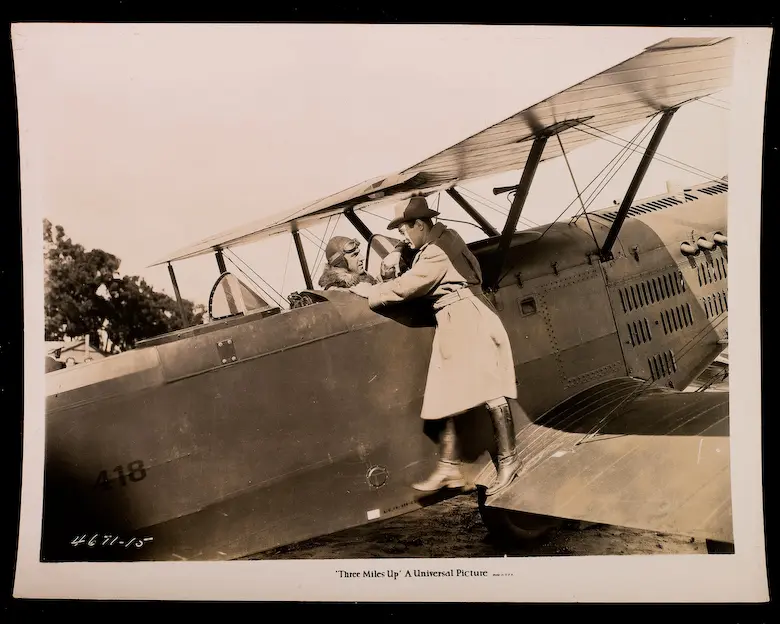
You should watch it if you're a student of film history, an aviation buff, or simply someone who enjoys seeing the foundational elements of cinematic storytelling taking flight.
The core narrative of Three Miles Up, penned by Gardner Bradford, Bruce Mitchell, and Carl Krusada, is deceptively simple yet profoundly compelling. We are introduced to Dick Morgan, a man who has traded the shadowy alleys of his criminal past for the open skies of wartime heroism. His transformation from a 'professional crook' to the revered 'Ace' of his squadron isn't just a change of profession; it's a desperate attempt at reinvention, a bid for redemption in the public eye.
This premise, while ripe for a complex character study, is filtered through the specific sensibilities of the silent era. The film doesn't merely tell us Morgan was a crook; it implies the weight of that past, the constant threat of exposure. It’s less about a clean slate and more about a precarious balancing act, where one slip could send his new life crashing down.
The genius, or perhaps the unintentional brilliance, of this setup lies in its inherent tension. Morgan isn't just fighting enemy planes; he's fighting his own history. This internal conflict, though often expressed through broad physical gestures and expository title cards, elevates the film beyond a mere aerial adventure. It touches upon themes of identity, societal judgment, and the elusive nature of true atonement.
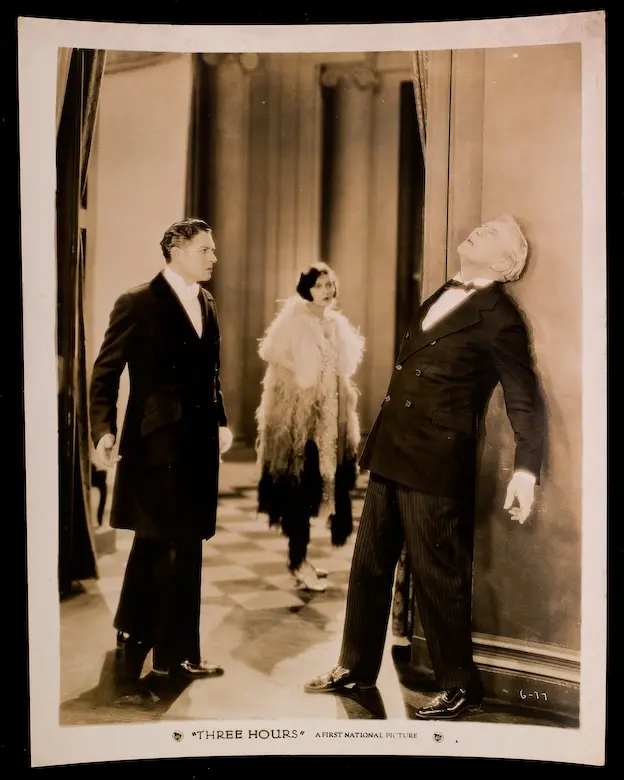
The narrative, while predictable by modern standards, delivers on its promise of adventure and moral quandary. The return of his past associates, personified by the menacing figures from his criminal days, isn't just a plot device; it's a symbolic manifestation of his unresolved guilt and the society that refuses to forget.
"The film, despite its adventure veneer, is a surprisingly stark commentary on the difficulty of escaping one's past, suggesting that even wartime heroism isn't a clean slate. It's almost a proto-noir in its thematic undercurrents."
Al Wilson, a name synonymous with early aviation films, takes on the challenging dual role of Dick Morgan. In the silent era, acting was a physical art form, and Wilson embodies this principle with gusto. His portrayal of the 'Ace' is all upright posture, confident strides, and a determined gaze that speaks of courage and leadership. He carries the weight of a national hero, projecting an aura of unflappable resolve in the cockpit.
However, it's in his depiction of the 'former crook' that Wilson truly shines, albeit subtly. When confronted by his past, as in a tense alleyway encounter with William Malan's shady character, Wilson's posture shifts. His shoulders hunch slightly, his eyes dart, and there's a nervous energy that betrays the polished war hero. It's a testament to his understanding of the character that he manages to convey this internal conflict without uttering a single word, relying on facial expressions and body language to communicate Morgan's quiet desperation.
Ethlyne Clair, as the inevitable love interest or moral compass, plays her part with the expected grace and vulnerability of the era. While her character doesn't offer the same depth as Morgan's, she serves as a vital anchor, representing the purity and hope that Morgan so desperately seeks to protect. Her reactions to Morgan's struggles, often conveyed through wide-eyed concern, provide a humanizing element to the high-flying drama.
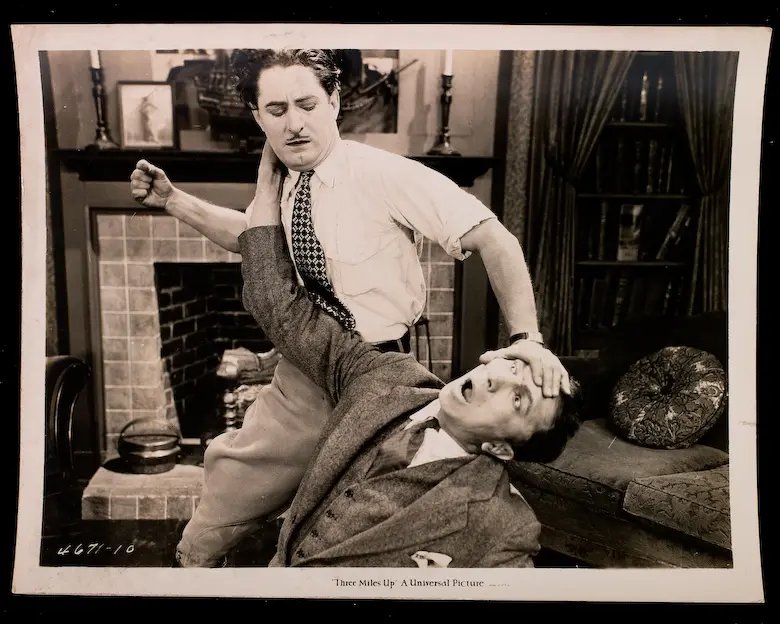
The supporting cast, including William Clifford and Frank Rice, deliver performances that are fitting for the period, often leaning into archetypes. Clifford's villainous turn, for instance, is painted with broad strokes of menace, making him an easily identifiable antagonist for Morgan's conflicted hero. It's a style that might feel over-the-top today, but it was essential for conveying character and motivation in a medium devoid of spoken dialogue.
Bruce Mitchell's direction of Three Miles Up is a fascinating study in early cinematic ingenuity, particularly in its handling of the aerial sequences. Filming planes in action in 1927 was no small feat, and Mitchell, along with his cinematographers, pushed the boundaries of what was technically possible. The film features genuine stunt work, with real biplanes performing daring maneuvers that would have thrilled audiences of the time. One particularly memorable sequence involves a low-altitude chase through a narrow canyon, a scene that clearly utilized a combination of skilled pilots and clever camera placement to create a palpable sense of danger.
While some shots undoubtedly relied on miniatures or static models, the film's commitment to capturing authentic aerial combat is evident. There’s a raw, almost documentary-like quality to these scenes, especially when compared to the more stylized action of later eras. The camera work, though limited by the bulky equipment of the day, manages to convey the speed and chaos of a dogfight, often using dynamic angles that place the viewer right in the thick of the action. A specific shot of a biplane silhouetted against a cloudy sky, shortly before a dramatic dive, remains a powerful visual, showcasing an early understanding of cinematic grandeur.
Mitchell's use of parallel editing, juxtaposing the aerial battles with the ground-based machinations of Morgan's former associates, is effective in building tension. For example, a scene cutting between Morgan narrowly escaping an enemy plane and his love interest being threatened by a gangster on the ground, creates a dual sense of peril. This technique, though standard today, was still evolving and demonstrates a thoughtful approach to narrative construction.
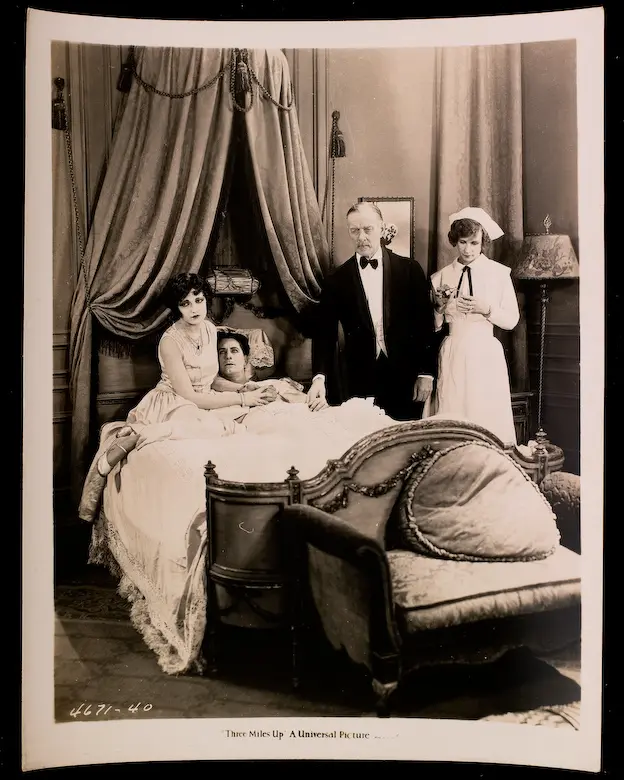
The cinematography, while not always polished, manages to capture the scale and ambition of the story. Close-ups are used sparingly but effectively, often to emphasize a character's emotional state during a tense moment, such as Morgan's furrowed brow as he makes a difficult decision. This visual storytelling, relying heavily on the actors' expressions and the spectacle of the aerial stunts, forms the backbone of the film's appeal.
The pacing of Three Miles Up is, by modern standards, deliberate. Silent films operated on a different rhythm, relying on title cards to convey dialogue, exposition, and internal thoughts. This can feel slow to contemporary viewers accustomed to rapid-fire editing and constant auditory stimulation. However, within its own context, the film builds tension effectively, allowing scenes to breathe and emotions to register through extended visual storytelling.
The tone is largely one of adventure and melodrama. There are moments of genuine excitement during the aerial sequences, balanced by the more dramatic and often exaggerated emotional beats on the ground. The film embraces the morality play aspect of its premise, clearly delineating between good and evil, heroism and villainy. Subtlety is not its strong suit, but sincerity often is.
The reliance on title cards, while a necessity, sometimes feels like a crutch. While some are poetic or impactful, others simply state what the visuals already imply, occasionally interrupting the flow of the action. Yet, they are an integral part of the silent narrative experience, offering direct access to the characters' thoughts and the plot's progression.
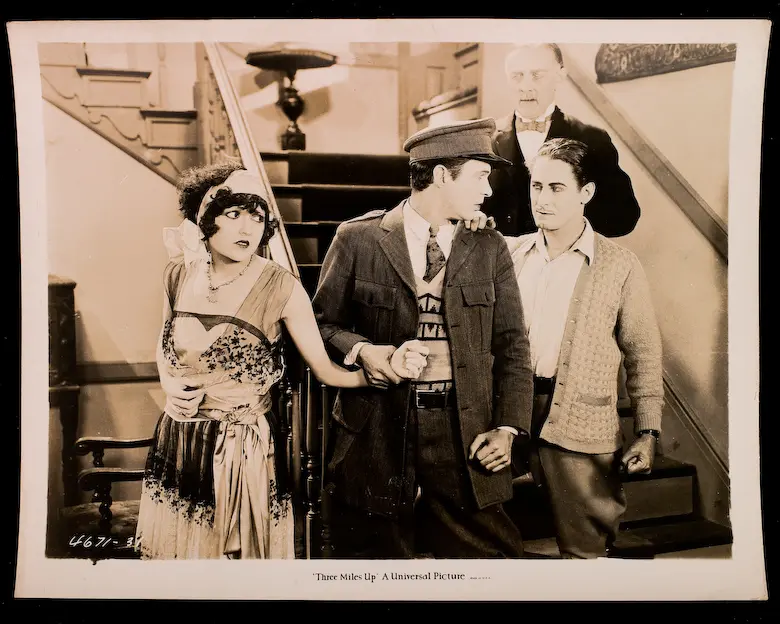
One could argue that the romantic subplot, thin as it is, feels entirely perfunctory, a studio mandate rather than an organic extension of Morgan's internal struggle. It serves its purpose in providing a damsel in distress and a clear motivation for Morgan's heroic actions, but it rarely deepens the central theme of redemption. This is a common characteristic of many films from this period, where plot mechanics often took precedence over complex emotional arcs.
Yes, for historical value. It showcases early aerial stunt work.
No, if you prefer modern storytelling. The pacing is slow by today's standards.
It offers a unique window into 1920s cinema. The film's primary appeal is its novelty and historical significance.
For those fascinated by the genesis of cinema, particularly the action and adventure genres, Three Miles Up provides invaluable insight. It demonstrates the resourcefulness of early filmmakers in creating spectacle despite technical limitations. The film is a testament to the enduring appeal of the underdog story and the thrill of aerial combat.
However, it demands a certain patience and an appreciation for the conventions of its time. Viewers expecting the rapid cuts, complex soundscapes, and nuanced performances of contemporary cinema will likely find it challenging. It’s a film that asks you to meet it on its own terms, to suspend modern expectations and immerse yourself in a bygone era of storytelling.
Is Three Miles Up a lost classic? Perhaps not in the traditional sense, but it is undeniably a compelling piece of cinematic history. It works. But it’s flawed. The film offers a rare glimpse into the nascent stages of action filmmaking, where practical stunts and raw ambition compensated for technological limitations. Al Wilson’s dual performance anchors a narrative that, despite its melodramatic flourishes, attempts to grapple with profound themes of identity and absolution.
For those willing to engage with its historical context, it’s an enriching experience. It reminds us of the foundations upon which modern cinema was built, showcasing the courage of early filmmakers to literally take to the skies for their art. It's not a film you'll watch for a gripping, modern thrill, but rather for an appreciation of where it all began, and for that, it remains remarkably relevant. It’s a relic. But a fascinating one.
If you're interested in other early aviation stories or silent-era action, you might also enjoy the general action pacing of The Combat or the broader historical context offered by films like The Night Horsemen, though Three Miles Up holds a unique place for its aerial focus.
IMDb 7.8
1925
Community
Log in to comment.