DbcultAccessing Vault...
Cult Review
Senior Film Conservator
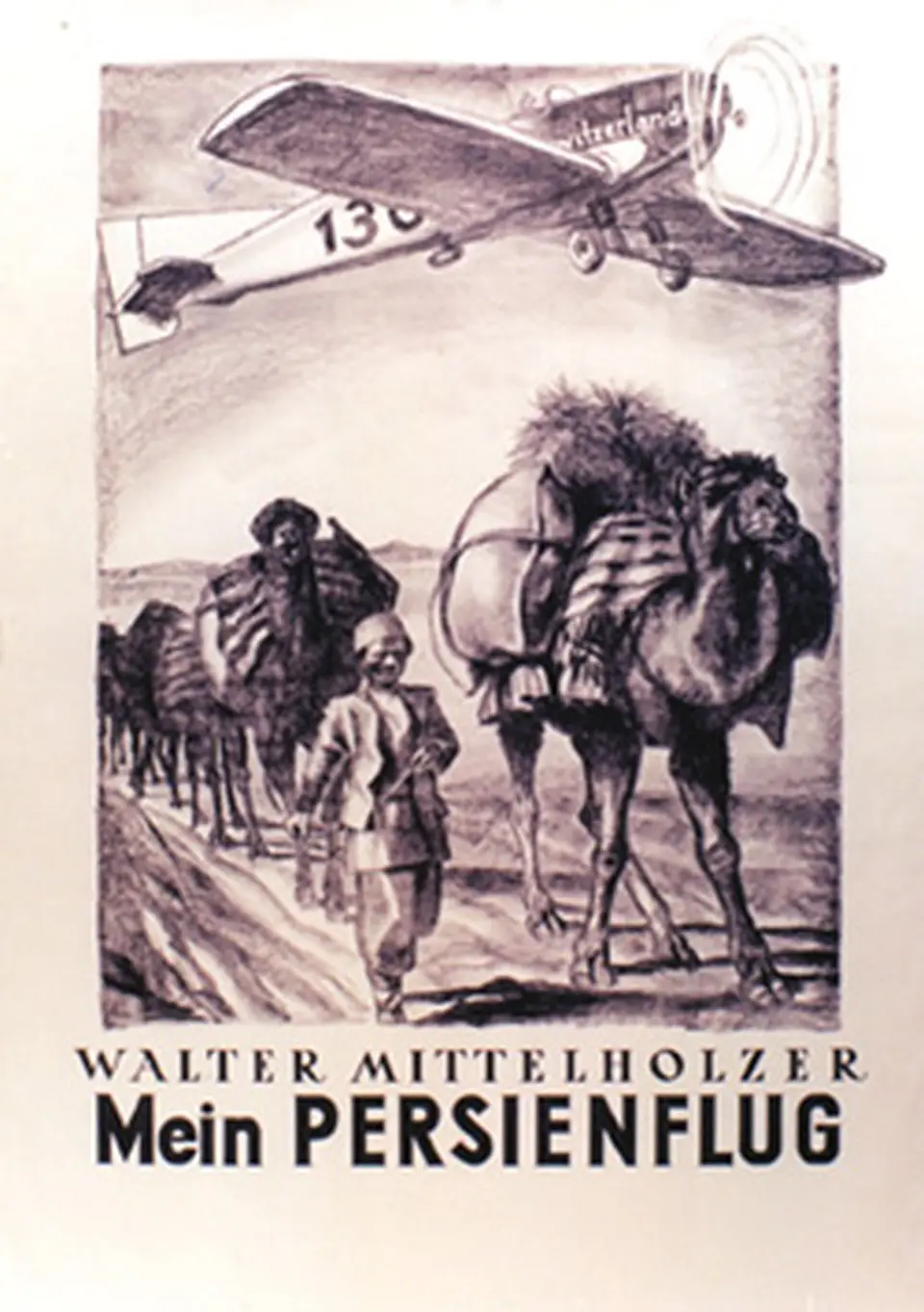
Short answer: Yes, but only if you approach it as a historical artifact rather than a narrative experience. This film is for the cartography obsessed, the aviation historian, and those who find beauty in the grainy textures of early 20th-century exploration; it is absolutely not for anyone seeking a traditional plot, character arcs, or modern pacing.
Mein Persienflug (My Persian Flight) is a singular piece of cinematic history that defies the standard definitions of a movie. Released in the mid-1920s, it documents Walter Mittelholzer’s flight from Switzerland to Tehran. While other films of the era like Sky-Eye sought to dramatize the dangers of the air, Mittelholzer’s work is characterized by a cold, Swiss precision. It is a film about the act of seeing from a perspective that, until that moment, was reserved for the gods or the birds.
The film begins with the logistical preparation, a sequence that feels almost like a technical manual. We see the Junkers A 20 monoplane, a marvel of duralumin engineering, being prepped for a journey that many at the time considered suicidal. There is a specific moment where the ground crew checks the engine, and the camera lingers on the mechanical components with a fetishistic intensity. This sets the tone for the entire film: it is a celebration of the machine’s ability to conquer the environment.
This film works because it captures the raw, unpolished reality of 1920s aviation. You can almost feel the vibration of the cockpit through the jittery frame rates and the occasional light leaks on the celluloid. Mittelholzer wasn't just a pilot; he was a pioneer of aerial photography, and his ability to keep a hand-cranked camera steady while navigating the turbulent air over the Zagros Mountains is a feat of physical endurance that modern drone pilots will never fully appreciate.
However, there is a debatable coldness to the film. Unlike the romanticized exoticism found in Adventures of Tarzan, Mittelholzer doesn't try to tell a story about the people he encounters. When the plane finally reaches Persian soil, the local inhabitants are often framed as distant figures, small dots against the vastness of the desert or the scale of their own architecture. One could argue that this is the ultimate expression of "Swiss neutrality"—a clinical, detached observation that values the topography over the humanity of the region.
The most striking sequence in the film is the arrival over Tehran. For the first time in history, the city’s labyrinthine structure was revealed from above. The camera pans across the rooftops, showing the intricate courtyards and the winding alleys that had remained hidden from the world for centuries. It is a hauntingly beautiful sight, especially when contrasted with the modern, grid-based Tehran of today. You are watching a world that was about to disappear under the weight of the Pahlavi modernization projects.
There is an unexpected observation to be made here: the shadows of the plane. As the aircraft circles the city, its shadow flits across the clay-colored buildings like a predatory bird. It serves as a visual metaphor for the encroaching Western technology that would soon change the face of the Middle East forever. It is a moment of accidental brilliance that adds a layer of tension to an otherwise placid travelogue.
The cinematography during the approach to Mount Damavand is where the film reaches its aesthetic peak. The peak rises out of the clouds like a jagged tooth, and Mittelholzer’s camera captures the play of light on the snow with a clarity that is surprising for 1924. The scale is overwhelming. In these moments, the film moves beyond a mere logbook and becomes a piece of visual poetry, albeit a very austere one.
If you are looking for a "movie" in the sense of a story with a beginning, middle, and end, then the answer is a resounding no. This film fails because it lacks any semblance of narrative momentum. It is a series of observations, a visual list of locations that can feel repetitive to the uninitiated. If you’ve seen one salt desert from 5,000 feet, you’ve seen them all, or so the impatient viewer might think.
However, for the cinephile, it is an essential watch. You should watch it if you want to understand the origins of the documentary genre. It shares a DNA with other early ethnographic works like African Lions and American Beauties, but with the added dimension of verticality. It is a testament to human curiosity and the lengths to which we will go to see the unseen.
The pacing is glacial by today's standards, but that is part of its charm. It forces you to slow down and look at the textures of the world. The grain of the film, the dust on the lens, and the tilt of the horizon all contribute to a sense of presence that modern, stabilized digital footage can never replicate. It is the difference between a high-definition map and a hand-drawn sketch made by someone who was actually there, risking their life in a tin can over the desert.
Mein Persienflug is a triumph of the will and a masterpiece of early documentary filmmaking, provided you define "masterpiece" by historical impact rather than entertainment value. It is a dry, dusty, and brilliant look at a world that no longer exists. Walter Mittelholzer didn't just fly to Persia; he brought Persia to the world in a way that had never been seen before. It is a cold film, a distant film, but ultimately an indispensable one for anyone who cares about the history of the moving image.
"Mittelholzer’s camera doesn't just record the landscape; it colonizes it with the eye, turning the impassable Zagros Mountains into a series of frames for European consumption."
In conclusion, while it may lack the dramatic flair of a film like Pettigrew's Girl or the thematic depth of The Price of Pleasure, its importance cannot be overstated. It is the ancestor of every drone shot and satellite image we see today. It is the moment the earth became a map.

IMDb —
1936
Community
Log in to comment.