DbcultAccessing Vault...
Cult Review
Senior Film Conservator
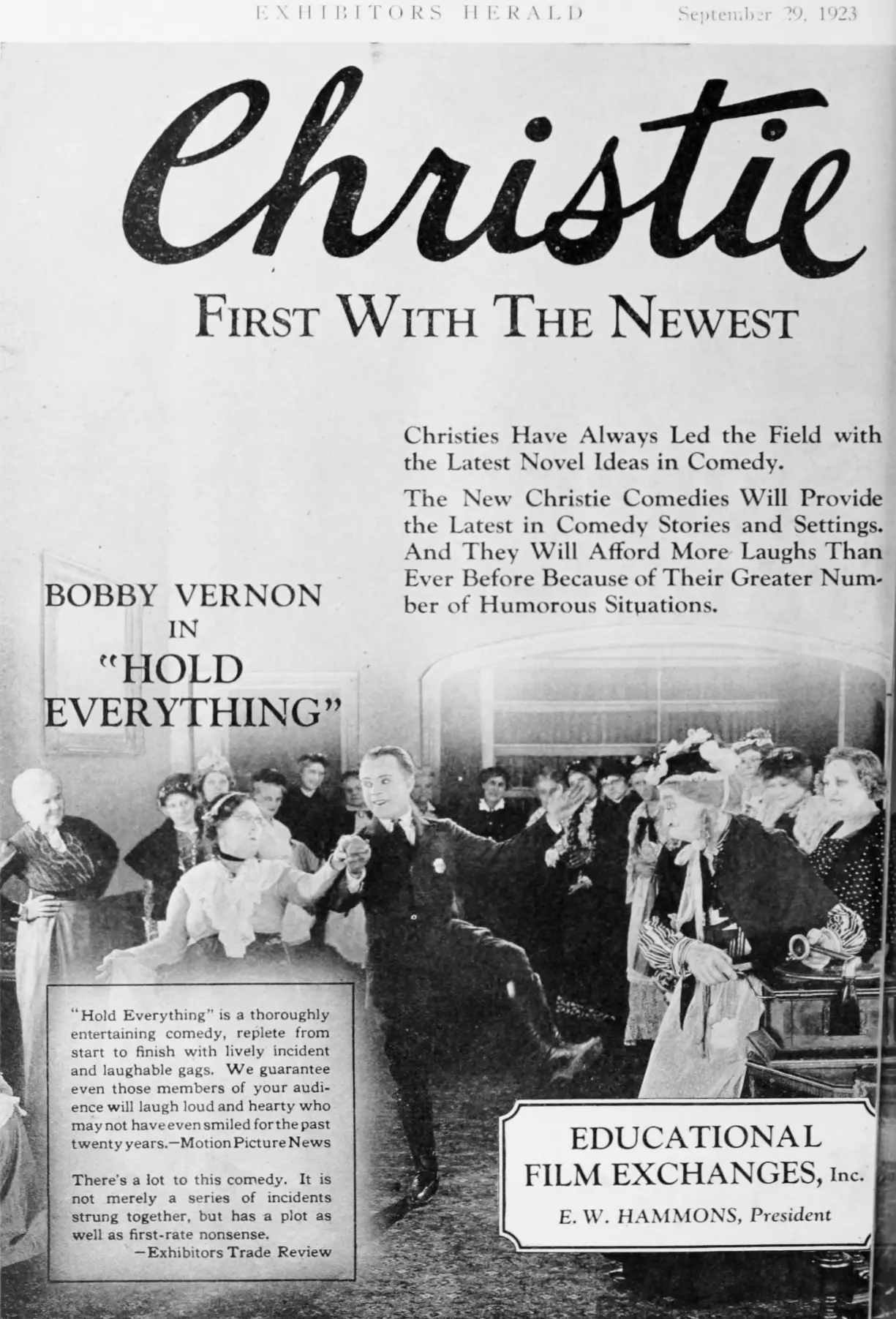
When the reels of Hold Everything begin to spin, the audience is thrust into a bustling metropolis where the streets pulse with the clatter of horse‑drawn cabs and the roar of early motorcars. Bobby Vernon, a lanky figure with a mischievous grin, is introduced not as a hero but as a rogue with a heart that beats to the rhythm of the city’s chaotic tempo. He seizes a sleek, black automobile—once the prized chariot of a feared taxi‑bandit—only to discover that the car’s trunk is a veritable treasure chest, overflowing with contraband that promises both fortune and peril.
The theft is not a quiet, solitary act; it erupts into a cat‑and‑mouse ballet as the bandit’s henchmen, armed with brass knuckles and a thirst for retribution, give chase. Simultaneously, the municipal police, garbed in crisp uniforms and wielding batons, converge on the same road, their sirens a distant wail that grows louder with each passing frame. Vernon’s driving becomes a study in improvisational choreography: he darts through narrow alleys, slides beneath low‑hanging awnings, and executes hairpin turns that would make a modern stunt driver gasp. The tension is palpable, yet the film never abandons its comedic core; each near‑miss is punctuated by a pratfall or a well‑timed visual gag that elicits a delighted chuckle.
Amidst the pandemonium, a luminous figure steps into the narrative: Vera Steadman’s character, a philanthropist whose very presence radiates compassion. She boards Bobby’s taxi with a purpose—delivering supplies to an Old Ladies’ Home—her demeanor a stark contrast to the gritty desperation surrounding her. The juxtaposition of her altruistic mission against the backdrop of stolen loot creates a thematic tension that the film explores with subtlety. As the cab hurtles forward, the audience witnesses a delicate dance of glances and gestures; Bobby, initially intent on exploiting the loot, finds his resolve softening under the influence of Vera’s earnestness.
The screenplay, crafted by Frank Roland Conklin, deftly balances slapstick with sentiment. Vernon’s attempts to shield Vera from the relentless pursuit are both heroic and hilariously inept. In one memorable sequence, he employs a series of improvised obstacles—a stack of crates, a tipped-over fruit cart, even a stray dog—to thwart the bandit’s advances. Each obstacle is a visual metaphor for the moral barricades Bobby erects in his own conscience, illustrating his internal conflict between self‑interest and burgeoning affection.
The film’s visual palette, though constrained by the monochrome nature of silent cinema, is enlivened through strategic use of set design and costuming. The bandit’s gang dons dark coats accented with brass buttons, their silhouettes cutting sharp lines against the fog‑filled streets. Vera’s attire, a flowing dress of pastel silk, stands out like a beacon, her movements graceful and measured. The contrast is further emphasized when the narrative reaches its climactic crescendo: Bobby, in a moment of audacious bravado, activates the “Aggravating Mamma”—a noisy, over‑engineered phonograph—sending a cacophonous blast through the city’s alleys.
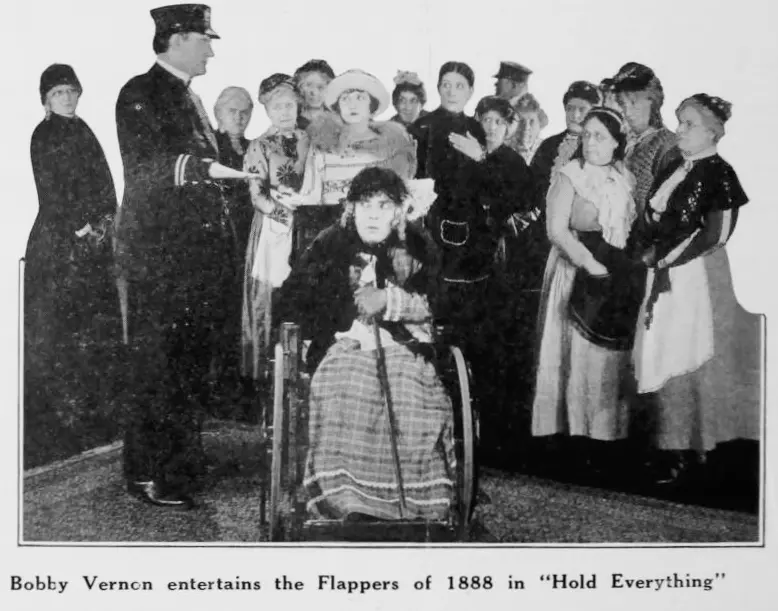
The phonograph’s roar triggers an unexpected spectacle: the “flappers of ’61,” a troupe of exuberant young women, burst onto the scene, their skirts swirling in synchronized choreography reminiscent of a 1923 debutante ball. Their dance, filmed in a wide‑angle shot that captures the kinetic energy of the moment, serves as both comic relief and a visual allegory for the era’s cultural upheaval. The flappers, with their bobbed hair and daring attitudes, embody the spirit of rebellion that permeates the film, mirroring Bobby’s own defiance of authority.
Comparatively, The Midnight Girl offers a more melodramatic take on urban intrigue, while Nugget Nell leans heavily into Western tropes. Hold Everything distinguishes itself by fusing the frenetic energy of a chase film with the light‑heartedness of a romantic comedy, a hybrid approach that predates later genre‑blending classics. Its pacing is relentless yet never exhausting; the film’s editing—sharp cuts between the pursuit, the cab interior, and the flapper performance—creates a rhythm that feels both urgent and playful.
The performances are a study in silent‑era expressiveness. Vernon’s facial contortions—wide‑eyed astonishment, sly smirks, and exaggerated panic—communicate a spectrum of emotions without a single spoken word. Steadman, meanwhile, employs a poised yet expressive demeanor, her eyes conveying compassion that transcends the limitations of intertitles. Their chemistry is palpable, each glance a silent dialogue that deepens the narrative without reliance on dialogue.
From a technical standpoint, the cinematography employs inventive camera angles that heighten the sense of speed. Low‑angle shots of the car’s wheels spinning, intercut with high‑angle views of the bustling streets, give the audience a visceral sense of motion. The use of dark orange lighting in night scenes adds a warm, almost nostalgic glow, while occasional splashes of yellow illuminate street lamps, creating a visual rhythm that mirrors the film’s musical score—though unheard, the rhythm is felt through the editing’s tempo.
The thematic undercurrents of the film are surprisingly sophisticated. On one level, it is a straightforward caper: a thief, a chase, a loot. On another, it interrogates the moral ambiguity of survival in an urban landscape where law and outlaw blur. Bobby’s evolution—from a self‑serving opportunist to a protector of Vera’s noble cause—reflects a broader societal yearning for redemption amidst the roaring twenties’ excesses. The inclusion of the Old Ladies’ Home as a narrative anchor grounds the film in a social reality, reminding viewers that compassion can thrive even in the midst of chaos.
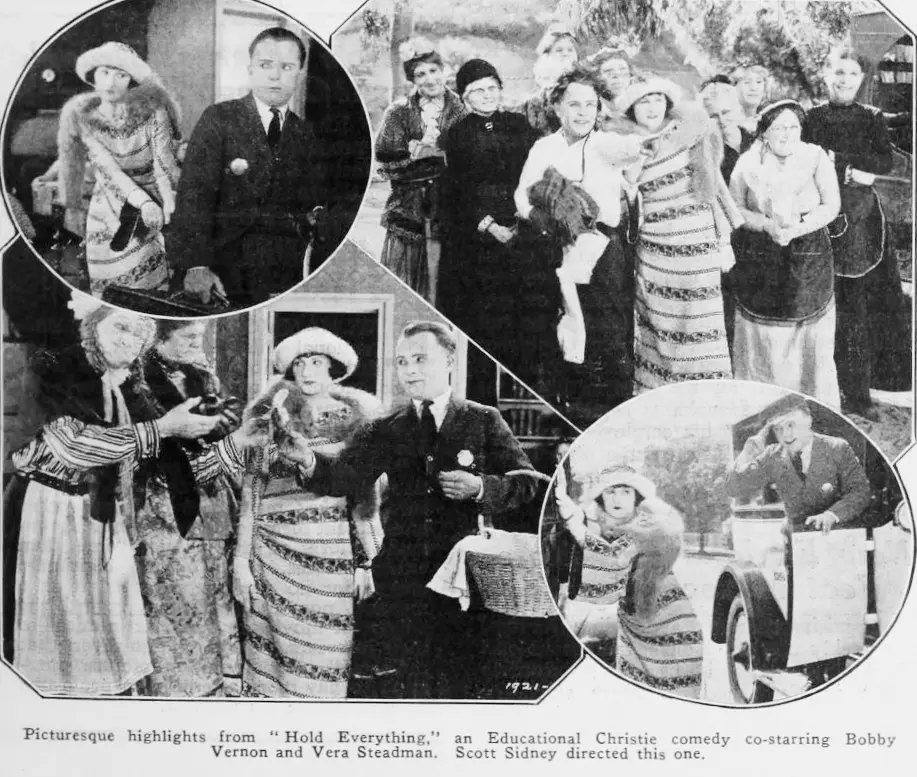
The film’s climax resolves with a clever twist: the bandit, outwitted by Bobby’s cunning use of the phonograph, is forced to retreat, his plans foiled by a cacophony that renders his henchmen disoriented. The police, arriving just in time, apprehend the remaining criminals, while Bobby and Vera share a quiet moment atop a city rooftop, the skyline silhouetted against a dawn that hints at new beginnings. The final intertitle—"Love, like a taxi, takes you where you need to go"—encapsulates the film’s central metaphor, marrying the literal journey with an emotional odyssey.
When placed alongside contemporaneous works such as Love and Lunch or Pets and Pests, Hold Everything stands out for its deft interweaving of high‑energy chase sequences with a tender romantic thread. While the former films rely heavily on situational comedy within domestic settings, Vernon’s escapade expands the canvas to the bustling cityscape, allowing for a broader exploration of social dynamics. Moreover, the film’s use of the sea‑blue tint in certain twilight scenes adds a cool counterpoint to the warm urban glow, enhancing visual depth and reinforcing the emotional dichotomy between danger and hope.
In terms of legacy, Hold Everything anticipates later cinematic innovations. Its blend of action, romance, and musical interludes foreshadows the genre‑bending tendencies of 1930s screwball comedies. The film’s influence can be traced to later works that juxtapose high‑stakes pursuits with romantic entanglements, such as the famed chase scenes in You’ll Be S’prised. Additionally, the flapper sequence prefigures the iconic dance numbers of the early talkies, showcasing how visual rhythm can substitute for audible music in silent cinema.
From a modern perspective, the film remains a vibrant artifact of its era. Its humor, while rooted in the physicality of silent performance, transcends time, offering contemporary audiences a glimpse into the kinetic storytelling that defined early Hollywood. The film’s preservation status—thanks to diligent archivists—allows for high‑resolution screenings that reveal the meticulous set design and the nuanced performances that might otherwise be lost to time.
In sum, Hold Everything is a masterclass in balancing kinetic spectacle with heartfelt narrative. Bobby Vernon’s charismatic mischief, Vera Steadman’s luminous compassion, and Frank Roland Conklin’s witty screenplay coalesce into a cinematic experience that is both exhilarating and emotionally resonant. Whether you are a silent‑film aficionado or a newcomer seeking a glimpse into the roaring twenties’ cinematic landscape, this film offers a roller‑coaster ride of laughter, suspense, and unexpected tenderness—an enduring testament to the power of visual storytelling.
IMDb —
1919
Community
Log in to comment.